If you've made it this far, it's because you already know you want data for your trip and just need to decide on the package size. Let's get straight to the point: I'll tell you how many GB you need for the Republic of the Congo without any hype or inflated figures. First, a clarification to avoid any trouble: we're talking about Congo-Brazzaville (capital Brazzaville), not the Democratic Republic of the Congo (DRC, capital Kinshasa), which is the neighboring country across the Congo River.
The quick estimate for the Republic of the Congo
For 10 days in the Republic of the Congo, 3 GB is more than enough for most people: you'll only use data in Brazzaville and Pointe-Noire, because there's no coverage in the Odzala forest. If you make daily video calls for work, increase it to 5 GB. Topping up on the go is easy.
Why so little for such a large country? Because here, you won't be connected all day, even if you want to be. Decent coverage is concentrated in two cities, and much of what's interesting—the jungle lodges, the inland roads—simply has no signal. That works in your favor financially: days without coverage are days when your data counter stops. This article doesn't repeat how to connect, but rather answers only the question of gigabytes. If you want the method applied to any destination, our general guide on how much data you need for travel has it explained step-by-step. Here, we apply it to a niche destination, with its peculiarities: an oil trip, an NGO mission, or a very specific safari, almost always with more hotel Wi-Fi than you imagine and more hours without a signal than you think.
Congo-Brazzaville, not Kinshasa: why it matters to you
Before calculating gigabytes, make sure you buy the package for the correct country, because there are two Congos and they are confused daily. You are traveling to the Republic of the Congo (Congo-Brazzaville), a country of about six million inhabitants with its capital in Brazzaville. The neighbor is the Democratic Republic of the Congo (DRC or Congo-Kinshasa), much larger and with its capital in Kinshasa, just across the Congo River. These are two distinct states, with distinct operators and distinct rates, although they share a name and a river border.
Why does it matter for your data? Because a plan bought for the DRC will not work—or will be extremely expensive—in Brazzaville, and vice-versa. This is the primary reason why someone's data doesn't work as soon as they land at Maya-Maya airport. When you choose your eSIM for the Republic of the Congo, make sure it says Congo-Brazzaville and not Kinshasa. This seemingly minor detail makes all the difference between arriving with internet or spending the first day trying to figure out why you can't connect. Keep this in mind even before thinking about how many gigabytes to pack in your digital suitcase.
Why you'll use less data here than you think
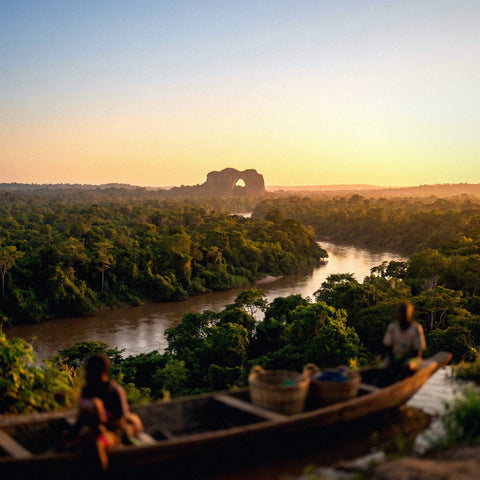
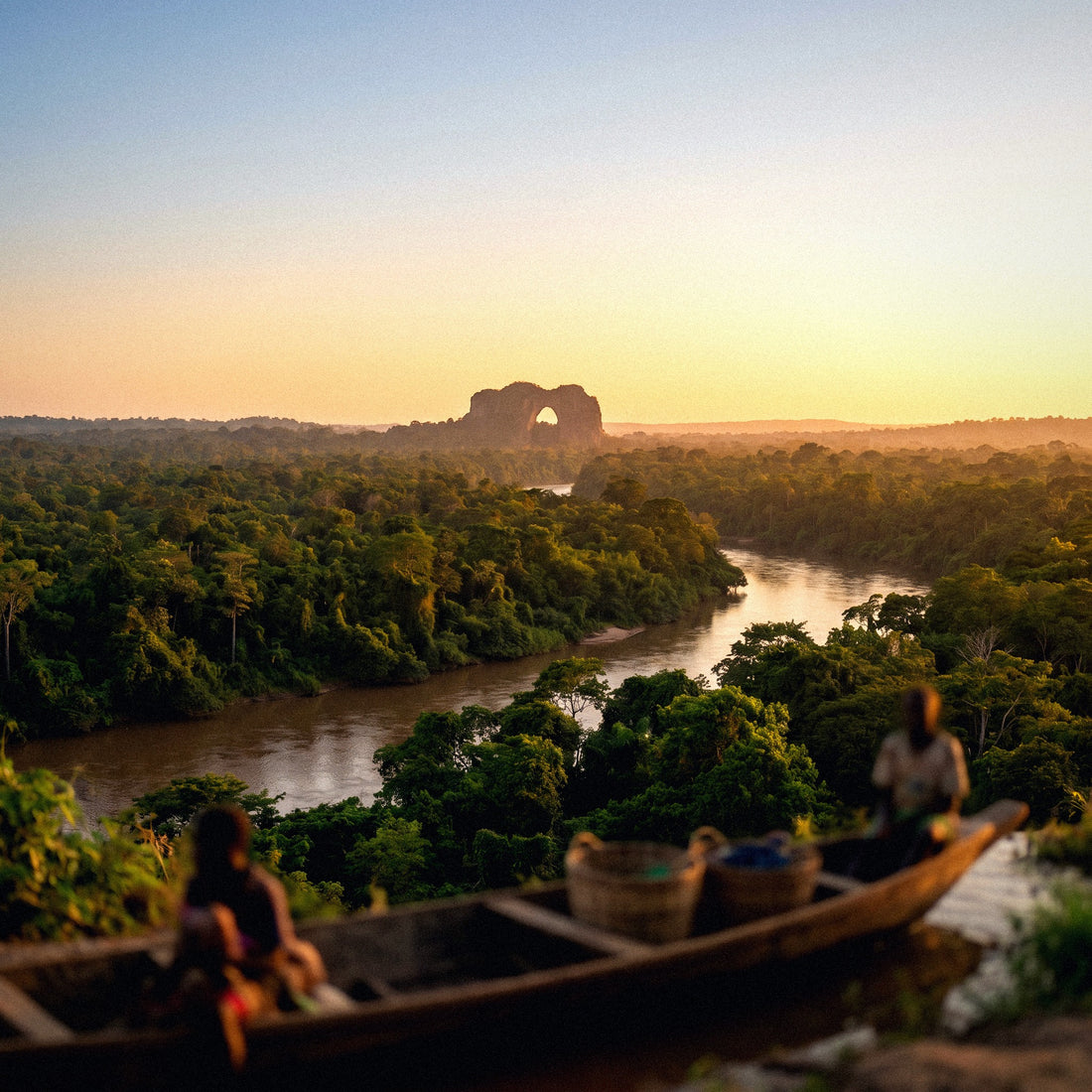
The key to this destination is coverage, and that's why the package can be modest. There's reasonable 4G in Brazzaville and Pointe-Noire—the coastal and oil city—especially in the city center, hotels, and business areas, with actual speeds from low single digits to low double digits Mbps. Outside of that, as soon as you hit the Route Nationale or head inland towards the Congo basin, the signal drops to 2G or disappears. And in Odzala-Kokoua Park, where you can see lowland gorillas, the lodges are deep in the jungle with no coverage: there, your phone is only good for taking photos.
Translated into gigabytes: you'll use data on city days and practically none on safari days or long travel days. That's why buying a huge package doesn't make sense. To understand how to connect (local Airtel or MTN SIM, digital option, hotel Wi-Fi), you can find details in our internet guide for the Republic of the Congo. Here, we'll stick to the numbers and this overview of where you'll have a signal and where you won't:
| Area | Coverage | What to expect |
|---|---|---|
| Brazzaville (city center) | Acceptable 4G/LTE | WhatsApp, maps, and video calls without issues |
| Pointe-Noire | 4G in city center and hotels | Good for work and browsing |
| Roads (RN1) and inland villages | Intermittent 2G or none | Download your maps beforehand |
| Odzala-Kokoua and Congo rainforest | No coverage | Airplane mode; data counter at zero |
How much each app uses: consumption by activity
To calculate your gigabytes, you need to know what really consumes data. The rule is simple: text and maps use very little; video and video calls use a lot. These figures are approximate—they depend on quality and network—but they help you get a realistic idea of your daily usage before you travel.
| Activity | Approximate Consumption |
|---|---|
| Maps with GPS (Google Maps, navigation) | 3–5 MB/hour (up to 10 with live traffic) |
| WhatsApp messages (text, audio, photos) | 5–15 MB/day |
| WhatsApp voice call | 25–30 MB/hour |
| Video call (WhatsApp, Zoom, Teams) | 300–500 MB/hour |
| Social media (feed and stories) | 100–150 MB/hour |
| Upload 10 photos in good quality | 30–50 MB |
| Music streaming (normal quality) | 40–70 MB/hour |
| Video streaming (YouTube, 480p) | 400–600 MB/hour |
Notice the difference: an entire hour of maps uses the same as a few minutes of good quality video. In a destination like this, where you'll primarily use WhatsApp and Google Maps, it's easy for a full day of normal use to stay below 100-150 MB. If you want a more detailed breakdown by app with more examples, you can find it in our mobile data usage statistics by activity. With this table in front of you, you can now estimate your daily consumption quite accurately.
How many GB based on your profile and duration
This is the table you've been looking for. Cross-reference your traveler profile with the number of days you'll be in the country, and you'll have your starting number. I've rounded up to give you a bit extra, which is how it should be, and I've considered the real profiles of those who travel here: the oil technician, the NGO aid worker, and the niche safari traveler.
| Profile | 5 days | 10 days | 15 days | 30 days |
|---|---|---|---|---|
| Tourist using maps and WhatsApp | 1 GB | 2 GB | 3 GB | 5 GB |
| Taking photos and using social media | 2 GB | 3 GB | 5 GB | 8 GB |
| Work (oil/NGO): email and video calls | 3 GB | 5 GB | 8 GB | 12 GB |
| Family sharing a hotspot | 3 GB | 6 GB | 10 GB | 15 GB |
| Safari in Odzala (days without coverage) | 0.5–1 GB | 1–2 GB | 2 GB | 3 GB |
A couple of honest nuances. The safari row for Odzala seems low, and it is intentionally so: if you're going to spend entire days in the jungle without a signal, those days don't count. And if your hotel has decent Wi-Fi—many in Brazzaville and Pointe-Noire do—you can drop down a notch, because you'll do photo backups and long video calls when connected to Wi-Fi. When in doubt, aim low and top up if necessary: almost no one completely uses up the package they thought they needed.
The river warning: the ghost bill from the DRC
This is the most important warning in the entire article, and you won't see it almost anywhere else. In Brazzaville, you are literally a couple of kilometers from Kinshasa, the capital of the DRC, with only the Congo River between them. The antennas on the Congolese bank of Kinshasa reach strongly to the Brazzaville bank, and your phone, always looking for the strongest signal, can connect to a network from the neighboring country without warning.
The problem? If your plan is only for the Republic of the Congo, that data will be billed as if you were in another country, or it simply won't work. You could end up paying extra without having crossed any border, simply by walking near the water.
If you are by the river in Brazzaville and see that the network displayed on your phone is from Kinshasa, go into settings and manually set the network to your Congolese operator (Airtel or MTN). Thirty seconds that can save you a bill shock.
The solution is as simple as regularly checking which network appears at the top of your screen, especially if you are staying or walking near the river. In the rest of the country, you won't have this problem, because there isn't another network so close competing for your phone.
Calculate your own consumption before you leave
There's no better prediction of what you'll spend abroad than what you already spend at home. Before buying anything, your own phone gives you the exact and free data:
- On Android: Settings › Network & internet › SIMs › App data usage.
- On iPhone: Settings › Mobile Data and scroll down to the list of app usage.
- Check your usage for the last full month and use that figure as a reference.
From that monthly figure, focus on what you spend outside the home, because in Congo you'll sleep many nights with hotel Wi-Fi. Divide by 30 for your daily "on the go" consumption, multiply by the number of travel days, and subtract the days you'll be without coverage in the jungle. That number, not a generic table, is your truth. It usually comes out lower than people think, because at home we rely on Wi-Fi much more than we realize, and the pattern is repeated on a business trip or safari.
How to make your data last in Congo
With a few adjustments, a modest package can last twice as long. These are the ones that really make a difference in this destination:
- Download offline maps for Brazzaville, Pointe-Noire, and your route to Odzala before leaving the city: there will be no network in the jungle to load them, and they are essential.
- Lower video quality to 480p and disable auto-play on social media.
- Schedule photo and video backups to occur only over Wi-Fi.
- Activate the phone's Data Saver Mode, which limits background app data usage.
- Download music and podcasts over Wi-Fi for long road trips.
The star trick in this destination is offline maps: between long journeys and the lack of inland coverage, they'll save you from more than one tight spot. You can find the complete list in our guide to saving data when traveling. With these habits, 3 GB can be stretched to feel like five without you noticing you're missing out on anything.
What happens if you run out
Let's address the question on your mind: what if I run out of data halfway through my trip? Good news: it's not a disaster. When you exhaust your package, your service isn't dramatically cut off; you simply buy another one and continue. And buying too much to "be safe" almost always means returning home with unused gigabytes that no one will refund you for.
That's why my advice is clear: it's better to run short and top up than to overbuy. Start with a modest package—the reference 3 GB for ten days—and if you find you're consuming it quickly in your first few days in the city, you can easily extend it. Having a safety net just a couple of taps away is more valuable than carrying extra gigabytes that you might not even touch. In Brazzaville and Pointe-Noire, you'll have plenty of coverage to top up when you need it, so there's no need to buy everything on the first day.
Frequently asked questions
How many GB do I need for 10 days in the Republic of the Congo?
For ten days, 3 GB is more than enough for almost everyone. You'll only use data in Brazzaville and Pointe-Noire; safari or road days barely count because there's no coverage. Go up to 5 GB if you work daily with video calls.
Am I going to the Republic of the Congo or the DRC in Kinshasa?
The Republic of the Congo is Congo-Brazzaville, with its capital in Brazzaville. The Democratic Republic of the Congo (DRC) is the neighboring country, with its capital in Kinshasa, across the river. Make sure you buy the plan for Congo-Brazzaville.
Why does my phone show a DRC network in Brazzaville?
Because Kinshasa is across the river, and its antennas reach Brazzaville. Your phone might connect to a neighboring country's network and charge you for international roaming. Manually set your operator (Airtel or MTN) in your settings.
Is there coverage in Odzala-Kokoua Park?
No, virtually none. The lodges are deep in the Congo jungle, without a signal. Download offline maps before leaving the city and inform your family that you'll be out of communication during those days. The upside: you won't use a single megabyte.
Do I need my passport to buy a local SIM?
Yes: SIM registration with a passport is mandatory in Congo. You will need to show it at the Airtel or MTN store. If you prefer to avoid queues and paperwork upon arrival, the digital option allows you to land with active data.
Airtel or MTN, which one is better?
Both work well in the city; choose based on where you're going. MTN generally performs slightly better in the center of Brazzaville and Pointe-Noire, while Airtel reaches a bit further into smaller towns like Dolisie or Ouesso. For urban use, either will do.
Can I use an eSIM in the Republic of the Congo?
Yes, if your phone is compatible. It's the most convenient way to land with internet without having to look for a store or register a SIM. If you're not sure how it works, we explain it in our guide on what an eSIM is.
If I run short, can I top up on the go?
Yes, and it's recommended. Start with a modest package, and if you use it up during your city days, you can top up instantly. With coverage in Brazzaville and Pointe-Noire, you can always recharge with just a couple of taps without being stranded.
Conclusion
To summarize bluntly: the Republic of the Congo is one of those destinations where less is more. With 3 GB for a week or ten-day stay, you'll have plenty if you're moving between Brazzaville and Pointe-Noire, because days in the Odzala jungle consume no data. Increase to 5 GB only if you work daily with video calls or share your connection with family. Choose the correct country—Congo-Brazzaville, not Kinshasa—monitor which network your phone shows when you're by the river, and download your maps. With that, you can forget about the issue and enjoy your trip. If you're clear on this, check out our eSIM for the Republic of the Congo and land with active data. Remember: it's easy to top up, so start modestly and only extend if you truly need to.