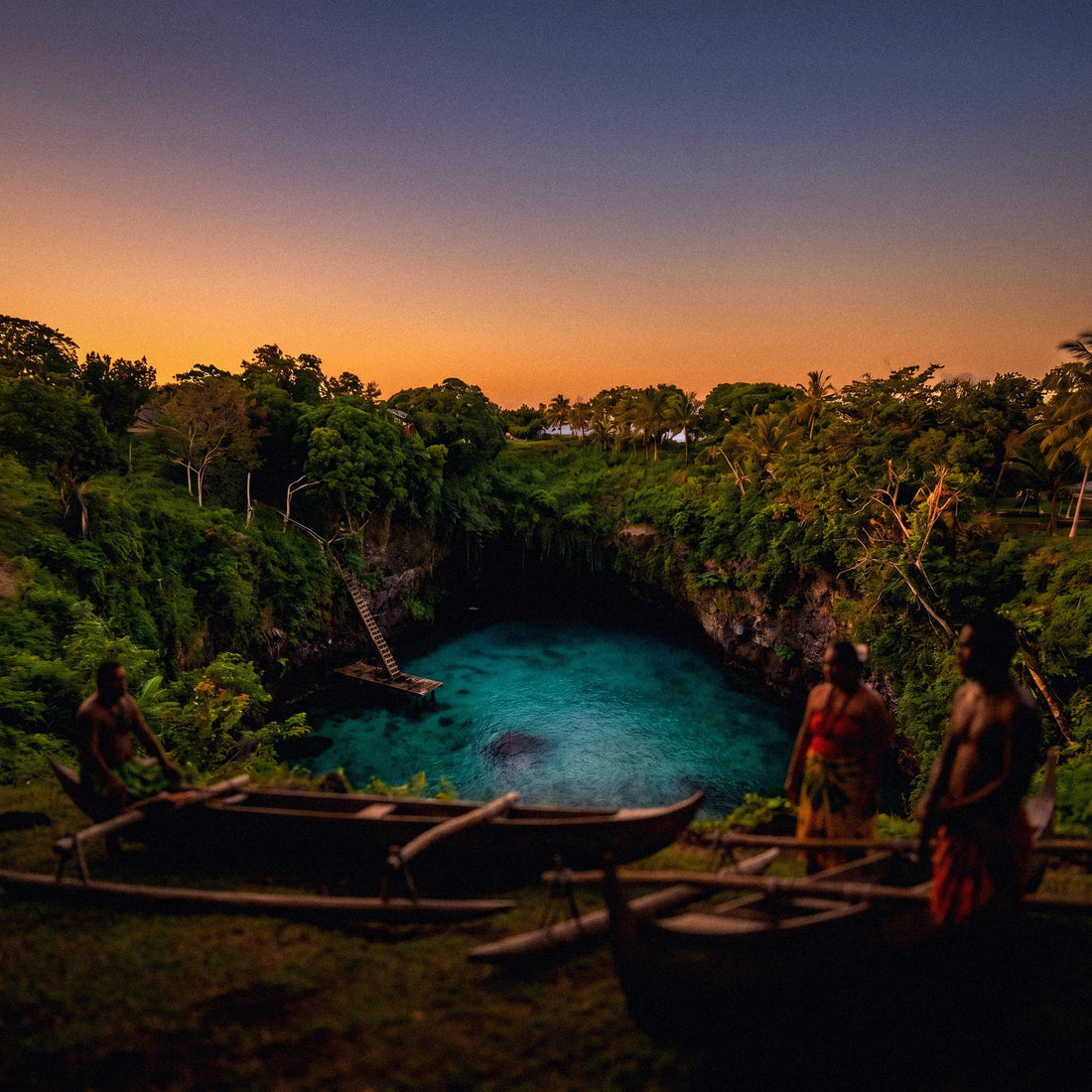
You've decided to travel with data and just need the number: how many GB to buy for Samoa without running out or overpaying. Good news: you'll spend less here than you fear. This isn't an article on how to connect—you can find that in the main guide to travel data—here, we're going straight to the number. Samoa is true South Pacific: open fales on the beach, quiet Sundays, and a pace that naturally detaches you from your phone. I'll give you a well-reasoned recommendation, by profile and by days.
The quick figure for Samoa
For 10 days in Samoa, most people will be fine with 3-5 GB. If you're using maps and WhatsApp, 3 GB will be plenty; if you upload photos and use social media daily, plan for 8-10 GB; and if you're working remotely, aim for 15-20 GB or an unlimited plan.
That's the short answer, and I believe it because Samoa works in your favor. It's a small destination, with short trips between Apia, the coast, and To Sua, with a culture—the fa'a Samoa—that encourages you to put your phone down. It's not Tokyo or New York, where you're glued to a screen; here you spend hours in the water, on the beach, or in church on Sunday, and your phone rests with you. That's why the numbers you'll see below are lower than for a European city break. Still, I'd rather you have half a gigabyte left over than run out of map on the way to Lalomanu at dusk. If you're debating between two sizes, choose the larger one: the price difference is minimal, and the peace of mind is significant. In the following sections, I'll break down consumption by activity and provide a table by profile and days so you can choose without a calculator.
Why you'll spend less in Samoa
Here's the particularity that changes the number. In Samoa, much of the charming accommodation consists of fales: open-air huts right on the beach, without walls and—this is key—almost never with Wi-Fi. In Europe, we assume the hotel provides Wi-Fi to download Netflix at night; in a fale, that network doesn't exist, and you don't miss it. The plan is to sleep to the sound of the sea, not binge-watch series. This detail, which sounds like an inconvenience, actually drives your consumption down.
Added to this is the vibrant fa'a Samoa culture, and especially Sunday: a day of almost complete rest, with villages quiet, shops closed, and families in church. On that day, you barely touch your phone. And there's the pace of the trip itself: swimming in the To Sua Ocean Trench, waterfalls, beaches, and long after-dinner conversations leave little room for scrolling. The result is that the average traveler in Samoa consumes significantly less data than in an urban destination. The honest counterpoint: since the fale has no Wi-Fi, everything you do use—maps, WhatsApp, uploading a photo—comes from your data plan, not a free network. That's why it's worth calculating carefully, neither overspending nor running short. If you want details on how connectivity works in the country, you can find it in internet in Samoa.
Real consumption by activity
Before deciding on gigabytes, look at how much data each app actually consumes. These figures are approximate and real, measured in normal use; your mileage will vary depending on video quality and signal. The mental rule: browsing, chatting, and listening to music consume very little; video and video calls consume everything.
| Activity | Approximate Consumption | Weight |
|---|---|---|
| WhatsApp (text and audio) | 5-10 MB per hour | Very low |
| Google Maps (navigation) | 5-10 MB per hour | Very low |
| Music streaming (Spotify) | 40-150 MB per hour | Low |
| Social media (feed, photos) | 150-250 MB per hour | Medium |
| Uploading photos (per 20) | 60-120 MB | Medium |
| Reels / Stories / TikTok | 600-720 MB per hour | High |
| Video call (WhatsApp) | 300-700 MB per hour | High |
| HD video (YouTube, Netflix 1080p) | 1.5-3 GB per hour | Very high |
See the pattern? A whole day of maps and WhatsApp costs you barely 50-100 MB. The same day watching an hour of Reels already jumps to 700 MB. In Samoa, with your phone resting half the day, it's easy to stay in the low range. If you want the long breakdown with more apps, you can find it in the mobile data usage statistics by activity. The practical conclusion: it's not how much time you use your phone, but what you use it for.
How many GB by profile and duration
This is the table you've been looking for. Choose your profile, cross-reference it with your travel days, and you'll have your number. The figures include a small safety cushion; in Samoa, due to the slow pace, it's common to consume less than the recommendation, not more.
| Profile | 5 days | 10 days | 15 days | 30 days |
|---|---|---|---|---|
| Map and WhatsApp tourist | 2 GB | 3 GB | 5 GB | 8-10 GB |
| Photo and social media user | 5 GB | 8-10 GB | 12-15 GB | 25-30 GB |
| Digital nomad / remote worker | 10 GB | 15-20 GB | 25-30 GB | Unlimited |
| Family sharing (2-4 mobiles) | 6-8 GB | 12-15 GB | 20 GB | 40 GB or unlimited |
How to read it without getting confused:
- Map and WhatsApp tourist: You navigate, use WhatsApp, and not much else. This is the most common profile in Samoa and consumes the least data.
- Photo and social media user: You upload stories daily and share To Sua live. Video is key here, so the number goes up.
- Digital nomad: Video calls and cloud work weigh heavily; in a fale without Wi-Fi, everything comes from your plan, so don't skimp.
- Family: Add up the phones that share the same plan and include extra for kids watching videos.
Samoa is not American Samoa
Important notice before buying anything, because many people get this wrong. Samoa (the independent one) and American Samoa are two distinct territories, and for mobile data, that matters a lot. American Samoa is a US territory, with different dialing codes, operators, and—what concerns us—data rates. A plan designed for Samoa doesn't always cover American Samoa, and vice versa.
If your trip is to Apia, Upolu, Savai'i, To Sua, or Lalomanu, you are in independent Samoa: that is the country your data plan for Samoa covers. If at some point you cross into Pago Pago, on the island of Tutuila, you are in American Samoa and will need US coverage, which is usually a different package and price. This is not a minor detail: I have seen travelers buy the wrong plan by confusing the two names.
Quick rule: if you fly to Faleolo (Apia), it's just Samoa. If you fly to Pago Pago, it's American Samoa (United States). Buy the plan for the place you're actually going to be.
For the vast majority of tourist trips—the circuit of beaches, waterfalls, and natural pools—we are talking about independent Samoa, and all the figures in this guide are adjusted to it. If you are unsure whether your destination is one or the other, check the arrival airport on your ticket: it will clarify it in a second.
Real coverage: where you WON'T spend
Gigabytes are only spent where there's a signal, and in Samoa, the signal has a map. Knowing this helps you avoid overbuying: in areas without coverage, you simply don't consume data. The network is decent in populated areas of both islands and weak inland.
| Area | Coverage | What to expect |
|---|---|---|
| Apia and North Upolu | Good (4G) | Browse and upload photos without issues |
| South coast of Upolu (Lalomanu, To Sua) | Adequate, drops to 3G at times | WhatsApp and maps yes; video, choppy |
| Savai'i (Salelologa, Asau, Fagamalo) | Decent in villages | Good on the coast, patchy inland |
| Interior and volcanic highlands | Weak or none | Download maps beforehand; you'll barely spend |
Practical translation: you'll spend much of your trip on the coast, where there's sufficient 4G, and another part in spots where your phone won't connect. These hours without signal are gigabytes you don't spend, which is why actual consumption in Samoa ends up being low. My advice: download maps of Upolu and Savai'i and routes to To Sua and the waterfalls, because those inland journeys are precisely where you'll lose signal. This way, you navigate without data and without surprises. The Samoa eSIM connects to local networks from Apia downwards, and as soon as you return to the coast, you regain speed.
If you combine Samoa with New Zealand, Fiji, or Australia
Few people fly to Samoa from Europe without a layover or without combining it with other destinations, and that's where the gigabyte calculation changes. It's very common to combine Samoa with New Zealand, Fiji, or Australia, either because you have a long layover or because it's a multi-week trip through the Pacific. If that's your case, don't buy four separate plans: see if a regional plan that covers several countries with a single top-up is more cost-effective.
The trick to not overspending is to sum by segments. Calculate the days in each country using the profile table from section 4 and add them up. A realistic example:
| Segment | Days | Profile | Estimated GB |
|---|---|---|---|
| New Zealand | 10 | Photos and social media | 8-10 GB |
| Samoa | 7 | Maps and WhatsApp | 2-3 GB |
| Fiji | 5 | Photos and social media | 5 GB |
| Total trip | 22 | — | 15-18 GB |
Note the important detail: Samoa is almost always the segment that consumes the least. It's the peaceful part of the trip, the one for disconnecting, so don't inflate its part of the calculation. Be careful with Australia and New Zealand, which usually have more Wi-Fi in accommodations, and where mobile data consumption drops if you take advantage of those networks. If your itinerary includes several of these countries, a single, well-sized plan will save you from having to buy on the go.
How to calculate your own consumption
Tables are a good compass, but the most reliable data is in your pocket: your real usage from the last month. No one knows your habits better than your own phone, so before choosing a plan, take two minutes to check it. It's the most honest advice I can give you.
On an iPhone: Settings → Mobile Data and scroll down to see the period usage. On Android: Settings → Network & internet → SIMs / Data usage. See how many GB you use in a normal month at home and divide it by 30 to get your daily consumption. Then adjust it for your trip with this simple logic:
| Your monthly home usage | Daily consumption | Estimate for 10 days in Samoa |
|---|---|---|
| Less than 3 GB/month | ~100 MB/day | 2-3 GB |
| 3-10 GB/month | ~250 MB/day | 3-5 GB |
| 10-25 GB/month | ~700 MB/day | 8-12 GB |
| More than 25 GB/month | 1 GB/day or more | 15 GB or unlimited |
A favorable nuance: when traveling, you usually spend slightly less than at home—you're out, at the beach, not on the sofa with your phone—and in Samoa, that effect is more noticeable than anywhere else for the reasons we've already discussed. But if you have to round, round up. It's better to have a gigabyte left over than to run out of map on the road to Lalomanu.
How to stretch your data
With four adjustments, you can make your gigabytes last twice as long, and in Samoa, they are especially useful because the fale won't rescue you with Wi-Fi. None of them will complicate your trip; they are thirty-second actions that you'll notice on your meter.
- Offline maps: Download Upolu and Savai'i via Wi-Fi before you leave (airport, Apia cafe). Navigating without data is the biggest saving and even works where there's no signal.
- Lower video quality: Set YouTube and Netflix to 480p and social media to "data saver." The difference on a phone screen is barely noticeable, and consumption plummets.
- Backups only via Wi-Fi: Google Photos and iCloud uploading your entire vacation on 4G will eat your plan without warning. Disable it until you find a free network.
- Disable autoplay: On Instagram, TikTok, and X, so videos don't start automatically while you're scrolling.
- System data saver mode: Activate it in your phone's settings to limit background data usage for all apps at once.
With these habits, a map-and-WhatsApp traveler can easily last a long week with 2 GB to spare. You can find the complete list, with more tricks, in how to save data on a trip. And remember that in Samoa, the best saving is free: it's called Sunday, and it disconnects for you.
What happens if you run out
I'll be frank with you, because it goes against what I'm supposed to sell: it's better to run short and top up than to overbuy. If you get it just right or run a little short, nothing serious happens; if you buy a huge package "just in case," you're wasting money, because in Samoa, it's very difficult to exhaust it. Honesty here saves you money.
What if one day you see the meter dropping fast? Topping up is immediate: you add another package from your phone in a couple of taps, without changing anything, without going to a store, without a passport or queues. That's why buying just enough is a good strategy, not a risk. In contrast, overbuying has two drawbacks: you pay for gigabytes you won't use, and if the plan expires, you lose them.
If 3 GB is plenty for your week in Samoa, get 3 GB. Just because we sell larger packages doesn't mean you need them. I'd rather you come back happy and with data to spare than squeezed and annoyed.
The winning strategy for Samoa: start with the figure for your profile in the table, monitor the meter for the first two days—which will set your real pace—and if you see you're going to run short, top up without drama. Since consumption here is naturally low, it's most likely that you won't even need to. And if you want to understand how all this works internally, read what an eSIM is.
Frequently asked questions
How many GB do I need for a week in Samoa?
For 7 days, 2-3 GB is enough for a tourist using maps and WhatsApp. If you upload photos and use social media daily, plan for 5-7 GB. The slow pace of the country and fales without Wi-Fi mean that almost no one exceeds that amount.
Do I need a lot of data if I stay in a fale without Wi-Fi?
Not as much as it seems. Without Wi-Fi, everything you use comes from your data plan, yes, but in a fale you disconnect: beach, sea, and relaxation. With 3-5 GB for ten days, you'll have plenty, because your phone spends more time put away than in your hand.
Is the Samoa plan valid for American Samoa?
No, they are different territories. American Samoa is a US territory, with different rates and coverage. If your trip is to Apia, Upolu or Savai'i, you are in independent Samoa; if you are going to Pago Pago (Tutuila), you need a US plan.
Is there good coverage on the beaches and at To Sua?
Decent on the coast, weak inland. Apia and northern Upolu have solid 4G; the south coast (Lalomanu, To Sua) is good for WhatsApp and maps and drops to 3G at times. In the highlands there is almost no signal, so download maps beforehand.
What happens on Sunday with connectivity?
The network works, but you'll barely use it. Sunday is a day of almost total rest in Samoa: towns are quiet and families are at church. It's not that the data cuts out, it's that the atmosphere itself disconnects you and you barely use any gigs that day.
Should I get too little or too much to be safe?
Get just enough and top up if necessary. Topping up from your phone is a two-tap and instant process. Buying a huge package "just in case" is throwing money away, because in Samoa it's very difficult to run out of data.
What if I combine Samoa with New Zealand or Fiji?
Look for a regional Pacific plan. Add up the days for each country with the profile table and get it all at once. Samoa is usually the leg that uses the least data, so don't inflate its part of the calculation.
Do I need data for a translator or transport apps?
Very little. English and Samoan are spoken in Samoa, and in tourist areas you can get by without a camera translator. There are no major metro or taxi apps that devour data: you get around by rental car or local transport, with the map downloaded.
Conclusion
In short: for a typical 7-12 day trip to Samoa, most people will be perfectly fine with 3-5 GB. Go up to 8-10 GB if you're into photos and social media, and 15-20 GB or unlimited if you work remotely. It's a destination that uses little data: fales without Wi-Fi that disconnect you, quiet Sundays, good coverage only on the coast, and a beach rhythm that leaves your phone resting. Buy according to your profile, download maps, and top up without drama if you go over one day. And don't forget: if your destination is Pago Pago and not Apia, that's American Samoa and is separate.
Once you have your number, activate it before takeoff and land in Faleolo already connected, without looking for a store or changing cards: check your eSIM for Samoa and choose the size you just calculated. Have a good trip, and may the only one disconnected be you, not your phone.