If you’ve made it here looking for how internet in Samoa works, here’s the bottom line: there’s decent 4G in the areas where you’ll spend almost your whole trip, local data is ridiculously cheap compared to what your carrier would charge you from back home, and the real problem isn’t coverage — it’s landing without anything prepared on a Sunday, which is the day when all of Samoa shuts down. I’ll walk you through the four real options, with prices in tala and no fluff.
What the connection is really like in Samoa
To get online in Samoa you have four options: roaming from your carrier (very expensive, since Samoa is outside the EU), accommodation Wi-Fi (patchy and nearly non-existent in the fales), a local SIM from Digicel or Vodafone Samoa (cheap, from 10 tala), or an eSIM bought before you leave (the most convenient).
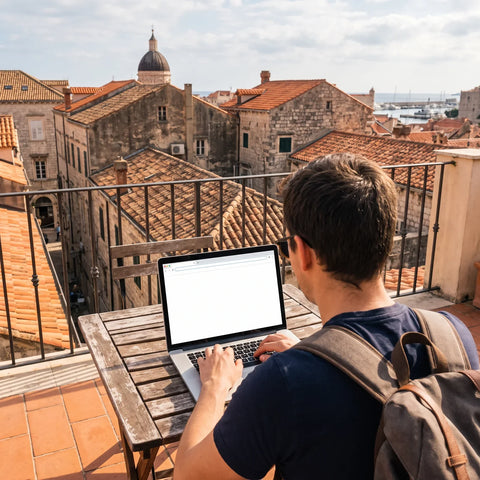
The first surprise in Samoa is that the connection is better than most people expect. Many arrive expecting the Pacific of twenty years ago and find 4G on the two main islands, Upolu and Savai’i, with speeds that in good conditions range between 5 and 20 Mbps. It's not fiber — you won't be uploading 4K video from a beach — but it's more than enough for video calls, maps, WhatsApp, Instagram, and working for a while from a terrace in Apia.
The game-changer was the Tui-Samoa submarine cable, operational since 2018, which linked the country to Fiji and freed Samoa from relying on satellite. Before that, data was expensive and slow; today Samoa is one of the places in the South Pacific where gigabytes cost less in absolute terms, well below what you pay in French Polynesia or the Cook Islands.
That said, there are two nuances worth being clear about from the start. The first is geographic: coverage follows the coast and the roads, and as soon as you head into the mountainous interior or the less populated villages of Savai’i, 4G drops to 3G or disappears entirely. The second is cultural: Samoa lives the fa’a Samoa very intensely, and Sunday is a day for church and rest. Shops closed includes carrier stores. If you land on a Saturday night or a Sunday, either you arrive with something already working on your phone, or you face twenty-four hours of digital silence.
The four options for getting connected, face to face
Before diving into prices operator by operator, I’d rather you see the full picture. In Samoa the alternatives are the same as always, but the differences are more noticeable than in Europe because roaming here isn’t regulated and the Wi-Fi is weaker than what the hotel website promises.
| Option | Approximate cost | Advantages | Drawbacks |
|---|---|---|---|
| Roaming from your carrier | Up to 12-18 € per MB without a purchased plan | Zero hassle, you keep your number | Outrageous price; Samoa is in the most expensive zone of all plans |
| Hotel or resort Wi-Fi | Included or 10-30 WST/day | Free at many accommodations in Apia | Slow, congested at night, non-existent in fales and on beaches |
| Local SIM | From 10 WST (about 3 €) for 6 GB | Cheapest per gig; Samoan number | You have to find a store, register the line, and swap the physical SIM |
| Travel eSIM | Fixed price before you leave | Activates on landing, you keep WhatsApp on your number | Requires a compatible phone and buying it in advance |
If I had to sum it up in one sentence: roaming rules itself out by price alone, Wi-Fi works as a backup but never as a primary plan, and the real choice is between a local SIM and a digital profile. I have the full comparison in eSIM vs. local SIM, but the summary applied to Samoa is simple: the local SIM wins on cents per gig, and the eSIM wins on time, peace of mind, and not depending on the store being open the day you arrive. On a one- or two-week trip, that convenience difference usually outweighs the four or five euro difference.

Spanish Roaming in Samoa: Outside the EU and Very Expensive
Let's start with the most important warning, because it's the one that saves you the most money. Samoa is not part of the European Union or the European Economic Area, so the "Roam Like at Home" regulation does not apply at all. Your gigabytes from your Spanish contract do not travel with you, your minutes don't either, and everything you use is billed at your carrier's international rate.
And that rate, for the South Pacific, is in the most expensive tier that exists. Samoa falls into the "rest of the world" zone for Movistar, Vodafone, and Orange, the same bucket where they put the most remote destinations. The reference prices published by the operators themselves are around €12.10 per MB on Movistar and up to €18.15 per MB on Vodafone, with calls that can reach almost €6 per minute. These are not typos: we're talking about euros per megabyte, not per gigabyte.
Translated to what anyone does with their phone: opening Google Maps a couple of times, checking email, and sending four photos on WhatsApp can run to several hundred euros in a single afternoon. That's exactly the kind of bill people discover three weeks later, back home, and that leads to those complaints that never end well.
Spanish operators offer international plans for outside Europe, but they are usually expensive and short on data: a handful of megabytes per day for a price that in Samoa would buy you plenty of gigabytes. If you want the numbers in detail, I break them down in how much international roaming costs and in the direct comparison of eSIM vs roaming. My practical recommendation for Samoa is clear: turn off data roaming before you board and don't touch it again.
Wi-Fi at Hotels, Resorts, and Fales: What to Expect
Wi-Fi in Samoa exists, but it's worth calibrating your expectations based on where you sleep, because the difference between a hotel in Apia and a beach fale is huge.
In Apia, the capital, most city hotels have Wi-Fi included and it works reasonably well for checking email or making a short video call. The cafés along the waterfront and some restaurants also offer free Wi-Fi if you buy something. Resorts on the north coast of Upolu usually provide Wi-Fi in the reception and restaurant area, and much less signal in the rooms or remote bungalows.
The interesting case is the fales, those open beach huts with palm roofs, mats, mosquito nets, and curtains instead of walls. They are the most Samoan experience you can have and also the most disconnected: many have no Wi-Fi at all, electricity may be limited to a few hours or a few light bulbs, and there isn't always a plug near your mattress. In Lalomanu, Manase, or the south coast, it's normal for the only available connection to be your own phone via mobile data.
Sleeping in a fale without Wi-Fi is not a flaw in the accommodation: it's literally the product you're buying. What you don't want is for it to also be your only way to let family know you've arrived safely.
That's why Wi-Fi in Samoa is a complement, never a plan. It's good for downloading maps at night and uploading photos at your leisure, not for navigating, booking the ferry to Savai'i, or calling a taxi. And as for renting a portable router: the option barely exists in Samoa, and even if you find one, carrying an extra device that needs to be charged every night in a fale without plugs doesn't make much sense. I compare it in detail in eSIM vs pocket Wi-Fi.
Local SIM: Digicel Samoa and Vodafone Samoa, real prices
Samoa has two mobile operators, period: Digicel Samoa and Vodafone Samoa, which until recently was called Bluesky — a name you'll still see on signs and in old guides. Both have a store in Apia, a counter at Faleolo international airport, and a network of top-up shops in local stores across the country.
| Operator | Bundle | Price | Approx. equivalent | Validity |
|---|---|---|---|---|
| Vodafone Samoa | 6 GB | 10 WST | ~3 € | 7 days |
| Vodafone Samoa | 13 GB | 20 WST | ~6.50 € | 15 days |
| Vodafone Samoa (tourist) | 25 GB + minutes | 25 WST | ~8 € | 7 days |
| Vodafone Samoa (tourist) | 50 GB + minutes | 50 WST | ~16 € | 14 days |
| Vodafone Samoa | 50-100 GB | 99 WST | ~32 € | 28 days |
| Digicel Samoa | 675 MB | 19 WST | ~6 € | 7 days |
| Digicel Samoa | 4 GB (top-up) | 20 WST | ~6.50 € | depends on plan |
Prices are in Samoan tala (WST) and the equivalent uses an approximate exchange rate of 1 WST ≈ 0.33 €; check it on the day of your trip because it fluctuates. As you can see, Vodafone Samoa offers much better value in gigabytes per tala, especially with its visitor packages that include national and international minutes. Digicel makes up for it with a network that's well spread outside the capital and a visitor SIM they usually give away for free at the airport, charging you only for the top-up.
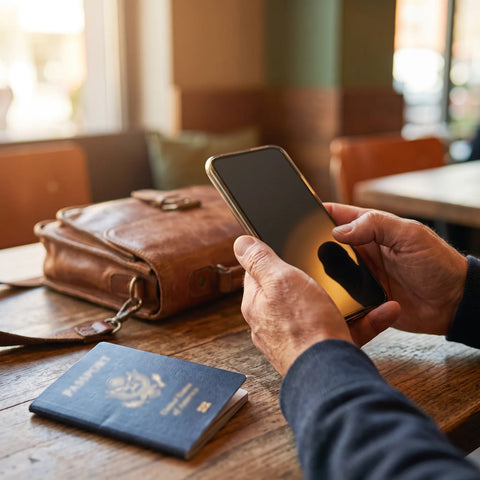
To buy one, bring your passport: that's the document used to register prepaid lines. And keep the hours in mind: airport counters open according to flight schedules, and Apia stores close early on weekdays and are closed on Sundays.
eSIM: why it's what I take to Samoa
An eSIM is a card that doesn't physically exist: you download it as a profile onto your phone and it lives alongside your local plan without removing anything. You buy it from your couch at home, install it with a QR code, and it activates automatically when the plane touches down at Faleolo. In a destination like Samoa, that solves exactly the three problems a local SIM has.
The first is timing. Flights to Apia often arrive from Auckland or Fiji at odd hours, and if you land at night, on a Sunday, or on a holiday, the counter might be closed. With the profile already installed, you walk out of the airport arranging your transfer on WhatsApp while everyone else is looking for someone to ask.
The second is keeping your usual number. Since you don't take out your home SIM, you still receive bank SMS, two-step verification codes, and important calls. On a trip to the other side of the world, with internal flight bookings and transfers to confirm, that's worth far more than it seems.
The third is the hassle. No registering lines, filling out forms, or storing a tiny SIM in your phone case with the risk of losing it in the sand at Lalomanu. If you're not sure how the technology works, I explain it step by step in what is an eSIM, and the specific options for this destination are detailed in the eSIM guide for Samoa.
The only serious requirement is compatibility: it's supported by iPhones from the XS or XR, Google Pixels from the 3, Samsung Galaxies from the S20 series, and practically all recent mid-to-high-end phones. Check before you buy, and also confirm your phone is carrier-unlocked.

Coverage by Area: Apia, To Sua, Lalomanu and Savai’i
Here’s what really matters for planning your day, zone by zone, including where there’s no signal.
- Apia and the north coast of Upolu: the best connection in the country. Solid 4G in the city, at the Fugalei market, along the waterfront, and on the entire road to the airport. You can work here without issue.
- Faleolo Airport: coverage from both carriers. Since it’s about 35 km from Apia and the drive takes around 45 minutes, this is where you’ll most appreciate arriving already connected.
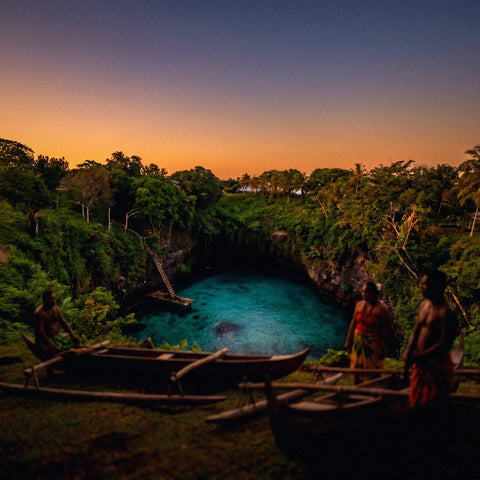
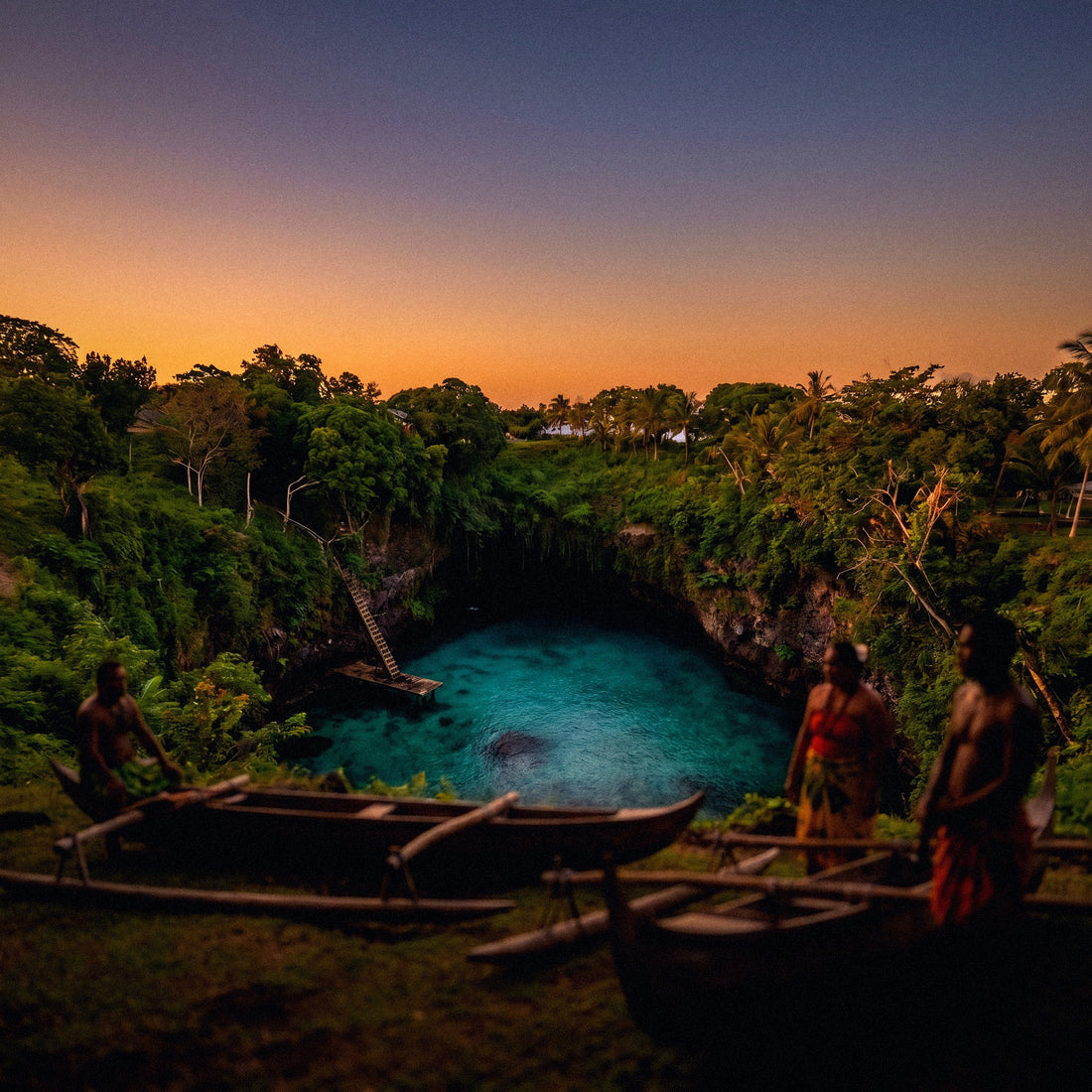
- To Sua Ocean Trench (Lotofaga, south coast): signal in the parking lot and in the upper gardens. Inside the trench, with thirty meters of rock above your head, don’t expect anything. You won’t need it either: climbing down that wooden ladder is worth both hands free.
- Lalomanu and the southeast coast: reasonable coverage on the beach and in the fales, better with Digicel on some stretches. Enough for maps and messaging.
- Inland waterfalls (Papapapaitai, Togitogiga, Afu Aau): intermittent signal and often none. The Cross Island Road has dead zones.
- Savai’i: good signal in Salelologa, at the ferry port, and along the coastal strip of Manase and Falealupo. In the volcanic interior and tiny villages, 3G or nothing at all.
The general rule that works: if you’re on the coast or a main road, you’ll have data. If you head into the jungle, the Saleaula lava fields, or the mountains, assume you’ll be offline for a good while. Download offline maps of Upolu and Savai’i before leaving your accommodation and take screenshots of important addresses. Oh, and on the ferry between Mulifanua and Salelologa, the signal comes and goes during the hour-long crossing.
How Many Gigabytes You Need Based on Your Trip Type
Overestimating data is throwing money away, and underestimating leaves you stranded on the south coast. These figures come from real usage by travelers in a destination like Samoa, where you spend plenty of time outdoors and your phone rests more than on an urban trip.
| Travel profile | Duration | Recommended data | Typical use |
|---|---|---|---|
| Layover or short stop | 2–4 days | 3–5 GB | Maps, messaging, the odd booking |
| Classic Upolu trip | 7–10 days | 8–10 GB | Photos, social media, short video calls |
| Upolu + Savai’i full | 2 weeks | 15–20 GB | Daily navigation, uploading video, occasional streaming |
| Remote work | 3–4 weeks | 30 GB or more | Long video calls, file sharing, tethering |
| Family with multiple phones | 10–14 days | 20–25 GB | One phone shares connection with the rest |
Two adjustments that work for almost everyone. First: in Samoa you’ll use less than you think on beach and waterfall days, because your phone stays in the bag; data usage spikes on travel days when you’re constantly on maps and messaging. Second: if you’re tethering for a partner or kids, multiply by two, not by the exact number of people, because the second device almost always uses less than the first.
And a note about video calls: a half-hour video call eats about half a gig. If you plan to update the family every night, add that separately.
Samoa Is Not American Samoa (and the Date Line Mess)
This section can save you a real headache, so read it even if you think it doesn’t apply.
Samoa and American Samoa are two different countries. Samoa is an independent state, with its capital in Apia and its own currency, the tala. American Samoa is a U.S. unincorporated territory, with its capital in Pago Pago, the US dollar, and different carriers. They’re about a forty-minute flight apart and share language and culture, but for your phone they’re separate worlds: a SIM or data plan bought for Samoa does not work in American Samoa, and vice versa. If your itinerary touches both, you need two separate coverage plans. Also note that many plans that say “United States” explicitly exclude Pacific territories.
And then there’s the quirk that throws everyone off with dates. In late 2011, Samoa switched sides of the International Date Line to align commercially with New Zealand and Australia, its main trading partners. The country literally skipped December 30, 2011: Thursday the 29th was followed by Saturday the 31st. Since then, Samoa has been on UTC+13 and is among the first places on the planet to start the day.
The practical consequence is curious: between Apia and Pago Pago there’s almost a full calendar day difference despite being a stone’s throw away. And regarding Spain, Samoa is eleven or twelve hours ahead depending on the time of year. Check this before setting work meetings or booking flights with layovers: misreading a date in this part of the world is easier than you think.
Tips to avoid getting stranded (Sundays included)
I'll wrap up with what I do when I travel to places like this, boiled down to things you can do this very afternoon.
- Get your phone ready before you leave home. Installing the data profile over your living-room Wi-Fi and not depending on a store twelve thousand kilometers away is the best decision of the trip.
- Download offline maps of Upolu and Savai'i in full, plus the routes to To Sua, Lalomanu and the port of Mulifanua.
- Respect Sunday. Shops closed, carrier stores closed, reduced transport, and in many villages there's the sa, the evening curfew for prayer. Don't count on getting anything done that day.
- Carry cash in tala. Outside Apia there are few ATMs, and many fales, markets and transport options only take cash.
- Save battery. In a fale with no outlet, a charged power bank is just as important as data. And battery-saver mode stretches the day a long way.
- Let people back home know your real schedule. With an eleven- or twelve-hour difference, your "good morning" is their "good night."
A note on etiquette that's not minor: in Samoa, taking photos inside a village, of a family home or of a ceremony is something you ask permission for first, not something you do and then apologize for. The fa'a Samoa is a living social system, with matai (family chiefs) and real community rules, and showing up with your phone out first leaves a bad impression. The connection is for practical things and for sharing with your people, not for turning the village into a backdrop.
If you follow these six points, Samoa is a surprisingly easy destination from a tech standpoint: cheap data, coverage where you need it, and disconnection exactly where you came to find it.
Frequently asked questions
Does my carrier's roaming work in Samoa?
It works, but at top-tier zone pricing: Samoa is outside the EU and "Roam Like at Home" doesn't apply. We're talking rates that can reach 12-18 € per megabyte and around 6 € per minute of calls depending on the carrier. Turn off data roaming before you board unless you have a specific international bundle already set up.
Is there 4G in Samoa or am I going to be without internet?
Yes, there's 4G on Upolu and Savai'i, with typical speeds of 5 to 20 Mbps. Coverage is good in Apia, on the north coast, at Faleolo airport and in the beach tourist areas. In the mountainous interior, at the waterfalls and in remote villages on Savai'i, it drops to 3G or disappears.
How much does a local SIM cost in Samoa?
Very little: from 10 tala (about 3 €) for 6 GB for a week with Vodafone Samoa. Tourist bundles run around 25 WST for 25 GB over seven days and 50 WST for 50 GB over fourteen. Digicel Samoa usually hands out its visitor SIM free at the airport and only charges you for the top-up.
Where do I buy the card and what do I need to register it?
At Faleolo airport, at Digicel and Vodafone stores in Apia, and at many neighborhood shops. Bring your passport, which is the document used to register a prepaid line. Keep in mind that airport counters open according to flights and that on Sunday practically the whole country shuts down.
Do beach fales have Wi-Fi?
Most don't, and that's exactly their charm. A fale is an open hut with a palm roof and curtains instead of walls; many have limited electricity and not an outlet next to the mattress. If you're sleeping in Lalomanu, Manase or on the south coast, your only reliable connection will be your own mobile data.
Does my Samoa plan work in American Samoa?
No. They're two separate territories with separate networks and rates. Samoa is an independent country and American Samoa is a U.S. territory, with its own carriers and the U.S. dollar. If you're visiting both, you need coverage arranged for each one, and check the fine print: many U.S. plans exclude the Pacific territories.
Why doesn't Samoa's date match my flight's date?
Because Samoa switched sides of the International Date Line in late 2011 and is now on UTC+13. The country skipped December 30, 2011 to align with New Zealand and Australia. Relative to the US, Samoa is anywhere from four to six hours behind depending on the season; check it when booking flights with layovers.
How many gigs do I need for two weeks in Samoa?
Between 15 and 20 GB if you're covering Upolu and Savai'i over two weeks. For a classic week on Upolu, 8-10 GB is enough, and for a short three- or four-day stop, 3-5 GB gets you there comfortably. Add more if you're going to share your connection or have long video calls every night.
Conclusion
Samoa is a rare destination in the best sense: it gives you authentic South Pacific at prices that have nothing to do with its more famous neighbors, and on top of that, cheap mobile data and a 4G network that covers where you'll actually be. The summary is short. Roaming from your carrier is out of the question because Samoa is outside the EU and rates are among the highest out there. Hotel and resort Wi-Fi works as a backup, but in a fale in Lalomanu it simply doesn't exist. The local SIM from Digicel or Vodafone Samoa is dirt cheap if you don't mind hunting for a store, carrying your passport and praying you don't land on a Sunday. And the eSIM is what lets you walk out of Faleolo airport with Google Maps open and your usual WhatsApp working, no paperwork and nothing to switch around.
If you want to arrive with everything sorted and spend the trip on To Sua, the waterfalls and those Sundays when the whole island comes to a standstill, take a look at our eSIM for Samoa: you install it before leaving home and it turns on by itself when you land. Fa'afetai and safe travels.