Searching for internet in Libya is not the same as searching for it for a vacation in Greece. There is no beach tourism or weekend getaways here: there are oil and gas engineers, journalists, humanitarian aid workers, contractors, and a very small handful of highly specialized travelers who enter with a Libyan agency, invitation letter, and pre-arranged visa. Before you read on, I want to make one thing clear: the Ministry of Foreign Affairs advises against travel to Libya except for essential reasons and there are officially designated no-go areas. Always consult the updated information on exteriors.gob.es before buying anything. That said, if you are going, this guide tells you how to really get connected in a country with its network split in two.
Libya is not a tourist destination: who really travels here
In Libya, there is decent 4G mobile network in Tripoli, Benghazi, Misrata, and the coastal strip, with Libyana and Almadar Aljadid. Local SIM cards are very cheap but require a passport and an in-person process; an eSIM gets you connected upon landing. Expect occasional network outages and be wary of Wi-Fi.
Let's start with the uncomfortable part. Libya has been in a fragmented political situation for over a decade: two rival administrations, one in the west based in Tripoli and another in the east supported by the military command in Benghazi, with armed militias holding real power on the ground. The Ministry of Foreign Affairs maintains the recommendation to avoid travel unless essential and classifies several areas—especially the south, the desert, and border zones—as very high risk. This is not a decorative warning: it affects insurance, evacuations, and even whether your company will let you go.
Who goes then? Energy sector personnel to Tripoli, Misrata, Benghazi, and oil and gas complexes; press; NGO and United Nations agency teams; engineering and reconstruction; and a tiny niche of heritage travelers who always enter with a Libyan agency and a visa processed via an invitation letter. There is no visa on arrival for a Spanish tourist who shows up on their own, and sometimes a sworn translation of the passport into Arabic is requested, a requirement that may or may not be enforced without prior notice.
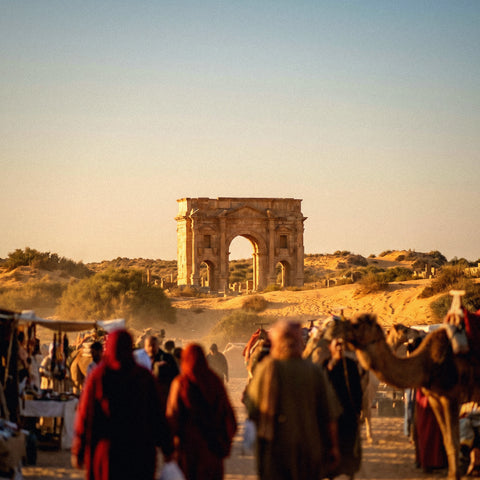
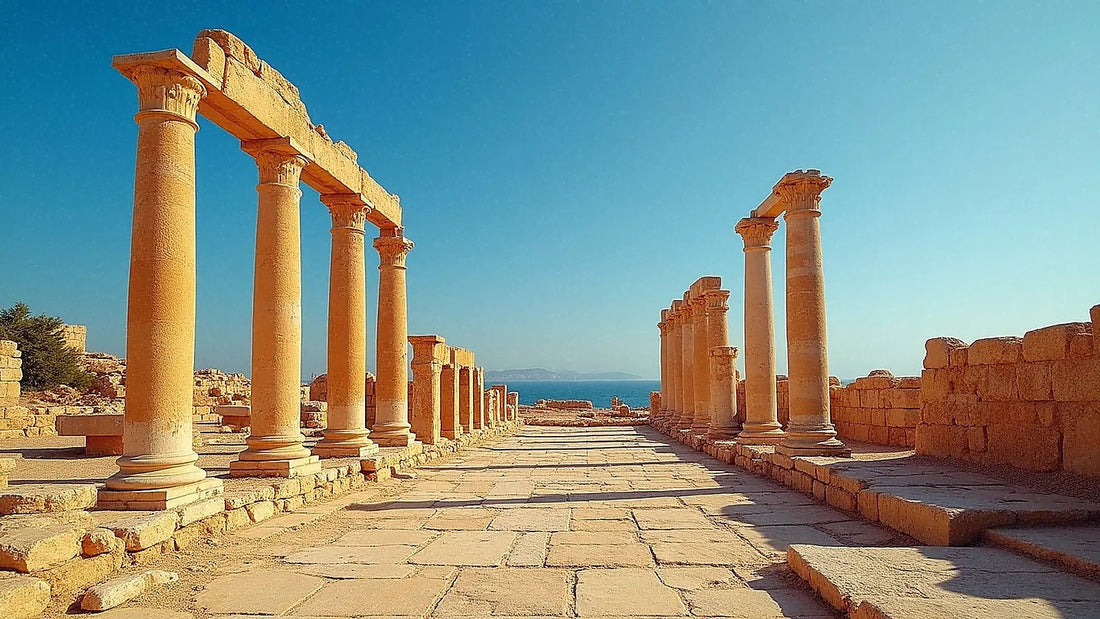
What there is, and the reason this niche exists, is top-tier Roman heritage with almost no visitors: Leptis Magna, Sabratha, Cyrene, plus the oasis of Ghadames. But access is through an agency, not by yourself. And connectivity, too.
How is the Libyan mobile network: operators and actual coverage
The Libyan mobile market is small and state-owned. There are two operators with their own networks, Libyana and Almadar Aljadid (Al-Madar), both under the state umbrella of LPTIC, the public telecommunications corporation. Libyana is the largest by market share, with just over half of the lines, and Almadar accounts for the bulk of the rest. There are no international private operators like Orange or Vodafone with their own networks, so there is no real competition to drive quality upwards.
The third name you'll see is Hatef Libya (or Hatif Libya), also an LPTIC subsidiary. Be careful, because it's constantly confused: Hatef is the operator for fixed telephony, ADSL, fiber, and fixed wireless access, and manages a large part of the country's fiber backbone. It is not a mobile operator where you would buy a prepaid card for your phone. Along with LTT (Libya Telecom & Technology), it provides internet to hotels, offices, and homes. The fact that almost all international traffic passes through LPTIC's centralized infrastructure is precisely what makes a national outage technically easy.
In terms of technology, both mobile networks have 2G, 3G, and 4G/LTE. Libyana has been expanding 4G+ and VoLTE to most cities and has conducted 5G trials, but don't count on commercial 5G as something you will use. Real speeds reported in cities are in the range of 5-15 Mbps download, sufficient for email, messaging, maps, and a video call with modest quality, but not for uploading heavy video without patience. If you don't know what this technology is exactly, here I explain what an eSIM is and how it relies on these same local networks.

West and East: a divided country reflected in its connection
This is where Libya differs from any other destination. The division between rival administrations is not just political: it translates into network decisions that users notice. Both sides have resorted to internet shutdowns justified as national security or public order, with very little transparency about who orders what and for how long. International reports on internet freedom have been documenting these episodes for years.
The cases are specific. In August 2022, a several-hour outage was registered in Tobruk, in the east, coinciding with a high-level visit. In September 2023, after the floods in Derna, internet and telephony were cut off in the midst of an emergency; the operator attributed the outage to damaged fiber cables and claimed to have restored it within the day, while other sources described an interruption of several days. And there have been national blackouts due to damage to the trunk fiber, with no further explanation than a technical note.
The practical takeaway is this: connectivity in Libya can disappear without warning and not always due to technical reasons. Quality also varies irregularly between regions: the western coastal strip (Tripoli, Zawiya, Misrata) and the eastern one (Benghazi, Al Bayda, Tobruk) are reasonably covered, but investment and maintenance have not kept pace everywhere, and the interior and south (Sabha, Ubari, Ghat) are clearly behind. If your work depends on being reachable, assume that you need a plan B, not a better plan.
Spanish roaming in Libya: outside the EU and outside your plan
First, the obvious and important: Libya is not part of the European Union or the European Economic Area. The "Roam Like at Home" that lets you use your Spanish data in Lisbon or Athens does not apply here. Not even a little. Your plan will go to the most expensive international zone in the catalog, the one almost no one reads.
And there's a second layer that's even more surprising: not all Spanish operators have roaming agreements with Libya, or they only have them with one of the two local operators. It might happen that you land and your phone doesn't connect directly, or it only connects for calls and SMS but not for data. Before flying, call your operator and ask three specific things: if there is data coverage in Libya, with which local network, and at what price per MB or per daily bundle. Ask for it in writing if you can.
When service is available, we're talking about rates of several euros per megabyte or expensive daily bundles for very little data. An afternoon checking maps and answering WhatsApp messages can lead to a three-figure bill. I detail this in the guide on how much international roaming costs, and the direct comparison with the alternative is in eSIM vs roaming.
My advice, and it's the most expensive mistake I see repeated in such destinations: leave home with data roaming disabled in your phone settings and only activate it when you know exactly what you are paying for.
| Option | Estimated Cost | Advantage | Disadvantage |
|---|---|---|---|
| Spanish Roaming | Very high; per MB or expensive daily bundles | You do nothing | Outside the EU; agreement may not exist |
| Hotel/Office Wi-Fi | Included | No direct cost | Slow, saturated, and no privacy |
| Local SIM | Very low (a few LYD) | Unbeatable price per GB | Passport, physical store, and cash |
| eSIM | Medium; paid in euros from home | Active upon landing, no paperwork | More expensive per GB than local SIM |
Hotel, base, and office Wi-Fi: useful, but don't trust it
Wi-Fi exists in Libya, and in hotels in Tripoli and Benghazi used by foreigners, it usually works. But it's good to adjust expectations. A large part of the country's fixed connection runs on copper ADSL with uneven fiber deployments, and dozens of guests share that line. The typical result is bandwidth that drops as soon as there is occupancy, with peaks of dead hours at night.
There's also an unspoken reality: power outages. Scheduled and unscheduled blackouts are still common in many areas, and when the power goes out, so does the router. Hotels and serious complexes have generators; small accommodations do not always. Wi-Fi that relies on a diesel generator is exactly as reliable as that generator's fuel tank.
And the security aspect, which weighs more in Libya than elsewhere: a shared and unfamiliar network is not a place for sensitive material. If you are a journalist, work for an NGO, or handle corporate documents, always use the corporate VPN, not the first free app you find, and don't send anything sensitive from the lobby Wi-Fi. This is the basic criterion that any information security manager would apply.
Regarding pocket routers or pocket Wi-Fi: in Libya, it's a marginal option, because there's no tourist rental market like in Japan or Thailand, and the device still needs a local SIM. If you were considering it, here's the comparison between eSIM and pocket Wi-Fi, but I'll state the outcome in advance: for this destination, it's not worth carrying extra hardware.
Local SIM: Libyana, Almadar Aljadid, and the passport process
The Libyan local SIM is ridiculously cheap, and that's its big selling point. The card costs around 5 LYD at both Libyana centers and Almadar Aljadid centers, where prepaid is sold under the Tawasul brand. Once the card is in, data bundles are in a different league compared to what we pay in Europe.
| Estimated Bundle | Price | Validity | Approximate Equivalent |
|---|---|---|---|
| SIM Card (Libyana or Tawasul) | 5 LYD | — | Less than €1 |
| 50 MB | 1 LYD | 7 days | Cents |
| 2 GB | 12 LYD | 15 days | Around €2 |
| 3 GB | 16 LYD | 15 days | Around €2.5 |
| 15 GB | 25 LYD | 30 days | Around €4 |
Prices are indicative and published by operators; they change frequently, and the euro equivalent depends on the exchange rate applied. Now for the fine print. Registration is mandatory and in-person: you have to go to an official center or an authorized distributor with your passport and a photocopy, fill out the form, and wait. A foreigner can have one line per operator, meaning a maximum of two Libyan numbers. There is no "tourist SIM" with a special package: you buy the same as locals.
The real obstacles are three: you have to find the store and get there, almost everything is paid in cash and in dinars, and the process is usually in Arabic. If you go with an agency or a local fixer, this can be resolved in an hour. If you go independently, it can take half a morning. Here I compare it cold: eSIM vs local SIM.

eSIM: connected from the moment you land at the airport
I'll be honest, because I prefer that to selling you smoke: an eSIM will be more expensive per gigabyte than a Libyan SIM. Period. What you're buying isn't price per GB, it's time, predictability, and not having to rely on anyone on day one.
The eSIM is installed before leaving Spain, with your home Wi-Fi and at your leisure. When the plane touches down at Mitiga or Benina, you turn on your phone and you already have data: no searching for a store, no photocopies, no cash, no explaining yourself in Arabic, and no relying on your driver having time to stop. In a country where the logistics of the first few hours are the most delicate, arriving already reachable is not a luxury, it's control. Being able to text "I've landed, all good" before leaving the terminal is worth much more than the three-euro difference.
Technically, the eSIM relies on the same Libyana or Almadar Aljadid networks, so the coverage is the same as you would have with a local card: neither better nor worse. What changes is the access. And there's an additional advantage for those traveling for work or for the press: you keep your Spanish number active in the other slot to receive bank verification SMS or corporate email, while data goes through the Libyan profile, without a surprise bill.
Requirements: a compatible mobile phone unlocked by the operator. If you need details on plans and coverage for this specific destination, you can find them in the guide on eSIM for Libya.
Coverage in Leptis Magna, Sabratha, Cyrene, Ghadames, and the desert
Here lies the heritage that justifies the journey for the specialized niche, and here also is the real coverage map. I'll tell you without embellishment, because promising a signal where there isn't one is the worst way to prepare for a trip.
Leptis Magna, about 130 km east of Tripoli near Al Khums, is probably the best-preserved Roman city in the Mediterranean and is practically devoid of visitors. Being on the coast and next to a city, you usually have reasonable 4G, although within the site the signal fluctuates. Sabratha, about 70 km west of Tripoli with its three-story Roman theater, is similar: coastal city coverage, with ups and downs.
Cyrene and the Apollonia complex, in Cyrenaica (east, near Shahat and Al Bayda), are in a populated and mountainous area: there is network, but the quality depends heavily on the exact location and which operator you are on. In the east, it is especially useful to have the ability to switch networks.
Ghadames, the oasis of the old mud-brick city near the triple border with Algeria and Tunisia, is another story: there is service in the urban core, but the approach route crosses hundreds of kilometers with nothing. And in the desert—Acacus, Ubari, the sand sea—there is simply no mobile coverage for hours on end. Serious expeditions go with a satellite phone and a communication protocol with base. If your agency doesn't carry one, change agencies.
Dinars, parallel market, and why your card won't work
The currency is the Libyan Dinar (LYD), and this section is important for your connection because everything you buy on the ground—SIM, top-ups, bundles—is paid in dinars and in cash.
Two serious warnings. First: Libya is a cash-based country. Foreign Visa and Mastercard cards do not reliably work at ATMs or in stores, the banking system is fragmented, and ATMs that accept international plastic are the exception, not the norm. Assume that you will have to enter with currency in banknotes (euros or dollars in good condition) and exchange it there. This, by the way, is another argument in favor of buying data from Spain and paying for it with a card before flying.
Second: there is a parallel currency market with a significant gap compared to the official exchange rate of the Central Bank, which has also applied devaluations in recent years. That is to say, the same €100 banknote can convert into very different amounts of dinars depending on where and how you exchange it. I am not giving you a fixed figure because any number I write today will be outdated in weeks; confirm it with your local contact before traveling. And keep in mind that operating in the parallel market has legal and compliance implications, something that a company or an NGO would care about.
Practical rule for Libya: arrive with data already paid for from Spain, with cash currency for daily expenses, and do not count on any digital payment as your primary plan.
How much data you need depending on why you're going
Travelers to Libya have very different consumption habits than European city tourists, so the standard table is not suitable. These are my estimates for realistic on-the-ground usage, assuming that much of the time you will be on office, base, or accommodation Wi-Fi.
| Profile | Typical Duration | Recommended Data | Primary Use |
|---|---|---|---|
| Short Business Trip | 3-5 days | 3-5 GB | Email, messaging, maps, some video calls |
| Energy Rotation | 2-4 weeks | 15-20 GB | Email, corporate VPN, calls home |
| Press / Reporting | 1-2 weeks | 20 GB or more | Photo and video uploads, live broadcasts, maps |
| Humanitarian Personnel | 1 month or more | 20-30 GB | Coordination, forms, reports, location tracking |
| Heritage Tour with Agency | 7-10 days | 5-10 GB | Maps, photos, messaging with family |
Three adjustments that save you data and trouble. One: download offline maps of the entire itinerary before you leave, including routes between cities, because there are hundreds of kilometers of road with nothing. Two: also download your documents, PDFs, and important contacts; anything that only lives in the cloud may not be there when you need it. Three: if you're traveling in a group, don't buy five identical lines: one with generous data shared via mobile hotspot usually covers the team on the go.
And one last operational recommendation: agree with your office or family on a daily contact window and a protocol for what to do if you don't show up. With network outages that can last for hours, silence alone means nothing, and having that agreed upon in advance prevents unnecessary alarms.
Frequently Asked Questions
The most common questions I get about connectivity in Libya, answered without sugarcoating the country's reality.
Can I travel to Libya as a tourist in 2026?
Formally yes with a visa, but the Ministry of Foreign Affairs advises against travel to Libya except for essential reasons, and specific areas are advised against. The visa is processed before traveling, usually through a Libyan agency with an invitation letter; there is no visa on arrival for independent Spanish travelers. Sometimes a translation of the passport into Arabic is required. Consult the updated official fact sheet before making any arrangements.
Does my Spanish tariff work in Libya with roaming?
Not for free: Libya is outside the EU, so "Roam Like at Home" does not apply. Furthermore, not all Spanish operators have roaming agreements with Libya, and some only with one of the two local networks. Call before you fly and ask about data coverage, local network, and price per MB or daily bundle.
Which operator has better coverage, Libyana or Almadar Aljadid?
Libyana has a slightly larger market share and 4G deployment, but both cover the coastal strip well. In practice, it depends on the area: there are points in the east where one works better than the other and vice versa. Long-term foreign residents usually carry both lines, which is exactly the maximum allowed per operator for a foreigner.
Can the internet go down across the entire country at once?
Yes, it has happened several times and is a real risk that needs to be planned for. International traffic is highly centralized in the LPTIC infrastructure, which makes a cutoff technically simple. There are documented incidents in Tobruk (2022) and during the Derna emergency (2023), as well as national outages attributed to damage to the backbone fiber.
What is Hatef Libya and is it useful for travelers?
Hatef Libya is the state-owned fixed-line, ADSL, fiber, and fixed wireless access operator, not a mobile option for travelers. It is the company behind hotel and office Wi-Fi and much of the national backbone, along with LTT. For your mobile, your real options are a prepaid SIM from Libyana or Almadar Aljadid, or an eSIM contracted before you travel.
Do I need to carry a satellite phone?
For the desert and long routes in the south, yes; for Tripoli or Benghazi, no. In Acacus, Ubari, or on trips to Ghadames, there are stretches of hours without any mobile coverage. Professional expeditions carry satellite communication and a protocol with their base. Keep in mind that introducing and using satellite communication equipment may require authorization: confirm this with your agency and organization.
Can I pay for the SIM with a card or do I need cash?
Cash and in Libyan Dinars: foreign cards do not work reliably in Libya. A SIM costs around 5 LYD and data bundles range from 1 to 25 LYD depending on the package. Contracting data from Spain with a card before flying avoids this hassle in your first few hours, which are usually the busiest of the trip.
What kind of speed can I actually expect?
Expect 4G speeds of between 5 and 15 Mbps download in cities, and worse outside of them. This is more than enough for email, messaging, maps, and modest video calls. It's not enough to comfortably upload heavy video or work in the cloud as if you were in Madrid. If you're a journalist and need to send material, plan your uploads and compress beforehand.
Conclusion
Libya is a work destination, not a holiday one, and its connectivity resembles its political situation: functional on the coast, uneven between west and east, and with outages that can occur without warning. First and foremost, review the travel advisories from your Ministry of Foreign Affairs and respect prohibited areas: that comes before any data considerations.
If you go, the summary is short. Spanish roaming is outside the European bubble and may not even exist; Wi-Fi is slow and not a place for sensitive material; a local Libyana or Almadar Aljadid SIM is very cheap but requires a passport, store, and cash; and an eSIM costs a bit more per gigabyte in exchange for landing already connected and traceable. In a country where the first few hours are the most delicate, I would pay that difference without hesitation. Download offline maps, carry cash, and agree on a daily contact window with your loved ones.
If you want to arrive in Tripoli or Benghazi with your data already sorted from Spain, check out the PuraSIM eSIM for Libya: you install it before leaving home and it activates as soon as your mobile connects to the local network.