Angola is not a destination to be improvised. If you've come this far looking for information on how internet in Angola works, it's most likely because you're traveling for work—oil, gas, construction, logistics—or you're one of the few who have heard that the country has opened its doors to tourism by eliminating visa requirements for almost one hundred nationalities. In both cases, the question is the same: do I get connected as soon as I land in Luanda or do I have to wrestle with the hotel's Wi-Fi? I'll tell you exactly how it is, with real prices, real coverage, and without selling you smoke.
Internet connectivity in Angola in 2026
To get connected in Angola, the easiest way is to activate an eSIM before leaving home: it works as soon as you land in Luanda, without queues or paperwork. If you're staying for weeks, a local Unitel SIM card is cheaper, but it requires a passport, in-person registration, and time. Spanish roaming, without a data plan, is extremely expensive.
Angola has invested heavily in fiber and mobile networks over the last decade, and it shows: Luanda has solid 4G and typical download speeds of 15 to 30 Mbps, sufficient for video calls, heavy email, and normal browsing. The SACS submarine cable, which connects Angola with Brazil, and the connection to West African coastal cables have significantly improved latency compared to a few years ago.
Now for the other side. This good picture is limited to the capital and provincial capitals. As soon as you move away from the asphalt—and in Angola, you move away quickly, because it's a huge country, almost twice the size of France—the network degrades to 3G, 2G, or simply disappears. This is not a rare exception: it's the normal pattern in the interior.
The market is shared by three operators: Unitel (by far the dominant one), Movicel (the veteran, cheaper with less coverage), and Africell Angola (the newcomer, aggressive in pricing and strong in Luanda). All three require document registration to sell a prepaid card, which is important to know before landing. If you want detailed information about the destination, I break it down in my eSIM guide for Angola.
The four options, compared
When you land at Luanda's Doutor António Agostinho Neto Airport, you have exactly four ways to get mobile data. There are no more. I'll put them in a table and then break them down one by one.
| Option | Estimated Cost | Pros | Cons |
|---|---|---|---|
| Roaming with your Spanish operator | €10-20 per day with an international plan; without a plan, per-MB rates that skyrocket the bill | Zero hassle: you arrive and it works | Angola falls into the most expensive zones for almost all operators |
| Hotel or office Wi-Fi | Included, or $5-15 USD per day in hotels with paid Wi-Fi | Free in many high-end accommodations | Irregular, saturated, and practically non-existent outside Luanda |
| Local SIM (Unitel, Movicel, Africell) | $5-15 USD for the card with credit, plus $5-25 USD for data package | The cheapest if you stay for weeks; Angolan number | Passport, in-person registration, 15-30 minutes of processing, and changing cards |
| Travel eSIM | Traveler plans for a few euros depending on GB and days | Activated before leaving; keeps your Spanish number; no paperwork | Requires a compatible and unlocked mobile phone |
My honest summary: if you're going for five days to a meeting in Talatona, the eSIM wins by a landslide. If you're setting up for three months on a project in Cabinda, you'll end up with a Unitel SIM, because no one beats local data volume. And if you're debating between paying your operator or managing your own line, I have a complete analysis on eSIM vs. roaming that saves you the calculations.

Spanish roaming: Angola is outside the EU
This is the first thing that needs to be made crystal clear, because it's surprise number one, and a costly one. Angola does not belong to the European Union or the European Economic Area, so the famous "Roam Like at Home" —that rule that lets you use your home data in Lisbon or Berlin without paying extra— does not apply here. Not even a little. Nor is there any special agreement due to language or historical ties with Portugal: in terms of tariffs, Angola is Sub-Saharan Africa, the most expensive zone in almost all Spanish operators' catalogs.
In practice, this means two scenarios. The first: you contract your company's international plan, which for this area usually costs around €10 to €20 per day with a limited amount of data—sometimes ridiculously small, like 200 MB or 500 MB daily. Ten days of travel and you've already spent over a hundred euros on connectivity. The second, worse scenario: you forget to activate it, and your phone starts consuming at base rate per megabyte. That's where triple-digit bills are born that are then difficult to explain to the company.
A very specific piece of advice: before boarding, log into your operator's customer area and check which tariff zone Angola is in and exactly how much a megabyte costs. If the number scares you, deactivate data roaming and find another solution. I've done the math on this in how much international roaming costs.
Hotel and office Wi-Fi: what to expect
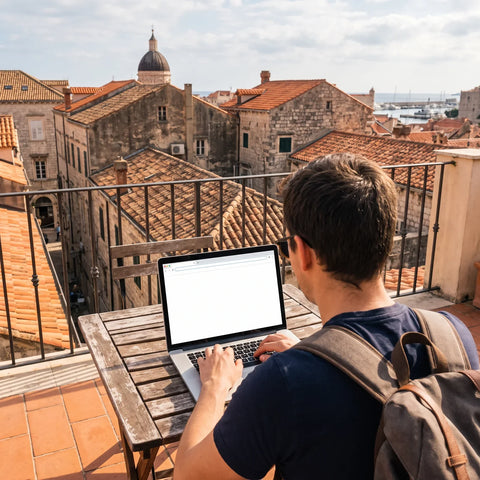
The theory says that all business hotels in Luanda have Wi-Fi. The practice says otherwise, and it's good to know before scheduling a video call with Madrid at nine in the morning.
In international hotels in the Talatona area and along the Marginal, Wi-Fi usually works reasonably well in the rooms but quite poorly in lounges and common areas, where it gets saturated as soon as an event is happening. In mid-range accommodations or guesthouses, the quality drops sharply: shared connections, frequent disconnections, and bandwidths that can't sustain a video conference with the camera on. Outside the capital—Benguela, Lubango, Malanje, Namibe—hotel Wi-Fi is a lottery, and in inland lodges, it simply doesn't exist or only works a couple of hours a day with a generator.
There's a second problem that's rarely talked about: security. If you're traveling for work and handling sensitive documents, an open hotel network is not the place to open corporate email without a VPN. Having your own mobile data is not just convenience; it's basic hygiene.
- Reserve important calls for your room, not the lobby.
- Ask if the hotel has a generator: power outages affect the router.
- Always have a mobile data backup plan, even if the hotel promises fiber.
And if you were thinking about a portable router, compare first: I analyze it in eSIM vs. pocket Wi-Fi, because in Angola, the rental of these devices is almost non-existent.
Local SIM: Unitel, Movicel, and Africell
Buying an Angolan SIM card is perfectly viable if you're staying for a while. You'll need your passport—owner registration is mandatory by law—and between 15 and 30 minutes at the store. They are sold at Luanda airport upon arrival, slightly more expensive, and at official city stores, where you get better service and help activating the data package.
| Operator | Coverage | Profile | Estimated Cost |
|---|---|---|---|
| Unitel | The best in the country: Luanda, all provincial capitals, and a good part of the main roads | The standard if you plan to move around the interior | SIM $5-15 USD with credit; data packages from $5 USD |
| Movicel | Good in cities, fades faster when leaving urban areas | Economical alternative for urban stays | Similar or slightly cheaper than Unitel |
| Africell Angola | Very focused on Luanda and large cities; rural deployment is still growing | The most aggressive in price per gigabyte | Data packages below the market average |
To give you an idea of the cost: a tourist package for 7 days with 5-10 GB costs around $10 USD—about 9,000 kwanzas, with the July 2026 exchange rate around 1,065 AOA per euro—and the usual range of packages goes from $5 to $25 USD depending on volume and days. Cheap, yes. But add the time spent in the store, currency exchange, recharging at a kiosk, and the fact that you'll be without your Spanish number for the duration of the trip. The full comparison is in eSIM vs. local SIM, and the numbers don't always add up as they seem.
eSIM: why it's what I use
An eSIM is a card already soldered inside the mobile phone that is activated by downloading a profile: you scan a QR code, accept, and you're done. No plastic, no tray, no clip. If you're not clear on the concept, I explain it step by step in what an eSIM is.
For Angola, it has three advantages that are convenient in other destinations and almost decisive here. The first: you activate it from home, with your Wi-Fi, without depending on whether the airport store is open when you land—many flights from Europe arrive in the early morning. The second: you don't have to register anything with your passport at a counter, a process that in Angola can take longer than expected. The third: you keep your Spanish line active to receive bank SMS, verification codes, and calls from the office, while data runs on the destination's line.
In Angola, connectivity is not a logistical detail: it's the difference between closing a meeting in Talatona and losing the morning searching for a network that can handle a video call.
The fine print? Your mobile must be compatible—almost all iPhones from the XS, Pixels from the 3, and high-end and mid-to-high-end Samsung, Xiaomi, or Motorola from recent years are compatible—and unlocked by the operator. And a travel eSIM provides data: if you need an Angolan number to receive local calls or use domestic services, that still requires a local card.

Coverage area by area: Luanda, provinces, and inland
Here's the part that no commercial website tells you with the bluntness it deserves, and which in Angola matters a lot because the distances are enormous.
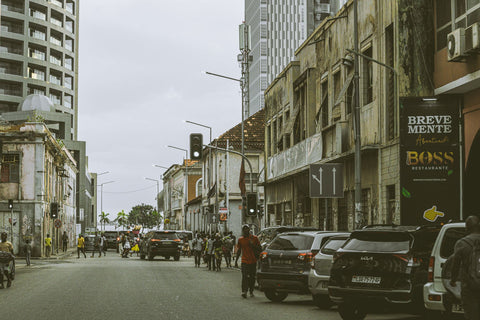
Luanda and surroundings. Very good coverage. Stable 4G in the center, on Ilha, along the Marginal, in Talatona, and in the airport area. Speeds of 15 to 30 Mbps are more than enough for work. During peak hours and in very dense neighborhoods, the network gets congested, and you'll notice slowdowns, but nothing dramatic.
Provincial capitals. Benguela, Lobito, Lubango, Huambo, Namibe, Cabinda, and Malanje have 4G in urban areas, with Unitel almost always being the most reliable option. It works well for maps, messaging, and email; for long video calls, it depends on the day.
Roads and interior. This is where the party ends. Between cities, the signal comes and goes, alternating 4G with 3G and nothing. In rural areas of Bié, Moxico, Cuando Cubango, or inland Huíla, you can go hours without data. In national parks—Iona, Quiçama, Cangandala—assume there's no coverage and plan accordingly.
- Download offline maps of Angola before leaving the city.
- Save reservations, tickets, and emergency contacts offline.
- Inform your team about periods when you'll be unreachable.
- Carry an external battery: searching for a signal devours your phone's battery at a brutal speed.
How much data you need based on your trip
The million-dollar question. Contracting too little is a constant hassle; contracting too much is throwing money away. These figures come from what a traveler who uses their phone wisely actually consumes: maps, messaging, email, some social media, and internet calls.
| Travel Profile | Duration | Recommended Data | What it Covers |
|---|---|---|---|
| Layover or quick trip to Luanda | 1-3 days | 1-3 GB | Maps, taxis, email, messaging |
| Standard business trip | 5-7 days | 5-10 GB | Above, plus short video calls and heavy documents |
| Long project stay | 2-4 weeks | 20 GB or more | Daily work, screen sharing, cloud backups |
| Tourist route inland | 10-14 days | 10-15 GB | Navigation, photos, social media uploads when there's signal |
| Family sharing connection | 7-10 days | 15-20 GB | Multiple devices via internet tethering |
Two important caveats. One: if you activate the hotspot for your laptop, multiply your estimate by two or three, because a computer syncing email and cloud consumes much more than a phone. Two: in the interior, you'll consume less than you think, simply because there won't be a network for much of the day; consumption is concentrated in cities. I prefer to err on the side of too little and top up as needed rather than paying for gigabytes I won't use.
Business trip in Luanda: what no one tells you
Luanda has a reputation, and it's well-deserved: for several years, it topped international rankings of the world's most expensive cities for expatriates, with accommodation and imported services at exorbitant prices. The sharp devaluation of the kwanza has gradually lowered it in those lists, but the cost of living for foreigners is still high, and that includes everything paid in foreign currency.
A few practical things you'll be glad to know before landing:
- Cash and Multicaixa. The local ATM and POS network is called Multicaixa and works with Angolan cards; international cards are accepted in hotels and large establishments, but don't assume you can pay with Visa everywhere.
- The kwanza (AOA). Carry some cash and exchange it at official institutions. With the July 2026 exchange rate around 1,065 kwanzas per euro, you can quickly estimate by dividing by a thousand.
- Traffic. Luanda's traffic jams are legendary. Having data in the car to reschedule meetings or notify of a delay is not a luxury.
- Language. Portuguese is spoken. English works in the oil sector and international hotels, but little else. A translator on your phone solves many situations.
And yes, there's good bureaucratic news: Angola has eliminated visa requirements for tourism for over a hundred nationalities, including Spanish and most European ones, for stays of up to 30 days per entry. This does not cover work or residency—those still require the corresponding visa—but it greatly simplifies a short trip.
Kalandula, Serra da Leba, Namibe, and the baobabs
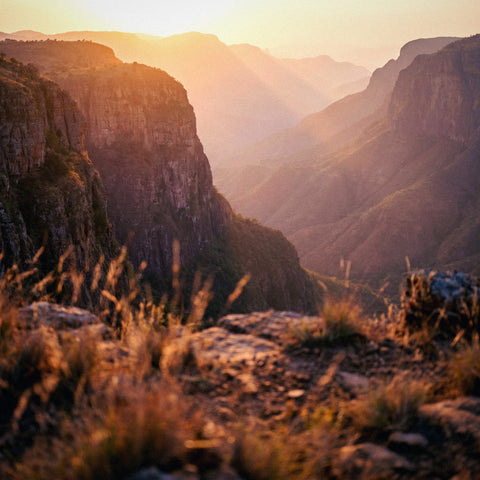
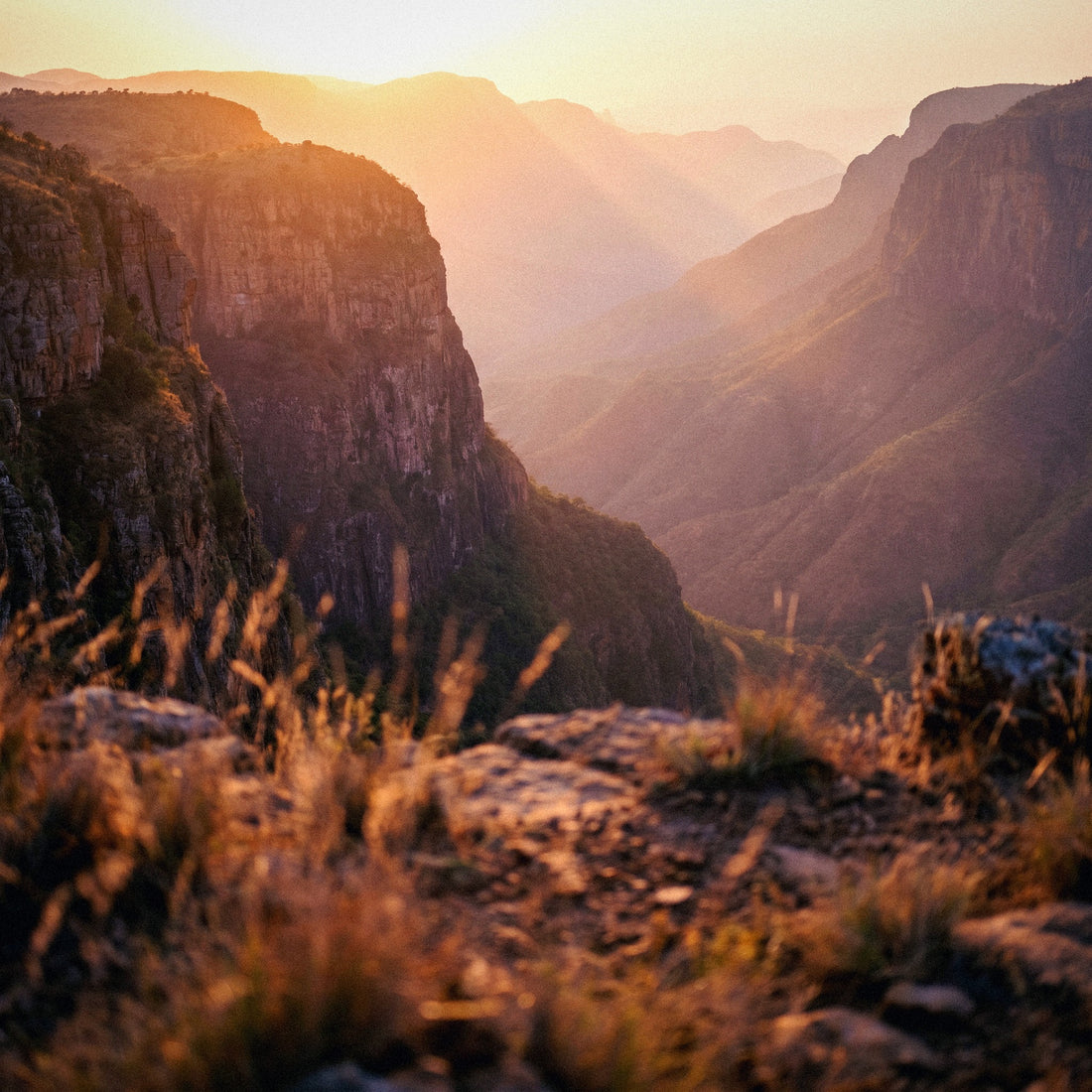
Angola has nascent tourism, with very little infrastructure and breathtaking landscapes precisely because there's hardly anyone there. If you're feeling adventurous, these are the big classics and what the connectivity is like in each.
Kalandula Falls (Malanje province). One of the largest waterfalls in Africa, spectacular during the rainy season. Malanje city has decent coverage; at the falls, the signal is weak and intermittent. Download the route before you leave.
Serra da Leba (Huíla). The winding road that descends from Lubango towards Namibe, probably the most photographed image in the country. At the viewpoint there may be some signal due to the altitude, but don't count on it for anything critical.
Namibe Desert and Iona National Park. Here, directly assume disconnection. This is expedition territory, with long tracks, no gas stations every few kilometers, and no mobile network for hours. Travel with a local guide, with two vehicles, and with logistics arranged in advance.
The baobabs and the south coast. Between Namibe and the border there are forests of baobabs and ancient welwitschias; only sporadic coverage.
- Share your itinerary with someone before each section without a network.
- Keep your embassy's contacts saved on your phone, not in the cloud.
- Take advantage of cities to upload photos and sync: that's where there's real bandwidth.
Frequently Asked Questions
Does my Spanish operator's roaming work in Angola?
Yes, it works, but it's expensive: Angola is outside the EU and "Roam Like at Home" does not apply. Your company classifies it in one of the most expensive zones, with daily bonuses usually ranging from €10 to €20 and very high per-megabyte rates if you don't contract anything. Check the tariff zone before traveling.
Do I need a passport to buy a SIM in Angola?
Yes, registration with an identity document is mandatory. You will need to present your passport at the operator's store or at the airport counter, and the process usually takes between 15 and 30 minutes. With a travel eSIM, you skip that step because you activate it before leaving home.
Which operator has the best coverage in Angola?
Unitel, without question. It is the dominant operator and the only one with a solid presence in all provincial capitals and a good part of the main roads. Movicel works well in cities but loses coverage outside, and Africell Angola is very competitively priced with a deployment still focused on Luanda.
Is there 5G in Angola?
There are 5G deployments, but they are very limited to specific areas of Luanda. Realistically for a traveler, you can expect 4G in the capital and provincial capitals, 3G on many road sections, and a total absence of signal in the deep interior and national parks. Do not plan anything critical outside of cities.
How much does mobile data cost in Angola?
A package of about 5-10 GB for 7 days costs around 10 USD, about 9,000 kwanzas. The usual range of packages goes from 5 to 25 USD depending on volume and validity, and the SIM card with initial credit costs between 5 and 15 USD. It's cheap in absolute terms, but you have to add the management time.
Is a visa still required to travel to Angola?
For tourism, not in most cases: Angola has eliminated the visa requirement for about a hundred nationalities, including Spanish and almost all of the EU. The permitted stay is up to 30 days per entry. For work, studies, press, or residency, the corresponding visa is still required; always confirm your case with the consulate.
Can I use my eSIM to share internet with my laptop?
Yes, on most mobile phones, the hotspot works normally. It is the most practical way to work from a hotel room when the Wi-Fi fails. However, contract more gigabytes than you calculated: a laptop syncing email and cloud consumes two or three times what a phone does.
What happens if I run out of data in the middle of my trip?
With an eSIM, you can top up from the app itself in minutes, as long as you have some connection or Wi-Fi handy. With a local SIM, you will have to buy a top-up at a kiosk or store and activate the package via USSD, something perfectly feasible in the city but impossible in the middle of Namibe.
Conclusion
Angola is a demanding and fascinating destination in equal measure: Luanda functions as an expensive and connected business capital, and as soon as you leave it, the country becomes vast, quiet, and without coverage. With that in mind, the decision is simple. Spanish roaming is expensive because the country is outside the EU. Hotel Wi-Fi is erratic and won't save you an important video call. A local Unitel SIM is the cheapest option if you're staying for weeks, but it requires a passport, queuing, and losing your Spanish number for the duration of the trip.
For the vast majority of trips—a week of meetings in Talatona, ten days touring Malanje and Huíla, a long layover—the best approach is to arrive with your data already sorted, keep your usual line active, and forget about it. Prepare offline maps, adjust coverage expectations outside of cities, and enjoy a country that very few people have seen.
If you want to get it ready before boarding, check out the PuraSIM eSIM for Angola and land with internet from the first minute.