In short: an eSIM for Angola gives you internet as soon as you land in Luanda, without relying on your Spanish operator's roaming, which can skyrocket in this country without warning. You install it before flying and activate the data upon arrival, keeping your usual number for WhatsApp. Coverage is solid in large cities and becomes spotty inland.
Traveling to Angola for work or to explore its Atlantic coast requires having your connection sorted, because your company's roaming in Africa is usually very expensive. An eSIM for Angola gives you internet as soon as you land in Luanda, without changing physical cards and without looking for a phone shop in a city you don't know. This guide covers real coverage, local operators, how many GB to get, how to activate it, and the most common mistakes made by first-time travelers to the country.
Is an eSIM for Angola worth it?
Yes, absolutely. Angola is not part of any cheap roaming zone for Spanish tariffs, so using your company while roaming will quickly increase your bill without you realizing it, especially if you check your email or open Maps several times a day. An eSIM gives you data at a fixed price, you keep your Spanish number for WhatsApp, and you connect as soon as you land, without ever touching your home operator's roaming.
Furthermore, buying a local SIM card at your destination is not always quick: in Angola, SIM card registration requires a passport and, in some stores, proof of accommodation, and not all counters at Luanda airport are open at all times. With an eSIM, you save yourself this hassle because you install it before leaving Spain and only activate it upon arrival. For business trips, where you need email and video calls from minute one, this peace of mind is invaluable.
The visa, the other formality you can't leave for the airport
A detail that is often overlooked: Spanish citizens need a visa to enter Angola, usually processed as an eVisa before the trip. It has nothing to do with the eSIM, but it's advisable to sort it out in advance because if you arrive without it, not even the best coverage in the world will do you much good at border control. Take advantage of organizing the digital part of your trip to review this administrative part as well.

Coverage and local operators in Angola
The main operators in Angola are Unitel, Movicel, and Africell, the latter being a more recent entry. Unitel has the widest coverage, with 4G in Luanda and provincial capitals. A travel eSIM connects to the best available network, so you don't have to manually select a company or worry about whether your profile is compatible with one or the other.
Coverage is solid in urban areas: Luanda, Benguela, Lobito, Huambo, and Lubango have good 4G signal. Inland and in rural areas, the network becomes more irregular and may drop to 3G or no coverage on road sections. If you're going to move inland, towards Kissama Park or Kalandula Falls, expect sections without signal for several kilometers and download maps before leaving the city; on that specific road, the signal disappears well before reaching the viewpoint and doesn't return until the last curves of access.
| Local operator | Coverage | Notes for travelers |
|---|---|---|
| Unitel | The widest in the country | Reliable 4G in Luanda and provincial capitals |
| Movicel | Good in urban areas | Solid alternative on the coast |
| Africell | Expanding | Growing coverage in major cities |
A detail that helps understand why it's worth sorting this out before flying: registering an Angolan physical SIM as a foreigner involves queuing at a store, a copy of your passport, and, with Unitel, sometimes a second visit if any documents are missing. Nothing serious, but if you land at night or have an early morning meeting, it's time you don't want to lose.
Country data worth knowing
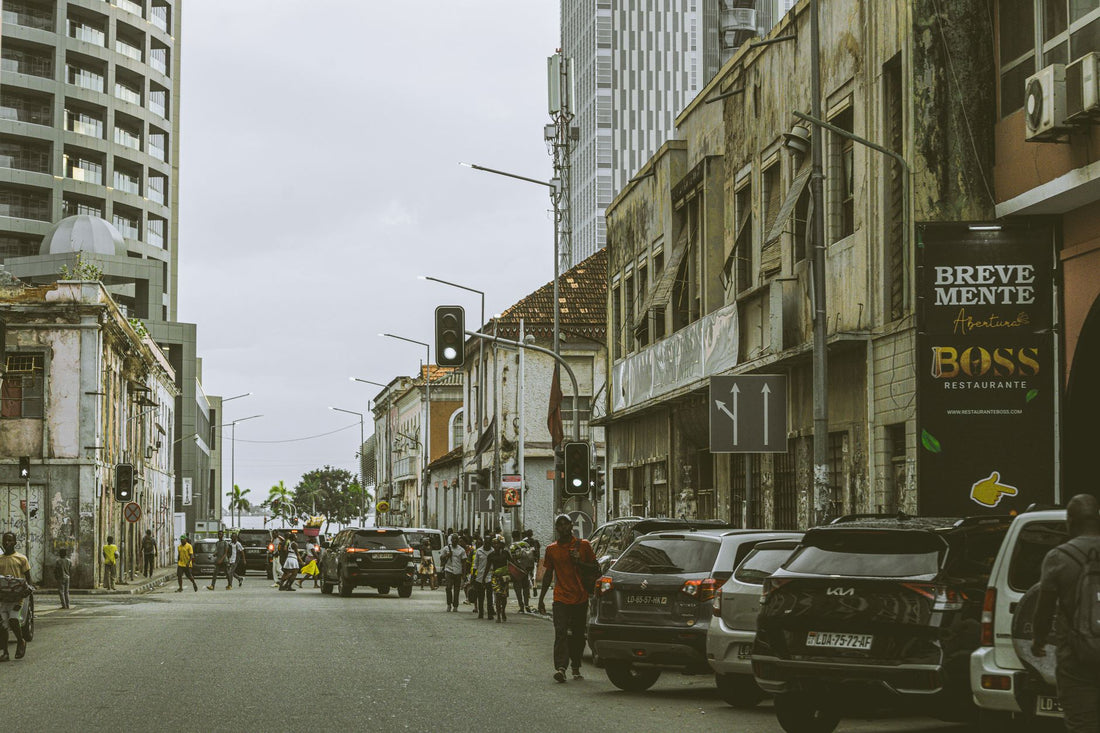
Angola is the second most populous Portuguese-speaking country in the world, with Portuguese as its official language. Its capital, Luanda, is one of the most expensive cities in Africa for foreign visitors and the country's main entry point, with the new Dr. António Agostinho Neto International Airport replacing the old 4 de Fevereiro. The currency is the kwanza, and having your phone connected helps you check the exchange rate and pay with apps where accepted, which is especially useful because cash in dollars is not always accepted outside of hotel circuits.
For travelers, having data is key for several practical reasons beyond social media. These are the uses where you'll appreciate it most during your stay.
- Translator: Portuguese makes things easier if you're from Spain, but an on-the-fly translator always helps outside tourist circuits, especially with local Creole mixed into daily conversation.
- Maps and transport: getting around Luanda is easier with real-time navigation; rush hour traffic on Avenida 4 de Fevereiro is the kind that makes you reluctant without data to reorganize your route.
- Email and work: if you're traveling for business, you stay in touch with the office from the first moment, which is relevant in a city with a lot of energy sector activity and meetings that change times without warning.
- Currency exchange: checking the value of the kwanza instantly avoids surprises when paying, as the currency moves somewhat rapidly.
Useful fact: in many Luanda hotels, Wi-Fi is paid or slow, especially during hours when several guests are connected simultaneously. Having your own data with an eSIM prevents you from relying on an overloaded network just when you need to send an important email or upload a heavy file.
Beyond Luanda: corners worth visiting
If your trip allows some free time, Ilha do Cabo, the peninsula that closes Luanda Bay, has seafood restaurants with sea views that make up for any day of meetings. And if you move south, the Namibe Desert and the old Benguela Railway line are some of those places that almost no one associates with Angola until they see them, and where coverage, precisely because of the remote environment, is one of the weakest in the country.

How many GB do you need in Angola?
It depends on your type of trip. For a short business trip with email, maps, and a few videos, 3 to 5 GB is more than enough if you use the hotel Wi-Fi at night. If you're going to make video calls or telework, calculate on the high side to avoid running short, because topping up on the fly in Angola isn't always instant, and you'd rather have plenty of margin than run out of data halfway through a call to Madrid.
This table gives you an idea based on how many days you'll be there and how you'll use your phone. Remember that local data in Angola isn't cheap, so adjusting your plan properly saves you money and, above all, time lost managing top-ups.
| Type of trip | Duration | Recommended data |
|---|---|---|
| Short business trip | 3-5 days | 3-5 GB |
| One-week stay | 7 days | 8-10 GB |
| Telework or long stay | 2-4 weeks | 15-20 GB or rechargeable |
If you're not sure how to calculate your actual consumption, the guide on how to save data on your travel eSIM has specific tips to extend your plan without running out of coverage on the last few days, which is when you really notice if you've calculated short.
How to activate your eSIM step by step
The advantage of an eSIM is that you prepare everything from home. The process takes less than 1 minute and you don't need to eject cards or go to a store upon landing in Luanda.
- Purchase the Angola eSIM and receive the code by email instantly.
- Install it before flying, with Wi-Fi, by scanning the QR or with a tap from the settings.
- Upon landing in Luanda, activate the eSIM data.
- Check that the local operator appears and you now have internet.
If it's your first eSIM, the guide on how to install an eSIM walks you through the process on iOS and Android, including checking that your device is compatible before purchasing. A note: install the profile at home but don't activate it until you arrive, to make the most of all the plan's days from the first actual minute of your stay and not from when you installed it on your sofa at home.
Tips for connecting without problems
Angola has its peculiarities and it's worth being prepared. With some basic adjustments, you'll have stable internet throughout your stay and avoid being cut off during a trip through the interior of the country.
- Download offline maps of Luanda and your destinations before leaving the city, especially if you're going inland where the signal disappears in sections.
- Activate data usage alerts to know how many GB you have left and top up in time, before they run out on a day of heavy use.
- Take advantage of hotel Wi-Fi for large updates and save your eSIM data for the street, meetings, and commutes.
- If you're combining Angola with another African destination on the same trip, check the coverage for your next stop: the guide on eSIM for Comoros serves as a reference for how coverage varies between countries on the continent, even on relatively short journeys.
- Keep your eSIM provider's support number in your suitcase in case you need assistance during your trip, not just before leaving home.
And if your business trip continues to Europe or the United States, you don't need to cancel anything or reconfigure your phone from scratch: you can pre-prepare the eSIM for Europe or the eSIM for the United States for the next leg of your itinerary.
Common myths and mistakes about eSIMs in Angola
There are a few circulating ideas about staying connected in Angola that are worth debunking before they complicate your trip.
"A local SIM is always cheaper." Not necessarily, and even less so if you consider time. Registration as a foreigner requires a passport and, in some stores, proof of accommodation, and the process can be lengthy if any documents are missing. For a short stay, the time saved and the certainty of being connected upon arrival often outweigh a few kwanzas difference.
"My Spanish operator's roaming covers Angola the same way it covers Europe." This is not the case. Angola is outside the Eurotariff and reduced roaming packages that apply within the European Union, so your company may charge per megabyte consumed or levy a daily extra fee that significantly impacts your next month's bill.
"I need Wi-Fi at the airport to activate the eSIM upon arrival." On the contrary: installation (the moment you scan the QR) does require Wi-Fi, but you do that at home before flying. Upon landing, you only activate mobile data from the settings, without needing any Wi-Fi network at that moment, which is useful because Luanda airport's Wi-Fi is not always stable.
"All African eSIMs work equally well in any country on the continent." Each country has its own agreements with local operators and its own actual coverage, so an eSIM designed for Angola does not automatically work just as well in another neighboring country. If your trip crosses borders, check the specific coverage for each leg instead of assuming that all of Africa works the same.
"Being in Luanda means I have coverage throughout the country." The capital has the best network in the country, but this does not automatically translate to the rest of the territory. If your agenda includes trips inland, expect sections without signal and don't leave everything to last-minute roaming.
Frequently Asked Questions
Does the eSIM work as soon as I land in Luanda?
Yes. If you install it before flying, you just need to activate the data upon arrival and your phone will connect to the Angolan network in seconds. You don't need airport Wi-Fi or to find a store. Prepare the plan at home and turn it on as soon as you arrive in Luanda.
How much does roaming in Angola cost with my Spanish tariff?
Angola is not in any cheap roaming zone for Spain, so roaming charges can easily skyrocket and vary greatly depending on the company and actual consumption. A travel eSIM gives you data at a fixed and much more predictable price, with no surprises on your bill when you return.
Is there good coverage outside Luanda?
In provincial capitals like Benguela, Lobito, or Huambo, 4G coverage is good. Inland and on roads to rural areas, such as the route to Kalandula Falls or Kissama Park, the signal becomes irregular and can drop to 3G or disappear in sections. Download offline maps before leaving the city.
Can I still use WhatsApp with my Spanish number?
Yes. The eSIM provides internet data while your Spanish number remains active for WhatsApp, calls, and verification SMS. You browse with the Angolan network and keep your usual messages, which is very practical if you travel for business and need to remain reachable on your usual number.
How many GB do I need for a week in Angola?
For a week with email, maps, and some video, 8 to 10 GB is more than enough if you use the hotel Wi-Fi at night. If you telework or make many video calls, go up to 15-20 GB or choose a rechargeable plan to be relaxed without worrying about the data counter.
Do I need a visa in addition to the eSIM to enter Angola?
Yes, these are completely different procedures. Spanish travelers need a visa for Angola, usually managed as an eVisa before flying. The eSIM solves the internet connection; the visa solves entry into the country, and it's advisable to process it with time because it cannot be resolved at the arrival counter.
What happens if my Angola eSIM runs out of data before the end of my trip?
It depends on the plan you've contracted: some allow topping up from the same app without touching the installed profile, and you only need to add more data when the consumption alert notifies you that it's running out. That's why it's advisable to activate this alert from the first day instead of waiting to run out of coverage in the middle of a task.
Conclusion
Angola is a destination where having your connection sorted makes a difference, especially due to the unpredictability of classic roaming. With an eSIM, you land in Luanda with internet, keep your number, and avoid local SIM procedures, and if your itinerary continues to another country, you can get everything ready in advance instead of improvising at the airport. Prepare your Angola eSIM before flying, also sort out your visa in advance, and don't worry about your connection from the first minute.