If you already know you're going to buy data and just need to decide on the size, this guide tells you how many GB you need for Angola based on your travel style. I won't bore you with "it depends": I'll give you a well-reasoned number for business in Luanda or a long road trip through the interior, and I'll show you how to adjust it to your actual consumption.
Why Angola changes the number of GB
For 10 days in Angola, most people will be fine with 5 GB: maps, WhatsApp, and some social media use little data, and in the interior, there are long stretches without coverage where you won't consume anything. If you're on business in Luanda with daily video calls, plan for 10-12 GB.
Angola is not a "normal" data destination, which is why the number changes. There are two very different types of travelers. The first goes on business to Luanda—oil, banking, construction—a city that for years was one of the most expensive in the world for expatriates, with hotels offering decent Wi-Fi and good 4G coverage on the street. This profile relies on video calls, heavy email, and some streaming at the hotel.
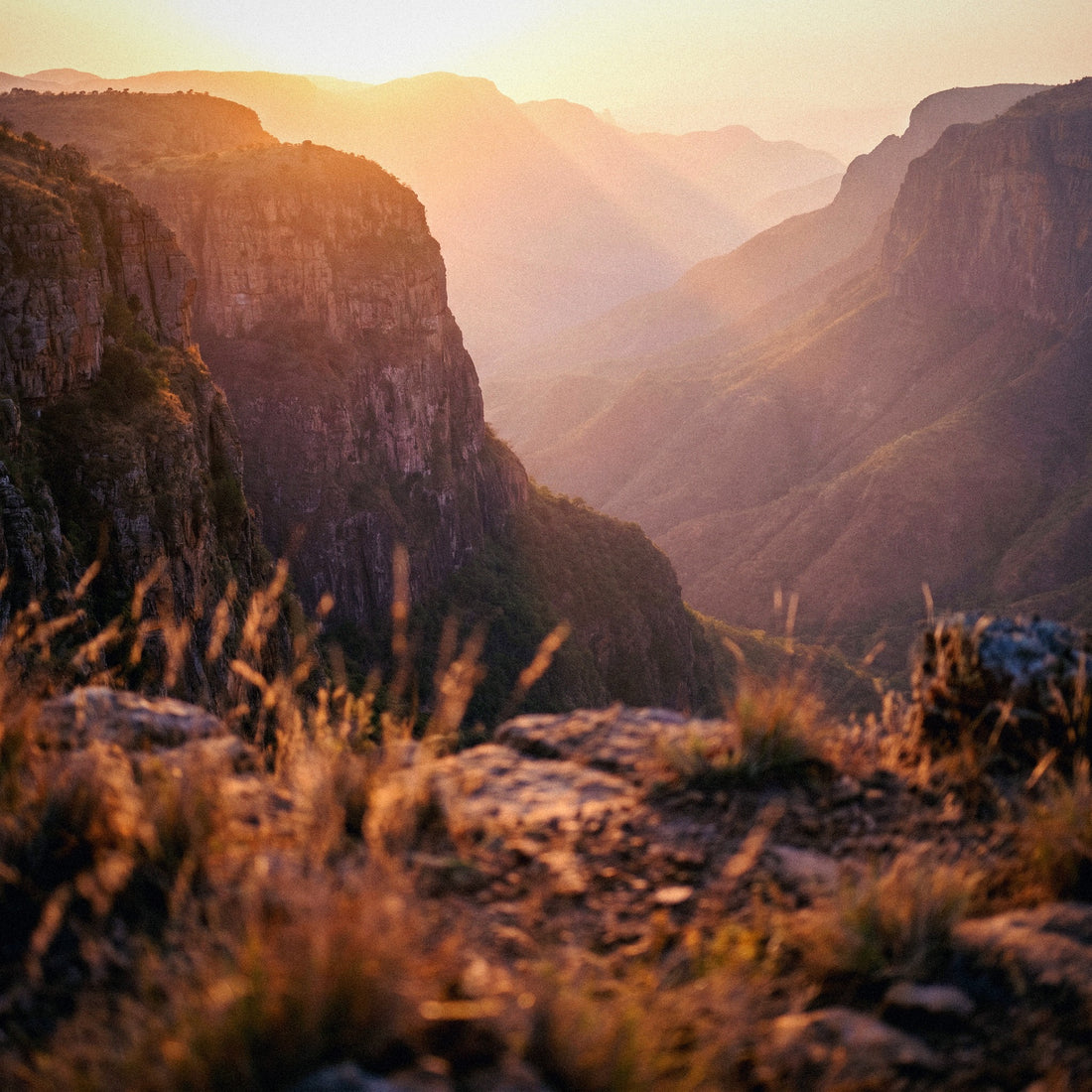
The second is tourism, still nascent but on the rise: Kalandula Falls, Serra da Leba, the Namibe desert and its baobabs. Here, there are many hours of driving through the interior with the signal coming and going, so you consume less than you think while driving, but you need to download maps before you leave. If you're still debating between roaming, a local SIM, and an eSIM, I explain it in the Angola internet guide; here we go straight to gigabytes. And if you want the general framework for the calculation, you have the how much data you need for travel hub.
How much apps actually consume
Before choosing a package, it's worth seeing what each thing consumes, because intuition can be deceiving: video drains gigabytes, not messages. A whole day of text WhatsApp doesn't even come close to what one minute of high-quality video consumes. These are real, rounded figures I use for calculation, and they align with what you'll see in the mobile data usage statistics by activity.
| Activity | Approximate consumption |
|---|---|
| Maps and GPS navigation | 3-5 MB per hour |
| WhatsApp (messages and photos) | 1-5 MB per day |
| WhatsApp voice call | ~30 MB per hour |
| Social media (Instagram, TikTok) | 200-350 MB per hour |
| Uploading photos to the cloud | 3-5 MB per photo (~400 MB per 100) |
| Video call (Zoom, WhatsApp, Teams) | 300-500 MB per hour |
| Music streaming (Spotify) | 50-100 MB per hour |
| Video (YouTube, Netflix) in SD | 0.5-0.7 GB per hour |
| Video in HD/Full HD | 1.5-3 GB per hour |
The quick takeaway: maps, messaging, and music barely make a dent; video calls and video are what drive your gigabyte bill. If you control those two, you control the total.
How many GB per profile and duration
This is the table you've come to see. It cross-references how you travel with how many days you'll be there, already adjusted for Angola: I'm factoring in that you'll lose signal intermittently in the interior (and won't consume data there) and that a hotel with Wi-Fi in Luanda will offload some of your video and backup data. These numbers include a small buffer, not an exact measurement.
| Profile | 5 days | 10 days | 15 days | 30 days |
|---|---|---|---|---|
| Tourist (maps and WhatsApp) | 1.5 GB | 3 GB | 4 GB | 8 GB |
| Photos and social media | 3 GB | 6 GB | 9 GB | 18 GB |
| Digital nomad / remote work | 6 GB | 12 GB | 18 GB | 35 GB |
| Family sharing (hotspot) | 8 GB | 15 GB | 22 GB | 45 GB |
An honest note: if you're in the remote work from Luanda profile and your hotel has good Wi-Fi, use it for long video calls and downloads, and reduce your mobile data purchase by one or two tiers. Save mobile data for when you're out and about, on the street or in transit, which is when you really need it.
Business in Luanda: video calls and hotel Wi-Fi
Business trips to Angola almost always involve Luanda, and 4G coverage in the city is good: an average of 15-30 Mbps with Unitel, enough for a stable video call, heavy email, and screen sharing. The problem isn't the signal; it's that video calls eat up gigabytes at 300-500 MB per hour: two hour-long meetings daily mean 0.6-1 GB just for that.
The good news is Wi-Fi. Business hotels in Luanda usually offer decent connections, as do office meeting rooms and co-working spaces. My practical recommendation: make long video calls and heavy downloads via Wi-Fi whenever you can, and reserve mobile data for city commutes, Quatro de Fevereiro airport, and visits to sites or plants where there's no reliable network.
If your work week includes two or three video calls a day but you're staying in a hotel with Wi-Fi, 8-10 GB for 7-10 days will be plenty. Without reliable Wi-Fi, increase to 12-15 GB.
Beware of an expensive habit: leaving your laptop backing up to the cloud or syncing Drive with your mobile hotspot. That can drain several gigabytes in an afternoon without you even noticing. Always do such tasks over Wi-Fi.
Interior route: coverage and offline maps
Here, Angola gets interesting and counterintuitive: the further away from Luanda, the less data you consume, because there's less coverage. On long roads towards Kalandula, Malanje, southern Namibe, or the parks, the signal comes and goes; in many stretches, there's no signal at all. It's not a consumption problem, it's a problem of having everything downloaded before you start.
| Area | Best operator | Typical technology | What it provides |
|---|---|---|---|
| Luanda (capital) | Unitel | 4G/LTE (15-30 Mbps) | Video calls, streaming, remote work |
| Provincial capitals (Lubango, Benguela, Lobito, Huambo, Malanje) | Unitel | 4G | Maps, social media, calls |
| Roads and rural areas | Unitel / Movicel | 3G / 2G or no signal | Intermittent messages; offline maps |
| Namibe, parks (Kissama, Iona) | Very intermittent | 2G or nothing | Download everything before entering |
Given this scenario, a two-week road trip through the interior consumes less than you fear: 4-6 GB is plenty if you have maps downloaded. Unitel is the operator with the best reach outside the capital, so if you buy a local SIM or choose your eSIM, make sure it relies on that network. The Angola eSIM saves you from having to find a physical store as soon as you land, which is appreciated when your first leg is already a road trip.
Portuguese, translator, and essential apps
Angola is a Portuguese-speaking country, and that changes a couple of things about your consumption. If you don't speak a smattering of Portuguese, a translator will be your companion: in text mode it consumes very little, but the real-time camera translator (pointing at a menu, a sign, a document) does use a bit more data. Download the Portuguese language pack for offline use and you won't have to worry about it: it works just as well and consumes no data.
The rest of your Angolan kit isn't particularly data-hungry. These are the apps you'll almost certainly use and what they entail:
- Offline maps (Google Maps or Maps.me): download them over Wi-Fi and navigation will cost you almost zero data.
- WhatsApp: it's the default communication channel in Angola, for work and for contacting hotels and guides. Text and voice consume very little.
- Translator: downloaded Portuguese pack; only the live camera consumes some data.
- Banking and email: minimal, except for large attachments.
Don't count on taxi apps like those in major capitals working everywhere: outside Luanda, you'll travel with pre-arranged transport or a driver, so don't inflate your data budget for that. If this is your first eSIM, here I explain what an eSIM is and how it works.
How to calculate your own consumption before traveling
The tables above are a good starting point, but the most reliable data you already have in your pocket: your consumption from the last month. No one knows better than your own phone how much data you actually use, so use it to fine-tune rather than guess.
On an iPhone, go to Settings > Mobile Data and look at the total for the period (remember to reset the statistics on the 1st of each month for a clean slate). On Android, it's Settings > Network & internet > Data usage. Look at your monthly consumption and use a rule of three for your travel days.
But with two important corrections for Angola:
- Subtract what you'll do over Wi-Fi. At home, much of your video and downloads go over Wi-Fi. In Luanda, with a decent hotel, the same applies, so your actual mobile consumption will be lower than on a normal day.
- Subtract hours without coverage. If you go to the interior, there are stretches where you won't consume anything whether you like it or not.
With that, if at home you use 8 GB of mobile data per month (outside of Wi-Fi), for 10 days that would be about 2.5-3 GB as a base; add margin if you're going to use video calls or share your phone with more people.
How to stretch your data without running out
If you want to buy just the right package and not overspend, there are tricks that make a difference in Angola, especially due to stretches without coverage where you can't top up on the go. The idea is simple: download everything you can with Wi-Fi and control video, which is the big data hog.
- Offline maps of your entire route before leaving Luanda: this is the first thing, not the last.
- Backups only over Wi-Fi: go into Google Photos, iCloud, and Drive settings and disable mobile data uploads. This is where most people get a shock.
- Lower video quality to 480p on YouTube and disable autoplay on Instagram, TikTok, and X.
- Activate your phone's Data Saver Mode and each app's (WhatsApp has its own for downloads).
- Download before flying: music, series, podcasts, and the translator's language pack.
You can find full details in the tips for saving data while traveling. With these habits, a 5 GB package performs like an 8 GB one for a normal tourist trip.
What happens if you run out
Let me be clear: it's better to run out and top up than to overbuy. Buying too much is throwing money away, because gigabytes you don't use aren't always saved, and you've paid for air. Buying just enough and extending if necessary is almost always cheaper and more flexible.
With an eSIM, running out is not a drama: topping up or buying another package is done from your phone in a couple of minutes, without looking for a store or struggling with Portuguese at a counter. The only thing you need to keep in mind in Angola is the detail we've already discussed: don't try to top up in the middle of an interior stretch with no coverage. Do it when you have a signal, in a provincial capital, or back in an urban area.
My rule: buy for your profile and days according to the table, deduct one tier if you'll have hotel Wi-Fi, and mentally keep the option to top up. You'll be stress-free without overpaying.
The other side: if you go overboard with the "just in case" package, you almost always end up going home with half of it unused. In a destination where you really use little data outside of video calls, inflating your purchase doesn't buy you peace of mind, it buys you dead balance.
Frequently asked questions
How many GB do I need for 7 business days in Luanda?
8-10 GB will be plenty if you're staying in a hotel with Wi-Fi. Use Wi-Fi for long video calls and downloads, and save mobile data for when you're out and about or traveling. Without reliable Wi-Fi, increase to 12-15 GB.
What about two weeks on a tourist route through the interior?
Between 4 and 6 GB is sufficient for tourists using maps and photos. You'll use less data than it seems due to losing coverage in many areas; the important thing is to have maps downloaded, not to buy more gigabytes.
Is a VPN needed in Angola, and does it consume extra data?
It's not mandatory for a normal trip. Angola does not block general tourist internet use, so don't expect extra consumption from a permanent VPN. If your company requires a corporate VPN, add a small margin because encrypting traffic uses a bit more data.
Can I share data with my laptop or another person?
Yes, almost all plans allow sharing via hotspot. This is normal for setting up a mobile office or for a couple to travel with a single connection. Just remember that sharing multiplies consumption: use the "family sharing" profile in the table.
Do I need a passport to get data in Angola?
For a local physical SIM, yes: they sell it with passport registration. With an eSIM, you skip that step, because you activate it yourself from your phone without going to a counter or handing over documentation upon arrival.
Is it true that it's now easier to travel to Angola?
Yes. Angola has simplified visas and opened visa-free entry to nearly a hundred countries (up to 30 days per stay) to boost tourism. This has encouraged leisure travel, although the destination is still nascent compared to the dominance of business travel.
Which operator offers the best coverage to choose wisely?
Unitel, by far. It dominates the market and has the best 4G in the country, especially outside Luanda. If you buy a SIM or choose your eSIM, make sure it relies on that network so you don't lose signal in the interior.
How many GB for a long month-long stay?
A tourist using maps and WhatsApp will manage with 8 GB; for remote working from Luanda, plan for 30-35 GB. For long stays, a large package or topping up in segments is usually better than buying small packages frequently.
Conclusion
To summarize directly. If you're on business in Luanda, aim for 8-12 GB per week and rely on hotel Wi-Fi for long video calls: that's where the gigabytes go. If you're on a road trip through the interior, 4-6 GB for two weeks will be more than enough, because stretches without coverage work in your favor; the only non-negotiable is to have maps downloaded. And for the casual tourist using maps and WhatsApp, 3 GB will last ten days easily.
Choose based on your profile and duration, deduct one tier if you'll have hotel Wi-Fi, and rest assured that topping up is easy if you run out. Once you've decided, set up your connection before taking off with PuraSIM's Angola eSIM and land in Luanda already connected, without looking for a store or handing over your passport at any counter.