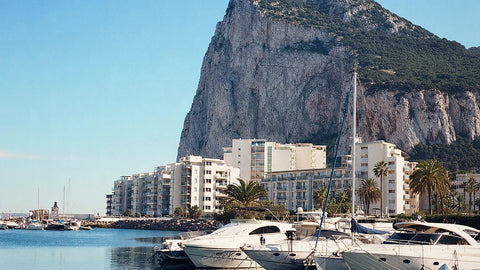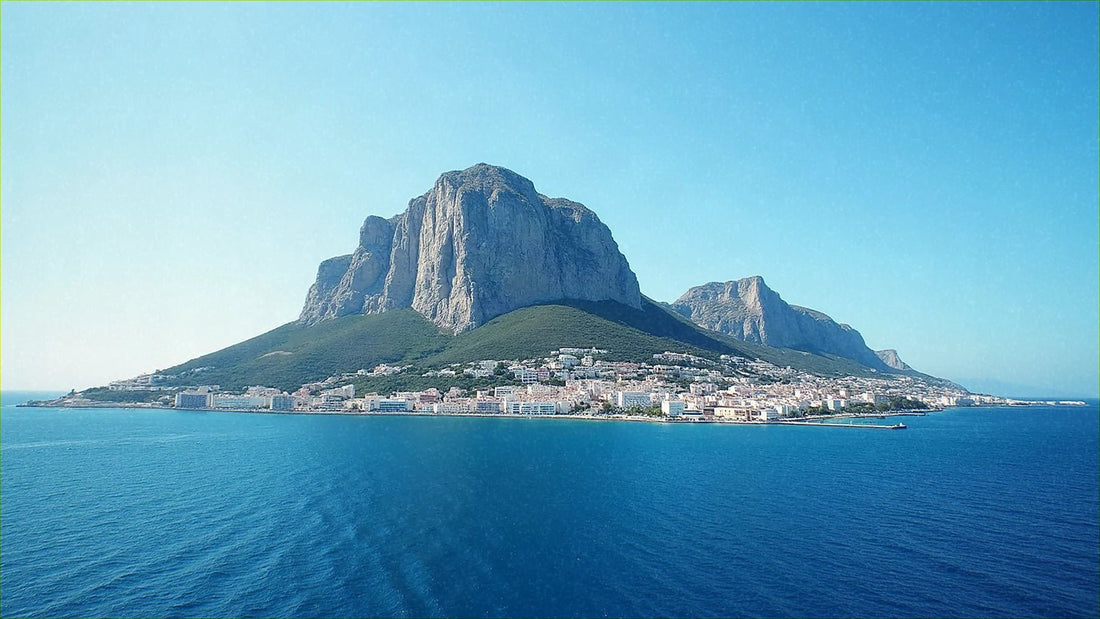
Crossing into Gibraltar for a day trip is one of the easiest plans from the Costa del Sol: you park, walk across the airport runway, and you're already on the Rock. What almost no one tells you is that getting internet in Gibraltar has a trick, because European roaming doesn't apply here. Gibraltar is British territory and, after Brexit, your mobile might connect to their network and charge you extra without you even having crossed. In this guide, I'll explain the risk and how to avoid it.
Gibraltar is British: European roaming doesn't reach the Rock
Gibraltar is British territory and, after Brexit, it was excluded from European Union roaming. No Spanish operator is obliged to give you data "as at home" there: each company decides whether to charge it as a European zone or as the United Kingdom. Check your tariff before crossing.
Here lies the fundamental misunderstanding. Many of us think of Gibraltar as "just another corner of the Costa del Sol," next to La Línea. But legally, it is a British overseas territory, and since the United Kingdom left the European Union on January 1, 2021, it has been outside the "Roam Like At Home" regulation, which allows you to use your gigabytes in Lisbon or Rome without paying extra.
What does this mean in practice? That there is no legal guarantee that your data will work "as at home" on the other side of the border. Coverage is provided by a British operator, and what you are charged depends entirely on the commercial decision of your Spanish company: some assimilate it to their European zone, others include it in the UK with a surcharge, and some treat it as "rest of the world," the most expensive rate. Don't trust what a friend told you last summer.
The network jump at the border fence: the shock you don't see coming
This is the most Spanish issue and the one that causes the most strange bills. The antenna of Gibtelecom, the operator of the Rock, broadcasts strongly and its signal overflows the border: it reaches La Línea de la Concepción and stretches of the Bay of Algeciras clearly, and even nearby points on the Costa del Sol. Technicians call this phenomenon "border bleeding."
The consequence? Your mobile can connect to the Gibraltarian network without having stepped foot on the Rock. You're having a drink in La Línea, your phone automatically chooses the strongest signal, jumps to Gibtelecom, and – if your operator treats Gibraltar as the UK – starts counting British roaming without you having done anything. It's enough for it to update your email or load a couple of maps in the background.
The same thing happens in the border queue, crossing the airport runway, or in your first minutes on Main Street. The jump is silent: no warning appears, just a tiny change in the network name, in the corner of the screen. That's why the problem is not "entering Gibraltar," but "approaching" it with your mobile on automatic.

Will I be overcharged? It depends on your Spanish operator
Time to roll up your sleeves. I've summarized how major companies usually treat Gibraltar, but with a huge caveat upfront: each company plays by its own rules, conditions change every few months, and everything depends on your specific tariff. The table helps you know what to ask, not to replace consulting your operator.
| Spanish operator | How Gibraltar is usually treated | What it means for you |
|---|---|---|
| Movistar | Assimilates it to its UK zone, with a fair use limit | You use data, but once the cap is reached, the extra cost per MB skyrockets |
| Vodafone | Has its own Gibraltar page; covered in some tariffs and promotions | Some surcharge-free promos were valid until June 30, 2026; check if still active |
| Orange | Outside the European zone | Surcharge unless you purchase a separate bundle |
| Yoigo / MásMóvil | May fall under "Rest of the World" | The most expensive case: high per-minute and per-MB rates |
| DIGI | Depends on the tariff; sometimes assimilates it to the EU | Confirm in writing before crossing |
Outside the European zone, data can cost several euros per megabyte, so an afternoon of stories can turn into a three-figure bill. Also, be careful with fair use limits: even if your tariff includes Gibraltar, there's almost always a gigabyte cap. I detail this in how much international roaming costs.
The trick of manually setting the Spanish network
The good news is that preventing the jump is within your control and takes two minutes. You have three levels of defense, from simplest to most refined:
- Deactivate roaming data for your Spanish line. This is the switch that prevents 90% of scares: without data roaming, your mobile won't use data even if it switches networks.
- Turn off automatic network selection. In the settings, go to operator selection, disable automatic mode, and manually choose a Spanish network (Movistar, Vodafone, or Orange). This way, your phone won't switch to Gibtelecom even if its signal is stronger.
- Activate airplane mode in the border area if you don't need your mobile. Radical, but foolproof.
With the network manually set, you regain control of your mobile: within Gibraltar itself, a good part of the Rock still picks up Spanish antennas from the bay, so often you'll remain connected to your usual network with European roaming. It's not a guarantee – there are areas where only Gibtelecom is available – but it helps a lot.
My rule before crossing the border: data roaming off and Spanish network manually set. If at any point I truly need internet on the Rock, I'll turn it on deliberately, knowing what it might cost, and not by accident.
Wi-Fi in Gibraltar: useful, but with gaps
Gibraltar is small and touristy, so connecting to a free network is easy in some places: most hotels include it, many cafes and restaurants on Main Street offer it, and there's Wi-Fi in some shopping centers and specific attractions. For a day trip, the temptation to rely solely on Wi-Fi is real.
The problem is that this strategy breaks down exactly when you need it most. Think of the critical moments of an excursion: you want to open the map to climb the Rock, confirm the cable car time, find somewhere to eat, or call your family from the nature reserve, up high, surrounded by monkeys and without a cafe nearby. None of those moments happen sitting in front of a hotel Wi-Fi password.
Add two constant drawbacks. Security: on open networks, don't access your bank without a VPN. And friction: many portals require registration with an email and sometimes a verification SMS that you won't receive if you don't have service. Wi-Fi is a good complement for the hotel, but a poor primary plan for getting around. I compare it in depth in eSIM vs pocket Wi-Fi.
The local SIM: Gibtelecom and coverage on the Rock
The classic option: buy a local prepaid card. In Gibraltar, the main operator is Gibtelecom (Gibtel brand), which has the best coverage around the rock, including the tunnels and the upper part of the reserve. They sell prepaid data and voice with a Gibraltarian number at their Main Street locations.
The advantages are those of any local SIM: native coverage without relying on roaming agreements and prices designed for the local market. If you're going to spend seasons in the Campo de Gibraltar for work, crossing daily, having a Gibraltarian line can make perfect sense.
But for a Spanish tourist who will only be there for a few hours, the drawbacks are significant. You lose your Spanish number while the SIM is inserted, unless you have a dual-SIM phone. You waste precious visiting time searching for a store and activating the line, when you crossed precisely to see the Rock, not to queue in a phone shop. And above all: for a single day, you end up paying for a British number you won't use beyond that afternoon. For short stays, it almost never pays off; I detail this in eSIM vs local SIM.

The eSIM: for a day on the Rock without surprises
An eSIM is a digital card already integrated into your mobile: no plastic or tray. You buy a data plan online, you receive a QR, you install it and activate the data whenever you want. If you've never used one, I explain it from scratch in what an eSIM is.
For a day in Gibraltar, it is, for me, the cleanest solution, for very specific reasons:
- You get it ready from home. You install it with your Wi-Fi in Spain and turn it on when you cross. Zero time wasted on Main Street.
- You keep your Spanish number. The eSIM carries the data; your physical SIM still receives calls and bank SMS.
- Fixed price. You pay in advance for the gigabytes you choose. No surprise bill or network jump to worry about.
- Eliminates the border fence problem. With Spanish data roaming turned off and the eSIM as your data line, it doesn't matter which network you connect to.
The honest downside is: you set it up from your couch, but you need a compatible mobile and you don't get a Gibraltarian number for traditional calls (with WhatsApp, this rarely matters). Specific plans for the destination are in the eSIM guide for Gibraltar.
Comparison: roaming, Wi-Fi, local SIM, and eSIM
Putting everything on the table, this is the picture for a Spanish tourist crossing for the day from La Línea or the Costa del Sol.
| Option | Cost for one day | Risk of surprise | Effort | Ideal for… |
|---|---|---|---|---|
| Your operator's roaming | From €0 to tens of € depending on company | High: depends on the zone and network jump | None, if it's included | Those with Gibraltar confirmed without surcharge |
| Free Wi-Fi only | €0 | Medium: you're left without a map outside the hotel | High: constantly searching for a network | Very short visits and not climbing the Rock |
| Local SIM (Gibtelecom) | Local price, but for only one day | Low | High: store, activation, changing SIM | Long stays or cross-border work |
| Travel eSIM | Fixed price depending on gigabytes | None: you pay in advance | Minimal: installed from home | Most day tourists |
What truly matters is the risk, not the absolute price: for a single day, the differences in euros are minimal. Roaming can be free or cost you a dinner for four without warning; Wi-Fi can leave you stranded on the mountain; a local SIM takes up your time; and an eSIM gives you a known price and zero hassle at the border. The head-to-head comparison is in eSIM vs roaming.
What to see in a day and how much data you'll use
Gibraltar fits into a single day, and the map says it all: almost everything worth seeing is in the Upper Rock Nature Reserve, at the top of the Rock. You go up by cable car or on a van tour, and at the top, you'll find the famous Barbary macaques —the only wild primates in Europe; look at them, but don't touch or feed them—, views of the Strait with Africa opposite, and St. Michael's Cave, a stalactite grotto now used as an auditorium.
The day is completed with the Great Siege Tunnels, excavated during the siege of 1779-1783, the Moorish Castle, Europa Point, and a stroll along Main Street. It's the perfect excursion plan: from Estepona or Marbella, you're an hour away by car, and from La Línea, you cross on foot.
How much data will you use? Less than you think, because you'll walk a lot and upload many photos later. To estimate, don't be swayed by video, which is the only thing that significantly increases data usage:
| Daily usage | What you do | Approx. data |
|---|---|---|
| Basic | Maps to go up the Rock, WhatsApp, some searches | 100-300 MB |
| Standard | The above + social media and photos occasionally | 0.5-1 GB |
| Intensive | Stories and live videos throughout the day | 2-3 GB |
The treaty that removes the border fence doesn't remove roaming
You might have read in the news: the European Union and the United Kingdom signed the agreement on Gibraltar which is provisionally applied from July 15, 2026 and which makes the border fence disappear, eliminates passport controls, and moves Schengen controls to the port and airport. It is a historic change for the Campo de Gibraltar.
But it's important to be honest so you don't get disappointed: this treaty is about borders, customs, and taxation, not telephony. That is, mobile rules do not change: Gibraltar remains British territory outside EU roaming, and your operator can still charge you for it as the UK. Crossing will be more convenient, but the network jump is still there.
So the routine before going remains the same:
- Check your tariff and literally look for "Gibraltar" or "United Kingdom" in the roaming conditions.
- Turn off data roaming for your Spanish line before approaching the border.
- Manually set a Spanish network so your mobile doesn't jump to Gibtelecom.
- Install the eSIM from home if you're going to spend hours connected on the Rock.
- Download the offline map of Gibraltar in case you lose signal at the top.
Frequently asked questions
Will I be charged roaming if I cross into Gibraltar for the day?
Possibly, depending on your operator. Gibraltar is outside EU roaming: some companies assimilate it to their European zone and others bill it as the UK. Without written confirmation, assume there will be a surcharge.
Can my mobile connect to the Gibraltar network without crossing the border?
Yes. Gibtelecom's signal extends into La Línea and the bay, so with automatic network selection, your mobile can connect to the Gibraltarian network from the Spanish side and incur British roaming charges.
How do I avoid the network jump at the border?
With two settings. Disable data roaming and turn off automatic network selection to manually choose a Spanish network. And if you don't need your mobile, airplane mode at the border is foolproof.
Does Gibraltar fall under the EU roaming tariff?
Not with guaranteed. As it is British territory outside the EU, the "Roam Like At Home" regulation does not apply. Some Spanish operators include it in their European zone by their own decision, but this is not the norm: check your contract.
Do Spanish antennas work inside Gibraltar?
In much of the Rock, yes. Due to its proximity, the Movistar, Vodafone, or Orange signal reaches many areas. If you manually select a Spanish network, you will often still have European roaming, except in areas where only Gibtelecom is available.
Does the new Gibraltar treaty eliminate roaming?
No. The EU-UK agreement, which will apply from July 2026, removes the border and controls, but regulates borders, customs, and taxation, not telephony. Gibraltar remains outside European roaming.
How much data do I need for a day on the Rock?
1 GB is more than enough. A day of maps, WhatsApp, photos, and some social media uses around 300 MB-1 GB. Only by continuously recording videos and stories will you get close to 2-3 GB.
Conclusion
To summarize what's important: Gibraltar is British and, despite being next to the Costa del Sol, it was excluded from European roaming with Brexit. The catch is not entering the Rock, but that the Gibtelecom signal crosses the border and your mobile can jump to it without warning, billing you as if you were in the UK. With roaming data turned off and a Spanish network manually selected, the worry disappears.
If you're going to spend the day seeing the monkeys, climbing the Rock, and exploring the tunnels, sort it out before you cross: install your eSIM for Gibraltar, activate it upon arrival, and dedicate the day to what you came to see. See you on the rock.