If you're wondering how many GB you need for Gibraltar, I'll tell you right away: probably less than you think. Most of us crossing the border are Spaniards coming up from La Línea or down from the Costa del Sol for the day: six or eight hours, the cable car, the monkeys, a stroll down Main Street, and back home for dinner. For that, you don't need a big data package. What you do need is to understand something that many people discover when the bill arrives: since Brexit, the Rock is no longer covered by European roaming, and your phone latches onto the Gibraltarian network on its own, sometimes before you've even crossed. Let's get to the numbers.
How many GB you need for Gibraltar: the short answer
For a day trip to Gibraltar, almost everyone has more than enough with 1 GB. For a full weekend, 2 or 3 GB will see you through comfortably. Only if you're planning to work from there for several days do you need to think about 5-10 GB. The problem in Gibraltar is never running out: it's overpaying without realizing it.
Let me explain. Gibraltar is just under seven square kilometers. It's a destination you explore on foot, with the cable car and your own legs. There are no long train rides where you'd binge-watch shows, you don't need a camera translator because Spanish and English are spoken in equal measure, and the apps you'll actually use (maps, WhatsApp, the camera) are the ones that consume the least on your phone.
The real data usage of a day on the Rock comes down to three things: checking the map so you don't get lost heading up to the Upper Rock, sending the forty photos you'll take of the macaques via WhatsApp, and a bit of social media while you queue at the border. All of that together rarely exceeds 500-700 MB. If you're the type to post stories every half hour, double it.
In other words: here, the size of the package matters far less than having it activated before you cross. If you want the full context on how to calculate data for any trip, check out the master guide on how much data you need when traveling.
Why Brexit changed the number
Gibraltar is a British Overseas Territory. Until 2020 it didn't matter: it fell under the European "Roam Like at Home" regulation, and your Spanish plan worked there just like in Málaga. With the UK's exit from the European Union, that guarantee disappeared. Today there's no rule forcing your carrier to treat you the same in Gibraltar as in Spain.
What you have now is a patchwork. Some postpaid plans from the big carriers still include the UK and Gibraltar at no extra cost, thanks to their own commercial agreements. Others have removed it from the package and charge it as an international zone. And a good number of virtual operators — the ones that usually have the best prices in Spain — classify it directly as Zone 2, charging per megabyte or through paid data add-ons.
The practical consequence is uncomfortable: two people in the same group, with the same phone, crossing the same border at the same time, can end up with one paying nothing and the other with a charge on next month's bill. And you won't know until it arrives.
One thing that confuses a lot of people: the political agreements about the border and the movement of people have nothing to do with this. Your connection doesn't depend on whether there's a border check or not; it depends on the contract you signed with your company. That's why the number one piece of advice in this article is boring but profitable: check the terms of your plan before you go. If Gibraltar is included at no extra cost, don't buy anything. If it isn't, one gigabyte is cheaper than a scare.
The La Línea Trap: Your Phone Connects by Itself
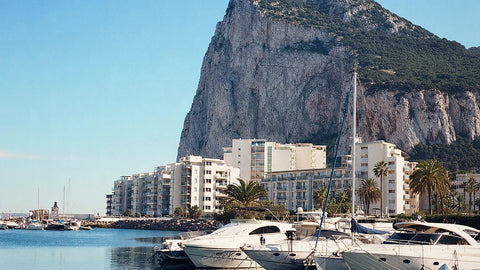
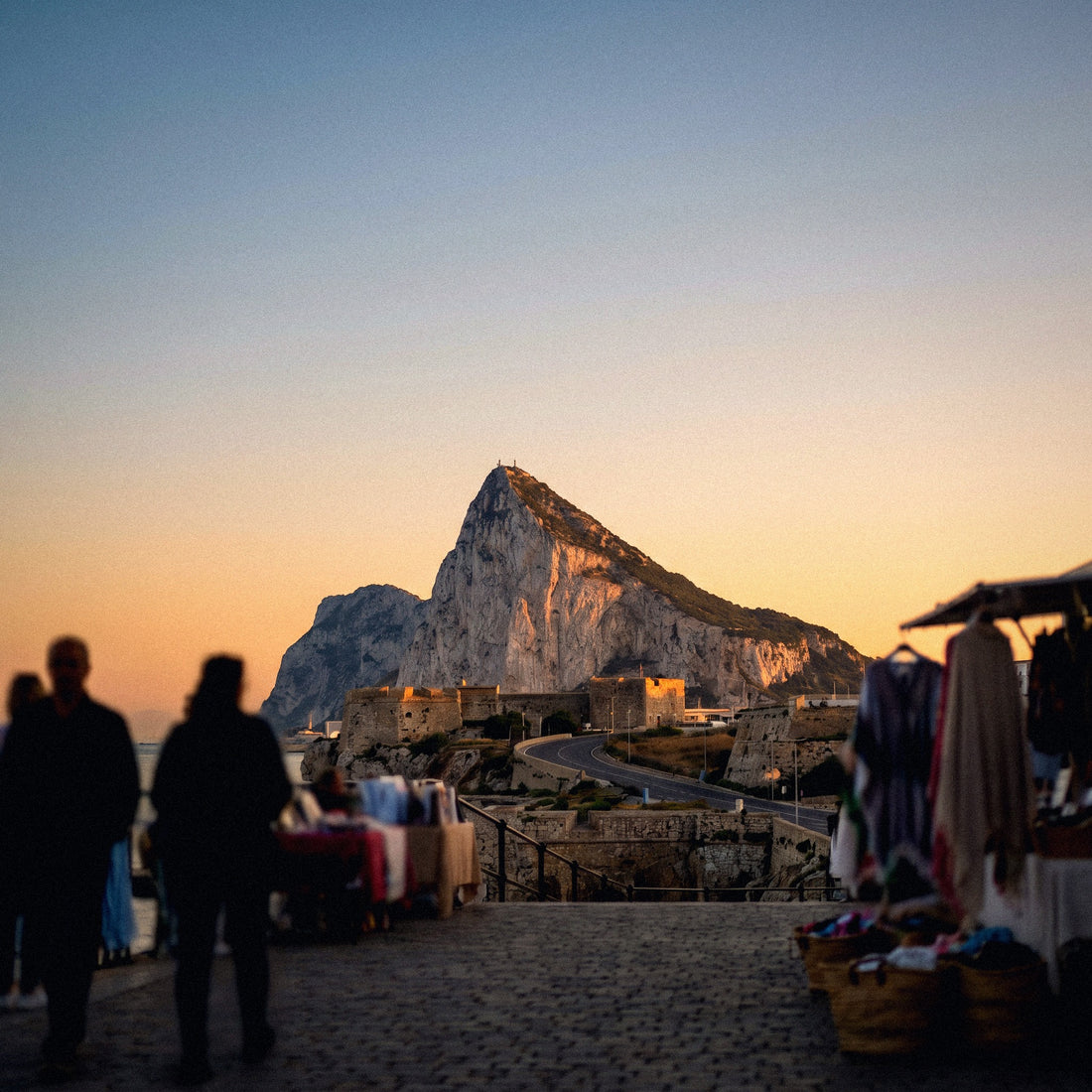
This is the quirk that makes Gibraltar unique and that you won't find in any other European destination. The Rock is a 426-meter mass with antennas on top, and the signal spills over the bay. In La Línea de la Concepción, on parts of the seafront, in the parking lot where you leave your car before crossing on foot, and even in some spots in Algeciras with a line of sight, your phone can jump onto the Gibraltar network without you having set foot outside Spain.
Your phone doesn't understand borders: it grabs onto the antenna giving it the best signal at that moment. And if that antenna is in Gibraltar and your plan charges extra for that network, the meter starts running while you're sipping a coffee on Spanish soil.
The expensive mistake in Gibraltar isn't running out of data. It's going home with 300 MB used on a network your plan bills as international, without ever having crossed the border.
The fix is simple and takes two minutes of settings:
- Turn off data roaming on your local line before you get near the area.
- Go into your mobile network settings and disable automatic network selection: manually choose your local carrier while you're still in La Línea.
- If you have a separate data line, activate it and set it as your default data line before you leave home, not while you're in the queue.
- When you come back, check that your main line has re-enabled data if you want it.
With that, the only network you'll use is the one you chose. I cover all the connection options in detail in the internet in Gibraltar guide.
How Much Data Each App Actually Uses on the Rock
Here are the numbers you need to do your math. These are real average consumption figures, not theory: they vary depending on video quality, your photo resolution, and how good the network is, but they're perfect for sizing a plan.
| Activity | Approximate usage | In a day in Gibraltar |
|---|---|---|
| Google Maps, normal navigation | 5-10 MB per hour | 30-60 MB for the whole day |
| Google Maps with satellite view | 120-150 MB per hour | Avoid it: it adds nothing here |
| WhatsApp, text only | 1-2 MB per hour | Less than 20 MB |
| Sending a photo on WhatsApp | 2-5 MB each | 100-150 MB if you send 30 |
| Sending a short video | 30-60 MB each | 200 MB if you get carried away with the monkeys |
| Uploading a story to Instagram | 5-10 MB each | 100 MB on an active day |
| Scrolling social media (Instagram, TikTok) | 600-720 MB per hour | The biggest drain of the day, by far |
| Video call on WhatsApp | 300-480 MB per hour | 150 MB if you show the Rock for 20 minutes |
| Music streaming | 70-150 MB per hour | 150-300 MB on your journeys |
| Video on YouTube | 500 MB - 1 GB per hour | Save it for the hotel Wi-Fi |
| Browsing websites, checking schedules | 50-60 MB per hour | 80-100 MB |
| Email and text messaging | Less than 5 MB per hour | Negligible |
Notice the pattern: what a tourist does in Gibraltar costs megabytes; what a couch potato does costs gigabytes. If you add up maps, messaging, photos, and some social media, a full day comes to 400-700 MB. You can find the full breakdown in the mobile data usage statistics by activity.
Day Trip, Weekend, or Business Trip
Gibraltar has a very different visit pattern from a normal destination, so this table uses real Rock durations, not two-week vacation ones. If you're coming from Málaga, Marbella, Estepona, or the Campo de Gibraltar area itself, your case is here.
| Profile | Typical duration | What you do | Recommended GB |
|---|---|---|---|
| Day trip, maps and WhatsApp | 6-8 hours | Cable car, monkeys, Main Street, family photos | 1 GB |
| Day trip, photos and social media | 6-8 hours | Stories every few minutes, reels, live uploads | 1-2 GB |
| Cruise stopover | 4-6 hours | Get off, go up the Rock, shop, and get back on board | 1 GB |
| Family sharing, one day | 1 day | Two or three phones using the same plan | 2 GB |
| Weekend | 2-3 days | Sleep there, dinners, Catalan Bay beach | 2-3 GB |
| Business trip or meetings | 3-5 days | Email, video calls, screen sharing, hotspot | 5-10 GB |
One thing almost nobody considers: the border queue. In high season you can spend 30 to 60 minutes waiting to get in or out, and that's exactly when people pull out their phones and start scrolling. Half an hour of social media costs more than the entire visit to the Rock combined. If you're tight on data, that's the time to hold off or play downloaded music.
And another thing: if you're driving and using navigation the whole way from the Costa del Sol, that usage is on your local line in Spanish territory, it doesn't count against your Gibraltar plan. Download the map of the area before you leave and you'll save on both.
The big table: GB per profile and duration
If Gibraltar is just a stop on a longer trip — Andalusia, the Costa del Sol, a tour of southern Spain, or a seasonal stay — this is the table you need. Here, the classic durations apply, and the numbers include a reasonable margin for the unexpected.
| Profile | 5 days | 10 days | 15 days | 30 days |
|---|---|---|---|---|
| Maps and WhatsApp tourist | 1-2 GB | 3 GB | 5 GB | 8-10 GB |
| Photos and social media | 3 GB | 5 GB | 10 GB | 20 GB |
| Digital nomad / remote work | 10 GB | 20 GB | 30 GB | 50 GB or unlimited |
| Family sharing (2-3 phones) | 5 GB | 10 GB | 15 GB | 30 GB |
Two important notes so this table actually works for you. First: if your trip mixes Spain and Gibraltar, check which territories your plan covers. Gibraltar is usually listed separately from the rest of Europe, with its own code, precisely because of what we covered in the Brexit section. An "Europe" plan doesn't always include it, and a UK plan doesn't necessarily either.
Second: the remote work profile shoots up because of video calls and tethering to your laptop. A computer connected to your phone uses way more than the phone alone — it downloads full pages, syncs the cloud, and updates without asking. If you're going to tether, double your estimate and turn off automatic updates on your laptop before you start.
To pick the specific plan, the eSIM for Gibraltar guide breaks down the options with their coverage.
Where you won't spend a single megabyte
Gibraltar's geography works in your favor when it comes to data usage. A good part of what you'll visit is literally inside the Rock, and there's no signal there. Those hours are free.
| Area | Coverage | What it means for your data |
|---|---|---|
| Main Street and the center | Good 4G/5G | This is where you actually use data |
| Upper Rock trails | Decent on main paths, patchy on terrain | Low usage: you're looking at monkeys, not the screen |
| St. Michael's Cave | Practically none under the rock | Zero usage during the visit |
| Great Siege Tunnels and WWII Tunnels | None or very weak | Zero usage, and photos upload when you leave |
| Europa Point and viewpoints | Good, with public Wi-Fi at several tourist spots | You can upload photos without touching your plan |
| The border queue | Mix of Spanish and Gibraltarian networks | Risk zone: this is where charges sneak in |
Gibraltar has been rolling out public Wi-Fi at tourist sites for years, so you'll find places to connect in several spots in the center and at attractions. But don't build your plan around it: a public Wi-Fi shared with four busloads of tourists is what it is, and halfway up the Upper Rock you won't have any.
The useful takeaway from this table is that on a six-hour visit to the Rock, there are easily two hours of "digital silence" between caves, tunnels, and the cable car itself. That explains why one gigabyte goes so far here and why buying five for a day is throwing money away. The photos you take underground stay on the camera roll and get sent when you leave, all at once, and that send is already accounted for in the table in the previous section.
Calculate your real usage before you cross the border
Averages are fine, but you're not the average. The most reliable way to get it right is to check your own history, and you have it on your phone right now, for free, in thirty seconds.
- On Android: Settings > Network & Internet > SIM or Data usage. You'll see your current cycle's usage and, by tapping the graph, a breakdown by app.
- On iPhone: Settings > Mobile Data. Scroll down to the app list and check the period shown at the very bottom, because if you've never reset the statistics, you might be looking at months of accumulated data.
Take your usage for a full month, divide it by 30, and you have your daily average. That number is your honest starting point. Now adjust it with two Gibraltar-specific corrections:
- Subtract what you use at home on Wi-Fi. Your monthly average includes days on the couch and at the office. On a trip, you won't be watching series or downloading updates.
- Add the photos. You'll be shooting way more than usual here: the cable car, the bay, the macaques, the Europa Point lighthouse. If you share on the go, add 200-300 MB per day.
With those two corrections, almost everyone lands between 300 MB and 900 MB for a full day. Round up to the next package size and forget about it. And if your daily average at home is already 2 GB because you live on your phone, then yes: don't trust the single gigabyte and go for 3 GB for the weekend.
One more thing: check how much your automatic photo backup takes up. It's the number one ghost data drain on trips.
How to stretch your data in Gibraltar
These settings take fifteen minutes the night before and can cut your usage by half or even two-thirds. Ordered by what saves the most:
- Download the offline map of Gibraltar and the Campo de Gibraltar in Google Maps. It's a tiny area, takes up very little space, and GPS works without data. Just this alone removes the app you'd open the most.
- Backups on Wi-Fi only. Google Photos, iCloud, Dropbox, and WhatsApp backup: set them all to "Wi-Fi only." Without this, every photo of the monkeys gets uploaded twice.
- Turn off autoplay video on Instagram, TikTok, X, and Facebook. It's the biggest saving per minute spent.
- Turn on Data Saver mode on your system and within each app. On Android it's under Network & Internet; on iPhone, under Cellular > Options.
- Lower WhatsApp upload quality to "data saver" in Storage and data. A photo goes from 4 MB to under 1 MB, and nobody in the family group will notice.
- Download music and podcasts before you leave home, especially if you're driving from the Costa del Sol.
- Turn off automatic updates for apps and the operating system.
And a trick specific to this destination: since much of the visit happens underground, use those stretches without signal to check which apps are still running in the background. When you come out of St. Michael's Cave and get signal back, everything queued up syncs at once. If you've left photo backup on automatic, that's the moment you burn 400 MB in one go without touching your phone. You'll find more ideas in the guide to data-saving tricks while traveling.
What happens if you run out
Let me be clear: it's better to run out than to overbuy. If you buy 1 GB and it runs out, the fix takes two minutes and costs what another gig costs. If you buy 10 GB for a day and use 600 MB, you've paid for nine-plus gigs you didn't need and there's no way to get them back.
When the package runs out, the connection usually just cuts off: no surprise bill, no overage charges, which is exactly the advantage over traditional roaming. You top up from your browser or the app, and within a couple of minutes you have data again without changing anything else on your phone.
In Gibraltar you also have plenty of safety nets if you run out of data mid-afternoon:
- Public Wi-Fi at several tourist spots and at any café or restaurant on Main Street.
- The territory is so small that navigating without a map is perfectly doable: there's one main street and the Rock is visible from everywhere.
- Card payments don't need your mobile data.
- If you walk back to Spain, you get your regular line back as soon as you cross the border.
My practical recommendation is to buy the small package and keep the option to top up, not the other way around. A day trip with 1 GB is reasonable; if you see by midday that you've used 70% because you've been going live, top up and you're done. What I won't do is sell you 20 GB for an afternoon: that's not good advice, it's a bad deal for you and a bad review for me.
Frequently asked questions
The questions I get most about data on the Rock, answered in two lines each. If you still have questions about the technology itself, it's explained in what an eSIM is and how it works on a compatible phone.
How many GB do I need for a day in Gibraltar?
1 GB is more than enough for a 6-8 hour trip. A typical day with maps, WhatsApp, photos, and some social media uses around 400-700 MB. Only if you're doing live streams or long video calls should you go for 2 GB.
Does Gibraltar count as EU free roaming?
No, since Brexit it's no longer covered by the European regulation. Each carrier decides whether to include it in your plan or charge it separately. Some contract plans still include it at no cost; many virtual carriers treat it as an international zone. Check before you go.
Can my phone pick up the Gibraltarian network without crossing the border?
Yes, and it happens more often than people think. From La Línea and from points around the bay with a line of sight to the Rock, your phone can latch onto a Gibraltarian antenna. The fix is to turn off data roaming and manually lock your carrier.
Will a Europe or UK plan work in Gibraltar?
Not always: Gibraltar is usually listed as its own territory. A European plan doesn't necessarily include it, and a UK one doesn't either. Before buying, check that Gibraltar is explicitly listed in the plan's covered countries.
Is there free Wi-Fi in Gibraltar?
Yes, there's public Wi-Fi at several tourist sites and in hospitality venues. It's a good complement for uploading photos, but don't make it your main plan: on the Upper Rock trails, in the caves, and in the tunnels, you won't have any.
Will I have signal in the tunnels and St. Michael's Cave?
Practically none: you're inside the rock. The Great Siege Tunnels, the WWII tunnels, and St. Michael's Cave are dead zones. Good news for your usage: those are hours of sightseeing where you spend nothing.
Do I need data for duty-free shopping?
No, you don't need it to pay. Gibraltar doesn't charge VAT and Main Street is full of perfume, electronics, and tobacco shops. Data is only useful for comparing prices with Spain on the go, which is a couple of searches under 10 MB.
What if I run out of data mid-visit?
Top up in two minutes and keep going. The plan runs out and the connection cuts off, with no overage charges. That's why it's better to buy small and top up if needed, rather than paying upfront for gigs you won't touch.
Conclusion
Let me sum up the key points. For a day trip to Gibraltar, 1 GB. For a weekend, 2-3 GB. For a few days of work there, between 5 and 10 GB. And if the Rock is just a stop on a longer trip through Andalusia, use the table by profile and duration from section six.
But the real money-saver for this specific destination is this: the Rock left the European umbrella, and your phone doesn't recognize borders. Turn off data roaming on your local plan, manually set the network while you're in La Línea, and cross over with your travel connection already activated. Do that, and you'll have your spending controlled to the cent with no surprises at the end of the month.
If you want to get it sorted before you get in the car, the PuraSIM eSIM for Gibraltar has packages starting from the small size, which is exactly what most people need for a day of seeing monkeys and shopping on Main Street. It activates in five minutes, works as soon as you step onto the Rock, and doesn't require you to touch your regular line.