In summary: a Luxembourg eSIM gives you active data as soon as you land, without having to look for Wi-Fi or manually adjust roaming settings. The country is in the EU, and your Spanish plan works for free, so an eSIM is especially useful if you are coming from outside Europe, want to save your data allowance, or need a separate work line.
Luxembourg is one of those destinations that people pass through more often than they visit: it's home to European institutions, a stopover for business trips, and a beautiful stop between France, Belgium, and Germany. Its old town, a UNESCO World Heritage site, deserves more than a day of strolling through the Grund and the Corniche. And although European roaming covers the country at no extra cost, a Luxembourg eSIM still makes sense in several scenarios that we will review one by one.
What is an eSIM and why is it useful here?
An eSIM is a digital SIM card that is installed by scanning a QR code, without a tray or plastic to lose in your luggage. If you've never used one, in what is a virtual eSIM you have the complete explanation with screenshots. For a short trip to Luxembourg, the practical advantage is this: you can have two active data lines at once on the same phone, the Spanish one for calls and SMS, and the travel one for everything else, without touching your contract or asking anything from your usual operator.
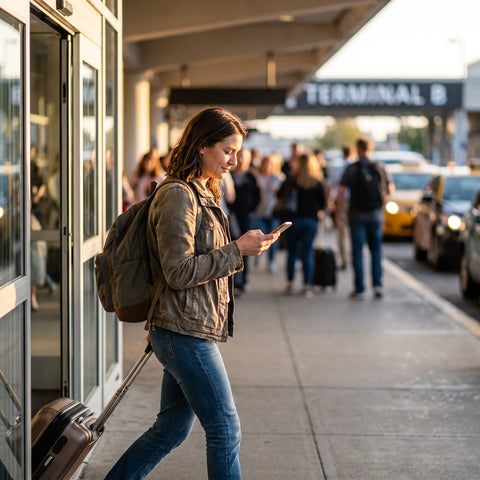
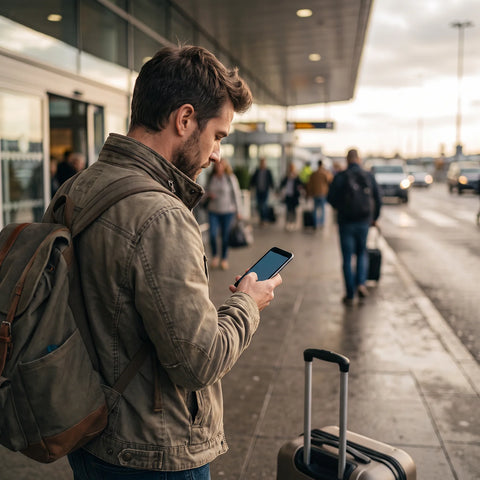
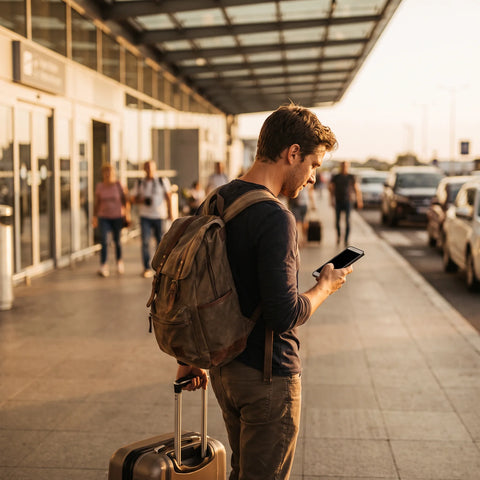
This translates into something very specific when landing at Findel Airport: there's no need to look for a phone counter or fill out forms with your passport. The profile is already installed before leaving home, and it's enough to activate roaming for that line upon stepping onto Luxembourgish soil.

Internet for tourists in Luxembourg: your options
If you're looking for internet for tourists in Luxembourg, you actually have four options, and not all are equally valuable depending on how much you move around the country. Hotel and cafe Wi-Fi covers the basics, but it cuts out as soon as you step outside to find the Pfaffenthal panoramic elevator or stroll through the Grund, precisely when you need Google Maps the most. Your Spanish plan's roaming works automatically, without any setup, because Luxembourg is in the EU. A physical local SIM forces you to find a point of sale and waste minutes configuring the APN. And the travel eSIM fills the gap: your own data, without relying on external Wi-Fi or your main allowance, installed before leaving home.
For those coming from outside the European Union, the calculation is even simpler, because then the roaming from their country of origin usually skyrockets in cost or is capped. If you're debating between a physical SIM and an eSIM, in international chip vs eSIM we compare the two options in detail.
Do I need an eSIM if EU roaming is available?
It depends on where you're from and what plan you have. If you're traveling with a Spanish operator, your European roaming works in Luxembourg at no extra cost due to the "roam like at home" regulation. An eSIM is particularly useful if you're arriving from outside the European Union, if your Spanish plan has a low data cap for roaming, or if you prefer not to use your main data allowance for the trip.
There's a nuance that almost no one checks before leaving: the European free roaming regulation is designed for travel, not for permanent residency. If you stay in Luxembourg for several consecutive months—a common occurrence for those temporarily working for a European institution or a bank—your operator might apply permanent roaming policies and start charging you separately after a certain period. For long stays, a local or regional eSIM helps you avoid that friction with the fine print of your plan.
There's a third, very practical reason: separating work from your personal mobile. Many business travelers use an eSIM as a dedicated data line for their trip and keep their usual SIM for calls and bank SMS. This way, they control expenses and don't depend on the specific conditions of their plan. To fully understand what roaming is and when to avoid it, check what data roaming is, and if you want a complete comparison between the two options, you have eSIM vs roaming.
Coverage in the capital and the country
Luxembourg boasts one of Europe's best telecommunications infrastructures. In Luxembourg City, Esch-sur-Alzette, and major towns, you'll find high-quality 4G and 5G, with very solid speeds even in the old town and in the Grund and Alzette valleys, where rock and uneven terrain often complicate signal in other European cities.
As a small and highly urbanized country, coverage is practically total: there are hardly any blind spots. Only in some wooded stretches of the Luxembourgish Ardennes, to the north, towards Vianden or Esch-sur-Sûre, might you notice a slightly weaker signal among dense trees, but nothing that affects normal use once you return to a road or urban center. For maps, email, video calls, and sharing data with your laptop, the connection is more than sufficient throughout the country.
Local operators in Luxembourg
The Luxembourgish market has three main operators that your eSIM can connect to via roaming:
- POST Luxembourg: the historical operator with the largest market share and the most extensive network in the country.
- Orange Luxembourg: a subsidiary of the Orange group, with good data coverage.
- Tango: a local operator that complements the offer with competitive rates.
With a travel eSIM, you don't have to choose: the plan connects to the best available network signal at any given moment. The currency is the euro, so there's no currency exchange here, but since the data is prepaid, you also don't deal with local top-ups or contracts.
Useful tip: Luxembourg is trilingual (Luxembourgish, French, and German), and many people speak English. With mobile data, a translator, and maps, you can resolve any task instantly, from reading a menu to understanding a construction sign on the street.

How many GB do you need?
Consumption depends on your type of trip. For a weekend getaway or a short business trip, these ranges work well:
| Travel Profile | Days | Recommended Data |
|---|---|---|
| Weekend Getaway | 2-3 | 2-3 GB |
| Business Trip, Medium Use | 4-7 | 5-8 GB |
| Long Stay or Heavy Video Use | 10-15 | 10-15 GB |
If you make daily work video calls or share your connection with your laptop in a hotel or coworking space in Kirchberg, opt for the higher tier. A detail you might miss: map and transport apps in the background consume more than it seems if you leave the GPS active all day, so if you're very tight on GB, close voice navigation as soon as you reach your destination. To adjust consumption without running out, you can find specific tips in how to save data with an eSIM on a trip.
How to activate it step by step
Installing the eSIM takes about 1 minute, and it's best to do it with Wi-Fi before you leave, so you land in Luxembourg with your connection ready:
- Purchase the eSIM for Luxembourg and you'll receive a QR code by email.
- In your phone's mobile data settings, choose to add an eSIM.
- Scan the QR and install the profile by following the steps.
- Upon arrival, activate data roaming for that line and you're connected.
A common mistake: activating the profile at home and also leaving the eSIM's mobile data activated before leaving, which causes the phone to try to connect to Spanish networks with that profile and confuse the two lines. Install the profile in advance, yes, but leave the eSIM's data roaming off until you land. For the complete process on any phone model, consult how to install an eSIM.
Traveling through the Greater Region
Luxembourg is at the heart of the so-called Greater Region, a crossroads where in half an hour by car you can cross into France, Belgium, or Germany almost without realizing it: no visible border control or lane change to announce it. Many residents and cross-border workers cross daily, and their mobile phones jump from a Luxembourgish antenna to a French or German one without warning.
If your route includes neighboring cities like Metz, Trier, or the Belgian Ardennes, the most convenient option is a regional European eSIM that covers all destinations on your itinerary. This way, you don't have to worry about which country's antenna is providing your coverage at any given moment: you always pay the same amount, and the plan remains active, including border crossings. For this type of multi-country route, you have the eSIM for Europe, designed precisely for moving through several countries with a single plan.
eSIM for business trips
Luxembourg is a hub for banks, funds, European institutions, and corporate headquarters, so a good portion of visitors come for work. For this profile, an eSIM organizes the digital life of the trip: you use the eSIM as a dedicated data line and keep your personal SIM for calls and bank verifications, without mixing consumption or getting surprises on your company bill.
The data connection here is so good that you can comfortably use your mobile as a mobile office: video calls from the hotel, sharing your connection with your laptop in a Kirchberg cafe, or presenting to a client with your plan's data. As it's a compact country, you can move between meetings in minutes, and arriving with a ready eSIM avoids wasting time on the first day searching for coverage. If you also connect to airport Wi-Fi or shared meeting room Wi-Fi, it's wise to be careful about what data travels through that network: in eSIM, VPN, and privacy on a trip, we review how to protect your connection when working outside the office.
Myths and what almost no one tells you
There are several preconceived notions about staying connected in Luxembourg that should be debunked before you leave:
"With EU roaming, I'll never have problems." The regulation covers reasonable travel use, not residency. If you stay for several months, check your operator's permanent roaming conditions before you get an unexpected charge.
"Public transport doesn't need internet; it's free." Luxembourg was the first country in the world to make all its public transport—trains, trams, and buses—free in 2020. But free doesn't mean without schedules: to seamlessly connect the Kirchberg tram with a regional train to Trier or Metz, the official mobility app saves you waiting time, and to consult it on the go, you need data.
"In such a small country, any data plan is overkill." It's overkill in volume, but not in time: it's precisely on short trips when it's most beneficial to have your phone sorted from minute one, because there's no room to waste half a morning setting up a physical SIM at a point of sale.
"Anyway, for two days, it's not worth installing anything." It's quite the opposite: on short trips, it's when it pays off the most to have your mobile sorted from the very first minute, because there's no room to waste half a morning configuring a physical SIM at a sales point.
Frequently asked questions
Is an eSIM in Luxembourg worth it if I have EU roaming?
Yes, in several cases: if you are coming from outside the European Union, if your Spanish plan has a low data allowance for roaming, if you are staying for a long period, or if you prefer a dedicated data line for your trip without touching your main plan. For many business travelers, it is the most organized option.
Is there good coverage in Luxembourg City?
Excellent. The capital and major towns have very high-quality 4G and 5G, with one of the best infrastructures in Europe. Only in some wooded sections of the northern Ardennes is the signal slightly weaker, without affecting usual use.
Can I use the same eSIM in France or Germany?
Only if the plan includes them. As Luxembourg is in the heart of the Greater Region and it's easy to cross borders without realizing it, many travelers choose a regional European eSIM that covers several countries. This way, you pay the same even if your phone connects to a French or German antenna.
What kind of internet should I get if I'm just passing through or on a layover?
If your stay in Luxembourg is only a few hours and your Spanish plan already has active roaming, you don't need to buy anything extra: use it as is. An eSIM comes into play when you want to save that data allowance, if you're coming from outside the EU, or if you're connecting with more countries on the same route.
How much does an eSIM for Luxembourg cost?
The cost varies depending on the GB and days you choose; check the current price on the product page. It's a convenient alternative to roaming, especially if your plan has data caps or if you prefer to separate your travel expenses from your monthly bill.
Does the eSIM include a phone number?
Data eSIMs do not come with a local number, but you can make calls over the internet with WhatsApp, Telegram, or other apps using the plan's data. The usual practice is to keep your Spanish number on your main SIM for calls and bank SMS.
What if my phone doesn't support eSIM?
Then you'll need a physical local SIM or to keep your operator's roaming. Most mid-range and high-end phones from recent years do have eSIM; it's advisable to check your settings before purchasing to avoid surprises on your flight day.
Conclusion
Luxembourg combines institutional importance, a picturesque old town, and top-tier connectivity. While European roaming works by default, a Luxembourg eSIM provides organized data if you're coming from outside the EU, want to save your data allowance, are staying for a while, or are traveling through the Greater Region without changing your plan at each border. Install it before you leave and arrive with everything sorted. PuraSIM has over 200 destinations in its catalog and 24/7 support in all languages via email and WhatsApp, so if your route changes on the fly, help is at hand.