If you've already decided to take data to Tajikistan and just need to know how many GB to buy, this article is for you. I won't repeat how to connect or sell you snake oil: I'll give you a well-reasoned number and a key idea that changes everything, because this is a destination where you spend much less than it seems.
The quick number for Tajikistan
For 10 days traveling through Tajikistan, a traveler using maps and WhatsApp will have more than enough with 2-3 GB, because on the Pamir Highway you'll spend entire days without coverage and won't use any data. If you use social media or upload many photos from cities, increase to 5 GB.
I know it sounds like little compared to what other packages offer, but it's the reality of this destination. Tajikistan is not a country where you'll be glued to your phone all day: a good part of the trip takes place on high mountain roads where there simply is no signal. And without a signal, there's no consumption. That's the big difference compared to an urban destination like Bangkok or Dubai, where you have 4G all the time and the meter never stops.
My honest recommendation: start on the low side and top up if you need to. It's cheaper to run short and add a gigabyte halfway through your trip than to buy a huge package that you'll only half use. If you want a general overview of how much data to take depending on the type of trip, I have the main guide on how much data I need for travel. Here we go into the specifics of gigabytes for Tajikistan and that's it.
Why you use less data here than you think
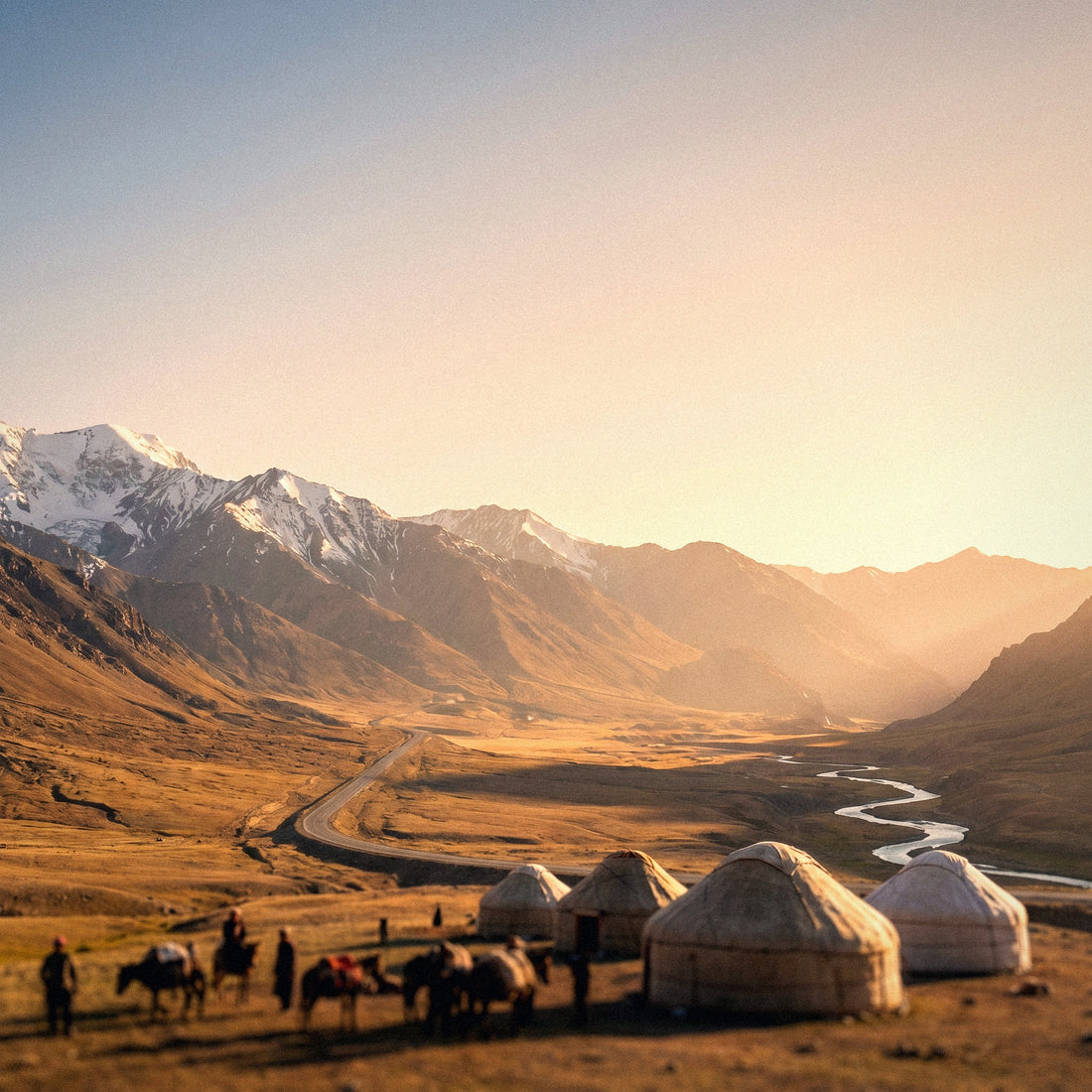
The typical mistake is to calculate gigabytes as if you were traveling to a place with constant connection. In Tajikistan, it doesn't work that way, which is why the actual number drops significantly. The star route, the Pamir Highway (M41), crosses the Wakhan Valley, goes over passes above 4,000 meters, and has long stretches without any coverage. That time, which in another country would be pure consumption, here is zero expense.
Add to that the fact that almost everyone combines Tajikistan with Kyrgyzstan and Uzbekistan, and that much of the journey is done by car or 4x4 through mountains. Many hours of travel, little connection. When you arrive in Dushanbe, Khorog, or a homestay with Wi-Fi, that's when you really use mobile data: to load the next day's map, send voice messages, or upload a couple of photos.
The practical consequence is twofold. First: don't inflate the package thinking about typical urban use. Second: what you do need is for that small consumption to be well managed, with a connection that works as soon as there's a network. If you're still debating between roaming, local SIM, or eSIM, I compare them in depth in internet in Tajikistan, and if you're unsure about the format, I explain what an eSIM is without jargon.
How much each activity consumes
Before deciding on gigabytes, it's good to know what consumes your data and what doesn't. Most people think maps devour data, but it's the opposite: navigating with an already downloaded map uses almost nothing. What really drives up the meter is video, especially social media with autoplay and high-quality streaming.
These are real and approximate figures to give you an idea. They round up, so if you stick to them, you'll have plenty:
| Activity | Approximate Consumption |
|---|---|
| Maps with navigation (online map) | 5-10 MB/hour |
| Downloaded maps (offline) | Almost 0 |
| WhatsApp: text, photos, and voice notes | 5-15 MB/day |
| WhatsApp: video call | 300-450 MB/hour |
| Social media (normal scrolling) | 500-800 MB/hour |
| Reels / TikTok / vertical video | ~1 GB/hour |
| Uploading a batch of 25-30 photos | 100-150 MB |
| Music streaming (normal quality) | 40-50 MB/hour |
| Video at 480p | 500-700 MB/hour |
| Video at 1080p (HD) | 1.5-3 GB/hour |
| Email and web browsing | 10-20 MB/hour |
If you want the full breakdown by app and country, I've compiled it in mobile data usage statistics by activity. The conclusion for Tajikistan: if you avoid high-quality video and use offline maps, your gigabytes will go a long way.
How many GB depending on your profile and days
This is the table you came for. I've structured it by traveler profile and duration, assuming that you'll be without signal for much of the time in the Pamir. These are figures with plenty of margin, designed so you don't get stranded, not to oversell.
| Profile | 5 days | 10 days | 15 days | 30 days |
|---|---|---|---|---|
| Maps and WhatsApp | 1 GB | 2 GB | 3 GB | 5 GB |
| Photos and social media | 2 GB | 4 GB | 6 GB | 12 GB |
| Nomad / remote work | 5 GB | 10 GB | 15 GB | 25 GB |
| Family sharing | 3 GB | 6 GB | 9 GB | 18 GB |
How to read it:
- Maps and WhatsApp: the most common profile in Tajikistan. You navigate with offline maps, send voice messages, and little else. Very little will be more than enough.
- Photos and social media: you upload stories and photos from cities and homestays with Wi-Fi. That's where you really spend data.
- Nomad / remote work: pay attention to this row. On the Pamir Highway, you won't be able to work, so these gigabytes assume you only work remotely from Dushanbe or Khorog. On the road, forget about it.
- Family sharing: a package that shares data across several phones via hotspot.
If you're torn between two rows, go with the lower one and top up. I repeat the mantra: in this country, it's hard to overspend, and very easy to buy too much.
The Pamir factor: coverage, GBAO, and battery
Here's the core of why Tajikistan is different. The Pamir Highway is one of the most remote routes on the planet: in its high sections, there's no network from any operator, and where there is, it's usually just EDGE or a shaky 3G. Travel eSIMs almost always rely on Tcell coverage (sometimes MegaFon), but no network can work magic where there's no antenna. In the Wakhan Valley and much of the Fann Mountains, simply don't count on anything.
Here's what you can expect depending on where you are:
| Area | Typical Coverage | How much you spend there |
|---|---|---|
| Dushanbe (capital) | Decent 4G | Normal use, with Wi-Fi in hotels |
| Khorog | Irregular 3G/4G | Low-medium |
| Pamir Highway (M41) | Long stretches with no signal; sporadic EDGE/3G | Almost none |
| Wakhan Valley | Practically no coverage | None |
| Fann Mountains | Very limited | Almost none |
Two practical tips. One: to enter the Pamir, you need the GBAO permit, which is usually obtained along with the e-visa for about 50 USD; it has nothing to do with mobile service, but without it, you can't enter. Two: since GPS and the screen will be on all the time and there's nowhere to charge on the road, the real problem won't be data, but battery life. Bring a large external battery. To get your phone ready with the eSIM before you leave, I detail it in eSIM for Tajikistan.
Slow internet, restrictions, and VPN
Another peculiarity that affects your experience (though not so much your gigabytes): in Tajikistan, the internet is slow and very controlled. All international traffic passes through a state center, and there have been instances of intermittent blocking of social media and messaging apps, which come and go. I'm not getting into politics: I'm telling you this as practical information so you're not surprised if an app doesn't load one day.
That's why my verifiable advice is simple:
- Install a VPN from home before you travel. Once there, downloading or activating certain services can be complicated, because some well-known VPNs are also blocked at times. Have at least two installed and tested.
- Have a backup messaging plan ready in case your usual app fails on a particular day.
- The good news for your data bill: a VPN consumes very little extra beyond what you would already use; it doesn't significantly increase your spending.
And a security note separate from the connection: a good part of the Pamir runs along the border strip, so before going, it's advisable to check your government's official travel recommendations for that area. It's five minutes that can save you trouble.
Calculate your own consumption before leaving
The tables give you a solid reference, but no one knows your usage better than your own phone. The most reliable and honest trick is to see how much you spend now and extrapolate it, adjusting for what you already know about Tajikistan: many hours without signal and plenty of Wi-Fi in accommodations.
How to do it in two minutes:
- On Android: Settings, then Network & Internet or Connections, and there, Data usage. Look at the last 30 days.
- On iPhone: Settings, then Mobile Data, and scroll down to the period summary. It's a good idea to reset the statistics at the beginning of the month to get clean data.
Take your monthly consumption, divide it by 30, and you have your daily spending for normal use with Wi-Fi. For Tajikistan, apply a significant cut: I estimate you'll spend much less than half of your urban average, because time on the road doesn't add up. If at home you spend 6 GB a month (about 200 MB a day) and you go for 10 days, the gross calculation would be 2 GB; for this destination, 2 GB is more than enough and you'll probably even have some left over.
The best gigabyte calculator is in your pocket: your data history from the last month is worth more than any generic estimate.
How to stretch your data in Tajikistan
With a few adjustments, the gigabytes in this destination will perform twice as well. And since you already spend little here, applying these tips almost certainly means you'll have leftover data. These are the ones that really move the needle:
- Offline maps, absolutely. Download the entire Pamir route on Google Maps or Maps.me before leaving, using Wi-Fi. It's essential for navigating without a signal, and incidentally, your map data usage drops to zero.
- Backups only via Wi-Fi. Don't let photos and phone backups upload using mobile data: that's the classic way to eat through a package without realizing it.
- Lower video quality on YouTube and social media to 480p, and disable autoplay. Video is, by far, the biggest data consumer.
- Activate Data Saver mode on your system and in each app. It curbs background downloads.
- Download music, podcasts, and series with Wi-Fi for the car, instead of streaming on the road.
I have the complete list of tricks, with screenshots, in how to save data with your eSIM on your travels. If you only apply offline maps and Wi-Fi backups, you'll already notice the difference in Tajikistan.
What happens if you run out
Don't worry, it's not a big deal, and it's exactly what I'd prefer to happen to you. Running out in Tajikistan has a solution in two minutes: you top up the package or buy a new one from your phone, without going to any store. What's truly expensive is buying too much and not using it, because no one will refund those extra gigabytes.
Why it's even more advisable to go short in this destination:
- With so many stretches without coverage, it's very likely you'll underestimate how much you have left, not how much you need.
- Top-ups are immediate: as soon as you get a network in Khorog or a homestay, you add data and continue.
- Starting small lets you see your actual consumption during the first few days and decide based on data, not fear.
The only precaution: if you know you'll be several days deep in the Pamir, top up before entering the area without signal, or have enough margin to reach the next village with a connection. But as a general strategy, going lean and topping up is cheaper and smarter than carrying a huge package out of fear.
Frequently asked questions
How many GB do I need for 10 days in Tajikistan?
For 10 days, 2-3 GB is enough for most people if you use offline maps and WhatsApp. Increase to 5 GB only if you upload many photos and use social media daily from cities.
Is there coverage on the Pamir Highway?
Very little and intermittent. In the high sections, there's no signal from any operator; where there is, it's usually just EDGE or shaky 3G. In the Wakhan Valley, practically none. That's why you don't use data there.
Do I need a VPN in Tajikistan?
It's highly recommended to install one before you leave. The internet is controlled, and there are intermittent blocks of some networks and apps. Bring two tested VPNs from home, because downloading or activating them there can be complicated.
What network do eSIMs use in Tajikistan?
They usually rely on Tcell, and in some cases MegaFon. These are the networks with the widest reach in the country, but even they don't provide coverage in the most remote sections of the Pamir, where there are no antennas.
Do I use data even if there's no signal?
No: without coverage, there's no consumption. That's the key reason you spend so little data in Tajikistan. Hours on the road without a network don't add anything to your gigabyte counter.
Does the GBAO permit have anything to do with the internet?
No, they are different things. The GBAO is the permit to travel to the Pamir region (about 50 USD with the e-visa), not for mobile service. But without it, you cannot access the area.
Can I work remotely from the Pamir?
Only from cities with Wi-Fi, not on the road. In Dushanbe or Khorog, you might manage; on the road and in the high valleys, don't count on a stable connection for work.
Is it better to buy a lot just in case?
No, in this destination, it almost never pays off. With offline maps, you'll spend less than you think. Start small and top up as soon as you get a network; it's cheaper than having unused gigabytes.
Conclusion
To summarize without mincing words: Tajikistan is one of those destinations where buying little is the right thing to do. For a typical map and WhatsApp trip through the Pamir, 2-3 GB for ten days is more than enough; if you're big on photos and social media from cities, aim for around 5 GB; and only if you work remotely from Dushanbe will you need more. The reason is simple and honest: you'll spend entire days without coverage, and without a signal, there's no data usage.
So, have your maps downloaded, a VPN installed from home, a good external battery for GPS, and above all, a suitably sized package that you can top up in two minutes if needed. Start small, observe your actual consumption during the first few days, and decide based on data. If you want to sort it out before flying, check out the Tajikistan eSIM and choose the size with a clear head. Have a great trip to the roof of the world.