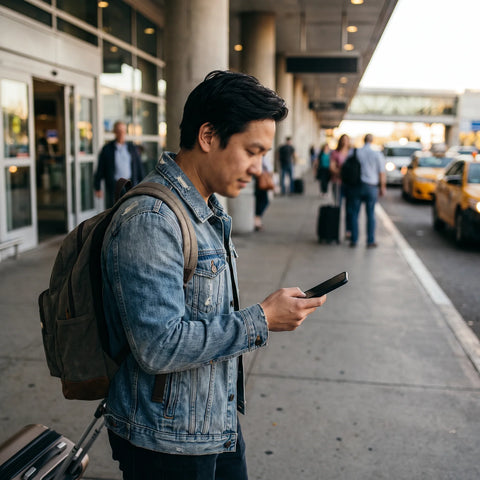
In short: the best destinations for travel in 2026 combine good timing, reasonable prices, and ease of getting around: South Korea, Colombia, Peru, Australia, and New Zealand are gaining ground, alongside the classics of Europe and the United States. Whichever you choose, landing with an activated eSIM saves you queues, expensive roaming, and dependence on hotel Wi-Fi.
Choosing a destination is the fun part of travel. Connectivity, on the other hand, is often left until the last minute, and it's precisely what makes the difference between arriving stressed, searching for a SIM at the airport, or leaving the terminal with Google Maps working and your Uber order in progress. In this guide, we review the destinations that are gaining the most popularity among Spanish travelers in 2026, why they're worth having on your radar, and what type of connection is suitable for each.
This is not a closed list or an absolute ranking. It's a map of options depending on what you're looking for: nature and non-stop cities in South Korea, Caribbean beaches and colonial cities in Colombia, mountains and archaeology in Peru, vast distances and unique landscapes in Oceania, or the convenience of moving around without thinking in Europe and the United States.
The destinations on the rise in 2026
This is the general overview before going into detail. We've put it together thinking about what really matters when deciding: when to go, what type of traveler it best suits, and what type of data connection is best to bring.
| Destination | Best time to visit | Ideal for | Recommended connection |
|---|---|---|---|
| South Korea | Spring (Apr-May) and autumn (Sep-Nov) | Cities, technology, gastronomy | National or Asia eSIM |
| Colombia | December-March (less rain) | Colonial cities, Caribbean, coffee | National eSIM |
| Peru | May-September (dry season) | Machu Picchu, trekking, Inca culture | National eSIM |
| Australia and New Zealand | October-April (their summer) | Nature, long road trips | Regional eSIM |
| Europe (outside the EU) | All year, depending on the country | Short getaways, cities | European regional eSIM |
| United States | All year | Road trips, iconic cities | National eSIM |
A pattern repeats in all of them: the further and more different the destination, the more noticeable it is to arrive with data already working. On a city-to-city trip in Europe, you can rely on Wi-Fi if you have to; in Machu Picchu, on the Colombian coast, or crossing the Australian desert, having your own connection stops being a luxury and becomes common sense.
South Korea: the Asian destination that keeps growing
Seoul and Busan have made their way onto the radar of more and more Spanish travelers, and it's no coincidence: high-speed trains that connect the country from end to end, a culinary scene that goes far beyond K-BBQ, and a mix of skyscrapers, temples, and mountains that surprises those who only knew the country for its music or TV series. Spring, with its cherry blossoms, and autumn, with the colors of Mount Seorak, are the two windows that travelers request most.
Mobile coverage in South Korea is one of the most robust on the planet, with virtually no dead zones, even on the subway. Still, buying a physical SIM there involves paperwork and queues at the airport that are completely avoided with an eSIM activated before you leave. If this destination is on your list, you might be interested in our specific guide to eSIM for South Korea: Seoul and Busan, which details coverage and how to move between cities without losing connection.
South America: Colombia and Peru gain strength
Colombia: cities, coffee, and the Caribbean all in one trip
Colombia has been gaining ground among the favorite destinations for Spaniards for several years, and in 2026 it continues to rise. Cartagena and its historic center, reinvented Medellín with its eternal spring climate, and Bogotá as a cultural starting point form a triangle that can be explored in two or three weeks without rushing. December to March is the window with the least rain, although the country can be visited all year round depending on the region.
Data coverage in major cities is good, but it varies considerably depending on the operator and area, so it's advisable to have it sorted before landing. We review coverage, routes, and practical tips in eSIM for Colombia: Medellín, Bogotá, and Cartagena.
Peru: Machu Picchu is still a pending visit
Peru is one of those destinations that almost everyone has on their list at some point, and 2026 is a good year to tick it off: the dry season (May to September) offers the best days for the Inca Trail and for seeing Machu Picchu without constant rain. Beyond the citadel, Cusco, the Sacred Valley, and Lake Titicaca complete a route that combines altitude, history, and unforgettable images.
In mountain and trekking areas, mobile coverage is limited, so planning where you'll have signal is as important as booking your ticket to the citadel. You can find the complete route, including coverage sections, in eSIM for Peru: the complete route to Machu Picchu.
Oceania: Australia and New Zealand, the long-distance trip
Australia and New Zealand top the list of "once-in-a-lifetime trips" for many Spaniards, and in 2026, interest continues to grow, especially among those seeking large-scale nature: the Great Barrier Reef, the New Zealand fjords, the outback, and cities like Sydney or Auckland that combine urban beaches and cultural life. Their high season falls between October and April, when it's summer in the Southern Hemisphere.
Here, the challenge isn't so much coverage as distances: a road trip through Australia can mean hundreds of kilometers between towns, with stretches where the signal disappears completely. Choosing the right operator and knowing what to expect on each stretch changes the trip. We explain this in detail in eSIM for Australia and New Zealand.
Europe: short getaways and Easter as the perfect window
For Spanish travelers, Europe remains the destination for weekend getaways: short flights, minimal planning, and, within the European Union, no nasty roaming surprises because your Spanish plan works just like at home. The nuance comes when you leave the EU: the United Kingdom, Switzerland, the Balkans, or Turkey have their own regulations, and roaming can become very expensive, so it's advisable to bring a European eSIM that covers several countries outside the Eurozone with a single profile.
Easter 2026 is once again one of the most popular windows of the year for short getaways: good weather, a long weekend, and destinations ranging from European cities to pilgrimage routes. We've gathered the most common options in eSIM destinations for Easter, with ideas both within and outside the Eurozone.
United States: the classic that never fails to impress
The United States works all year round and remains one of the most chosen destinations for those who want to mix iconic cities—New York, Los Angeles, Chicago—with national parks and coast-to-coast road trips. The variety is such that one country can offer an urban trip, a nature trip, or a road trip, depending on what you're looking for.
There, a local SIM is usually expensive and involves slow contracting processes for tourists, so an eSIM for the United States with national coverage solves the entire issue at once: you activate upon landing and have data in any state you visit, without needing a contract or a physical store.
eSIM, roaming, or local SIM: what's best depending on the trip
With the destination decided, the next question is how you're going to connect. There's no single correct answer: it depends on where you're going, how many countries you're crossing, and how long you'll be away. As a general rule, for a single country, a national plan is worthwhile; for several countries in the same region, a regional plan; and within the European Union, your own plan is usually sufficient.
Your Spanish operator's traditional roaming outside the EU tends to be the most expensive option by far, and it's easy to get a shock on your bill if you don't deactivate it in time. The eSIM solves this by installing a second data profile without affecting your Spanish line: you keep your number for calls and WhatsApp and use local data at the price of the country you visit. We compare the two options in detail, with pros and cons of each, in eSIM vs. roaming: what to choose.
When does roaming still make sense?
If your trip is within the European Union and your plan includes roaming at home rates, you don't need anything else: it's the simplest option and has no extra cost. Roaming can also be worthwhile for very short trips, a couple of days, where the savings of an eSIM don't justify the time to configure it. Outside of these cases, it's almost always more cost-effective to have your own connection.
Before you leave: how to get everything ready
Preparing your connection shouldn't take more than five minutes. You buy the plan for your destination, activate it with Wi-Fi at home the day before you fly, and as soon as you land, activate data roaming from your phone settings. There's no need to fiddle with any SIM trays or look for a counter at the terminal.
One point that often causes doubts the first time is what exactly an eSIM is and how it differs from the traditional physical SIM. If you've never used one, understanding how it works before buying anything prevents surprises and makes activation at your destination even faster.
Myths and mistakes almost no one tells you about
There are a few common mistakes that happen trip after trip and are easy to avoid if you know about them beforehand.
- Activating the eSIM too soon: some plans count days from activation, not from arrival. If your plan is by days, activate it at your destination, not a week before to get ahead.
- Thinking that "more GB is always better": buying too much isn't serious, but it's unused money. Most trips rely heavily on accommodation Wi-Fi; estimate low and recharge if necessary.
- Not checking phone compatibility: not all models, especially those unlocked outside Europe or very old ones, support eSIM. Checking takes thirty seconds and avoids disappointment at the airport.
- Forgetting to activate data roaming: with the eSIM installed, if you don't activate data roaming for that profile, you won't browse even if you have plenty of coverage. This is a common cause of "it's not working" when everything is actually configured correctly.
- Assuming all of Europe is the EU: the UK, Switzerland, Turkey, or the Balkans are not part of free European roaming, even if they're nearby. It's advisable to check this for each destination.
And a less obvious recommendation: if you're going to use public Wi-Fi in airports, cafes, or shared accommodations, a VPN adds an extra layer of privacy, especially if you're going to check your bank or handle any personal data.
Destinations by season: when to go where
The same destination can be a great choice or a trap of heat and crowds depending on the month. This distribution best fits the Spanish holiday calendar for 2026.
| Season | Recommended Destinations | Why |
|---|---|---|
| Winter (Dec-Feb) | Colombia, South Korea (snow), Caribbean | Less rain in Colombia, ski season in Asia |
| Spring (Mar-May) / Easter | South Korea (cherry blossoms), Europe, Peru | Good weather, Andean dry season begins |
| Summer (Jun-Aug) | Peru, Mediterranean Europe, United States | Dry season in the Andes, beach close to home |
| Autumn (Sep-Nov) | South Korea (autumn colors), Australia and New Zealand | Their spring and summer begin in the Southern Hemisphere |
There's no need to cram all your plans into August. Spreading trips throughout the year, taking advantage of long weekends and Easter, usually results in cheaper travel and fewer people sharing the same sunset photo.
Frequently asked questions
What are the best destinations to travel to in 2026?
South Korea, Colombia, Peru, Australia, and New Zealand stand out among the destinations that are gaining the most popularity this year among Spanish travelers, along with the usual classics: Europe and the United States. The choice depends on your budget, the time of year you can travel, and whether you're looking for cities, nature, or beaches.
Do I need a different eSIM for each country I visit?
Not always. If your route passes through several countries in the same region, such as Europe outside the EU, there are regional plans that cover several destinations with a single profile. When traveling to a single country, a national plan is almost always more cost-effective in terms of price and coverage.
When should I buy and activate my eSIM?
The most convenient way is to buy it and have it installed with Wi-Fi at home the day before you leave, and activate data roaming at your destination or at the departure airport if your plan counts days from activation. This way, you avoid queues, paperwork, and local SIMs as soon as you land.
How many GB do I need for a two-week trip?
It depends a lot on your usage, but for normal browsing, maps, and social media, most travelers use less than they expect because they use Wi-Fi at their accommodation. If you're going to make video calls daily or upload a lot of content, estimate higher; otherwise, it's better to underestimate and recharge on the go.
Can I travel through Europe without buying anything if my plan already includes roaming?
Yes, within the European Union, your Spanish plan works with roaming as if you were at home, with no extra cost. The eSIM comes into play when you leave the EU, in countries like the UK, Switzerland, Turkey, or the Balkans, where your operator's roaming costs can skyrocket.
What happens if my destination has areas without coverage, like Machu Picchu or the Australian outback?
No eSIM or local SIM provides coverage where there is no physical network; that depends on the operator in each country, not the type of card. What you can do is find out beforehand which parts of your route have signal and which don't, to plan for downloaded maps and to notify your location when you do have a connection.
Does an eSIM work the same way as my traditional physical SIM?
Yes, in terms of mobile data, it works exactly the same: it connects you to a local network. The difference is that it's installed by scanning a QR code instead of inserting a physical card, and you can have several profiles saved on the same phone without affecting your Spanish line.
Conclusion
2026 offers a broad map of destinations: from the urban pulse of Seoul to the heights of Machu Picchu, passing through the Colombian Caribbean, the vast distances of Oceania, and the ever-popular Europe and the United States. Each calls for its own pace and its own way of connecting, but the underlying idea is the same for all: land with internet, without roaming, and without stress, and let the trip truly begin the moment you step out of the airport. Check out all PuraSim plans for your intended destination.