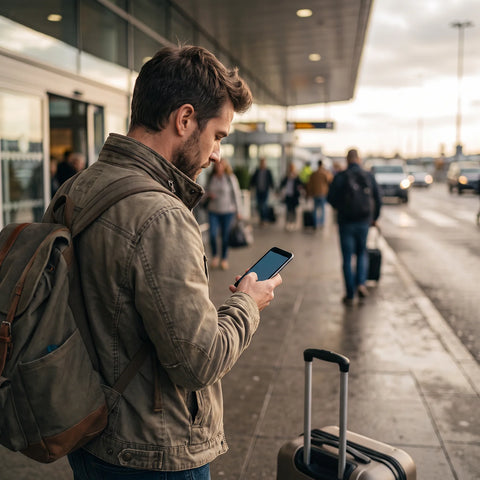
How do I activate my roaming on Tuenti?
To activate roaming on Tuenti, first confirm with the operator that your plan includes international roaming, then activate "data roaming" in your phone's settings, and if it still doesn't work, contact Tuenti through their app or official social media to request manual activation before your flight.
The first step, and the one most people skip, is to verify that the contracted plan has roaming enabled. As a mobile virtual network operator (MVNO) running on Movistar's network, Tuenti does not always include international roaming by default in its prepaid plans: in several cases, you need to request or activate it from the app before traveling, not once you are already at your destination.
Once the plan is confirmed, the second step is on your end: on Android, go to Settings > Mobile networks > Roaming and activate "Data roaming." On iPhone, it's Settings > Cellular > Cellular Data Options > Data Roaming. Without this switch activated, the phone will not attempt to connect to any foreign network even if the plan allows it.
If, after these two steps, the phone still shows "no service" or "emergency calls only," the third step is to restart the phone once you arrive at your destination (this forces a new network search) and, if it's not resolved, write to Tuenti through their customer service channel to ask them to review the activation from their system. In many cases, the app or website do not reflect changes immediately, and it is necessary for the operator to manage it on their side.
Why Tuenti roaming is not activating (most common causes)
When roaming doesn't start, it's almost always one of these four things: the plan doesn't include it, the phone's switch is still off, there's insufficient balance or a valid top-up, or the device isn't compatible with the destination network's bands. Check them in that order before assuming it's a coverage problem.
The most common cause, by far, is the first: prepaid plans designed for local use that do not have roaming activated by default. If your line is prepaid, it's a good idea to confirm directly with Tuenti, a few days before your trip, whether your specific plan allows roaming and which countries it covers.
The second cause is configuration: the data roaming switch is still off, or the APN (the access point to the data network) has been reset when changing countries. If you never manually touched the APN, you shouldn't need to, but if you at some point installed an app that modifies the network configuration, it's worth checking that the APN is still Tuenti's.
A less obvious but real cause: if your line is prepaid and the balance is very low or expired, some operators block roaming even if you have Wi-Fi connection available to top up. Top up with margin before leaving, not the same day of the flight.
And a detail almost no one checks: if the phone's date and time are not set to automatic (by network), some roaming networks reject the authentication process because the device's clock does not match that of the visited network. It's a quick and simple adjustment that rarely appears in troubleshooting guides, but it can be the difference between connecting or not.
As a mobile virtual network operator, Tuenti relies on Movistar's infrastructure: when the problem is coverage, roaming agreements with the destination country, or commercial policy, no adjustment you make on your phone will solve it. The only way is through the operator itself or an independent alternative to that network.
How can I use Tuenti abroad?
Beyond activating roaming, there are ways to maintain connectivity with your Tuenti line without relying on mobile data abroad. None replace having your own internet, but they are useful while you resolve activation or if you decide not to use roaming due to cost.
The simplest option is to rely on Wi-Fi: hotels, airports, cafes, and many public spaces in tourist destinations offer free networks. With Wi-Fi, you can continue using WhatsApp, email, and downloaded maps without spending a single megabyte of mobile data. The obvious limitation is that you don't have coverage on the street, in transport, or when walking between places.
Another option is to leave your Tuenti number only for calls and SMS (which in some plans do work in roaming even if data is not enabled) and manage navigation with an independent international eSIM, installed as an additional line on the same phone. This way, you don't depend on Tuenti resolving activation on time, and you continue receiving calls and verification codes on your usual number.
You can read more about how this coexistence between physical and digital lines works in this comparison between eSIM and physical SIM, useful if you've never used a second data line on the same device.

How to activate international roaming?
If you haven't traveled yet and want to avoid problems at your destination, there's a short checklist to complete three to five days before your flight, not the night before.
- Confirm coverage in the destination country. Not all Tuenti plans cover the same countries or regions; ask specifically about your travel destination, not generally.
- Request activation in advance. If your plan requires a manual request, do it several days beforehand: activations that depend on an internal operator process are not always instantaneous.
- Top up with sufficient balance if your line is prepaid, considering that roaming consumption is usually higher than local.
- Activate the data roaming switch on your phone before boarding the plane, so you don't depend on having signal at the destination airport.
- Have a backup plan ready (saved Wi-Fi, or an international eSIM installed in advance) in case activation doesn't happen on time.
This same problem—relying on a local operator to activate something remotely and on time—is what users of other similar operators face. If you also use or have considered WOM, the activation logic is comparable: you can check how to activate roaming with WOM to compare processes.
How do I get internet in Brazil if I have Tuenti?
Brazil is one of the destinations where this question is most frequently asked, especially from Argentina. The procedure doesn't change compared to other countries: confirm that your Tuenti plan includes roaming in Brazil, activate the data roaming switch, and if your device supports dual SIM, consider a local or regional eSIM as a backup, because roaming consumption in destinations with high tourist traffic (beaches, urban centers) can become saturated during peak hours.
A particularity of Brazil is its geographical extent: if your trip includes moving between distant cities (for example, from Florianópolis to Rio de Janeiro), the quality of roaming can vary considerably depending on the area, as it depends on which local operator Tuenti has an agreement with in each region. Coverage in a capital city is not the same as in a less populated coastal area.
If roaming fails just when you want to upload photos or share your real-time location during the trip, an independent international eSIM solves this without depending on whether Tuenti has an agreement with the Brazilian operator in that specific area.
Tuenti Roaming vs. International eSIM: Key Differences
Before deciding whether to struggle with roaming activation or solve it with a separate eSIM, it's worth comparing how each option works in practice.
| Aspect | Roaming with your Tuenti line | Independent International eSIM |
|---|---|---|
| Activation | Depends on the contracted plan; may require manual request in advance | Self-managed, in approximately 1 minute from your phone |
| Coverage | Limited to countries with which the operator has roaming agreements | Available in over 200 destinations |
| Support if it fails | Operator's customer service channels, with variable response times | 24/7 support in all languages via email and WhatsApp |
| Installation | No additional requirements; uses the existing physical line | Requires an eSIM-compatible phone and Wi-Fi connection to install |
| Purchase Validity | Depends on the contracted plan's cycle | 180 days to activate it from the purchase date |
To better understand the technical difference between both concepts — because roaming and eSIM are not mutually exclusive, they can coexist on the same phone — it is useful to read this comparison between eSIM and roaming.
What to check on your phone before traveling
A good part of roaming problems are not the operator's fault, but rather the device's configuration. This technical checklist is useful whether you use Tuenti roaming or are going to install an additional eSIM.
| Item to check | Where to check | Why it matters |
|---|---|---|
| eSIM compatibility (if you are going to use one) | Settings > About phone > look for "EID", or consult manufacturer's model | Not all phones, especially unlocked models from certain regions, support eSIM |
| Operating system version | Settings > Software update | Outdated versions can cause errors when installing new network profiles |
| Data roaming | Settings > Mobile networks / Mobile data | If off, the phone does not search for networks outside the country even if the plan allows it |
| Automatic date and time by network | Settings > Date and time | An out-of-sync clock can prevent authentication with the visited network |
| APN configured | Settings > Mobile networks > Access Point Names | An incorrect or empty APN blocks browsing even if there is signal |
If it's your first time installing an additional digital line, this guide on how to install an eSIM explains the complete process, and this one on which phones are eSIM compatible saves you the surprise of buying something your device doesn't support.

How much it can cost you and how to avoid surprises
It's not possible to give an exact price for Tuenti roaming here: it varies depending on the contracted plan, the destination, and whether it's an included or additional activation, and a figure without a consultation date can become outdated from one month to the next. What can be recommended is how to avoid an unexpected bill or balance deduction.
Before traveling, ask Tuenti directly (through their app or official channel) what the cost of roaming is for your specific destination and if it's deducted from your usual balance or data allowance, or if it has a separate charge. Requesting it in writing, even if it's via chat, provides you with a backup if a different charge than informed appears later.
A simple practice to avoid surprises: activate data consumption alerts on your phone (Settings > Mobile data > Data limit) before traveling, so the device notifies you when you approach a threshold you define yourself, whether with Tuenti or any other line.
If what you're looking for is total cost predictability before leaving — paying once for a defined amount of data, without depending on variable roaming charges — that's precisely the problem an international eSIM with a fixed plan solves, which is paid in advance and does not generate surprise charges while you travel.
When to switch to an international eSIM?
Tuenti roaming can work perfectly well for some trips. But there are specific signs that the problem isn't your phone, but the operator, and in that case, it's advisable to have an alternative ready instead of continuing to insist on activation.
Change strategy if: you've already checked the plan, the roaming switch, the balance, and the device's date, and you still have no connection; if Tuenti confirms that your plan does not include the destination country; if the reported cost of roaming is higher than you are willing to pay for the trip; or if you are going to be in areas for several days where solving a problem with the operator in person is not an option, and you need guaranteed connectivity from the first minute.
In these cases, an international eSIM is installed before traveling, is ready to activate in approximately 1 minute upon arrival at your destination, covers more than 200 destinations, and if something goes wrong, you have 24/7 support in all languages via email and WhatsApp instead of relying exclusively on the local operator's channels. You can review the available options for your next destination in the international eSIM collection.
For a broader view of how to plan connectivity for an entire trip, beyond a single destination or specific problem, this definitive eSIM guide for traveling covers the process from beginning to end.
Frequently Asked Questions
Do I need an app to activate Tuenti roaming?
It's not always mandatory, but in most cases, the Tuenti app or official channel is the fastest way to confirm if your plan includes roaming and to request activation if it's not enabled by default.
Does Tuenti roaming work the same in all countries?
>No. Coverage and connection quality depend on the roaming agreements the operator has in each country and, within the same country, can vary between urban and less populated areas.
Can I use Tuenti data and an eSIM at the same time?
Yes, if your phone supports dual SIM (physical SIM plus eSIM). You can leave Tuenti active for calls and SMS from your usual number, and use the international eSIM only for data.
What do I do if I travel and roaming cuts out midway through the trip?
Restart your phone to force a new network search, check that your balance is still valid, and if the problem persists, contact Tuenti through their official channel. Having an international eSIM installed as a backup prevents you from being without connection while the issue is resolved.
How long does it take for roaming to activate after requesting it?
It varies depending on the plan and the operator's internal process; that's why it's advisable to request it several days in advance and not on the day of travel.
Is Tuenti roaming suitable for working or making video calls?
It depends on the signal quality in the specific destination, which is not guaranteed beforehand. If you need reliable connectivity to work during your trip, it's advisable to have an independent backup of the local operator's network.
Do I need to change my physical SIM to use an international eSIM?
No. The eSIM is installed as an additional digital line, without removing your Tuenti physical SIM, provided your phone is compatible with dual SIM.
Conclusion
If Tuenti roaming is not working for you, the correct order to resolve it is: confirm that your plan includes it, activate the data roaming switch on your cell phone, check your balance and date/time settings, and only then contact the operator if none of the above worked. Most cases are resolved in the first two steps.
But if you've done all that and the problem is still with the operator —unavailable coverage at your destination, activation that doesn't arrive on time, or a roaming cost that doesn't work for you— there's no point in continuing to waste travel time waiting for an external solution. An international eSIM is installed before you leave, activates in about 1 minute upon arrival, covers more than 200 destinations, and has 24/7 support in all languages via email and WhatsApp if something doesn't go as expected.