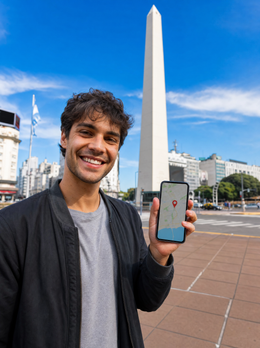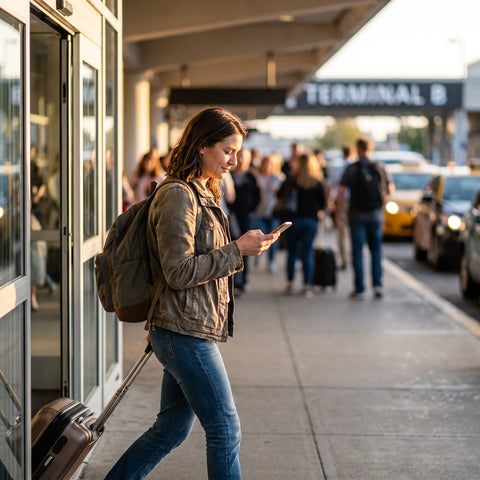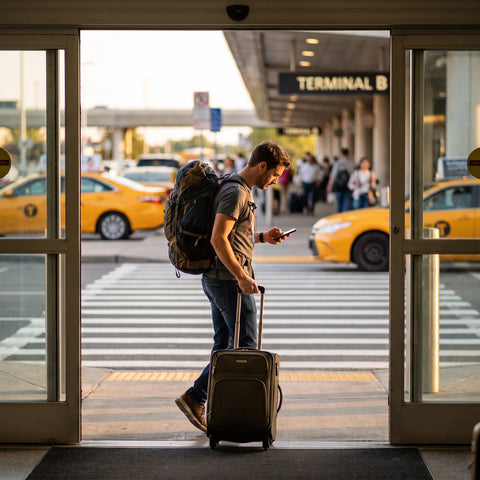
You're going to Buenos Aires for a few days and want to get off the plane with Google Maps working, without searching for an internet cafe or paying exorbitant roaming fees. A Buenos Aires eSIM gives you instant data at Ezeiza or Aeroparque, keeping your Spanish number in case the bank sends you an SMS. In this guide, I'll tell you how to get around the city connected from minute one, what coverage to expect by neighborhood, and how many GB to take for a getaway.
In summary: for a trip to Buenos Aires, the eSIM is installed before flying and activated upon landing at Ezeiza or Aeroparque, without a local chip or Argentine ID formalities. With 1-3 GB, you can cover several days of maps, transport apps, and social media in tourist areas, and keep your Spanish number with dual SIM for banking SMS.
Is an eSIM worth it just for Buenos Aires?
Yes, especially for a city break. In Buenos Aires, you'll be using transport apps, maps, restaurant reservations, and payments, and relying on hotel Wi-Fi leaves you stranded as soon as you step outside. An eSIM gives you continuous data for less than the cost of roaming for those same days.
The difference with a country-specific eSIM is subtle but important: for a visit focused on the capital, you don't need a huge plan designed for traveling all over Argentina. You just need enough data for three, four, or five days in the city, with maps, taxi apps, and social media. If your route also continues to Bariloche, the Waterfalls, or Mendoza, then a plan covering the entire country would be better than one designed only for a few days in the city. For a weekend in Buenos Aires, a travel eSIM is more than enough.
And when it's NOT worth it: if your stopover in Buenos Aires is only a few hours on your way to another destination, or if your hotel has decent Wi-Fi and your plan is not to leave the neighborhood, you'll probably be fine with the accommodation's Wi-Fi and a coffee shop. The eSIM is noticeable when you're moving around the city all day; if you're going to be mostly stationary, save it for the next leg of your trip.

Data upon landing: Ezeiza and Aeroparque
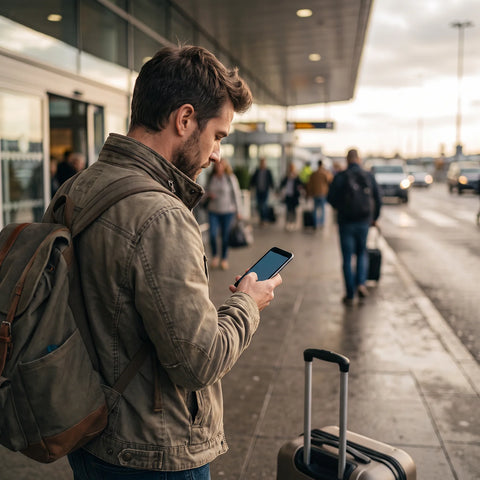
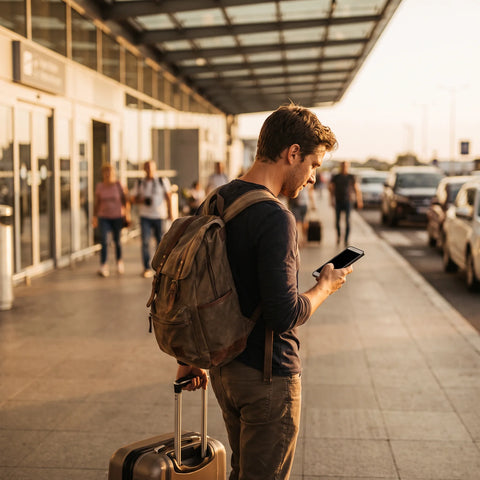
Upon landing at Ezeiza Airport (EZE) or Aeroparque Jorge Newbery (AEP), your eSIM automatically connects to the local network and you already have internet before going through baggage claim. You only need to activate the eSIM's roaming data; no airport Wi-Fi is necessary.
This makes all the difference on the first day. Ezeiza is about 30-40 minutes from the city center, and there you'll want to order a remís or taxi via an app, check your accommodation's address, and let people know you've arrived. With the eSIM already active, you can do this without relying on the terminal's saturated Wi-Fi or buying a chip at a counter. Aeroparque, closer to the center, is common for domestic flights: if you arrive from another province, same scenario, data ready when you get off. The trick is to have it installed from home: install the QR in Spain with Wi-Fi and activate it upon landing. This saves you the most inconvenient step.
Tip: save your hotel address offline and a screenshot of your reservation. If your plane arrives in the early morning, you'll have the essentials even if it takes a moment to activate your data.
Coverage by neighborhood (Palermo, Recoleta, San Telmo)
Buenos Aires has very good 4G/LTE coverage throughout the tourist area. In Palermo, Recoleta, Puerto Madero, San Telmo, and Microcentro, you'll browse smoothly for maps, streaming, and video calls with hardly any interruptions.
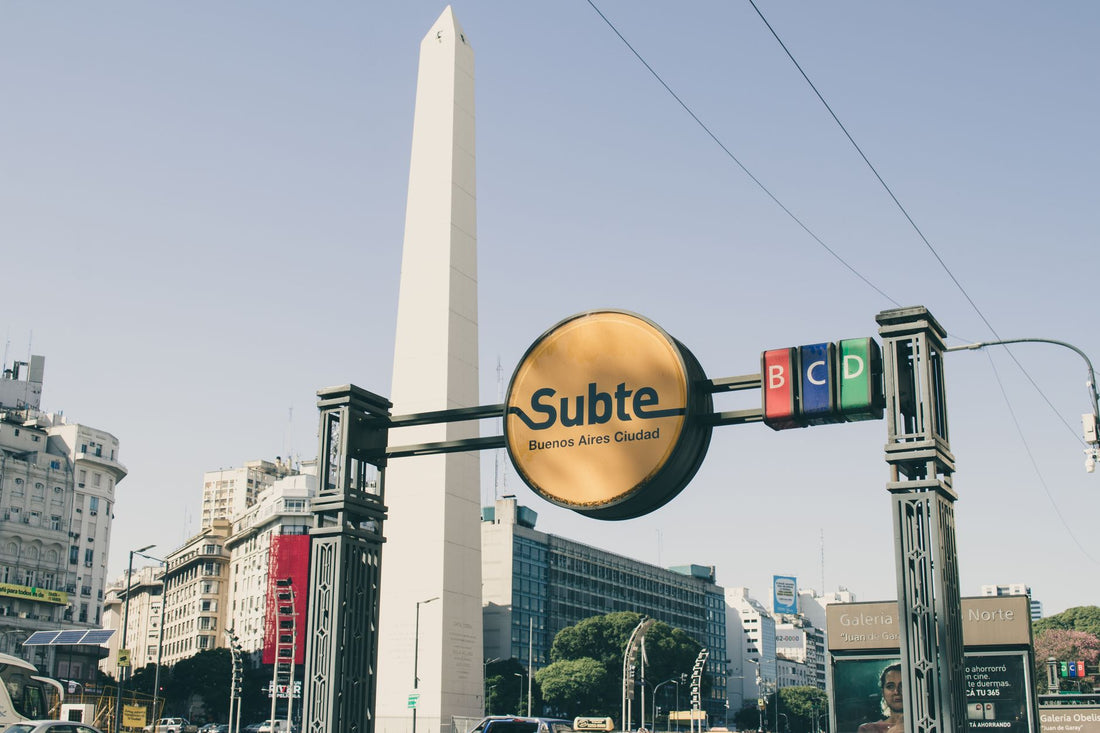
Where you might notice a drop is underground: the subway (subte) network has irregular signal depending on the line and station, so download your route before going down to the platform. In areas with very tall buildings in Microcentro or inside old premises, the signal sometimes weakens but recovers on the street. For a city break in the classic neighborhoods, coverage won't be your problem. The eSIM relies on the best available network at each point in the city, so you don't depend on a single operator having a good antenna in your neighborhood. If your trip is part of a larger South American route, also check out our guide to eSIM for Colombia, useful if Buenos Aires is just one stop on a longer itinerary across the continent.

Local operators and why the eSIM is separate
Mobile operators in Argentina are Claro, Movistar, Personal, and Tuenti. Buying a prepaid chip from any of them as a tourist involves registration, topping up in pesos, and sometimes a local ID, a hassle that isn't worth it for a few days.
The travel eSIM avoids all that because it works through a network agreement: it uses the infrastructure of these operators without you having to register with any of them. You don't step into a store, you don't handle cash in pesos for top-ups, and you don't change your number. For a city break, you save time and peace of mind. And since you carry your Spanish line in dual SIM, you continue to receive important calls and SMS. If you want to see why this option usually wins against a physical chip, we compare it in international chip vs eSIM.
How many GB for a city getaway
For a few days in Buenos Aires, you don't need a huge plan. Urban consumption focuses on maps, transport apps, social media, and messaging, not heavy downloads. These references will help you choose correctly without overspending.
- Weekend (2-3 days): 1-2 GB are enough for maps, taxi apps, and moderate social media use.
- 4-5 day getaway: 3 GB allow for occasional streaming, photos, and short video calls.
- Full week: 5 GB if you use your phone a lot or share internet with your tablet.
Since you'll have Wi-Fi in many cafes, hotels, and some public spaces in the city, actual consumption is usually less than you think. Even so, having a small buffer prevents scares when looking for a parrilla on a Saturday night. If you want to fine-tune the calculation and stretch your GB for several more days, check out our tricks to save data while traveling.
Suggested plans by days
Plans are organized by GB and days of validity. This table is a guide to help you plan your Buenos Aires getaway; the final price depends on the specific plan you choose.
| Duration | Suggested Data | Ideal for |
|---|---|---|
| 3 days | 1-2 GB | Long weekend in the capital |
| 5 days | 3 GB | Classic city break through the neighborhoods |
| 7 days | 5 GB | Week with a trip to Tigre or Uruguay |
| 15 days | 8 GB or more | Long stay or base for exploring the country |
Compared to roaming, which outside the European Union skyrockets depending on your operator and contracted tariff, an eSIM for the entire trip is usually more cost-effective once you add up several days of roaming. The eSIM pays off after more than two nights in the city; check the current roaming price with your Spanish operator before deciding.
How to activate it in 1 minute
Activating the eSIM takes a minute, and it's best to do it at home, with Wi-Fi, before flying to Buenos Aires. The process is the same on iPhone and Android except for the menu names.
- Purchase the plan and receive the QR code by email instantly.
- iPhone: Settings → Mobile Data → Add eSIM. Android: Settings → Connections → SIM Manager → Add eSIM.
- Scan the QR and label the line as "Buenos Aires".
- Upon landing at Ezeiza or Aeroparque, activate the eSIM's data roaming and turn it off for your Spanish line.
If your phone doesn't read the QR or you're not sure if it supports eSIM, resolve it beforehand with how to install an eSIM step-by-step. Landing with data already ready makes a getaway comfortable from the first minute.
Myths and what almost no one tells you
There are several ideas circulating about getting connected in Buenos Aires that should be clarified before traveling, because some could cost you time or mobile troubles.
- "Hotel Wi-Fi is enough for me." This sounds reasonable until you go out and need to confirm an address on an Uber, show a reservation QR code, or call a remís back from a San Telmo pedestrian street at one in the morning. Wi-Fi covers you in your room, not on the sidewalk.
- The automatic roaming confusion. Upon landing, your phone might briefly connect to your Spanish operator's roaming network before you activate the eSIM, especially if you have general mobile data turned on. This isn't an eSIM failure: it's because the phone prioritizes the physical SIM if you haven't turned off its roaming data beforehand. Disable it at home, before boarding, and you'll avoid any surprise charges.
- Mercado Pago and Argentine banking apps are not essential. As a tourist, you don't need to register with the local payment system to get around with the eSIM: your usual payment apps, Google Pay or Apple Pay, work in most tourist shops with normal data. Only consider it if you're going to rent public bikes or pay for the subway with a rechargeable SUBE card, which usually requires a local payment method.
- "The more signal, the better coverage." In Microcentro, you might see 4-5 bars and still notice a website taking time to load, because the network is saturated during peak hours on weekdays. If this happens, cross the street or enter a local establishment: sometimes the problem is the nearest antenna, not your eSIM.
- Currency exchange doesn't affect your eSIM. The fluctuations of the Argentine peso have no effect on your data plan: you paid for it in euros from Spain before flying, so there are no exchange rate surprises or peso top-ups to manage on the fly.
Frequently asked questions
Does the eSIM work on the Buenos Aires subway?
Subway coverage is irregular depending on the line and section, which is common in underground metros. On some station platforms there is signal, but in the tunnels it usually cuts out. Download your route before going down, and you will recover data without problem when you go out to the street.
Is the Buenos Aires eSIM useful if I then go to Bariloche or Mendoza?
Yes, as long as the plan covers all of Argentina and has enough data. If your route leaves the capital for other provinces, it's better to choose an eSIM for all of Argentina directly, rather than a plan designed for just a few days in the city. That way, you're covered from start to finish.
Can I order taxis and use payment apps with the eSIM?
Yes. The eSIM gives you normal mobile data, so transport, map, and payment apps work just like at home. Additionally, by keeping your Spanish number on dual SIM, you continue to receive bank verification SMS to authorize payments without interruption.
Do I need an Argentine ID to use the eSIM?
No. Unlike a local prepaid chip, which sometimes requires a document and registration, a travel eSIM is activated only with the QR code you receive by email. There are no formalities, no store, and no top-ups in pesos. You buy online from Spain, and you're all set.
How long does it take to activate upon arrival?
If you installed it at home, upon landing you just need to activate the eSIM's data roaming, and you'll be browsing in seconds. The Buenos Aires network is recognized very quickly. You don't need to scan anything at the airport or look for Wi-Fi to get started.
Is an eSIM the same as roaming with my Spanish operator?
No. Roaming means your own Spanish line continues to work outside the European Union, usually with an added cost depending on your tariff. A travel eSIM is an independent data line, practically local, that you install only for the destination. You can have both active at the same time on dual SIM: data via the eSIM and calls or SMS via your Spanish line. We explain this in more detail in eSIM vs roaming.
Can I share the eSIM's data with another device?
Yes, just like you would with any data plan: activate your phone's Wi-Fi hotspot and share the connection with your tablet or laptop. Keep in mind that sharing consumes GB faster, so if you're going to rely on a hotspot to work from a cafe in Palermo, factor that into the data you'll need for your trip.
Conclusion
A Buenos Aires eSIM solves your getaway connectivity without internet cafes, without a local chip, and without the roaming bill. You get off the plane at Ezeiza or Aeroparque with data, navigate Palermo and San Telmo with maps and apps, and keep your Spanish number for important matters. Install your eSIM before flying and enjoy the city connected from the first taxi, with Spanish support if you need it.