In short: an eSIM for Swaziland (now Eswatini) gives you 4G internet as soon as you land in Mbabane or Manzini, without expensive roaming or physical SIM card shops. It installs at home in a minute, works on local Eswatini Mobile and MTN networks, and with 3-5 GB, you'll have more than enough for a week's trip through wildlife reserves and the Ezulwini Valley.
If you're preparing for a trip to Eswatini, the small Southern African kingdom known for decades as Swaziland, an eSIM for Eswatini is the most convenient way to have internet upon arrival without searching for card shops or paying your Spanish carrier's roaming fees. In this guide, we'll tell you how the coverage works, which local operators it uses, how much data you'll need, and how to activate it in a minute before you leave.
Is an eSIM worth it in Eswatini?
Yes. An eSIM for Eswatini gives you internet as soon as you land, without queues or physical cards, and at a much lower price than traditional roaming. You install the plan before leaving home, activate it upon arrival, and browse with local data for maps, messaging, and reservations.
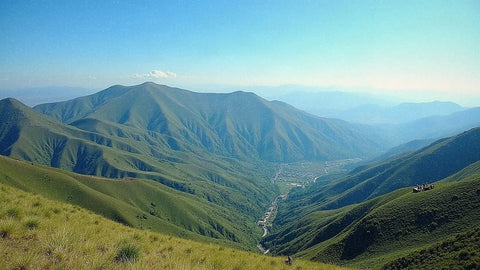
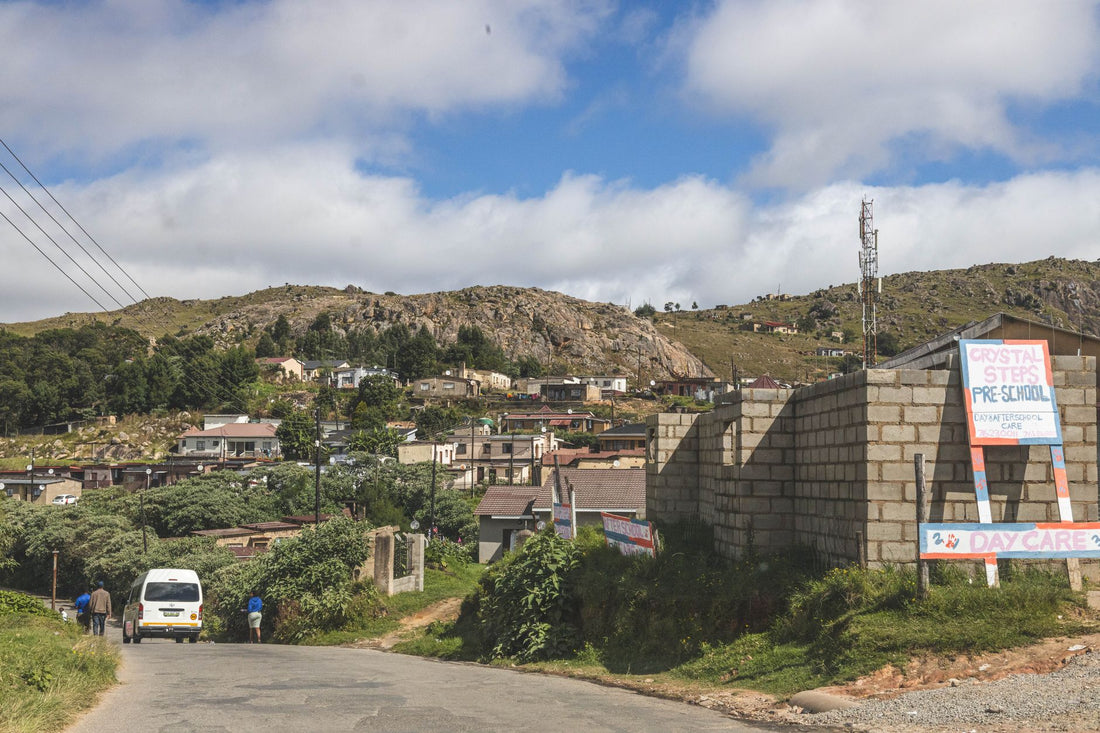
Eswatini is a compact destination but with uneven connectivity: in the administrative capital, Mbabane, and in tourist areas like the Ezulwini Valley or the Mlilwane reserve, there's good signal, while in rural mountain areas, it can be weak. With an eSIM supported by local networks, you'll have coverage where available without relying on hotel Wi-Fi, which in many lodges is slow or non-existent. And since it's a country often combined with South Africa or Mozambique on the same trip, you avoid changing physical cards every time you cross a border. If your itinerary includes other unusual African destinations, also check out our eSIM for Comoros, an example of how we cover destinations that barely have tourist SIM sales points.

Coverage and local operators
Mobile connectivity in Eswatini is shared between two main operators: Eswatini Mobile and MTN Eswatini, the latter part of the large pan-African MTN group. Both offer 4G in major cities and road corridors, with 3G as a backup in more remote areas.
The PuraSIM eSIM relies on these local networks, so you connect to the best available signal at each point without manual configuration. 4G coverage is strong in Mbabane, the commercial city of Manzini, and the axis connecting both, as well as at King Mswati III International Airport. In wildlife reserves and mountain passes, the speed drops, which is normal in the country's rugged terrain. A useful note: if you're going on a safari or moving through natural parks, download offline maps before entering areas with poorer signal, and activate background data saver on your phone so your eSIM lasts longer between recharges. You can find specific tricks to stretch your GBs in our guide on how to save data with an eSIM on a trip.
How many GB you need for your trip
The amount of data depends on how long you stay and your usage. As a reference, a typical one-week trip can be covered with a moderate plan including maps, messaging, social media, and some internet calls. This table serves as a guide:
| Travel profile | Days | Estimated data |
|---|---|---|
| Short stopover / business | 2-3 | 1-2 GB |
| Tourism and safari | 5-7 | 3-5 GB |
| Long trip with South Africa | 10-14 | 8-10 GB |
Tip: If you're going to upload a lot of safari photos or videos to social media, estimate on the higher side. Video consumes the most data; the rest (maps, WhatsApp, email) uses very little.
If you run short, you can always recharge or buy a second plan without losing your Spanish number. And if you're wondering if an eSIM is more convenient than that international physical chip you might have used on another trip, the detailed answer is in international chip vs. eSIM.

How to activate your eSIM in 1 minute
Activating your Eswatini eSIM is so simple that you'll do it from your couch before packing your suitcase. The complete process is as follows:
- Purchase the Eswatini plan and instantly receive the QR code by email.
- With Wi-Fi at home, go to Settings > Mobile Data > Add eSIM and scan the QR code.
- Label the line "Eswatini" and keep your Spanish SIM for calls and texts.
- Upon landing, activate the eSIM's data and start browsing from the first minute.
The entire setup takes about 1 minute and requires no technical knowledge. If it's your first time, the guide on how to install an eSIM walks you through it step-by-step, and if you're still unclear about the difference between a physical and virtual eSIM, we explain it without jargon in what is a virtual eSIM. Remember to install it before traveling, even if you don't activate it until you arrive.
Eswatini or Swaziland: what you will find
Eswatini is the official name since 2018 for the country formerly known as Swaziland. It is an absolute monarchy ruled by King Mswati III, nestled between South Africa and Mozambique, with Mbabane as the administrative capital and Lobamba as the royal and legislative capital.
For travelers, it's a surprisingly varied destination despite its size: wildlife reserves like Hlane and Mkhaya, the lush Ezulwini Valley with its craft markets, and a vibrant Swazi culture with festivals like Umhlanga. It can be explored in a few days and is often combined with South Africa's Kruger Park or the coast of Mozambique. This is why many travelers combine local eSIMs for each country on their route instead of relying on a single physical card that loses coverage when crossing a border. As a small country, reliable mobile data helps you navigate, book activities on the go, and stay in touch in areas where Wi-Fi is scarce. As a reference, at PuraSIM, we have over 200 destinations in our catalog and 24/7 email and WhatsApp support in all languages, so if your African route extends to another country, you can manage the eSIM for each leg within the same app.
eSIM vs. roaming and local SIM
The eSIM combines the best of roaming and local SIMs without their drawbacks: convenience and your same number, with real country prices and data. Traditional roaming from your Spanish operator to Eswatini can cost a lot per day, and a local physical SIM requires finding a store, showing documentation, and changing cards.
With an eSIM, everything is sorted before you leave: you pay a fixed rate, keep your Spanish line to receive bank SMS, and browse with local data. If you want to understand the differences clearly, we recommend reading eSIM vs. roaming, and if the concept of data roaming is still confusing, clarify your doubts in what is data roaming. For a country like Eswatini, where it's not always easy to find points of sale for tourist SIMs, arriving with the plan already installed saves you time and headaches precisely when you most want to be connected.
What almost no one tells you before going to Eswatini
There are details about the region that don't appear in general African guides but do affect how you'll use your eSIM. Here they are, straight to the point:
- The currency is the lilangeni, but it functions like the South African rand. It's pegged 1:1 to the rand, and the rand is accepted everywhere, so if you're coming from South Africa, you don't need to exchange cash. Card payments work well in Mbabane and Manzini; at craft stalls in Ezulwini, you'll almost always need cash, and no mobile data will solve that.
- Near the border, your phone might "get confused" about the country. At the Ngwenya/Oshoek crossing, the most common if you enter from Johannesburg, it's normal for your phone to pick up a South African tower for a few seconds before connecting to the local network. This isn't an eSIM fault: move a few meters away from the border line, and it will stabilize.
- The lowveld wildlife reserves (Hlane, Mkhaya) are in a malaria risk zone according to usual health recommendations for that strip of Southern Africa. Having reliable data there isn't just for uploading photos: it's for having your travel health app handy or being able to call if needed.
- If your trip coincides with the Umhlanga (Reed Dance) or another royal festival in Lobamba, the local network will be saturated, just as would happen at any large gathering of people in any country. If you're there during those dates, be patient with the speed on those specific days; it's not representative of the rest of your trip.
- Good coverage is concentrated on the Mbabane-Manzini axis. As soon as you deviate onto dirt roads north, towards Piggs Peak or Malolotja, the network drops to 3G or less. If you're staying in that area, download the complete route map beforehand, not just the final destination.
And a basic often forgotten: if there's open Wi-Fi at a lodge and you want to use it for a while to save eSIM data, do so cautiously, because open networks in small accommodations aren't always well protected. We dedicated an entire guide to this topic in eSIM, VPN, and travel privacy.
When you DON'T need an eSIM in Eswatini
Be honest with yourself before buying, because it's not always necessary. If your visit to Eswatini is a day trip from Kruger or Mbombela and you already have an active South African line, in the areas near Ngwenya, the signal will cross the border for that short time, and you probably won't need anything new for those few hours. It also won't pay off if you're staying in an all-inclusive lodge with guided activities and decent Wi-Fi in common areas, and your plan is to truly disconnect: in that case, a little emergency data will suffice, no need to load up on GBs. Where it does make a difference is if you're traveling independently, driving yourself between reserves and cities, or need to work and be reachable during your trip: in that scenario, stable internet is what prevents you from missing a turn on the MR3 or being unable to confirm a last-minute booking.
Frequently asked questions
Does the eSIM work throughout Eswatini?
It works wherever there is coverage from local operators, which is good in Mbabane, Manzini, the Ezulwini Valley, and main corridors. In wildlife reserves and mountain areas, the signal may drop, so it's advisable to download offline maps before entering those areas.
How many GB do I need for a week in Eswatini?
For a week-long tourist trip with maps, messaging, and social media, 3 to 5 GB is usually sufficient. If you upload many safari videos to social media, estimate a bit more. You can always recharge without losing your Spanish number if you run out.
Can I use the same eSIM in Eswatini and South Africa?
The Eswatini eSIM is designed for that country. If your route includes South Africa or Mozambique, it's ideal to add a plan for each country or consider a regional Africa plan. This way you'll have optimal coverage in each segment without changing physical cards.
Do I need an unlocked phone to use an eSIM in Eswatini?
Yes. As with any eSIM, your phone must be unlocked from a carrier and be eSIM compatible. You can check compatibility by dialing *#06# and looking for the EID number. Almost all mid-to-high-end phones from recent years meet both requirements.
When should I activate the Eswatini eSIM?
Install it at home with Wi-Fi before traveling, but do not activate the data until you land in Eswatini so that the plan starts counting at your destination. The installation takes about one minute, so you arrive with internet from the moment you get off the plane.
Is an eSIM better than hotel Wi-Fi in Eswatini?
It depends on the accommodation, but generally, an eSIM is more reliable. Many lodges and small accommodations in the Ezulwini Valley or reserves have slow or unstable Wi-Fi, so having your own data prevents you from relying on that connection for maps, messaging, or work while you're out of the room.
What happens to coverage if I cross the border into South Africa or Mozambique on the same trip?
The Eswatini eSIM is designed to work within the country; in border areas, it's normal for your phone to briefly detect a neighboring network before stabilizing on the local one. If your route continues to another country, the most practical approach is to have a data plan for each destination instead of forcing a single one to cover multiple borders.
Conclusion
An eSIM for Eswatini saves you expensive roaming and the hassle of finding local cards, giving you reliable internet in Mbabane, the Ezulwini Valley, and the country's corridors from the first minute. It installs at home in a minute, you keep your Spanish number, and you browse with local data throughout your trip. Choose your data plan for Eswatini and arrive connected to the former Swaziland with no surprises on your bill.