In short: the eSIM for Mombasa is actually the Kenya eSIM: there's no city-specific plan, and the national plan covers Moi Airport, Mombasa Island, Nyali, and Diani. Activate it before you fly, no passport or queues required, and choose between 3 and 10 GB depending on whether you combine a safari with the beach.
If your trip to Kenya includes the coast, arriving with an eSIM for Mombasa activated from your home country saves you the hassle of finding local SIMs, queuing at the airport, and handing over your passport to register a card. Here, we explain what coverage you'll have between the city and Diani beaches, how many GB you should get if combining coast and safari, and why the plan you need is for Kenya, which covers Mombasa and the entire country.
Mombasa is included in the Kenya plan, not separate
For Mombasa, you buy the Kenya eSIM: the city doesn't have its own plan, and the country's plan covers it entirely, from Moi Airport to the southern beaches. With a single eSIM, you'll have data on Mombasa Island, in Nyali, in Diani, and on the road to Nairobi or the parks.
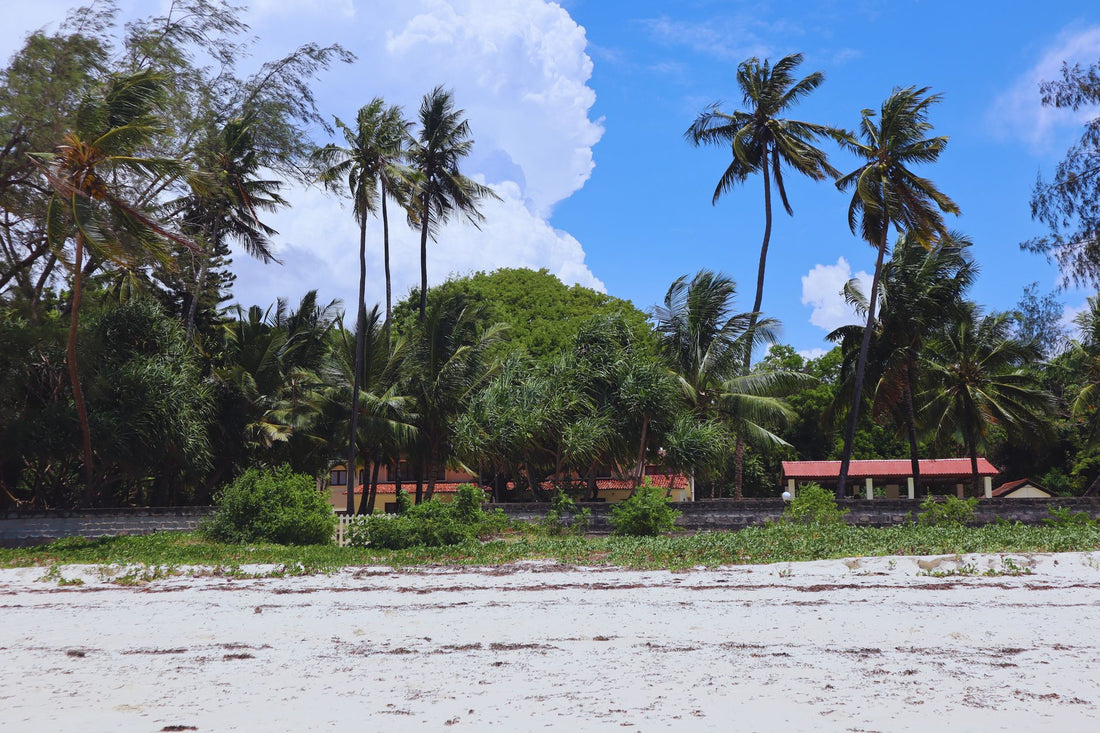
Mombasa is Kenya's second-largest city and the main gateway to the Indian Ocean coast: the old town with Fort Jesus, the port, and especially the beaches of Nyali, Bamburi, and Diani, which are among the most famous in East Africa. Since almost no one stays only in the city, a plan that covers the entire country is the most practical. The network relies on local operators, with Safaricom and Airtel as the main ones, providing good mobile coverage in tourist areas. The plan you're looking for is the eSIM for Kenya.

Coverage in Mombasa, Diani, and the coast
Coverage along the coastal strip is solid in tourist hubs. Mombasa's Moi International Airport (code MBA) has signal, so you can activate data upon landing and arrange your transfer without relying on hotel Wi-Fi.
In the city and the most visited beach areas (Nyali, Bamburi, Shanzu to the north, and Diani to the south, crossing the Likoni ferry), the 4G connection works well in most resorts and towns. Signal can become irregular on isolated road sections, in very secluded coves, or if you venture into rural areas far from population centers. For a coastal trip, based at a hotel with excursions to beaches and reefs, you'll almost always have a connection. If you want to make your data last in areas with fair signal, apply our tricks to save data abroad.
Coastal tip: download offline maps of Mombasa and your beach area before you leave. That way, even if the signal is weak in some stretches, you'll still be able to navigate without using data or getting lost.
A detail almost no one mentions: in the Old Town, next to Fort Jesus, the alleys are narrow and the coral stone walls are thick, so the signal inside shops and old houses is weaker than in the street. Nothing serious, but if you're going to make a video call from there, step out into the main alley first. Crossing on the Likoni ferry, which connects the island to the south towards Diani, also cuts the connection for a couple of minutes in the middle of the channel: it's not an eSIM fault; it happens to all operators equally, so don't waste time trying to reconnect until you reach the other shore.
GB for combining beach and safari
Most trips to Mombasa combine beach with a safari, and that influences the data you'll need. At the resort, you'll mostly use Wi-Fi; during transfers and on safari, however, you'll depend on your eSIM. This table guides you based on the type of trip.
| Type of trip | Duration | Recommended GB |
|---|---|---|
| Coast only, plenty of hotel Wi-Fi | 7 days | 3 GB |
| Coast + daily excursions | 7-10 days | 5 GB |
| Coast + safari in parks | 10-12 days | 8-10 GB |
| High usage (photos, video, hotspot) | 2 weeks | 10-15 GB |
Keep in mind that video and uploading high-quality wildlife photos use a lot of data; checking maps, WhatsApp, and email use very little. If you're going to share a lot of safari content or make video calls to show animals live, aim for the higher end of the table. And if you run short, you can top up your eSIM without changing cards. A little-known trick: most safari lodges share Wi-Fi among all guests, so if you're going to check your bank or work email from there, it's best to have a VPN activated to protect your privacy on public networks, whether you're using shared Wi-Fi or eSIM data in a saturated network area.
And if your plan is to stay at a single all-inclusive resort in Diani or Nyali without hardly leaving the premises, you don't need the higher end of the table: the hotel's Wi-Fi covers the essentials, and you only need your eSIM to handle the journey from the airport, an occasional afternoon on the public beach, and the photos you upload outside the Wi-Fi zone. In that case, 3 GB will be plenty; don't buy more "just in case."

Why eSIM beats Kenyan local SIM
Buying a local SIM in Kenya is possible, but it means registering it with your passport, queuing right after landing tired from the flight, and hoping the salesperson configures your phone correctly. With an eSIM, you skip all that: you buy and install it at home, and arrive in Mombasa with your data ready.
Compared to your home operator's roaming, the advantage is even clearer. Kenya is far from the European zone, so roaming is charged at international rates, and the risk of a skyrocketing bill is real: always check the current price with your operator before you leave. With an eSIM, you pay a fixed rate for the contracted GB and control your spending from minute one. If you're deciding between the three options, we compare them in our guide on eSIM versus roaming and on international chip versus eSIM.
Install and activate eSIM before flying
Prepare your eSIM at home, with Wi-Fi, before boarding the plane. The process is quick, and you avoid any configuration issues when you're far from a stable connection.
- Purchase the Kenya plan and instantly receive the QR code via email.
- Go to Settings, Mobile Data, and "Add eSIM."
- Scan the QR and wait for the line to be installed on your phone.
- Leave the line configured but do not activate data yet.
- Upon landing at Moi Airport, activate data roaming for the eSIM.
Remember that activating data roaming for the eSIM is not paying roaming to your home operator: it only allows the Kenyan line to connect. Your home number remains active for SMS and calls if you leave it on. If this is your first eSIM, refer to the guide on how to install an eSIM, with steps for iPhone and Android.
A common mistake is getting confused with the phone's toggles: activate only data roaming for the Kenyan line and leave your home line's data roaming off, so you don't incur charges if your plan doesn't include it. If you're unsure what each toggle does exactly, our guide on what data roaming is explains it step by step. And download the QR and install the line calmly, at home: Moi Airport's Wi-Fi is not always stable, so it's not a good time to do it for the first time with your bags already on the carousel.
Connectivity in the nearby national parks
From Mombasa, many travelers go on safari in Tsavo East and Tsavo West, or fly to Masai Mara and Amboseli. In these parks, coverage is naturally more limited than on the coast: there is signal near lodges and entrances, but it is lost in the interior of the savannah. This is normal and part of the safari experience of disconnecting.
For these days, the eSIM allows you to stay connected during transfers, at accommodations, and when you return to areas with coverage. Download maps and any information you need in advance, and use the lodge's Wi-Fi for heavy tasks. If after the safari you continue exploring destinations in the Indian Ocean, we also have a guide for eSIM for Comoros. With the Kenya eSIM and some foresight, the coast and safari are well covered.
Myths about eSIM in Mombasa (what almost no one tells you)
"The local SIM at the airport is cheaper." Sometimes yes, sometimes no, and the actual savings almost never compensate for the lost time: Safaricom and Airtel stands at Moi usually have queues right after landing, require a passport for registration, and if many people arrived on the same flight, they sometimes run out of tourist cards until they restock. With the eSIM already active before leaving your home country, you use that fifteen minutes to order a taxi or find your hotel transfer.
"If my phone isn't new, it won't have an eSIM." It doesn't have to be the latest model: most iPhones from the XS and many mid-range Android phones from recent years have it. What sometimes fails is if the phone is locked by the original operator; if you never unlocked it, check it before buying the plan, not upon arrival in Mombasa.
"With an eSIM, I no longer need my home line." Keep it active, even without data: it's the number where you receive verification SMS from your bank or apps with two-factor authentication, and on a trip with a safari, you might need to confirm something exactly when you're out of coverage with the Kenyan eSIM.
"During peak season, the speed is the same all day." Not always. With resorts in Diani and Nyali full during peak times, the network gets saturated in the late afternoon/evening, when a good part of the hotel connects at the same time to make video calls or upload photos from the day. If you need real bandwidth for something important, it's best to do it first thing in the morning.
Frequently asked questions
Should I buy an eSIM for Mombasa or for Kenya?
You should buy the one for Kenya. Mombasa does not have its own plan, so the country's eSIM covers the city, Moi Airport, the coastal beaches, and the rest of the territory. It is the correct option for both a beach trip and if you add a safari.
Is there coverage on Diani Beach?
Yes. Diani is one of the most developed tourist areas on the coast and has good 4G coverage in most resorts and towns. The signal only becomes irregular in isolated stretches or very secluded coves, which is common outside tourist centers.
Do I need to register the eSIM with my passport like a local SIM?
No. One of the big advantages of eSIM is that you buy and install it online without in-person procedures or passport registration at a counter. A local Kenyan SIM does require this registration; the eSIM completely saves you from it.
Will my eSIM work during a safari in Tsavo or Masai Mara?
Partially. There is usually signal near lodges and park entrances, but coverage is lost in the interior of the savannah. This is normal for any operator. Download maps and content beforehand, and use the lodge's Wi-Fi for heavy data usage.
How many GB do I need for ten days of coast and safari?
For a combination of beach and safari lasting about ten days, an 8 to 10 GB plan is usually sufficient if you use the hotel's Wi-Fi for heavy tasks. If you're going to upload many wildlife videos or make video calls, aim for 15 GB to avoid running out.
Can I activate the eSIM right after landing at Moi Airport?
Yes, but install the line (scan the QR) before flying, with stable Wi-Fi at home. Upon landing at Moi, you just need to go to Settings and activate data roaming for the eSIM: it takes seconds and you don't depend on airport Wi-Fi for that last step.
Do I need my phone unlocked to use an eSIM in Kenya?
Yes. If your phone is still associated with its original operator and you haven't unlocked it, you won won't be able to install an eSIM from another provider. Check this before purchasing the plan; it's usually resolved with a simple process with your home operator.
Conclusion
Mombasa combines an Indian Ocean beach and a gateway to safari, and with an eSIM, you arrive connected without queues or registrations. Remember that the city is covered by the Kenya plan, adjust your GB based on whether you add a safari, and prepare maps for areas with limited signal. Travel with a Kenya eSIM ready for the coast and forget about roaming.