In summary: an eSIM for Punta Cana is actually a Dominican Republic eSIM that you activate at the airport or resort, giving you your own mobile data, without roaming or relying on the hotel's WiFi. For a week at the beach, 5 GB is usually enough; on sea excursions, such as Saona Island, it is normal to lose coverage for a while.
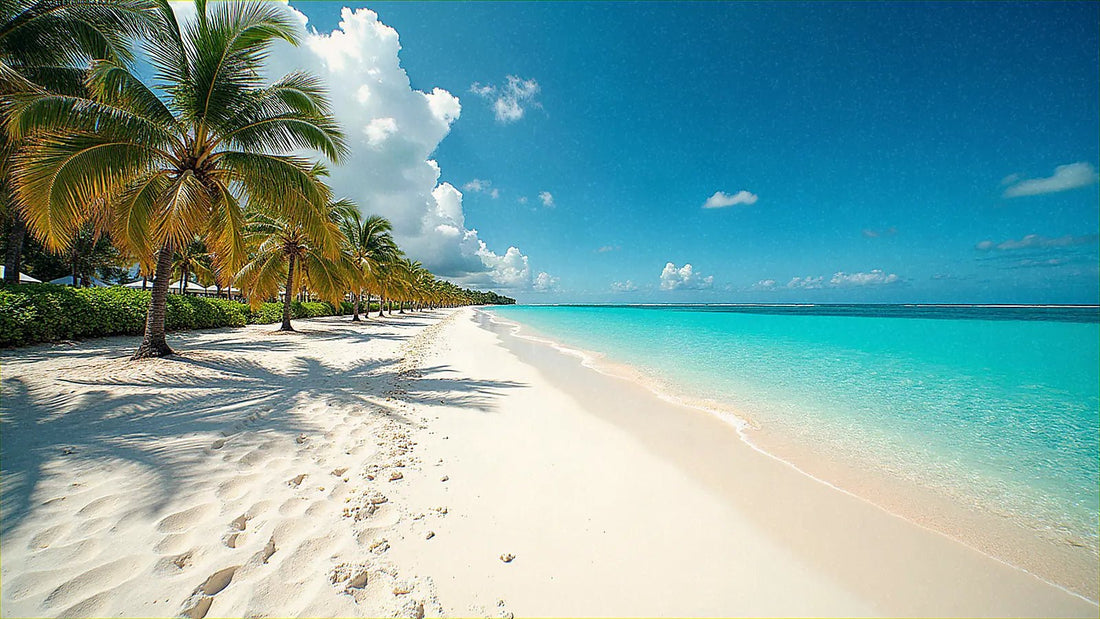
Punta Cana is synonymous with resorts, palm trees, and postcard-perfect beaches, but even on an all-inclusive vacation, you'll want internet to share photos, order an Uber to Bávaro, or book an excursion to Saona Island. The eSIM for Punta Cana gives you data from the moment you land, without relying solely on hotel WiFi or getting hit with your carrier's roaming charges. A beach trip uses less data than you might think but needs connectivity at key moments. Here's everything you need to know before packing your bags.
What exactly is an eSIM for Punta Cana?
There is no "Punta Cana only" card: what you buy is a Dominican Republic eSIM, a digital profile installed via QR code that covers the entire country, from Punta Cana and Bávaro to Santo Domingo or Puerto Plata. The only thing that changes depending on your trip is the size of the data plan, not the profile you install. If you've never used one, it's worth understanding first what a virtual eSIM is and why it has replaced the physical plastic SIM in most tourist destinations.
The eSIM relies on the networks of Dominican operators (Claro and Altice, mainly), which offer good coverage in the tourist area of the east of the country. Technically, it is a profile that is downloaded to your own phone: there's no need to open the SIM tray, no physical card to lose or to change mid-trip. You buy it online, install it calmly before leaving home, and activate it once you arrive at your destination.

Coverage at the resort, beach, and on excursions
The direct answer: in the Punta Cana and Bávaro area, mobile coverage is good. Resorts, Bávaro beach, Cap Cana, and the San Juan shopping center have stable 4G. The eastern Dominican Republic concentrates most of the country's tourist infrastructure, and with it, the antennas: it is one of the best-covered areas in the Dominican Republic.
Within the hotel grounds, you'll browse without problems, and on day trips to Macao, Cabeza de Toro, or the town of Higüey, you'll maintain a connection in inhabited areas. On the boat to Saona Island, however, expect to lose coverage for part of the journey: it's open sea, and no local card changes that, whether physical or eSIM. The same happens in some sections of the excursion to Hoyo Azul, surrounded by jungle. For these getaways, it's a good idea to download the map and meeting point info beforehand and let your group know that you might take a while to reply.
A nuance that almost no one explains: coverage in Punta Cana doesn't depend on whether your eSIM is "expensive" or "cheap," it depends on the network of the Dominican operator your profile connects to. No matter how much you pay, if you're in the open sea, there's no antenna that can reach you. The eSIM solves the problem of having data on land, not the problem of being without coverage anywhere on the planet.
Hotel WiFi, roaming, or eSIM: what to use when
Almost all resorts in Punta Cana offer WiFi, sometimes free and sometimes with faster premium plans. It's good for long video calls or uploading a heavy video, but resort WiFi tends to be stretched when hundreds of guests use it at once, for example, at dinner time or late at night. And it doesn't accompany you to the pool, the beach, or on your day excursion.
That's where the eSIM makes a difference: your own stable data to order a taxi, find a restaurant outside the hotel, or send your location to your group. Compared to roaming from your Spanish carrier, which in many cases applies rates outside the European Union that can exceed several euros a day or charge per megabyte consumed, the eSIM is usually more cost-effective and allows you to set in advance how many GB you've contracted. If you want to understand why international roaming is so expensive outside Europe, it's worth reading before you travel, and the complete comparison between eSIM and roaming makes it clear when each option is worthwhile.
The combination that works best on the ground is simple: hotel WiFi for large downloads when you're in your room, and eSIM for everything else, which means ninety percent of the day. Plus, entering bank details or making a transfer on unprotected public WiFi isn't the safest; if you're going to use open networks at the hotel or a bar, a VPN to protect your privacy during your trip adds an extra layer that almost no one activates until they've already had a scare.
Quick comparison: eSIM vs. roaming vs. hotel WiFi
| Option | Approximate cost | Coverage outside the hotel | Ease of use |
|---|---|---|---|
| Dominican Republic eSIM | Fixed price per GB, known before traveling | Yes, in all areas with mobile coverage | Installed before leaving, activated upon landing |
| Spanish carrier roaming | Variable; outside the EU can skyrocket per day or per MB | Yes, same network you use in Spain | Automatic, but without spending control |
| Hotel WiFi | Included or with premium supplement | Only within the premises | Depends on network saturation |

How many GB do you need for a week at the beach?
An all-inclusive beach trip consumes less data than an urban trip, because you spend hours without looking at your phone: between swimming, sunbathing, and the buffet, your phone rests for a good part of the day. For a week in Punta Cana, 5 GB is usually enough if you use the hotel's WiFi for heavy tasks, like uploading long videos or backing up photos. This table provides guidance based on the type of stay:
| Stay | Days | Estimated GB | Intended use |
|---|---|---|---|
| Short getaway | 3-4 | 3 GB | Photos, WhatsApp, maps |
| Beach week | 7 | 5 GB | Social media, some excursions, taxis |
| Ten days | 10 | 8 GB | More excursions and stories |
| Active honeymoon | 7-10 | 10 GB | Video, hotspot, and video calls |
Useful tip: if you're sharing the trip with your partner, each phone needs its own eSIM. Another option is to use one phone's hotspot for the other, although this consumes the plan faster than it seems, especially if the second phone is used for video browsing.
Since a good part of the leisure in Punta Cana involves the beach and pool, your actual consumption will be low. The exception is on excursion days, when you rely more on maps, photos, and, if you're in a group, real-time location sharing. If you're unsure how much to contract, you can always start with an intermediate plan: most travel eSIMs allow you to extend data from your phone if you run short, without having to buy a new profile.
Arriving at Punta Cana airport already connected
Punta Cana International Airport (PUJ) receives direct flights from Spain and is your first contact with the island. With an eSIM, you arrive connected: you activate the data upon landing and you already have internet to locate your transfer to the hotel or let people know you've arrived safely, without looking for a SIM counter or queuing with your luggage in tow.
This is especially convenient when the transfer is arranged by an agency and you need to confirm the meeting point or the driver's name as soon as you leave the terminal. The actual activation, with a Dominican network, usually takes about a minute once the plane has landed and the mobile searches for the new network. If you've never done it, the guide on how to install an eSIM will get the process ready before you fly, with the specific settings you need to adjust so that the data connects first time. It's a one-time process: once that's done, the rest of the trip you only have to worry about the beach.
Install and activate without hassle
Installing the eSIM doesn't require you to remove your Spanish SIM, which continues to receive bank SMS and calls to your usual number. The eSIM only provides Dominican data, like a second line that coexists with the first.
- Confirm that your mobile is eSIM compatible (almost all recent models are, though it's worth checking if the phone came from outside the EU or is heavily carrier-locked).
- Purchase the Dominican Republic eSIM and receive the QR code by email.
- Scan it from your phone settings, using home WiFi, before traveling. It doesn't consume data or activate the plan yet.
- Upon landing in Punta Cana, manually activate the new data profile from your network settings.
With this, you arrive at the beach with your homework done and no surprises on your phone bill when you return home.
What almost no one tells you about traveling with an eSIM to Punta Cana
Beyond the basics, there are a number of details that you only learn if you have already traveled with an eSIM, or if someone tells you first:
- Install the profile before leaving home, but don't activate it until you land. Scanning the QR doesn't use data or activate the plan; it just saves the profile. This way you avoid relying on hotel WiFi on the first day, which is usually the most chaotic with check-in.
- Take a screenshot of the QR code and save it to your gallery. If you need to reinstall the profile at another point in your trip, for example after an accidental factory reset, it saves you from having to dig through your email on slow airport WiFi.
- Leave airplane mode activated with the eSIM profile's mobile data turned on. This is the combination experienced travelers use to avoid receiving roaming calls from their Spanish line while browsing with Dominican data.
- Check which line uses data by default. On dual SIM phones, if you don't select the correct data line, you could end up browsing with your Spanish line and paying for roaming without realizing it, which happens more often than it seems in the first few days.
- The excursion to Saona Island is the only real black spot of the trip. It's not an eSIM or carrier fault: it's simply open sea with no antennas nearby. Warn anyone staying in Spain that you will be disconnected for a few hours on that specific day.
- If you're going to use the hotspot a lot to share data with your partner or children, estimate high. Sharing a connection uses up the data plan significantly faster than using it on a single phone, and it's easy to run short mid-week if it hasn't been planned for.
If your trip doesn't end in Punta Cana
Not all trips are just resorts. If you plan to move around the country, combine the beach with Santo Domingo, or take a getaway to another Caribbean island, it's a good idea to plan your data with some leeway: check the tips in the guide on how to save data on an eSIM trip before buying the plan, especially if you're going to rely on your phone for road navigation. And if your return flight has a long layover in the United States and you take the opportunity to leave the airport for a few hours, the eSIM for the United States solves that specific part of the journey without activating roaming just for a few hours of layover.
Frequently asked questions
Is there coverage on Bávaro beach?
Yes, the Bávaro and Punta Cana area has good 4G coverage on beaches and at resorts. Only on open sea excursions, such as the boat trip to Saona Island, can you expect stretches without signal, which does not depend on the eSIM but on being far from any antenna.
Does the eSIM work throughout the resort, not just in the room?
Yes. The eSIM provides mobile data throughout the area, including the resort, and does not depend on the hotel's WiFi or being near a router. In fact, it is the most reliable option when the WiFi is slow due to saturation during peak hours, such as after dinner.
Can the eSIM be used to call Spain from Punta Cana?
Travel eSIM plans are for data, so you make calls via WhatsApp, FaceTime, or any internet calling app, which work perfectly with the eSIM connection. Your Spanish number remains active on your phone to receive SMS, but making a traditional roaming call with that line would incur an extra cost.
How many GB does a week of all-inclusive in Punta Cana consume?
Less than it seems: spending a lot of time on the beach and by the pool significantly reduces data consumption compared to a city trip. About 5 GB is usually enough for a week if you use the hotel's WiFi for large downloads and the eSIM for the rest of the day.
Can I share the eSIM with my partner or family?
Each mobile needs to install its own eSIM profile; it cannot be duplicated on two phones at once. What you can do is share one mobile's connection with the other using the hotspot, although this consumes the data plan faster, so it's advisable to adjust the GB upwards if you plan to do it often.
Do I need to remove my physical Spanish SIM to use the eSIM in Punta Cana?
No. Most modern phones allow you to have both lines active at the same time: the Spanish SIM, which continues to receive SMS and calls to your usual number, and the eSIM profile, which is solely responsible for Dominican data. You just need to properly configure which line uses data by default.
When should I activate the eSIM, before flying or upon landing?
Install it at home, calmly and with WiFi, but only activate it when you land in Punta Cana. Installing the profile does not consume data or start counting the plan days; activating it does, so doing it right upon arrival makes the most of every contracted GB.
Conclusion
In Punta Cana, the beach rules and your phone rests, but an eSIM installed from home ensures you have internet when you really need it: for excursions, taxis, confirming airport transfers, and those photos you want to share instantly. Leave the hotel WiFi for heavy tasks, avoid expensive roaming outside the European Union, and always have your own data with you throughout your trip.