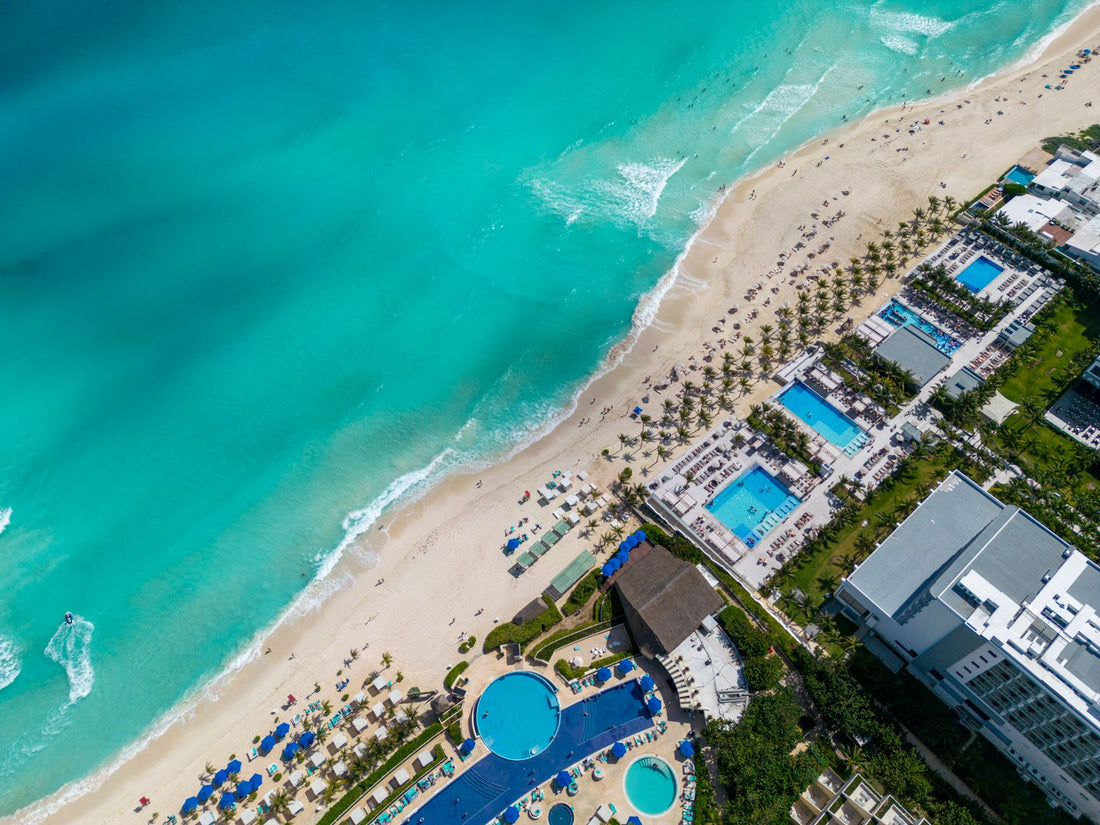
In short: the best eSIM for Mexico is one that combines good coverage on the most extensive local network, a fair price per GB, and immediate activation with a QR code. For beach and city trips, a gigabyte plan is sufficient; if you're traveling inland, prioritize coverage over price and arrive with your data already set up.
Before flying to Cancun or Mexico City, you need to decide how you'll get internet, and the options are multiplying. In this comparison, we tell you what makes an eSIM for Mexico the best choice for your trip: real coverage in the Riviera Maya, price per GB, how much data you actually need, and when it's better than roaming or a local SIM. The idea is simple: land with internet, no roaming, no stress.
What is the best eSIM for Mexico?
The best eSIM for Mexico combines good coverage on local networks, a fair price per GB, and immediate activation with no paperwork. For a beach and city trip, a data plan that works on the country's most extensive network gives you stable connection in both the Riviera Maya and the historic center of the capital. You don't have to look for Wi-Fi upon landing or queue at any store.
There's no single valid answer for everyone: it depends on how many days you're staying, whether you're venturing away from tourist areas, and how much data you consume. What the best options have in common is that they are installed in a minute with a QR code and avoid your Spanish operator's roaming charges. Our Mexico eSIM is designed precisely for that: day-based plans, local network coverage, and Spanish-language support.
If you're still comparing brands and general prices, it's a good idea to know your budget per gigabyte before diving into the specifics for Mexico.

What is an eSIM and why is it so suitable for Mexico?
An eSIM is a digital SIM already integrated into your mobile phone. Instead of inserting a physical card, you download a profile with a QR code and activate data for the country you're traveling to. Your Spanish line remains on your phone, so you keep your number for WhatsApp, banking, and receiving those annoying verification SMS that always arrive at the worst possible moment.
For a destination like Mexico, this works wonderfully. You arrive in Cancún in the early morning, step off the plane, and already have data without depending on an open store or an overloaded airport Wi-Fi. You buy it calmly from home, install it before flying, and have it ready to activate upon landing.
Of course, there's a requirement: your phone must be compatible. Most mid-range and high-end phones from recent years are, but it's advisable to confirm this before purchasing by checking the manufacturer's list of eSIM-compatible models.
What to look for before choosing
Don't just focus on the cover price. These are the factors that really make a difference in Mexico:
- Local network used: Coverage outside major cities depends on which Mexican operator the eSIM relies on. This is the number one factor if you're traveling inland.
- Price per GB, not per plan: A "cheap" 1 GB plan can be more expensive per gigabyte than a 10 GB plan. Always divide the price by the gigabytes to truly compare.
- Validity: Ensure the validity days cover your entire trip, not just the first week. A 15-day eSIM for a 20-day trip will fall short.
- Data sharing: If you're traveling as a couple or family, ensure it allows hotspot sharing without extra charges. This way, a single eSIM can provide internet to multiple phones.
- Spanish-language support: If something goes wrong at two in the morning, you'll appreciate help that understands you and responds quickly.
With these five clear points, comparing stops being a hassle. The usual trap is to focus only on the headline "1 GB for very little" and discover halfway through your trip that you've run out of data in Tulum.
Coverage by zone: Cancún, CDMX, and towns
Mexico is huge, and the signal isn't the same everywhere. In tourist areas (Cancún, Playa del Carmen, Tulum, Mexico City, Guadalajara, Monterrey), you'll have 4G and 5G without issue with any decent eSIM. The challenge appears when you venture further afield: cenotes, towns in Oaxaca or Chiapas, mountains and inland roads.
This is where it matters which local network your eSIM relies on, because the network with the most extensive rural coverage in the country performs better in those areas. If your trip is mainly coast and capital, almost any plan will do; if you're traveling inland, prioritize coverage over price. We have city guides like the one for eSIM in Cancún and eSIM in Mexico City, if you want to fine-tune based on your route to the coast or the capital.
Tip: download offline maps of your route before you leave. Even if you have data, the signal can drop in cenotes and jungle areas, and a downloaded map can save your day.

Plan type comparison
To choose well, it's helpful to understand the types of plans available and who each one is for. This table summarizes the most common options for a trip to Mexico.
| Plan Type | Ideal For | Things to Consider |
|---|---|---|
| Data by GB (5-10 GB) | Short beach or city trip | Best price per GB; monitor your daily usage |
| Large or High Data | Remote work, streaming, lots of maps | Ensure validity days cover your trip |
| Regional North America eSIM | Mexico + USA on the same trip | A single profile for multiple countries |
| Family or Shared Plan | Couples and families | Allows hotspot without extra charge |
| Long Stay (2-4 weeks) | Long trips and temporary expats | Prioritize long validity and top-up option |
If you combine Mexico with the United States, instead of two eSIMs, a regional one is better: with a North America eSIM, you have a single profile for the entire trip and avoid changing eSIMs when crossing the border.
How much data do you need for Mexico?
The million-dollar question. As a reference, for normal holiday use (maps, WhatsApp, social media, some photo uploads to the cloud), 1 to 1.5 GB per day is usually sufficient. A week in Cancún uploading photos daily rounds out to 7 to 10 GB; two weeks of travel, between 15 and 20 GB.
If you work remotely or watch videos, double that estimate or look for a large data plan. And remember that hotel and many restaurant Wi-Fi networks will cover a good portion of your usage: uploading your day's photo album at night from your accommodation's Wi-Fi saves a lot of mobile data. An extra trick to avoid running short is to activate your phone's data usage warning, so it notifies you when you're nearing your plan's limit and you can top up in time without interruptions.
This table gives you a quick estimate based on your travel profile:
| Travel Profile | Approx. Daily Usage | For One Week |
|---|---|---|
| Light use (messaging, occasional maps) | 0.5 - 1 GB | 3.5 - 7 GB |
| Normal holiday use (social media, photos) | 1 - 1.5 GB | 7 - 10 GB |
| Intense use (streaming, remote work) | 2.5 - 3.5 GB | 18 - 25 GB |
To refine your calculation based on the number of days and your travel style, check out our guide on how much data I need for travel. If your plan is two full weeks exploring the country, we also have a specific guide for eSIM for Mexico in 2 weeks with more detailed estimates.
How to install and activate your eSIM step-by-step
One of the great advantages of an eSIM is how easy it is to get it ready. The process, broadly speaking, is this:
- Buy before you fly from home, with your Wi-Fi and no rush. You'll receive a QR code by email.
- Install the profile by scanning the QR code from your phone's mobile data settings. This only adds the eSIM; it doesn't use data yet.
- Activate data upon landing in Mexico, selecting the eSIM as your data line and enabling data roaming for that profile (this is normal and necessary, don't worry).
- Check the APN if for some reason you can't browse: it almost always configures itself, but it's good to know where to look.
Our advice is to install the profile at home, with a good connection, and leave data activation for when you arrive in Mexico. If you want screen-by-screen details, you can find the guide on how to install an eSIM with all the steps. Taking five minutes the night before your flight saves you from juggling your phone right after getting off the plane.
eSIM vs. roaming and local SIM
Why eSIM and not something else? Roaming from your Spanish operator in Mexico usually costs several euros a day and can exceed ten or twenty euros daily depending on the rate, which is a fortune for two weeks. A local physical SIM is cheap for data, but it means queuing at an Oxxo or the airport, sometimes with identity registration, and losing your Spanish number.
The eSIM combines the best of both: local plan pricing and the convenience of buying it from home before you fly, while keeping your Spanish number for banking and WhatsApp. You don't queue, you don't hand your ID to anyone, and you don't depend on a shop being open when you land in Cancún in the early morning. Plus, by buying it in advance, you arrive in Mexico with your phone already configured: you just activate the data and enjoy.
We compare it in depth in eSIM versus roaming, if you want to examine the pros and cons closely before deciding.
Common mistakes and what almost no one tells you
Here are the pitfalls we see time and again, and some advice that doesn't usually appear in typical guides:
- Choosing based on cover price. The cheapest plan in total gigabytes is almost never the cheapest per GB. Do the division before paying.
- Buying at your destination "just in case." If you wait until you arrive, you'll have to find Wi-Fi, compare in a rush, and perhaps register your passport. Buying beforehand saves you that stress and you'll have data from minute one.
- Forgetting to activate data roaming for the eSIM profile. It sounds contradictory, but the eSIM needs roaming activated for that profile to work on the local network. This is normal and won't charge you extra: it's your plan's data.
- Not setting the eSIM as the data line. Many phones keep trying to use the Spanish line. Go into settings and choose the eSIM for mobile data.
- Trusting "unlimited" data that isn't really unlimited. Many "unlimited" plans have a fair use policy: after a certain threshold, the speed decreases. For normal holidays, a well-calculated GB plan is usually better and without surprises.
And a gem few mention: in Mexico, the emergency number is 911, just like in many countries, and it works even if you don't have data. Also save your embassy's phone number. Another practical detail: activate your phone's data usage warning on the first day, so the system notifies you when you're nearing your plan's limit and you can top up before getting stranded without internet on the road.
Frequently asked questions
Which eSIM has the best coverage in Mexico?
Those that rely on the local network with the widest coverage in the country offer better signal outside tourist areas. In Cancún, the Riviera Maya, and Mexico City, almost any eSIM works well; the interior and towns are where the network difference truly shows.
How much does an eSIM for Mexico cost?
It depends on the GB and days. Data plans for Mexico start at very competitive prices per GB, well below the several-euro-per-day roaming charges of a Spanish operator. Buy according to your travel days and estimated data to avoid overpaying. Check the current price before purchasing, as offers change.
Does the Mexico eSIM work in Cancún and the Riviera Maya?
Yes. The entire coast of Quintana Roo (Cancún, Playa del Carmen, Tulum) has good 4G and 5G coverage. A travel eSIM gives you data as soon as you land at Cancún airport, without needing to find Wi-Fi or buy a local SIM.
Do I need unlimited data for Mexico?
Rarely. With 1 to 1.5 GB per day, you cover maps, messaging, social media, and photos. Unlimited data only pays off if you work remotely or watch a lot of video, and many have a fair use policy. For normal holidays, a GB plan is cheaper and gives you plenty of leeway.
Can I use the same eSIM in Mexico and the United States?
Yes, if you choose a regional North America eSIM instead of one just for Mexico. With a single profile, you have data in both countries, ideal if you're combining Cancún with a stop in Miami or Los Angeles on the same trip, without having to change eSIMs.
Do I keep my WhatsApp number with the eSIM?
Yes. The eSIM provides you with data, but your Spanish line remains on your phone, so you keep your number for WhatsApp, calls, and bank SMS. WhatsApp works with the eSIM's data without changing anything in your account.
When should I buy and activate the eSIM?
Buy and install the profile before flying, using your home Wi-Fi. Leave data activation for when you land in Mexico: this way, everything is ready, and you just have to select the eSIM as your data line. Validity doesn't start until you connect.
Conclusion
The best eSIM for Mexico is one that balances coverage on your route, price per GB, and validity days, not simply the cheapest upfront. For a beach and city trip, a GB plan with a good local network is more than enough; for inland travel, prioritize coverage. Buy your Mexico eSIM before flying and land in Cancún with data from the very first minute, without roaming or queues.