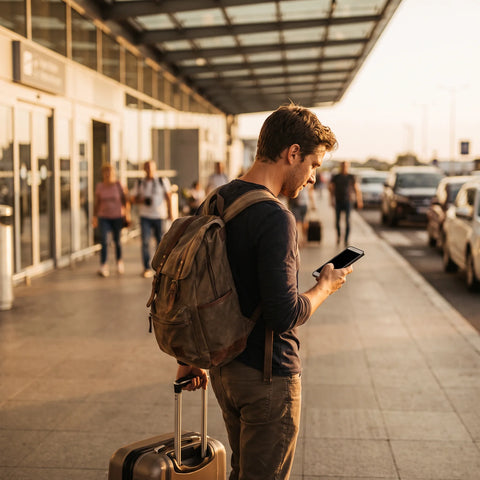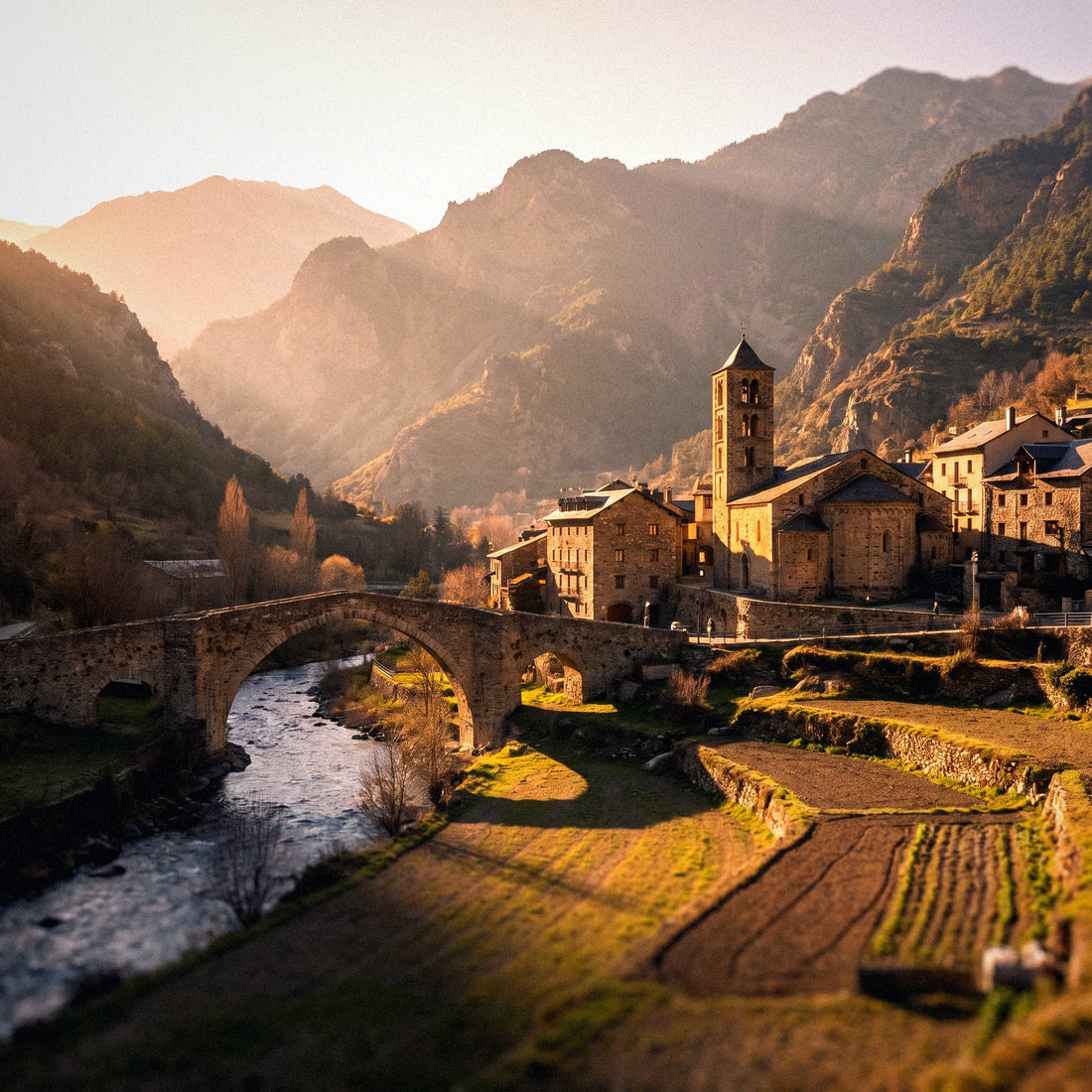
If you're planning a ski trip, a shopping spree, or just a weekend in the Pyrenees, you're probably already wondering how to get internet in Andorra without getting a nasty surprise when you get home. And here's the warning almost no one gives you in time: Andorra is nestled between Spain and France, but it doesn't play by the same rules as the rest of the continent. In this guide, I compare all the options, with real prices, so you can make an informed choice.
The expensive misunderstanding: Andorra is not in the European Union
Andorra is not part of the European Union or the European Economic Area, so free European roaming does not apply here. As soon as your mobile connects to the Andorran network, your Spanish operator treats it as international roaming and starts charging. It's a trap that catches thousands of skiers off guard every season.
This is, for me, the big differentiator of Andorra compared to a trip to France or Portugal. There, your Spanish tariff works the same as at home thanks to the "roam like at home" regulation. However, the Principality is not part of these agreements signed by member countries since 2017. It doesn't matter if you arrive from Lleida in two hours: your phone pays as if you were in Switzerland or Morocco.
Distance has nothing to do with price. Your mobile doesn't know that Andorra is "next door": it only knows that it has connected to a network outside the EU, and bills accordingly.
The worst part is that almost no one checks before leaving. You cross the border, continue using WhatsApp or Google Maps as usual, and the charge appears days later. That's why the first rule for a worry-free trip is simple: decide on your connection before you cross, not when you're already at the ski resort with your phone in hand.
Mobile coverage in Andorra
The good news is that Andorra is a small country with excellent connectivity. The entire territory relies on a single national operator, Andorra Telecom, which maintains a stable 4G network throughout the Principality and 5G in parish centers and urban areas. In Andorra la Vella, Escaldes, or the commercial area, the signal is excellent.
The important nuance comes when you go up the mountain. Coverage remains very good in villages and most resorts, but in closed valleys, high lifts, and remote corners, it's normal for the signal to drop or become intermittent. If your plan is to go ski touring, explore routes through Sorteny, or go off-piste, expect there to be sections without data regardless of the option you choose.
It's worth understanding one thing here: it doesn't matter if you use roaming, a local SIM, or a travel eSIM, because they all rely on the same physical infrastructure of Andorra Telecom, the sole owner of the antennas. It's a monopoly. Therefore, don't choose based on "who has the best coverage" (it will be practically the same), but on price, convenience, and how you activate it.
Option 1: roaming with your Spanish operator
This is the default and most convenient option: you do nothing and your mobile connects automatically. The problem is the price, because since Andorra is a destination outside the EU, each operator applies its international zone bonuses, which are charged for full days even if you only cross for a few hours to buy tobacco or ski in the morning.
These are the most common daily bonuses from major Spanish operators for Andorra in 2026:
| Operator | Daily bonus | Data included | Details |
|---|---|---|---|
| Movistar | €9/day | 3 GB | Once exhausted, another 3 GB block is activated at the same price |
| Orange | €9/day | 2 GB | Calls at €2/min and €1 setup fee |
| Vodafone | €15/day | 2 GB | "Travel World" rate: unlimited minutes and SMS |
| Without active bonus | Skyrockets with consumption | — | This scenario is to be avoided at all costs |
For a single day, a €9 bonus may be acceptable. But if you go for a whole week of skiing, multiply: seven days at €9-15 is between €63 and €105 just for data. That's where other options win by a landslide. If you want to delve deeper into why roaming is so expensive, I explain it in detail in my guide on how much international roaming costs, and I compare the two alternatives head-to-head in eSIM vs roaming.
Option 2: hotel and local Wi-Fi
Almost all hotels, apartments, restaurants, and shopping centers in Andorra offer free Wi-Fi, and it usually works well for basic needs: sending photos at night, making a video call, or planning the next day. As a free complement, it's very good and worth taking advantage of for heavy downloads. The big "but" is that it leaves you tied to the hotel lobby.
As soon as you go out onto the street, to the slopes, or on the road, the Wi-Fi disappears and you're back to the usual problem: without mobile data, you don't have Google Maps to get around, you can't check the status of the lifts, or pay with your mobile in the shops in the commercial area. And relying on open public Wi-Fi in bars or shopping centers carries the added risk of security: never enter bank details on an open network you don't control.
My conclusion is clear: Wi-Fi is good support, but it's not a connection solution for the entire trip. The ideal is to combine it with your own mobile data. If you were considering bringing a portable router, I explain why it almost never pays off compared to mobile data in eSIM vs pocket Wi-Fi.
Option 3: local Andorran SIM card
Since Andorra Telecom is the sole operator in the country, buying a local SIM means buying from them, with no alternatives or competition to drive down prices. Even so, it's a solid option if you're staying for several days. Their prepaid cards range from Tariff S for €10/month with 3 GB to Tariff M for €20/month with 12 GB, including local minutes and SMS.
You can get it at the official Andorra la Vella store, at tourist offices, and also in any large supermarket like Súper U or Carrefour. The process is simple, you don't need to be a resident, and they activate it on the spot. It's the "old-fashioned" option and it works.
However, it has friction: you have to find a point of sale, spend some time buying and activating it once you're in Andorra (just when you still don't have data), take out your Spanish SIM and store it without losing it, and change numbers for the duration of the trip. Also consider the opening hours: if you arrive at night or on a holiday, the stores might be closed and you'll be without data on your first evening. For a long stay, it might be worth it; for a short getaway, it's quite a hassle. I compare its pros and cons against the digital alternative in eSIM vs local SIM.
Option 4: travel eSIM (my recommendation)
An eSIM is a digital card installed on your mobile via QR, without plastic or physical changes. You contract a data plan for Andorra, install it while you still have Wi-Fi at home, and leave it ready before you leave home, so that it activates automatically as soon as you set foot in the Principality. If you've never used one, I explain it step by step in what an eSIM is.
For Andorra, in my opinion, it's the best combination of price and convenience. You keep your Spanish number active to receive calls and SMS (useful for banks and verification codes), while data runs on the Andorran plan, supported by the same Andorra Telecom network as all the others. No searching for stores, no bonuses charged for individual days, no new numbers.
The requirement is that your phone is compatible with eSIM (most iPhones from XS and recent high-end Androids are). If yours is, you have all the specific destination information in my Andorra eSIM guide, including installation steps and available rates.
Quick comparison of all options
For a quick overview, here are the four options side by side. Remember that coverage is practically identical for all, as they all use the Andorra Telecom network:
| Option | Estimated price | Advantage | Disadvantage |
|---|---|---|---|
| Spanish roaming | €9-15/day | You do nothing, it connects automatically | Charged for full days; expensive for long stays |
| Hotel/local WiFi | Free | Perfect for downloads and at night | Doesn't work outside the venue; no signal on the slopes |
| Local SIM | From €10 | Good network and plenty of GB | You have to go to the store and change numbers |
| Travel eSIM | From a few euros | Activate it beforehand and keep your number | Requires eSIM-compatible mobile phone |
As you can see, the actual choice depends on how long you stay and how much convenience you want. For a single day, your operator's bonus might suffice; for a weekend or a week of skiing, avoiding roaming will save you a lot of money and prevent surprises. The digital option wins in almost all scenarios unless your mobile doesn't support it. My quick rule: for a single day, use your operator's bonus; for two days or more, contract separate data and save real money.
How much data do you need for Andorra
Choosing the right amount of data avoids running out or paying too much. The quantity depends on your type of trip and whether you'll use your mobile only for the basics (maps, WhatsApp, a few photos) or for streaming video and uploading content to social media. As a reference, this table will guide you:
| Type of trip | Typical use | Recommended data |
|---|---|---|
| Shopping day or occasional skiing | Maps, messaging, occasional photos | 1-2 GB |
| Weekend | Normal browsing + social media | 3-5 GB |
| Ski week or remote work | Video, uploading photos, daily maps | 8-10 GB or unlimited |
My practical advice: think about how you use your mobile on a normal day in Spain and add a little margin, because on a trip you tend to use maps more and share photos of the snow. If you're going to make work video calls or live stream from the slopes, go straight for a generous or unlimited plan and forget about it. To download heavy series, movies, or offline maps, do it with the hotel's Wi-Fi to stretch your mobile data for what really matters on the ground. And if you're torn between two plans, always choose the one with more gigabytes: running out of data in the middle of the mountain is much worse than having a couple of euros left over.
Tips for not losing signal on slopes and in valleys
Although general coverage is good, the slopes and high valleys have their blind spots. The never-fail trick is to download offline maps of your ski area on Google Maps or Maps.me before heading up, so you can orient yourself even if you lose data on a remote lift.
- Activate your connection with Wi-Fi before leaving the hotel or home: install the eSIM or change the SIM where you have a stable network, never in the middle of the mountain.
- Save essentials offline: ski map, accommodation phone number, car location, and hotel reservation.
- Reduce background consumption: disable automatic updates and backups so your data lasts longer.
- Bring a spare battery: the cold in the mountains drains mobile phones very quickly, and without a battery, no connection is worth it.
- Have a plan B: write down a couple of key phone numbers in case you completely lose coverage in a closed valley.
With these habits, those areas without signal stop being a problem and become something temporary and predictable. You'll have a good connection for 90% of your trip; you just need to anticipate the remaining 10%, which usually coincides with the most beautiful and remote corners of the Principality.
Frequently asked questions
These are the questions I get again and again, almost always because people make the same mistake of assuming that Andorra works like the rest of Europe.
Do I have free roaming in Andorra?
No. Andorra is not in the European Union or the European Economic Area, so the "roam like at home" rule does not apply. Your Spanish operator charges international rates as soon as you connect to the Andorran network.
Is Andorra in the European Union?
No. Andorra is an independent country between Spain and France, with trade agreements with the EU, but it is not a member. That is why it is outside the European regulation on mobile roaming and free tariffs do not cover the Principality.
Does my Spanish mobile work in Andorra?
Yes, your mobile connects without problem to the Andorra Telecom network, but it does so in paid international roaming mode. Everything works (calls, data, messages), it's just billed according to your operator's international bonus.
Is there coverage on the ski slopes?
In general, yes, it's good in resorts and villages. But in closed valleys, high lifts, and remote areas, the signal can drop or become intermittent. Download offline maps just in case, regardless of the option you use.
Can I buy a local SIM without being a resident?
Yes. Andorra Telecom sells prepaid cards to tourists without residency requirements. You can find them at their official store, tourist offices, and large supermarkets. They activate it on the spot, although you will have to use a temporary Andorran number.
Do I need an eSIM if I'm only crossing for a few hours?
It depends on your operator. If your international bonus costs €9-15 for a full day even if you're only there for a few hours, a cheap eSIM is usually more cost-effective. For very brief and sporadic crossings, consider both options before deciding.
How many GB do I need for a week of skiing?
With normal use of maps, messaging, and social networks, about 8-10 GB will cover a week well. If you are going to make work video calls or upload many videos from the slopes, go straight for an unlimited plan and don't worry about it.
Conclusion
The key to Andorra can be summed up in one sentence: it's a nearby destination but outside the EU, so free European roaming doesn't cover you, and you have to decide on your connection before crossing. Hotel Wi-Fi is helpful, a local SIM works but has friction, and a travel eSIM is the most convenient way to arrive connected from minute one while keeping your Spanish number.
If you want to forget about the issue and enjoy the snow and shopping without checking the bill, get your connection ready before leaving with PuraSIM's Andorra eSIM: you install it at home via QR and it activates automatically as soon as you set foot in the Principality.