In short: a Kuwait eSIM gives you 4G/5G data from the moment you land at Kuwait Airport (KWI), without registering your passport at a counter or losing your WhatsApp number. Coverage from Zain, Ooredoo, and STC is among the best in the Gulf in Kuwait City, Salmiya, and Hawalli. You install the profile before flying and activate data upon arrival.
Does an eSIM work in Kuwait?
Yes, and it works well. Kuwait primarily receives business travelers connected to the energy sector, layovers for Gulf airlines, and some tourists who venture to explore Kuwait City outside the classic Dubai or Doha route. This traveler profile cannot afford to arrive without a connection: meetings that start immediately after leaving the terminal, a driver waiting with a sign, a hotel to confirm. A Kuwait eSIM solves exactly that, connecting to the 4G/5G network of local operators and providing data as soon as you turn on your mobile, without touching your physical SIM card or losing your Spanish number with which you communicate via WhatsApp.
The difference compared to traditional roaming from your Spanish operator is fundamental: the eSIM uses the destination country's infrastructure directly, while roaming forwards your traffic through agreements between operators that tend to be expensive outside the European Union. If you want to understand the technical difference in detail, the guide on what data roaming is explains it without technical jargon.

Coverage and speed in Kuwait City and the rest of the country
Kuwait is a small, very urban country with one of the densest mobile networks in the Middle East. Almost the entire population lives along the coast, in a strip extending from Kuwait City to Al-Ahmadi, so fiber and antenna infrastructure is concentrated where it is truly needed.
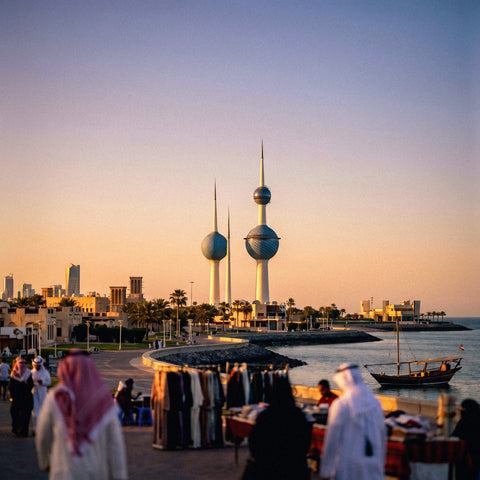
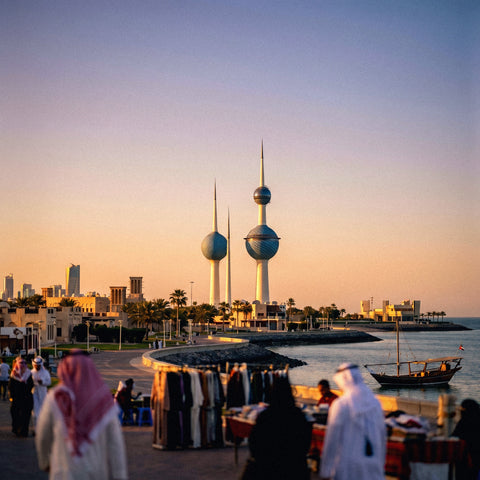
- Kuwait City and the bay: Strong 5G in the financial center, around the Kuwait Towers, and along the coast to Salmiya. Sufficient for HD video calls without interruptions.
- Salmiya, Hawalli, Al-Ahmadi, Jahra: Solid 4G/5G in residential and commercial areas, including centers like The Avenues, one of the largest shopping malls in the region.
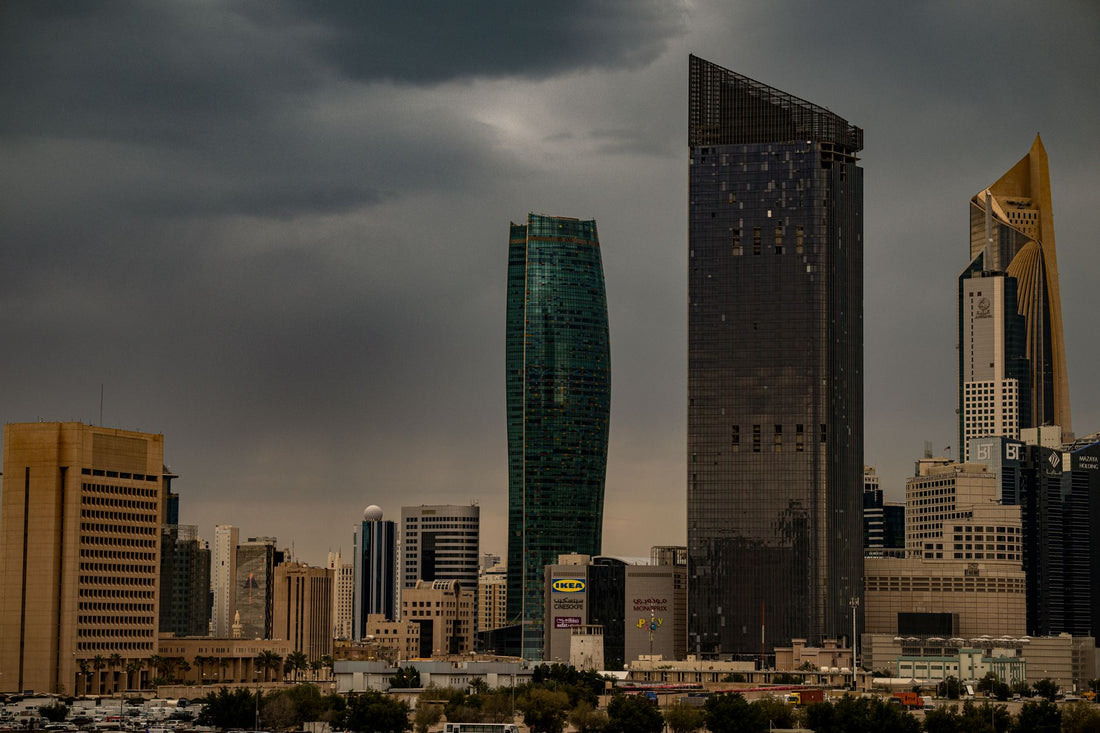
- Glass-fronted buildings in the financial district: In some office towers with highly reflective facades, the indoor signal may drop a couple of bars compared to the street; if you're going to an important meeting, check beforehand that the building's Wi-Fi works as a backup.
- Failaka Island: If you take the ferry excursion, coverage remains acceptable, but don't expect urban center speeds.
- Desert and inland roads (towards the border with Iraq or Saudi Arabia): Reasonable 4G on main routes, with real weak spots in uninhabited stretches. If you drive towards Wafra or north on the N40, download the offline map before leaving the city.
Kuwait has one of the best mobile networks in the Gulf, so in the capital, you will rarely experience outages. Offline backup is only needed if you truly go into the desert or take the ferry to Failaka.
Like all eSIMs, it relies on the local network of the country and not on your Spanish operator's roaming, which is exactly what avoids a surprise bill upon return. If you want to compare both options in depth, you have the comparison eSIM vs roaming.
Local operators (Zain, Ooredoo, STC) versus eSIM
In Kuwait, the mobile market is dominated by three operators: Zain, Ooredoo, and STC (the local subsidiary of the Saudi company, different from Zain Kuwait even though the name can be confusing at times). All three offer tourist SIMs and have counters at the airport terminal, but purchasing always involves passport registration, and for a transient traveler landing at three in the morning after a long layover, this process eats up time you can least afford.
| Local SIM (Zain / Ooredoo / STC) | Travel eSIM | |
|---|---|---|
| Passport registration | Yes, at counter or store | Not required |
| Data upon arrival | Once you find the counter and there's no queue | Instantly, with phone in airplane mode deactivated |
| Transaction language | Arabic or English, depending on the counter | All in Spanish, before leaving home |
| Your WhatsApp number | Changes with the physical SIM | Remains the same, eSIM is for data only |
| Support if something goes wrong | Local, depending on the operator | Spanish |
For a layover or a short business trip, saving yourself the registration hassle and arriving already connected usually outweighs the price per gigabyte. If your itinerary also combines Kuwait with another country in the same week, avoid the trouble of buying SIMs at each airport: the comparison between international chip and eSIM helps you decide which one suits you best depending on how many borders you'll cross.

How many GB to get depending on your trip type
Consumption in Kuwait depends mainly on whether your day is based on email and messaging or on uploading content to social media. On a corporate trip with hotel and office Wi-Fi, mobile data is mainly spent on commutes, taxi apps, and messaging; on a city tourism weekend in Kuwait City, usage increases because you rely more on maps and sharing photos on the spot.
| Trip type | Days | Suggested GB |
|---|---|---|
| Long layover in KWI | 1-2 | 1-3 GB |
| Business trip | 4-5 | 5 GB |
| City tourism (Kuwait City, Failaka) | 7 | 5-8 GB |
| Long stay or project in the country | 15+ | 10 GB or more |
If your job requires HD video calls with headquarters in Spain, step up a tier to be on the safe side, especially if you'll be showing documents or sharing your screen. And since your phone will act as a Wi-Fi hotspot for your laptop in more than one impromptu meeting from the hotel, factor that extra consumption into your plan calculation. If you want to maximize your GB, this guide on tricks to save data while traveling has settings that make a noticeable difference, especially in the background consumption of apps you don't need while you're away.
Visa, requirements, and practical information for Kuwait
Before flying, it's good to have a couple of procedures clear, and this is where arriving with internet on your mobile really makes a difference. Most Spanish travelers arrange an online eVisa or a visa on arrival depending on the purpose of the trip; the requirement changes quite frequently, so always confirm it with the official source before you leave, not on traveler forums.
- Currency: The Kuwaiti Dinar (KWD) is, due to its value against the euro, one of the strongest currencies in the world. With active data, you can check the exchange rate in real time and avoid surprises when seeing a price with many fewer digits than you expected.
- Language: Arabic is official, with English widely spoken in business, hospitality, and on signage in Kuwait City.
- Weekend: Unlike Spain, the weekly rest in Kuwait is Friday and Saturday, not Saturday and Sunday. If you are meeting with local contacts, schedule with this in mind.
- Alcohol: Kuwait is a completely dry country, with no exceptions for tourists or in international hotels. This is a real difference compared to Dubai or Doha, where some licensed hotels do serve alcohol to foreigners. If you are coming from another Gulf country, do not assume that the same applies here.
- Dress and customs: Kuwait is conservative. In public spaces, it is advisable to dress discreetly, especially outside very touristy areas or shopping centers like The Avenues.
Having data from minute one allows you to show your visa at passport control, order a taxi by app instead of negotiating a fare at the arrivals gate, and check the dinar exchange rate without relying on the airport's Wi-Fi.
If your route continues after Kuwait to another continent — common among those working in the energy sector, with frequent connections to Houston or the Gulf of Mexico — don't forget that you'll need another eSIM for that next country: the USA eSIM covers precisely that leg without relying on the American hotel's Wi-Fi.
Myths and what almost no one tells you
There are quite a few half-truths about Kuwait, some due to lack of knowledge and others due to confusing it with its Gulf neighbors. Here are the ones that most often cause surprises upon arrival.
Myth: "It's a small, little-known country, so coverage will be poor." Quite the opposite. Precisely because it's small and highly urbanized, Zain, Ooredoo, and STC have invested heavily in 5G, and the experience in Kuwait City is among the best in the Gulf, better than in rural areas of much larger countries.
Myth: "WhatsApp calls or video calls don't work in the Gulf." This is true in the United Arab Emirates, where voice and video calls via apps like WhatsApp or FaceTime are restricted unless you use locally licensed applications. In Kuwait, however, there is no such general block: you can make video calls without encountering this restriction. Even so, if you are concerned about the privacy of your connection on public Wi-Fi networks at the airport or hotel, the guide on eSIM, VPN, and travel privacy explains when it's worth adding an extra layer.
Myth: "With a local SIM, I save a lot compared to an eSIM." For stays of one or two weeks, the actual savings almost never outweigh the time lost at the counter with your passport, especially if your connecting flight has little margin. Where a local SIM might pay off is for long stays of several months, with very high and sustained data usage.
What almost no one tells you: The journey between Kuwait Airport (KWI) and Kuwait City center is about 20-25 minutes by car without traffic, and it's precisely on this journey, late at night and unfamiliar with the area, where having active data to verify the taxi route on the map is most appreciated instead of just trusting what the driver tells you. Another little-mentioned detail: during Ramadan, the rhythm of the city changes a lot, with shops opening at night and closing during the day, so if your trip coincides with those dates, confirm opening hours with mobile data before leaving the hotel, because the "normal" schedule you had in mind won't apply.
Install your eSIM in minutes
Installation is done with Wi-Fi, in a few steps, and you don't need to be in Kuwait to complete it. Ideally, you should have the profile ready at home and activate the data only upon landing, thus saving battery during the flight.
- Confirm that your mobile is eSIM compatible (most recent models are).
- Purchase the plan and receive the QR code by email instantly.
- Scan the QR from your mobile's settings to install the profile.
- Upon arrival in Kuwait, activate the eSIM data and deactivate roaming on your Spanish line to avoid mixing consumption.
If you've never installed an eSIM, the step-by-step guide on how to install an eSIM explains it with screenshots so you have no doubts before checking in. And if your return layover takes you through any European country, having the Europe eSIM ready beforehand prevents you from being without data just when you need it most to locate the next boarding gate.
Frequently asked questions
Is it safe to travel to Kuwait?
Kuwait is one of the safest countries in the Gulf for foreign visitors, with an excellent mobile network that helps you move around safely. With an active eSIM, you have maps, taxi apps, and a translator from the moment you land. As with any destination, inform yourself about local rules before traveling, especially regarding alcohol and dress code.
What are the visa requirements for traveling to Kuwait?
Depending on the purpose of the trip, an online eVisa or a visa on arrival is usually required, along with a passport with sufficient validity. These requirements change over time, so always confirm them with the official source before flying. Having data on your mobile makes it easier to manage and show documentation immediately upon arrival.
What currency is used in Kuwait and can I pay by card?
The Kuwaiti Dinar (KWD) is used, one of the highest-value currencies in the world against the euro. In Kuwait City, card payments are widely accepted in most shops and hotels, but it's advisable to carry some cash for taxis or small stalls in the souq. With data on your mobile, you can check the exchange rate in real time and avoid confusion when seeing prices.
Does the 5G network work with eSIM in Kuwait?
Yes. If your mobile supports 5G, the eSIM connects to the local 5G network, which is very good in Kuwait City and the bay area. You'll have plenty of speed for work video calls, uploading large files, and sharing your connection with your laptop as a hotspot.
Can I use an eSIM on a short layover at Kuwait Airport?
Yes, and it's one of the cases where the difference is most noticeable. For a layover of a few hours or a couple of days, a small plan of 1-3 GB is enough for maps, messaging, and email. You install the QR at home before flying and activate data upon landing, without having to look for a SIM counter at the terminal.
When should I activate the eSIM, before or after flying?
Install the profile (scan the QR) with Wi-Fi before leaving home, but save the data activation for when you land in Kuwait. This prevents your phone from trying to connect to the Kuwaiti network while you're still in Spain and avoids unnecessary battery drain during the flight.
Can I make WhatsApp video calls without restrictions in Kuwait?
Yes, unlike the United Arab Emirates, there is no general block on voice and video calls from apps like WhatsApp or FaceTime in Kuwait. With an active eSIM and good coverage in Kuwait City, video calls work normally.
Conclusion
Kuwait is an urban and business destination where being connected makes a difference from the first taxi ride: 4G/5G network among the best in the Gulf, zero passport registration at a counter, and your Spanish number intact so you can continue to receive WhatsApp messages. Adjust the GB to whether your trip is a layover, a week of meetings, or a long stay, and have the visa requirements handy before you leave. Land in Kuwait City with your Kuwait eSIM activated in 1 minute.