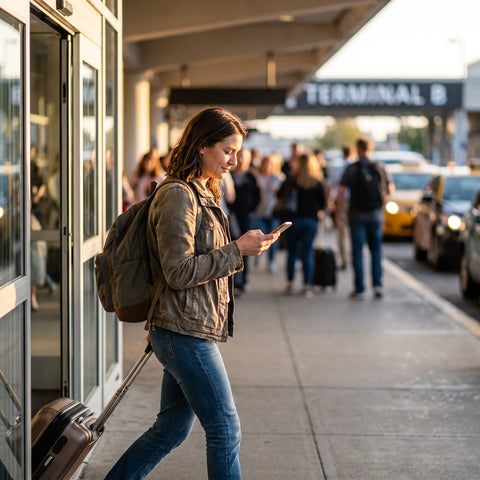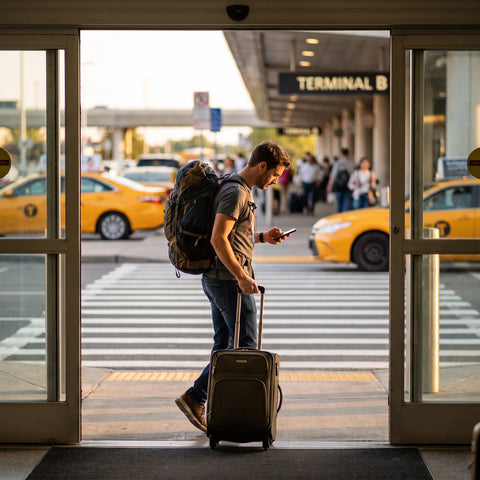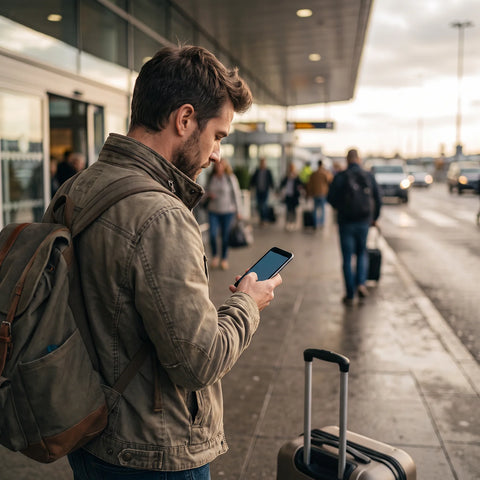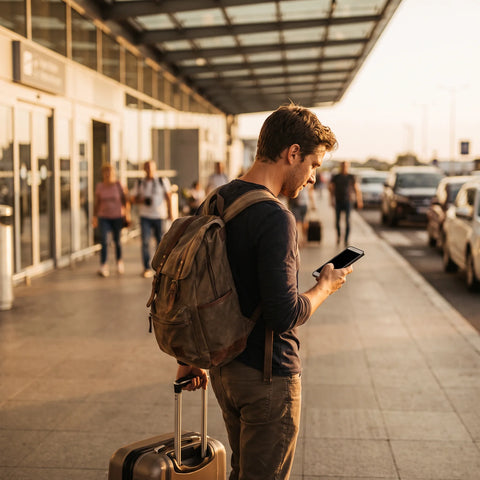
In short: to have internet in Vancouver you need an eSIM for Vancouver, which is actually a Canada eSIM (there are no city-specific eSIMs). It's installed before you fly, activated upon landing at YVR airport, and provides ample 4G/5G coverage throughout the city, with some nuances if you get closer to the Rockies or mountainous areas.
Landing in Vancouver and having your phone working to order an Uber, open the Stanley Park map, or send the first photo of the snowy North Shore mountains is exactly what a Vancouver eSIM solves. No need to search for a phone store with jet lag or dread your bill upon return. In this guide, we'll tell you how to get internet as soon as you land at YVR airport, what real coverage is like in the city, and why what you're actually buying is a Canada eSIM.
eSIM for Vancouver: direct answer
For Vancouver, you buy a Canada eSIM and choose a plan based on your trip duration: about 5 GB for a three- or four-day city break, between 8 and 10 GB if you combine city and nature for a week, and significantly more if you're doing a long road trip with GPS on all day. You install it at home with Wi-Fi, leave it activated, and upon landing at YVR, you'll be connected to the Canadian network without touching your Spanish SIM card.
Canada is one of those destinations where roaming can significantly impact your bill: Spanish operators often limit data to a very tight daily allowance or charge extra for each day of use. An eSIM avoids that surprise. Urban coverage in Vancouver is excellent; the only real nuance comes if your route ventures into the Rockies or mountain roads. Let's start with what you need as soon as you arrive.

Internet from YVR airport
Vancouver International Airport (YVR) is located in Richmond, about 25-30 minutes from downtown by SkyTrain (Canada Line). It offers free Wi-Fi, but to buy tickets through the Compass app, request a car, or open a map on your way to the hotel, it's worth having your own data from minute one, rather than struggling with a spotty terminal Wi-Fi connection.
The key is to install the eSIM in Spain, using Wi-Fi, before leaving home, and have it ready without activating the plan yet. Upon landing, disable airplane mode, and your phone will automatically connect to the Canadian network. If this is your first time traveling with an eSIM, we'll guide you step-by-step on how to install an eSIM so you arrive with everything ready before boarding.
Keep in mind the time difference: Vancouver operates on Pacific Time, nine hours behind mainland Spain. If you land in the late afternoon/evening there, it's already early morning back home, so having data from the start allows you to send a quick message to announce your arrival without relying on finding Wi-Fi in the immigration line. Many travelers take advantage of that SkyTrain ride to book a dinner reservation or check the weather, which in Vancouver can switch from light rain to clear sun in a couple of hours without warning.
Real tip: The Canada Line SkyTrain connects YVR to downtown (Waterfront station) in just over 25 minutes and is considerably cheaper than a taxi or Uber from the airport. With data already on your phone, you can buy your ticket on the Compass app before reaching the platform and avoid the queue at the vending machine.
It's a Canada eSIM, not city-specific
There is no eSIM that covers only Vancouver, just as there is no eSIM only for Madrid. Travel eSIMs are sold by country or by region, so what you actually need is a Canada eSIM. The advantage is clear: with the same card, you have data in Vancouver city, on Vancouver Island (Victoria), in Whistler if you go skiing or hiking, or on a road trip through the Rockies to Banff and Jasper.
If your itinerary mixes Canada and the United States—which is quite common if you go down to Seattle by bus or cross the border to Niagara later in the same trip—then it's advisable to look for plans that cover both countries or also carry a separate United States eSIM for that leg. But if you stay on the Canadian West Coast, the Canada eSIM is more than enough. One country, one plan, and Vancouver is included in the Canada plan.
If you've never used an eSIM and are unsure how it differs from a physical card, this guide on what a virtual eSIM is answers the basic questions before buying: there's nothing to insert, it doesn't get lost or bent, and it coexists with your Spanish line without any problem.

Coverage in Vancouver and surroundings
Vancouver has one of Canada's most robust mobile networks. Travel eSIMs rely on the country's major operators (Rogers, Telus, and Bell), so in downtown, Gastown, Yaletown, Stanley Park, Granville Island, or Kitsilano Beach, you'll have uninterrupted 4G/5G for maps, social media, and video calls.
Things change if you go up to the North Shore. At Capilano Suspension Bridge Park or driving up the road towards Grouse Mountain, the signal starts to weaken among trees and inclines, and deep in the forest, it can disappear completely for some stretches. The same happens if you drive the Sea to Sky Highway towards Whistler: there are canyon and mountain areas where there is no coverage from any operator, so it's advisable to download the offline map for that route before leaving the city, not when you're already on the road without data.
For the city itself, any data plan will have plenty of speed; there's no need to pay extra for 5G if you're only going to be moving around the center. To make the most of every GB on your phone without running out halfway through your trip, check out these tips for saving data with an eSIM while traveling. In Vancouver city, the connection is fluid at all times; the nuance is outside, in the surrounding nature.
How many GB to get
Consumption depends on your travel pace: maps and social media almost all day, a video call home, photos and videos of landscapes that in Vancouver make you want to record as soon as the sun breaks through the clouds. Use this indicative table as a starting point, not as a fixed figure:
| Type of trip | Days | Estimated GB |
|---|---|---|
| City break in Vancouver | 3-4 days | 5 GB |
| Week on the West Coast (Vancouver + Whistler or Victoria) | 7 days | 8-10 GB |
| Road trip through the Rockies (Banff, Jasper) | 10-14 days | 15 GB |
| Remote work or many video calls | Variable | 20 GB or more |
If you run out halfway through your stay, you can usually recharge the same eSIM without buying a new one from scratch, so there's no need to overbuy "just in case." Keep in mind that on a road trip through Canada, GPS with real-time navigation and streaming music for hours on the road add up to much more than one calculates before leaving.
eSIM versus roaming in Canada
Roaming with Spanish operators in Canada can quickly become expensive: many plans charge a fixed extra for each day of use or limit data to a very tight allowance before cutting speed. A Canada eSIM designed for the entire stay is usually better priced and, most importantly, avoids bill shock upon returning home. Always check the current price with your operator before deciding, as roaming conditions change frequently.
Additionally, with an eSIM, you keep your Spanish number active for bank SMS or important calls, while browsing with the Canadian data plan in the background. If you plan to use online banking or payment apps during your trip, it's worth reviewing this guide on privacy and VPN when traveling with an eSIM, especially if you'll also be connecting to public Wi-Fi in hotels or cafes. If you first want to understand exactly what you're avoiding by not using roaming, this explanation of what data roaming is clarifies it in two minutes. And if you're torn between a physical prepaid SIM purchased there and an eSIM, this comparison of international chip versus eSIM helps you decide without getting confused at the airport.
There's a detail that many people overlook in Vancouver: it's a city very focused on the outdoors, and many activities—kayaking in False Creek, hiking in Grouse Mountain, whale watching from Steveston—are booked or confirmed via app on the same day, depending on the weather. Without your own data, you're tied to the accommodation's Wi-Fi to manage all that, and you lose spontaneity. With an eSIM, you decide on the fly and take advantage of sunny spells, which on the Canadian West Coast you have to catch as soon as they appear because they don't give advance warning.
Myths and mistakes almost no one tells you about
There are quite a few common mistakes among first-time Vancouver travelers using eSIMs, and almost none have to do with the technology itself, but rather with how it's used:
"My Spanish roaming plan is enough"
Beware: free or included roaming in your plan usually covers the European Union, not Canada. Canada is outside that umbrella, so if your operator doesn't explicitly inform you, you might activate data thinking it's included and get a nasty surprise on your bill when you return. Before leaving, check your operator's app to see if Canada is included in your plan; don't take it for granted.
"The more 5G coverage, the better the plan"
For a normal trip around Vancouver city, chasing the plan with the most 5G doesn't offer much benefit: 4G is already more than enough for maps, transport apps, and video calls. What really makes a difference is getting the right amount of GB for your trip duration, not the theoretical maximum speed.
"I can activate the eSIM when I'm already on the plane"
It's best not to leave it until the last minute. The installation itself requires Wi-Fi (a profile is downloaded), so do it calmly at home, days before you fly. All you do when you land is activate the data plan and deactivate airplane mode; if you try to install the profile from the plane's or airport's Wi-Fi without stable coverage, it might fail just when you're in a hurry to leave.
"If my phone is dual SIM, everything works automatically"
Most modern phones allow you to have your physical Spanish SIM and Canadian eSIM active at the same time, but it's advisable to check which line you're using for data and which for calls/SMS before landing, not after. If you don't configure it correctly, you could accidentally end up browsing with Spanish data at roaming prices without realizing it, which is exactly what the eSIM should help you avoid.
"I need to change local operators to get a good signal"
There's no need to chase a specific operator in Canada. Travel eSIMs automatically connect to the available network with the best signal among the country's main operators in each area, so you don't have to manually choose or worry about which one "is better" in each neighborhood of Vancouver.
Frequently asked questions
Is there an eSIM just for Vancouver?
No. eSIMs are sold by country, so for Vancouver you buy a Canada eSIM. That same card gives you data in the city, on Vancouver Island, in Whistler, and anywhere else in the country you visit during the same trip.
Does it work as soon as I land at YVR airport?
It connects as soon as you arrive, provided you have installed it at home with Wi-Fi and have it ready in advance. At YVR, you just need to disable airplane mode: your phone will pick up the Canadian network, and you'll have data to buy a SkyTrain ticket or request transport to your hotel.
How many GB do I need for a week in Vancouver?
With 8-10 GB, you'll be comfortable for a week combining city and nearby nature. If it's just a weekend city break, 5 GB will be more than enough. Increase the plan if you make long video calls or take a road trip with GPS on all day.
Does the Canada eSIM also cover the United States?
It depends on the specific plan. Many eSIMs are only for Canada; if your trip includes Seattle or crossing into the U.S., it's advisable to look for a North America plan or also carry a separate U.S. eSIM. For staying on the Canadian West Coast, the Canada one is sufficient.
Is it worth it compared to roaming from my Spanish operator?
In Canada, almost always yes. Roaming there is usually excluded from "roaming included" plans designed for the EU, and operators charge dearly for it or impose strict daily limits. An eSIM designed for the entire stay avoids that surprise, and you also don't have to share your Spanish number with anyone on the trip.
What happens if I run out of data halfway through my trip?
Normally, you can recharge the same eSIM from the app or the provider's panel without having to install or activate anything new, so there's no need to overbuy "just in case" at the beginning of the trip.
Is there coverage in Whistler and the Rockies?
In Whistler village, yes, with good signal from the main operators. On road sections and mountain trails along the way, coverage may drop or disappear, so download offline maps for that specific route before leaving Vancouver.
Conclusion
Vancouver combines city and mountains like few destinations, and a Canada eSIM keeps you connected in both without paying exorbitant roaming fees or relying on hotel Wi-Fi for everything. Install it before flying, activate it upon landing at YVR, and arrive ready to navigate Gastown, Stanley Park, or the SkyTrain from the very first minute. Get your Canada eSIM ready and land in Vancouver with internet already connected.