If you're planning a trip to the land of fire, you're probably wondering how to get internet in Azerbaijan without any bill shocks or weird paperwork. I'll tell you straight: I've compared all the options a tourist has —roaming, hotel wifi, a local Azerbaijani SIM, and eSIM— so you can make an informed choice. And a heads-up from the start: there's a little-known legal detail that could actually get your phone blocked if you don't take it into account.
How to get online in Azerbaijan
To get online in Azerbaijan you have four options: your carrier's roaming (convenient but expensive), hotel Wi-Fi (free but tied to one spot), a local Azerbaijani SIM (cheap, requires a passport and IMEI registration), or a data eSIM that you activate before you fly and skip the paperwork. For most travelers, the eSIM is the best value.
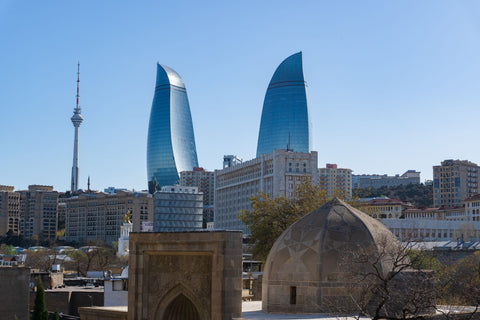
Azerbaijan is a destination that hooks you: Baku and its old town, the eternal flame at Yanar Dağ, the petroglyphs of Gobustan, and mountain villages like Sheki. To navigate with Google Maps, translate a menu, order a Bolt, or upload photos, you'll need data almost all day. The first thing to know is that Azerbaijan is not part of the European Union or any "roam like at home" agreement, so your local plan doesn't travel with you for free. The second is that the country has a legal quirk —IMEI registration— that affects anyone who puts a local SIM card in their phone. From there, each option has its price, its convenience, and its fine print. In the sections below I go through them one by one, with real prices in Azerbaijani manats (AZN) and my honest recommendation so you arrive connected from minute one and without blowing half your budget on data.
Roaming: convenient but expensive
The simplest option is to do nothing: turn on data and let your carrier charge you for using the Azerbaijani network. The problem is the price. Since Azerbaijan is outside the European zone, "roam like at home" doesn't apply and data rates skyrocket. Depending on your carrier and plan, you could end up paying daily passes of 5 to 15 € per day with very limited data, or even per-megabyte rates if you don't buy a pass. On a one-week trip that's easily 35-100 € just to stay connected, and always with the risk of a surprise bill if you go over the limit.
My advice: before ruling it out completely, check your carrier's app to see exactly what your plan includes for "zone 3" or "rest of the world," because Azerbaijan almost never falls into the cheap passes. If you travel a lot, it's worth understanding the mechanics: I explain it in detail in my guide to how much international roaming costs and in the comparison of eSIM vs. roaming. For a leisure trip, roaming is usually the most expensive way to stay connected.

Hotel and café Wi-Fi
Free Wi-Fi is the great ally of the light traveler. In Baku you'll almost certainly have it in the hotel, many cafés, shopping centers, and tourist restaurants, and it's usually pretty good for messaging, email, or a video call at night. The downside is obvious: it only works while you're sitting inside the venue. As soon as you go outside, take the metro, or head out to Gobustan, you lose connection just when you need it most for the map or translator.
There are two important warnings. First, security: open networks are not encrypted, so avoid entering banking details or sensitive passwords without a VPN. Second, coverage outside the capital: in towns and rural areas, Wi-Fi is much scarcer and slower. In practice, I see it as a supplement — perfect for downloading offline maps and saving data — but not as your main connection. If you were thinking of a pocket router as an alternative, here's my comparison of eSIM vs. pocket Wi-Fi so you can see why it's almost never worth carrying an extra device.
Local SIM: Azercell, Bakcell, and Nar
Azerbaijan has three mobile operators, and all offer good service for tourists. Azercell is the largest, with about 50% of the market and the best coverage outside the city. Bakcell is its main rival, with specific plans for visitors, and Nar is usually the cheapest. To buy a SIM you'll need to go to an official store with your passport in hand, because document registration is mandatory by law and is done at the time of purchase.
The starter card costs about 5 AZN (a bit under 3 EUR) and on top of that you add a data bundle. Note: at Baku airport there are no official operator stores, only some unofficial kiosks that usually sell for more, so many travelers end up buying in the city center. Here's a reference for indicative prices:
| Operator | Starter SIM | Example tourist bundle | Note |
|---|---|---|---|
| Azercell | ~5 AZN | ~10-15 AZN for 3-6 GB; up to ~39 AZN for 30 GB | Best rural coverage |
| Bakcell | ~5 AZN | TravelSIM from ~35 AZN/month | Plans designed for visitors |
| Nar | ~5 AZN | ~14 AZN for 7 GB; ~34 AZN for 40 GB | The most affordable |
Reference prices in manats (AZN); subject to change based on promotions. Even though it's cheap, the local SIM comes with the IMEI paperwork we'll see next. If you're undecided between this route and the digital one, I have a full comparison of eSIM vs. local SIM.
Mandatory IMEI registration within 30 days
This is the detail that almost no guide explains well and can ruin your trip. In Azerbaijan, any phone that uses a local SIM must register its IMEI number (the device's unique identifier) within a maximum of 30 days from when that card first connects. If you don't, the IMEI goes on a blacklist and your phone can be blocked on the Azerbaijani network, even if you still have balance and data.
Key rule: the registration is paid once, costs 5 AZN per device, and is processed at imei.az, at registration centers, post offices, or through the operator's customer service, presenting a copy of your ID and the phone itself. The resolution takes about 3 business days.
The good news: there are two important exemptions. If you use roaming with your foreign SIM, you're exempt; and if you use a data eSIM, you're also exempt from this obligation, because the procedure is triggered by the local physical SIM card. To find your IMEI, dial *#06# or check it on your phone's box. In short: the local SIM is cheap, but it adds paperwork, an extra cost, and a risk of blocking that's worth keeping in mind before deciding.
The eSIM: my recommendation for travelers
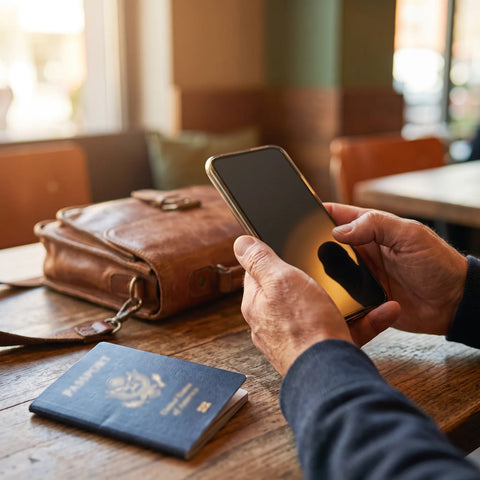
After comparing everything, for a leisure trip the choice is clear to me. An eSIM is a digital card you activate yourself in five minutes from your couch at home, without having to swap your physical SIM or visit any store. You land in Baku, switch on your phone, and you already have data working. You buy the plan online before you fly, scan a QR code, and you're set: you keep your local number for WhatsApp and receive your data through a second digital line.
The three advantages I value most are concrete. First, it avoids the IMEI registration: since it's a data plan and not a local physical SIM, you skip the imei.az process, the 5 AZN fee, and the risk of being blocked. Second, you're not tied to the hours or location of Azerbaijani stores, nor do you have to hand over your passport. And third, you control the cost: you pay a fixed price and there are no surprise bills. If you've never used one, I explain step by step what an eSIM is and how to activate it, and you'll find all the specific destination details in my eSIM guide for Azerbaijan.

Real coverage: Baku, Sheki, Gobustan, and the mountains
Mobile coverage in Azerbaijan is better than many people expect. In Baku and its metropolitan area you get fast, stable 4G/LTE everywhere, and even some 5G in specific spots in the capital. For everyday tourism —maps, social media, streaming— you're more than covered. Azercell, the leading carrier, claims to cover nearly 80% of the territory and around 99% of populated areas, so in the places you'll actually be, the signal holds up.
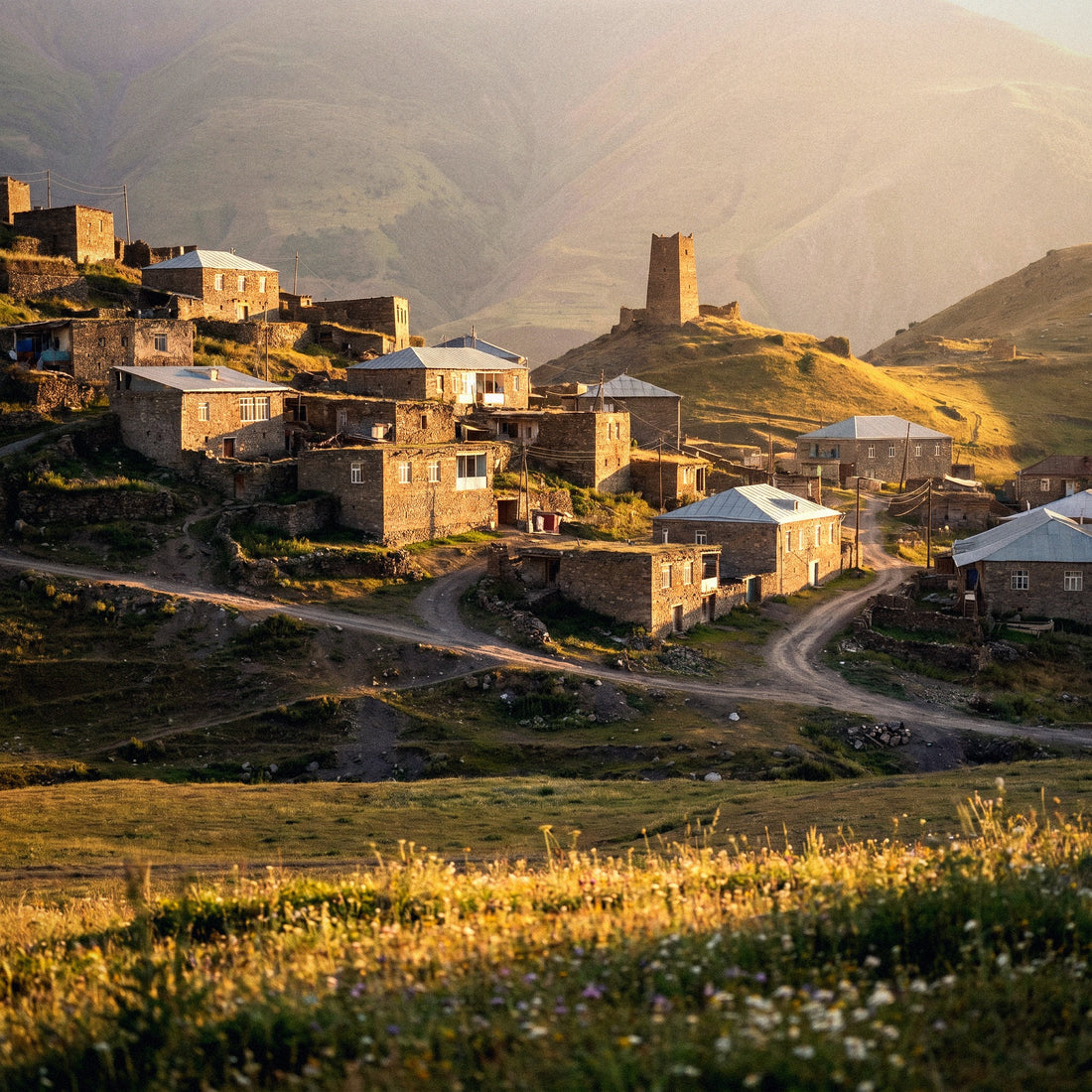
Outside the capital, things are still good at the classic destinations. In Gobustan, with its petroglyphs and mud volcanoes, and in Sheki, with its palace and old town, you'll have a connection without issues in the town and the visitable areas. Where you will notice drop-offs is once you head up into the mountains: remote Caucasus valleys, isolated roads toward Xınalıq, or far-off trails can lose data for stretches. My usual trick: download Google Maps or Maps.me offline maps before leaving Baku, so you don't rely on coverage to find your way on the more adventurous excursions.
How much data do I need for my trip?
The million-dollar question, because nobody wants to overpay or run out. The answer depends on your style: if you lean heavily on hotel Wi-Fi and only use data for maps and messaging, you'll use little; if you stream, tether to your laptop, or upload videos constantly, you'll need quite a bit more to make it through without running out halfway. As a reference, normal tourist usage runs around 500 MB to 1 GB per day.
Here's a quick guide based on travel profile:
| Profile | Typical use | Recommended data (one week) |
|---|---|---|
| Light | Maps, WhatsApp, some web browsing | 3-5 GB |
| Medium | Social media, photos, daily navigation | 7-10 GB |
| Heavy | Streaming, tethering, videos | 15-20 GB or more |
A trick to stretch your data: connect to hotel Wi-Fi for heavy downloads (updates, uploading the day's photo album, watching a series) and save your mobile data for when you're out and about. That way, a modest plan is plenty. Tethering to your laptop or tablet is what really drives up consumption, so keep that in mind if you plan to work from your trip.
My practical advice: for a 7-10 day trip around Baku and the surrounding area, a plan of around 10 GB leaves the vast majority of people worry-free. And if you run short, with an eSIM you can top up in a couple of taps from your phone, without going back to any store or dealing with paperwork again.
Comparison: all options side by side
So you can see everything at a glance, here are the four options compared by what really matters to a tourist: how much they cost, whether they involve IMEI registration, how convenient they are, and who they suit best. There is no single perfect answer, but there is one that wins for most tourist trips.
| Option | Approximate price | IMEI registration? | Convenience | Best for |
|---|---|---|---|---|
| Roaming | High (5-15 €/day) | No (foreign SIM) | Maximum, but expensive | Very short trips without watching the cost |
| Hotel Wi-Fi | Free | No | Low (only on site) | Backup, not main connection |
| Local SIM | Low (~5-39 AZN) | Yes, within 30 days | Medium (store + passport) | Long stays that need an Azerbaijani number |
| Data eSIM | Fixed and predictable | No, exempt | Maximum (activate before you fly) | Most tourists |
As you can see, the local SIM wins on raw price but loses on convenience and adds the IMEI paperwork; roaming wins on convenience but hits your wallet; Wi-Fi is free but ties you to the hotel. The eSIM best balances all four columns for a normal vacation trip, and it is the one I recommend unless you have a specific reason to need an Azerbaijani phone number.
Frequently asked questions
Do I have to register my phone's IMEI in Azerbaijan?
Only if you use a physical local SIM: you must register the IMEI within 30 days, paying 5 AZN on imei.az or at the carrier, or your phone will be blocked on the Azerbaijani network. With roaming or a data eSIM you are exempt from this process.
Does my local plan work in Azerbaijan?
It works through roaming, but you pay extra. Azerbaijan is not in the European Union, so "roam like at home" does not apply and you will see 5-15 € per day passes or per-megabyte charges. Check your plan before you travel to avoid bill surprises.
Where do I buy a local SIM and what do I need?
At official Azercell, Bakcell or Nar stores in central Baku, always with your passport, because document registration is mandatory. There are no official stores at the airport, only unofficial kiosks that usually overcharge.
Is there coverage outside Baku, in Sheki or Gobustan?
Yes. In Baku you get fast 4G and some 5G, and in destinations like Gobustan or Sheki coverage is good in the visitable areas. You will only notice dropouts in valleys and remote mountain roads, so download offline maps for excursions.
How many gigs do I need for a week?
For normal tourist use, between 7 and 10 GB easily covers a week in Baku and the surrounding area. If you do a lot of streaming or tether your laptop, aim for 15-20 GB. With an eSIM you can top up in seconds if you run short.
Can I use an eSIM on any phone?
On most recent phones, yes, but not all. You need an eSIM-compatible phone that is carrier-unlocked. Check in your settings whether the option to add an eSIM or mobile plan appears before buying your data plan.
Is there free Wi-Fi at Baku airport?
Yes, Baku airport offers free Wi-Fi, useful for basics right after landing. But it is only inside the terminal: for the trip to your hotel and the rest of your journey, it is better to have your connection already activated beforehand.
Conclusion
Staying connected in Azerbaijan is easy if you choose well: roaming is convenient but expensive, hotel Wi-Fi is a good backup, the local SIM is cheap but involves IMEI registration within 30 days, and the eSIM balances price, convenience and zero paperwork. For the vast majority of tourist trips, the eSIM is the winner. Activate your eSIM for Azerbaijan before you fly and land in Baku with internet working from the first minute, no queues, no passport, and no surprises on your bill.