If you're planning a trip to Georgia (the country in the Caucasus, not the US state) and want to know how to get internet in Georgia without any nasty surprises, this guide is for you. I'll tell you, firsthand and without marketing, all the real options you have as a tourist: roaming with your Spanish carrier, hotel Wi-Fi, a local SIM purchased at Tbilisi airport, and an eSIM. I'll compare prices, coverage, and who each option is best for, with updated data for 2026.
Your options at a glance
In Georgia, you have four paths: roaming with your Spanish carrier (very expensive, because Georgia is not in the EU), hotel Wi-Fi (limited to the building), a local SIM you buy with your passport at Tbilisi airport, or an eSIM you activate before leaving home.
Georgia is one of those surprising destinations: cheap, safe, with spectacular mountains and a huge digital nomad scene. But it's also a country that is not part of the European Union, so your Spanish "talk and surf in Europe" plan is useless here. Before deciding, it's worth knowing that the connection is excellent in cities and very patchy in the high mountains, where the operator you choose makes a difference. Throughout the guide, you'll see that the recommendation changes depending on how many days you stay, whether you're going to cities or the Caucasus, and whether you're traveling for leisure or remote work. The idea is that you leave here knowing exactly what to contract and why, without overpaying or getting stranded without data in the middle of Svaneti.
Roaming from Spain: why it's expensive
Here's the classic trap. Within the European Union, you use your data as at home, but Georgia is outside that agreement, so international roaming rates apply that have nothing to do with what you normally pay. With Movistar, for example, a call to Spain or within Georgia is around €3.14/minute, receiving calls is about €2.66/minute, and each SMS is €0.72. And what hurts most is the data: in some cases, browsing just one megabyte costs more than €12, or you pay for expensive daily bundles for a tiny amount of traffic.
Translated: leaving your phone "as at home" in Georgia is a direct route to a three-figure bill for looking at a map and sending four photos. If you're going to use roaming despite everything, at least activate a specific bundle from your carrier and disable background data. But, honestly, it's the worst option for almost everyone. If you want to see the numbers calmly, I'll leave you my comparison of how much international roaming costs and a specific one on eSIM vs. roaming.

Hotel Wi-Fi: useful, but limited
Almost all hotels, hostels, and apartments in Georgia offer free Wi-Fi, and in Tbilisi or Batumi, it usually works quite well for video calls and streaming. The specialty coffee shops in the capital, very much designed for nomads, also have a good connection. As a base for downloading maps, planning routes, or making a long video call at night, accommodation Wi-Fi is a perfectly valid and free resource.
The problem is obvious: Wi-Fi doesn't follow you on the street. As soon as you leave the hotel, you're without Google Maps, without a translator, without being able to order a Bolt (the local taxi) or check schedules. And in a country where many signs are in the Georgian alphabet, being without data in the city is truly inconvenient. In rural areas, furthermore, Wi-Fi quality drops significantly: in mountain guesthouses, it can be slow or go down for hours. My advice is to treat it as a supplement, never as your sole source of internet. If you were considering a portable router, first check out my comparison of eSIM vs. pocket Wi-Fi, because for a single traveler, it rarely pays off.
Georgian local SIM: Magti, Silknet, and Cellfie
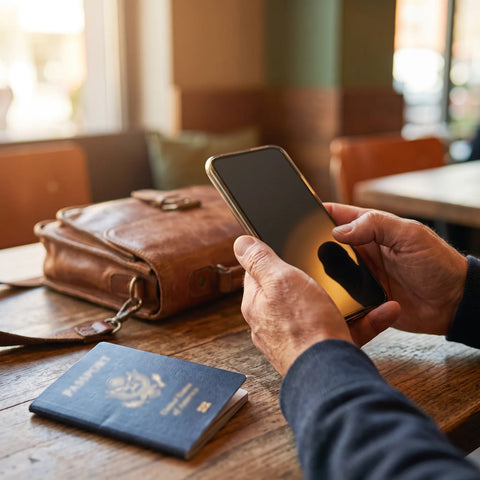
The classic backpacker option. At Tbilisi airport, there are counters for the three national operators (Magti, Silknet, and Cellfie) open 24 hours in the arrivals area, so you can buy your card as soon as you land. However, you'll need your passport in hand: Georgian law requires each SIM to be registered in the holder's name.
Prices are ridiculously low compared to Spain. Magti sells a tourist package of 5 GB for 15 days for about 15 GEL (around €5), Silknet offers 4 GB with minutes and SMS for 15 GEL, and Cellfie is the king of volume with 30 GB for 25 GEL (about €8-9) valid for 30 days. If you're going to be moving around the mountains, Magti has the best network in the country. The downsides: you have to physically change the card (and keep yours), sometimes there's a queue, communication is in basic English, and you lose your Spanish number while using it. It's a good option if you're staying for a long time; for a calm comparison, here's my analysis of eSIM vs. local SIM.
Why I recommend eSIM
An eSIM is a digital card: it's installed with a QR code and coexists with your Spanish line, without removing or changing anything physical. For Georgia, it seems like the most convenient option because you leave it activated before takeoff and land with data, without looking for counters or queuing with your passport at three in the morning. You keep your Spanish number to receive bank SMS and use the eSIM data for everything else.
My rule: I arrive in a new country with the connection already working. No landing, looking for a shop, and losing the first hour of the trip fighting with a tiny SIM.
eSIMs for Georgia rely on the same local networks (including Magti), so the coverage is the same as with a physical SIM, but without the hassle. You can choose the data volume you need and top up from your phone if you run out. If you've never used one, start with what an eSIM is and then check out my complete guide to eSIM for Georgia with installation steps.
How much each option costs
Let's get to the numbers, which is what really matters. This table summarizes what you actually pay to connect in Georgia depending on the option you choose. Keep in mind that local SIM prices are in GEL (the Georgian Lari), where 3 GEL is roughly equivalent to €1.
| Option | Approximate Price | Data Included | Where to get it |
|---|---|---|---|
| Spanish Roaming | €6-12/day or more | Very few MB | Automatic (doing nothing = expensive) |
| Hotel Wi-Fi | Included | Only inside the building | Accommodation reception |
| Local SIM | 15-25 GEL (€5-9) | 4-30 GB | Tbilisi Airport, with passport |
| eSIM | From a few € | Depending on the plan | Online, before traveling |
The reading is clear: roaming is the only absurdly expensive option, and the other three are within a very reasonable range. Between a local SIM and an eSIM, the price difference is small; what really changes is the convenience. For a few euros more (or even the same), an eSIM saves you queues, card changes, and the risk of losing your Spanish SIM. For a short getaway, that convenience usually wins hands down.

Coverage by region of the country
Georgia has much more mountains than cities, and that's where the operator that maintains the signal matters. In cities, the connection is magnificent; in the Great Caucasus, it's patchy. Here's the realistic map by region:
| Region | Coverage | Notes |
|---|---|---|
| Tbilisi | Excellent 4G and 5G | The capital has 5G |
| Batumi | Very good 4G/5G | Black Sea coast |
| Kazbegi (Stepantsminda) | Solid 4G in the village | Lost on high passes |
| Svaneti (Mestia, Ushguli) | 4G in villages | No signal on trails to glaciers |
| Mountain roads | Patchy | Magti holds up best |
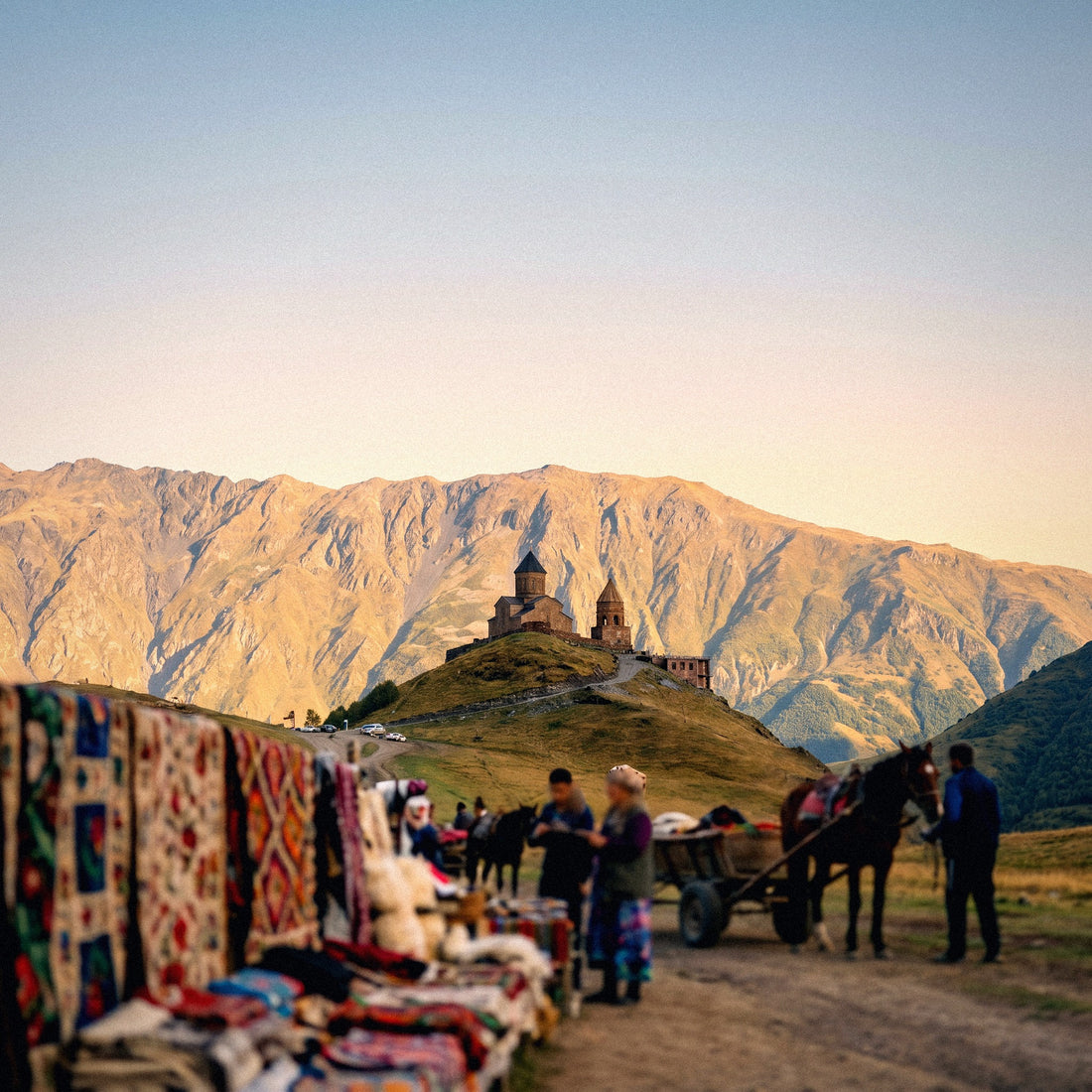
5G is available in Tbilisi and some large cities, but it's not nationwide and doesn't reach the mountains. In Kazbegi village, you'll have decent 4G, and the lower part of the trail to Gergeti Trinity Church still has signal; further up, it cuts out. The same happens in Svaneti: Mestia and Ushguli have coverage, but routes to Chalaadi Glacier or Koruldi Lakes lose all operator signal. Therefore, whether you choose a SIM or eSIM, make sure it relies on Magti's network if you're going to the Caucasus, and always download offline maps before heading up.
How much data you actually need
The eternal question. The honest answer is less than you think, because in Georgia you'll have Wi-Fi in almost all accommodations and cafes. Mobile data is mostly spent on maps, messaging, social media, and some searches on the street. To avoid overspending or running out of gigabytes, this profile-based guide will help you:
| Travel Profile | Days | Recommended Data |
|---|---|---|
| Short getaway | 3-5 days | 3-5 GB |
| Typical tourist trip | 7-10 days | 10-15 GB |
| Long trip or remote work | 15-30 days | 20-30 GB or unlimited |
If your plan is pure tourism (maps, photos, WhatsApp, and some Instagram), 1-1.5 GB per day is more than enough. Consumption skyrockets if you make a lot of video calls outside the hotel, upload videos to social media, or use your phone as a hotspot for your laptop. In that case, aim for a 20 GB or directly unlimited plan. My trick: activate offline map downloads for the area via Wi-Fi the night before each excursion; it saves a lot of data and helps you out in mountain sections without coverage.
Georgia for digital nomads
Georgia has become one of the capitals of remote work in Eastern Europe, and for good reason. Spaniards can enter and stay for up to 365 days without a visa, something almost unique in the world, and there is also the "Remotely from Georgia" program for those who want a formal route. Add a low cost of living, good coffee, mountains nearby, and an established nomad community in Tbilisi and Batumi.
For long stays, the connectivity equation changes. If you stay for weeks or months, a local SIM with monthly top-up or a long-term eSIM with a renewable plan is very cost-effective, and the fiber optic internet in Tbilisi apartments is fast and stable. For work, always prioritize the Magti network, which holds up best if you escape to remote work from a mountain village. And have a plan B: carry enough mobile data to tether on days when the apartment Wi-Fi decides to fail in the middle of an important meeting. With that covered, Georgia is a perfect remote work destination.
Frequently asked questions
Does my Spanish mobile work in Georgia?
Yes, any modern mobile phone works in Georgia without a problem. Local networks use compatible bands and you don't need anything special. The only thing that changes is how you get data: with roaming (expensive), with a local SIM, or with an eSIM. The phone itself poses no technical problems.
Is there free roaming in Georgia like in the European Union?
No. Georgia is not part of the European Union or the European Economic Area, so "roaming like at home" does not apply. Your operator charges international roaming rates, which can exceed €12 per megabyte. That's why a local SIM or an eSIM is recommended instead of roaming.
Where can I buy a local SIM in Georgia?
At Tbilisi airport, there are Magti, Silknet, and Cellfie counters open 24 hours in arrivals. You can also find stores in the center of Tbilisi and Batumi. Tourist packages cost between 15 and 25 GEL (about €5-9) and include several gigabytes of data.
Do I need my passport to buy a Georgian SIM?
Yes, it's mandatory. Georgian regulations require each SIM card to be registered in the name of its owner, so you'll need to show your passport at the counter. Registration is quick and done by the seller themselves. With an eSIM, you skip this process entirely.
Is there coverage in Svaneti and Kazbegi?
In the villages, yes: Mestia, Ushguli, and Stepantsminda have 4G. The problem is mountain routes, high passes, and trails to glaciers or lakes, where you might lose all operator signal. Magti holds up best, and it's advisable to download offline maps before heading up.
How many gigabytes do I need for a week in Georgia?
For a week of normal tourism, 10-15 GB is more than enough, especially since you'll have Wi-Fi in the hotel and cafes. If you make a lot of video calls outside the accommodation or share your connection with a laptop, increase to 20 GB or an unlimited plan.
Which local operator in Georgia is best?
It depends on your route. Magti has the best general and mountain coverage, ideal if you're going to the Caucasus. Cellfie offers more data for less money, perfect if you're staying in cities. Silknet is a solid middle ground in urban areas. For trips to the interior, bet on Magti.
Conclusion
Getting connected in Georgia is easy and cheap if you avoid the only trap: Spanish roaming, which skyrockets here because the country is outside the EU. Hotel Wi-Fi serves as backup, a local SIM is a solid option for long stays, and an eSIM is, for most travelers, the most convenient way to land already connected, without queues or card changes. Whatever your route (Tbilisi, Batumi, or the Caucasus mountains), make sure to rely on Magti's network and carry plenty of data.
If you want to sort it out before leaving home, activate your eSIM for Georgia and take off already connected: you install it in a minute, keep your Spanish number, and have internet from the very first second. Have a great trip to the Caucasus.