If you're planning a safari in Kenya—early mornings in the Maasai Mara and perhaps a few days on the beach in Mombasa—you'll need internet in Kenya for almost everything: maps between parks, coordinating your 4x4 on WhatsApp, uploading lion photos, and paying with M-Pesa like a local. Doing it right or wrong will be reflected in your bill when you get home. In this guide, I'll tell you, with real data and no technical jargon, all the ways to connect as a tourist, where there's actual coverage, and which option I choose.
All the ways to get internet in Kenya
To connect to the internet in Kenya, you have four options: roaming with your provider (convenient but very expensive), hotel and lodge Wi-Fi (scarce on safari), a local Kenyan SIM (cheap, with Safaricom leading the way), and an eSIM, which you activate before flying. For most tourists, the eSIM wins.
Kenya has two very distinct faces: in Nairobi or Mombasa, you'll find fast 4G almost everywhere, but as soon as you enter a national park, coverage becomes spotty and depends on the network you're using. That's why it's worth understanding what each option offers before deciding. Here's the summary I wish I had before my first safari.
| Option | Approximate Cost | Coverage | For whom |
|---|---|---|---|
| Roaming with Spanish provider | Very high (per usage or bundles) | Good in cities, uses local network | Those who don't want to configure anything |
| Hotel / Lodge Wi-Fi | Free | Only on-site, scarce on safari | Very occasional use |
| Local Kenyan SIM | Low (with registration and passport) | Very good with Safaricom | Long stays, M-Pesa use |
| Travel eSIM | Low-medium, no surprises | Very good 4G/5G | Most tourists |
In the following sections, I break down each one with indicative prices, its drawbacks, and in which cases it makes sense. If you're in a hurry, jump straight to the eSIM section and the final comparison.
Roaming with your Spanish provider: convenient, but very expensive
Roaming is the easiest thing in the world: you land in Nairobi, your phone connects to a Kenyan network, and you're online. The problem is the price. Kenya is outside the European Union's "roaming like home" zone, so your usual Spanish tariff doesn't apply, and you enter an international zone that is usually one of the most expensive.
Without a contracted bundle, data in Kenya can cost you several euros per MB, with some providers charging up to about €12 per MB: a couple of videos and you've spent what the safari costs. Almost all Spanish providers offer daily bundles for destinations outside the EU, which range from €5 to €15 per day for a small amount of data. Multiply that by a week-long safari, and the "convenience" will cost an arm and a leg.
My personal rule: I only leave classic roaming on as an emergency network the day I land, until I have a cheaper option ready. Never as a primary plan for a ten-day trip.
If you want specific figures for your provider, I explain it here: how much international roaming costs. And if you're torn between this and a digital alternative, I compare them in eSIM vs roaming. In short: convenient, yes, but it's the most expensive way to stay connected in the country.

Hotel, lodge, and camp Wi-Fi: free but scarce
The second option is to rely on free Wi-Fi. In Nairobi hotels and Mombasa resorts, you'll find it without a problem, and it's usually enough to check emails or make a video call from your room. The problem arises on safari: in many lodges and tented camps, Wi-Fi is a luxury you can't take for granted, and when it exists, there's a catch.
The good news is that by 2026, many mid-range and high-end camps in Mara, Laikipia, or Amboseli have installed Starlink. The bad news is that this internet is usually only available in common areas (reception or dining room), not in your tent, and it's shared among all guests. Speeds can be good, from 20 to 100 Mbps, but at night, with half the camp connected, it drags; in fact, the average Starlink speed in Kenya has dropped to about 47 Mbps due to saturation.
A couple of practical warnings:
- Ask when booking if your specific camp has Starlink: two lodges an hour apart can be worlds apart in terms of connection.
- On open networks, activate a VPN and don't enter bank details.
As a sole plan, I don't trust it: use it to download maps and back up photos at night, not to stay connected while you're on the move.
Local Kenyan SIM: Safaricom, Airtel, and the passport process
Buying a local SIM is the cheapest data option, and in Kenya, the battle is between two operators: Safaricom, the giant with the best coverage in the country, and Airtel, cheaper but with less reach outside cities. They are sold at Nairobi airport counters and in any store, with tourist packages that are dirt cheap.
To give you an idea, at the airport, a tourist SIM with 3-5 GB usually costs between 15 and 25 USD, with some call credit. In stores, it's even cheaper: Safaricom sells bundles like 1 GB for about 250 KSh (less than €2) or 3 GB for 500 KSh, and Airtel pushes prices down further with offers like 4 GB for 100 KSh. In euros, these figures are almost ridiculous.
The catch? The process. By law, in Kenya, all SIMs are registered with your passport, both for Safaricom and Airtel, so you have to show it and wait for activation. After a long flight, that registration can steal your first afternoon of the trip. If you're weighing this option against the digital one, check out eSIM vs local SIM. And if you're traveling in a group and value a rental router, I compare it here: eSIM vs pocket Wi-Fi.
Why Safaricom dominates (and what M-Pesa is)
If I could only give you one piece of advice about networks in Kenya, it would be this: for safari, Safaricom is king. It has the most extensive mobile network in the country and, above all, the one that penetrates furthest into national parks, where Airtel and others fall short. It is, by far, the network that reaches the furthest in the country, which is why many serious travel eSIMs rely on it precisely to cover remote areas.
Airtel is a perfectly valid and cheaper alternative if you're mostly going to be moving around Nairobi, Mombasa, and large cities, where both offer plenty of 4G. But as soon as you step into the Mara or Amboseli, Safaricom's advantage becomes clear.
The other major reason for Safaricom's dominance is M-Pesa, its mobile payment system. In Kenya, almost everything is paid for with M-Pesa—from the market to tipping your guide—and it's linked to a Safaricom number. As a tourist, you don't need it to get connected, but if you're staying for weeks or want to move around like a local, a Safaricom line opens that door for you. For pure travel connection, there are more convenient options than managing a physical SIM and an M-Pesa account.
The eSIM: my recommended option
An eSIM is a digital SIM card that is already integrated into most modern mobile phones (iPhone XS onwards, Google Pixel, Samsung Galaxy S20 and later…). Instead of a piece of plastic, you buy a data plan online and install it by scanning a QR code, without opening your phone or changing anything inside. If you've never used one, I explain it from scratch in what an eSIM is.
For Kenya, I think it's the most well-rounded option for very practical reasons:
- You buy it and set it up from your couch at home, before flying: you land already connected, without queues or passport registration.
- You keep your active Spanish number to receive bank SMS or any important calls.
- The best eSIMs for the country rely on the Safaricom network, which is exactly what you need for safari.
- You know exactly what you're going to pay: no surprises on your next month's bill.
The only condition is having a compatible and unlocked phone, and buying it from a reputable provider. I have my plan installed before leaving Spain, activate it when I land in Nairobi, and forget about it. If you want the complete guide for the country, with steps and tips, you can find it here: Kenya eSIM guide.

Coverage in Nairobi and Mombasa: no problem here
Let's start with the easy part. In Kenya's major cities, mobile coverage is much better than many people imagine. In both Nairobi and Mombasa, you'll have fast and stable 4G in almost any neighborhood, with Safaricom and Airtel competing head-to-head and a good portion of the city already having 5G available. For a tourist, this means that in the urban part of your trip, you'll have more than enough coverage.
Here's what you can expect in the most common areas:
- Nairobi: Solid 4G/5G throughout the city center, Jomo Kenyatta Airport, hotels, and shopping malls.
- Mombasa and the coast (Diani, Nyali, Malindi): Good signal in the city, resorts, and promenades.
- Main roads between cities: Decent coverage on the busiest stretches, with occasional gaps.
- Nakuru, Kisumu, and medium-sized cities: Perfectly functional 4G for all tourist needs.
In other words: in urban or beach areas, any option with a local network will work for you, and you won't even notice the difference between Safaricom and Airtel. The real challenge appears when you venture into the parks. Let's get to that now, as it's what those of you going on safari ask me about the most.
Coverage on safari: Maasai Mara, Amboseli, and Tsavo
This is the key to the trip, and one must be honest: in Kenya's national parks, coverage is irregular. No operator provides continuous signal in the middle of the savannah, and this is the point where your connection is decided. The good news: Safaricom is, by far, the network that reaches the furthest, so with a SIM or eSIM supported by it, you'll have the best possible experience.
Zone by zone, this is the realistic picture:
- Maasai Mara: good Safaricom 4G near the gates of Sekenani, Talek, and Oloololo and in the main camps; it quickly fades in the western Mara Triangle and at river crossings.
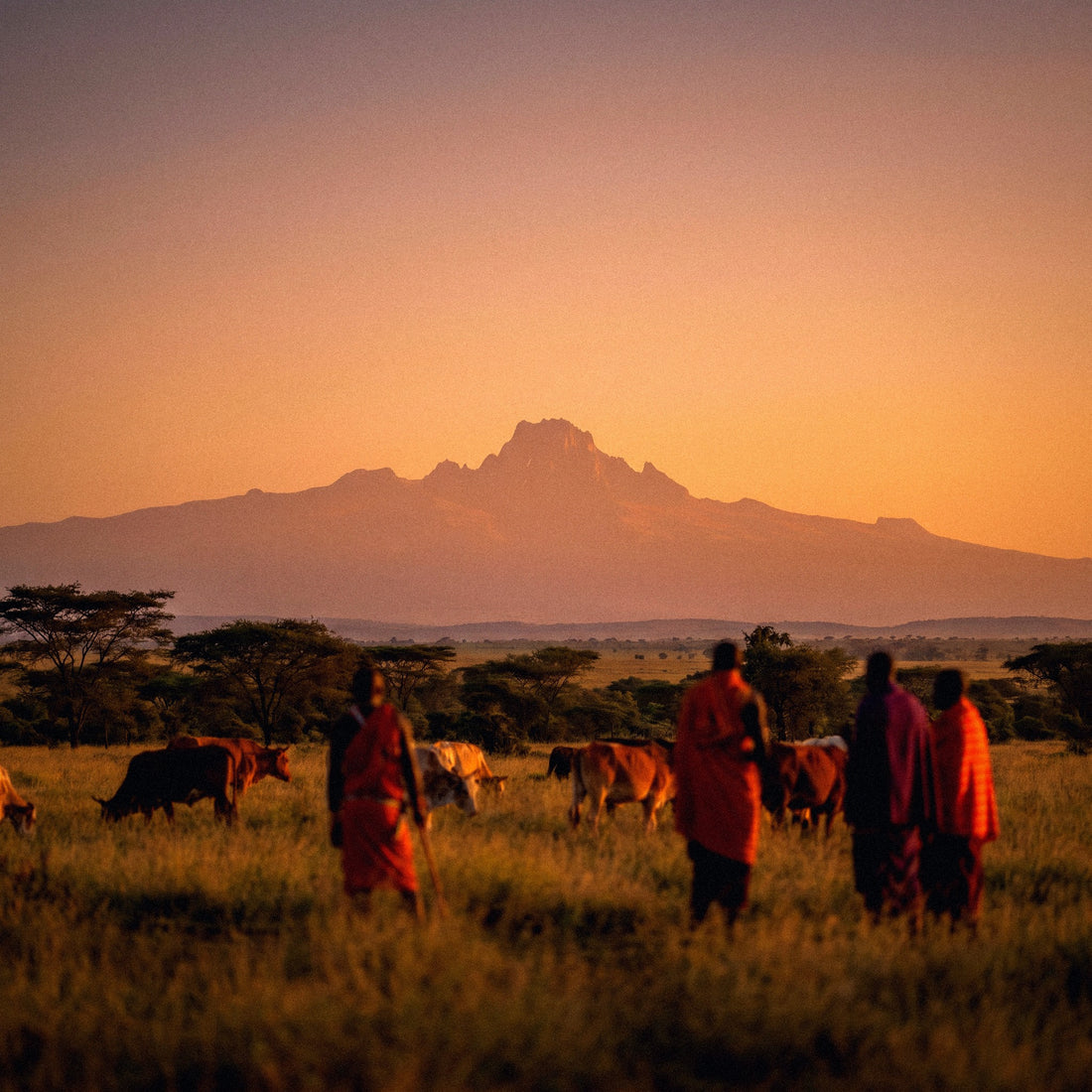
- Amboseli: reliable coverage around the Kimana gate, Ol Tukai, and lodges, with Kilimanjaro in the background.
- Tsavo: vast and with capricious signal; good near the Voi gate and the main road, scarce inland.
My go-to tip: load your data bundle and download offline maps before entering the park. Inside, in the middle of the wildlife area, there's often no signal even to top up.
The routine that works: during game drives, assume you'll be disconnected and use the camp (for signal or Wi-Fi) to upload photos at night. With Safaricom backing you up, you'll have coverage in many more places than you think.
How much data do you need for your trip to Kenya?
This is the million-dollar question, and it depends on your usage. Most travelers overestimate how much they'll use, because on safari you spend many hours without signal, and at the lodge, you rely on Wi-Fi for heavy usage. What drives up consumption is video (Instagram, TikTok, YouTube) and video calls; WhatsApp and maps use very little. Here's a table to estimate based on how you travel.
| Activity | Approximate Consumption | For 7-10 days |
|---|---|---|
| Maps and navigation (Google Maps) | ~5 MB per hour | Very little |
| WhatsApp (text, photos, audio) | ~100-200 MB per day | 1-2 GB |
| Social media and browsing | ~300-500 MB per day | 3-5 GB |
| Daily video and streaming | ~1 GB per hour | 10 GB or more |
With this, my practical recommendation for a one-week or ten-day safari:
- Light use (maps, messaging, occasional photo): 3 GB will be tight but doable.
- Medium use (daily social media, many wildlife photos): aim for 5-10 GB, the range I recommend for a typical safari.
- Intense use (video, tethering, remote work): better to have 15-20 GB or a large data plan.
A trick I always use: I save photo backups and large downloads for the lodge's Wi-Fi, which makes mobile data last three times longer. For a normal tourist trip, with 5-10 GB, I'm well covered.
Quick comparison: eSIM versus other options
You've seen the four options individually; let's put them face to face. If I had to summarize my experience in one sentence, I'd say that the best option is the one that lets you forget about it and enjoy the safari. For almost everyone, that means landing with data already activated and on a network that reaches the parks. Look at the difference with roaming, the comparison I'm asked for the most.
| Aspect | Roaming with Spanish provider | Travel eSIM |
|---|---|---|
| Price | Very high (international zone) | Low-medium, set in advance |
| Activation | Automatic upon landing | Before leaving, with a QR |
| Cost control | Difficult, risk of surprise | Total, you pay a fixed plan |
| Your Spanish number | Yes | Yes (you keep it) |
| Network on safari | Whatever your provider assigns | You can choose Safaricom |
Compared to lodge Wi-Fi, the eSIM wins in freedom of movement; compared to the local SIM, it wins because you avoid queues and passport registration, although the local SIM is slightly cheaper and unbeatable if you want to use M-Pesa. For a one or two-week getaway, that difference is a few euros that, for me, don't compensate for the lost time. Except for very long stays, my clear recommendation is the eSIM over Safaricom.
Frequently asked questions
These are the most common questions I get about connecting in Kenya, with direct and concise answers.
Is there coverage on safari and in the Maasai Mara?
Yes, but it's irregular. Safaricom has the widest reach: you'll have good 4G near the Sekenani, Talek, and Oloololo gates and in the main camps, but it fades in remote areas of the park. Download offline maps before entering.
Which operator is better in Kenya, Safaricom or Airtel?
Safaricom for safari and rural areas: its coverage is the widest in the country. Airtel is cheaper and works great if you're only moving around cities like Nairobi or Mombasa.
Do I need a passport to get internet in Kenya?
Only if you buy a physical local SIM: Kenyan law requires you to register it with your passport, both for Safaricom and Airtel. With a travel eSIM, no paperwork or documents are needed: you buy it online and activate it with a QR.
How many GB do I need for a week-long safari?
For normal tourist use (maps, WhatsApp, and photos), the 5-10 GB range will cover a 7-10 day safari well. If you post videos daily or share your connection, bump it up to 15 GB or more.
Do I need M-Pesa as a tourist?
Not to connect to the internet. M-Pesa is Kenya's mobile payment system, useful if you're staying for weeks or want to pay like a local, and it's linked to a Safaricom number. For a short trip, a card and cash will suffice.
Can I keep my Spanish number while using data there?
Yes. With an eSIM, your Spanish SIM remains active for receiving SMS and calls, while data runs on the Kenyan plan. This way, you continue to receive bank codes without paying your operator's expensive roaming fees.
Is my mobile compatible with eSIM?
Most mid-to-high-end mobiles from recent years are: iPhone XS or later, Google Pixel 3 onwards, Samsung Galaxy S20 and above. The mobile must be unlocked. Check this in the settings, under the "add eSIM" option.
Does Wi-Fi work well in safari lodges?
Increasingly better thanks to Starlink, but with nuances: it's usually only in the common area, it's shared among guests, and it gets saturated at night. Ask when booking if your camp has it and don't rely on it as your sole connection.
Conclusion: my recommendation for getting connected in Kenya
After considering the four options, the conclusion is clear. Roaming is convenient but one of the most expensive in the world, lodge Wi-Fi ties you to the camp and is weak at night, and a local SIM is very cheap but involves queues, passports, and changing cards. For most tourists, an eSIM combines the best of all worlds: a fixed price, your Spanish number intact, zero hassle upon landing, and the ability to use Safaricom, the network that truly reaches Maasai Mara and the parks.
If you want to travel with your data sorted and start your safari connected from the first minute, check out the PuraSIM eSIM for Kenya: buy it today, have it ready on your phone, and forget about bill shock. Have a great trip, and enjoy Kenya with your camera always ready.