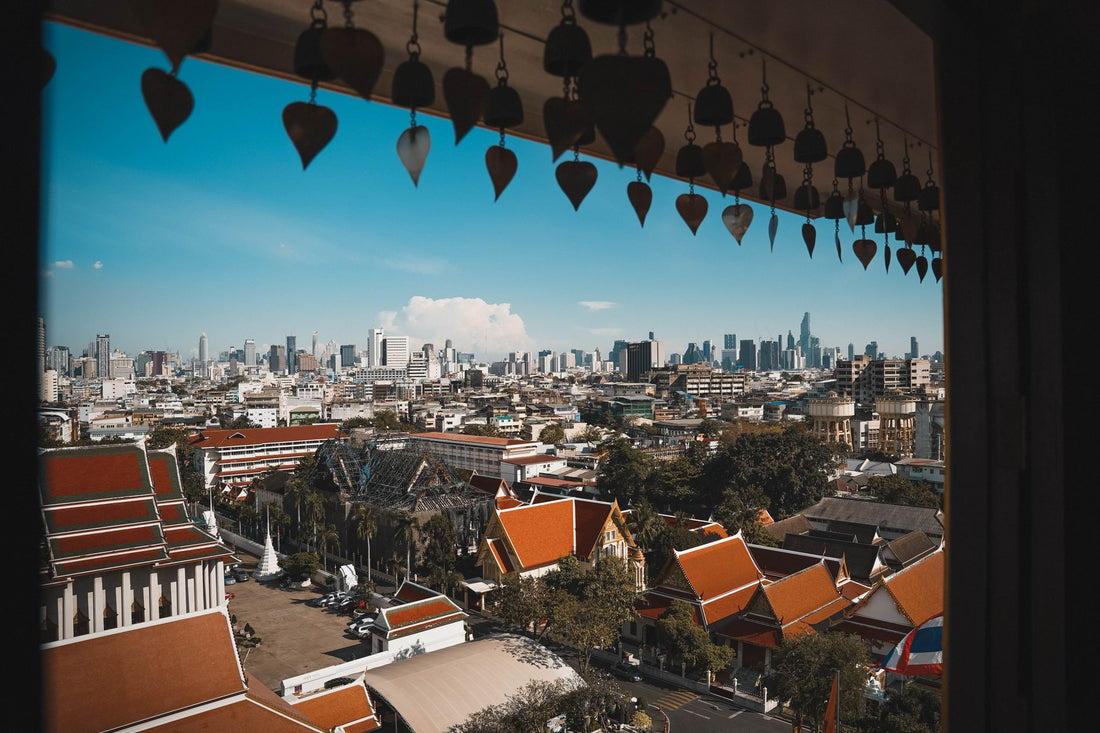
In short: the best eSIM for Thailand in 2026 is one that relies on AIS or TrueMove H networks, charges reasonably per gigabyte, and activates in minutes without needing to visit a counter. For a 10-15 day trip covering Bangkok, Chiang Mai, and the islands, a 10-15 GB plan is usually sufficient; if you plan to share your connection or stream a lot, an unlimited data plan might be better.
Quick Ranking: Which eSIM to choose for Thailand
If you're in a hurry, here's the general picture: for short stays of up to a week, a light 3-5 GB plan covers Bangkok or Phuket without overspending. For the classic 10-15 day itinerary combining the capital, the north, and an island, the sweet spot is 10-15 GB on AIS or TrueMove networks. And if your trip extends beyond three weeks or you plan to work remotely from a Chiang Mai co-working space, then it's worth looking into an unlimited data plan or a higher volume package.
PuraSIM's Thailand eSIM is designed precisely so you don't have to do this calculation with a calculator in hand: you choose the duration and gigabytes, pay, and get the QR code in your email before you even pack your suitcase. If your itinerary crosses borders within Southeast Asia (e.g., Thailand, Malaysia, and Singapore on the same trip), a regional eSIM for Singapore, Malaysia, and Thailand will be more cost-effective than buying one for each country.
That said, "the best eSIM for Thailand" isn't a single magic card: it's the combination of plan and provider that fits your specific itinerary. Let's break down the criteria one by one so that the decision is yours, informed, and not an act of faith.
What to look for before buying an eSIM for Thailand
Before you look at the price, there are four things that truly make the difference between a connected trip and a week of "my map isn't loading here":
- Which networks does the provider use? In Thailand, the leading operator is AIS, closely followed by TrueMove H, and further behind, dtac. An eSIM that relies on AIS or TrueMove will give you stable 4G/5G even in tourist areas on the islands.
- Price per gigabyte, not total price. A 3 GB plan that seems cheap can be expensive per gigabyte compared to a 15 GB plan. Always do the division before comparing.
- Plan validity versus actual trip duration. Ensure the contracted days cover the entire trip, with some margin: arriving on day 15 with a 14-day plan is a common unpleasant surprise at the departure airport.
- English support when something goes wrong. If the QR doesn't scan or the plan doesn't activate at three in the morning in Ko Pha Ngan, you want to be able to write in your language and be understood right away.
With these four filters, you can immediately discard half of the options that appear when searching for "best esim thailand." The curious thing is that, among serious providers, the final price is usually quite similar: the real difference lies in on-the-ground coverage and what happens when you need help.
Coverage and local operators in Thailand
Thailand has a remarkably good mobile network for how touristy it is. In Bangkok and Chiang Mai, you'll find 5G on almost every corner, and on the southern islands—Phuket, Krabi, Ko Samui, Phi Phi—4G is solid in urban centers and main beaches. Only in very remote coves or jungle trekking routes will you notice occasional signal drops.
AIS, TrueMove H, and dtac: important differences
AIS is the operator with the widest deployment in the country and usually provides the best coverage on the Gulf islands, such as Ko Tao and Ko Pha Ngan, two very popular destinations for Spanish tourists. TrueMove H, on the other hand, excels in urban environments: Bangkok, Chiang Mai, Pattaya. dtac is a step behind in rural coverage, although it works fine in cities. An eSIM that combines access to several of these networks is the safest bet if your itinerary mixes city and islands, which is common.
If your itinerary leaves Thailand
If you're crossing into Cambodia, Laos, or Vietnam on the same trip, a Thailand-only eSIM will fall short, and you'll need to buy another one when you cross the border. And if your plan includes Singapore or Malaysia in addition to Thailand, as we've already mentioned: a single regional plan is more practical and usually cheaper than managing several different eSIMs. To understand the difference between relying on your Spanish operator's roaming and having your own data, this guide on what data roaming is explains it without technical jargon.
How many GB you need depending on your type of trip
The exact number depends on your habits, but there are patterns that repeat trip after trip. An average usage profile in Thailand combines maps for navigation, WhatsApp and video calls with family, social media for daily photos, and some streaming at night in your accommodation. With this pattern, daily consumption is around 500 MB to 1 GB. Here are the common benchmarks that usually work well:
- Light use (maps, messaging, occasional social media): 300-500 MB per day. A 5-8 GB plan for two weeks will be more than enough.
- Medium use (the above plus photos and some video): 700 MB-1 GB per day. Aim for 10-15 GB for a 15-day trip.
- Intensive use (streaming, shared hotspot, uploading content to social media): 1.5-2 GB per day. This is where unlimited data starts to make sense.
If you're traveling as a couple or group and plan to share a hotspot from a single phone, multiply that daily figure by the number of connected people, not just by the number of eSIMs purchased. And once you're on the go, it's wise to monitor actual consumption in your phone settings to avoid surprises halfway through your trip; it's a habit that takes thirty seconds and prevents you from running out of data on the day you need it most, like when you're looking for your hostel at ten at night in Chiang Mai.
Plan comparison by trip duration
This table summarizes the most common trip durations for Spanish travelers to Thailand and for which profile each one fits. Prices vary depending on the campaign and operator, so always check the current price at the time of purchase; the important thing here is the relationship between days, gigabytes, and type of itinerary.
| Trip Duration | Recommended GB | Ideal for | Reference Networks |
|---|---|---|---|
| 5-7 days | 3-5 GB | Bangkok or Phuket getaway | TrueMove H / AIS |
| 10 days | 8-10 GB | Bangkok + one island | AIS / TrueMove H |
| 15 days | 10-15 GB | Classic North + South route | AIS (islands) / TrueMove (city) |
| 21-30 days | 15-20 GB or unlimited | Long trip, backpacker or digital nomad | AIS + TrueMove combined |
The 15-day period is, by far, the most popular among travelers from Spain: it coincides with the typical duration of a long vacation and naturally fits the Bangkok-Chiang Mai-islands route that most first-time visitors to the country take.
eSIM, physical SIM, or roaming: what's best for Thailand
Before deciding on a specific eSIM, it's worth clarifying why the other two options should be discarded. Roaming with your Spanish operator outside the European Union is not regulated by "Roam like at Home" rules, so the cost can easily skyrocket, and often you won't even know how much you'll pay until the bill arrives. A local physical SIM, bought at a 7-Eleven or at the airport, is cheap on paper, but it requires finding a point of sale, showing your passport, and waiting for the line to be activated.
The eSIM solves all three problems at once: you keep your Spanish line for calls and texts, activate local data without touching the physical tray, and purchase everything from your sofa at home before you travel. If you want a detailed comparison, this guide on international chip vs. eSIM delves into the technical details, and this one on eSIM vs. roaming focuses on the economic aspect.
Unlimited data in Thailand: are they worth it?
Unlimited data plans sound like the perfect solution, but in practice, they only pay off in two scenarios: if you're going to stream daily (series, music, high-quality video) or if you're going to share the connection with several people via hotspot throughout your trip. For the average traveler, a well-sized 10-15 GB plan is usually more cost-effective and more than covers actual needs.
There's a nuance that almost no one reads before buying: many "unlimited" plans actually apply a reduced speed after a certain daily or total consumption, while the rest of the traffic still works but slower. It's not a trick—it's usually indicated in the fine print—but it's good to know before paying more for something you won't fully utilize. If your priority is never having to think about gigabytes, go ahead with unlimited; if you're looking for the best value for money, a plan with a generous limit usually wins the comparison.
When and how to activate your eSIM upon arrival in Thailand
The big advantage of an eSIM over any physical alternative is that it is installed before you leave home and remains on standby until you land. The process, in practice, has three steps: you buy the plan online, receive a QR code by email, and scan it from your phone settings using your home Wi-Fi, leaving the profile "on standby" without activating it. Upon landing at Suvarnabhumi or Don Mueang, you activate the plan with a tap and have internet within minutes, without immigration queues or searching for a phone counter late at night.
A practical tip: install the QR code in advance, never in the taxi on the way to the airport, because some profiles need stable Wi-Fi the first time. And don't delete the confirmation email until the end of your trip, in case you need to top up the plan on the go. If this is your first time with this technology, the complete step-by-step guide is available in how to install an eSIM, with screenshots for iOS and Android.
Common mistakes and what almost no one tells you
These are the most frequent pitfalls among travelers to Thailand, and almost all of them can be avoided with five minutes of foresight before leaving home:
- Buying the SIM at the airport due to last-minute panic. Arrival counters usually charge more than buying in advance, and on top of that, you have to queue as soon as you get off the plane.
- Leaving Spanish roaming activated "just in case." Outside the European Union, roaming has no regulated cap, so it's advisable to deactivate it before takeoff.
- Calculating gigabytes for the entire trip instead of per day. It's more reliable to estimate your daily consumption and multiply it by the actual number of days than to trust a round number that "sounds good."
- Not checking phone compatibility before buying. Almost all recent models support eSIM, but there are exceptions, so it's worth verifying before paying.
And here are two things that very few guides mention. First: if your phone supports dual eSIM or eSIM + physical SIM, you can keep your Spanish line active only to receive verification SMS (bank, apps) without incurring roaming data charges. Second: in crowded tourist areas of Bangkok, like the Grand Palace, the signal can become saturated at peak times due to the number of people connected simultaneously, not because your eSIM is failing; moving a few meters or waiting a few minutes usually resolves it.
To make the most of the gigabytes you purchase, whatever plan you choose, this guide on tips for saving data with an eSIM while traveling has settings that almost no one activates and that are especially noticeable for those who buy limited plans. And if you're concerned about security when connecting to public Wi-Fi networks in hostels or cafes, it's also worth reading about eSIM, VPN, and privacy while traveling.
Frequently asked questions about eSIM in Thailand
What is the best eSIM for Thailand in 2026?
The one that relies on AIS or TrueMove H networks, offers a good price per gigabyte, and activates in a few minutes without airport procedures. For a 10 to 15-day trip, a 10-15 GB plan usually covers Bangkok, Chiang Mai, and the islands without running out. If you're going to share your connection or watch a lot of video, consider an unlimited data plan.
How many GB do I need for two weeks in Thailand?
For average use—maps, messaging, social media, and some video—between 10 and 15 GB for 15 days is usually more than enough, at a rate of 700 MB to 1 GB per day. If you stream daily or share a hotspot with more people, increase to 15-20 GB or go directly for an unlimited plan.
Does eSIM work well on the southern islands of Thailand?
Yes. 4G coverage is very good in Phuket, Krabi, Ko Samui, Ko Pha Ngan, and Phi Phi, especially on the main beaches and tourist centers. Only in very remote coves or inland trekking routes will you see occasional signal drops. AIS usually provides the best coverage on the Gulf islands.
Can I buy an eSIM in my home country before traveling to Thailand?
Yes, and it's recommended. You buy the plan online, install the QR with your home Wi-Fi in advance, and leave the eSIM on standby. Upon landing in Thailand, you activate it with a tap and have internet within minutes, without queues or the need to find a physical SIM.
Is an unlimited data plan for Thailand worth it?
Only if you're going to stream daily or share your connection with several people continuously. For the average traveler, a well-sized 10-15 GB plan is usually more cost-effective and more than covers daily needs.
What happens if I run out of data halfway through my trip in Thailand?
You can top up the same plan from the app in a few minutes or buy a new one and activate it without changing eSIMs or losing your number. What you should avoid is reactivating roaming on your home country's SIM card as an emergency solution, because the cost outside the European Union can skyrocket.
Do I need a different eSIM if I travel to Thailand, Malaysia, and Singapore on the same trip?
Not necessarily. If your itinerary combines these three countries, a single regional plan is usually more practical and economical than buying an eSIM for each country every time you cross a border.
Conclusion
The best eSIM for Thailand in 2026 isn't the cheapest on the list or the one that promises the most gigabytes: it's the one that fits your actual itinerary. Coverage on AIS or TrueMove, a data volume calculated based on your travel days, and an activation process that doesn't waste your time as soon as you land. For the average two-week stay that most Spanish travelers take, a 10-15 GB plan is, almost always, the sweet spot between price and peace of mind. Activate it before leaving home and land in Bangkok with internet from the very first minute, without roaming and without surprises on your bill.