In short: the eSIM for Cartagena de Indias is, in reality, the eSIM for Colombia: there are no city-specific plans. It's installed before leaving Spain using your home Wi-Fi, activated upon landing at Rafael Núñez airport, and provides mobile data in the walled city, Getsemaní, Bocagrande, and the rest of the country, without roaming and without having to search for a local SIM card on the street.
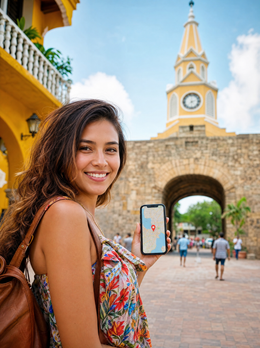
Cartagena is best explored on foot, amidst colorful balconies, stone walls, and cobbled streets where GPS is your best ally to avoid getting lost between Getsemaní and the historic center. If you're looking for an eSIM for Cartagena, the first thing to know is that you're buying a data plan for all of Colombia, not one limited to the city. In this guide, you'll learn how to get connected as soon as you land at Rafael Núñez airport, what real coverage is like within the city walls and in Bocagrande, how much data you should get for a Caribbean getaway, and what happens when you take a day trip to the Rosario Islands.

How to connect as soon as you land at Rafael Núñez airport
Rafael Núñez Airport (CTG) has an advantage that not all destinations offer: it's just a ten-minute taxi ride from the historic center, practically within the city. This means that the first connection you need — to hail a taxi, open your hotel's location, or let someone know you've arrived — you'll use almost before leaving the terminal.
The trick is to get everything ready before you travel: install the eSIM at home with your usual Wi-Fi, without rushing or waiting in line at the terminal, and keep it saved on your phone. When you get off the plane, turn off airplane mode, activate the data for that line, and within seconds you'll be connected to a Colombian network. Don't rely on airport Wi-Fi, which is often slow and requires typical registration asking for personal data before letting you browse. If this is your first time using one, the guide on how to install an eSIM will walk you through the process, which takes no more than a couple of minutes.
A detail that many people miss: before leaving Spain, check that your phone supports eSIM and has dual SIM active (physical SIM plus eSIM, or two eSIMs if your device allows it). Almost all recent phones do, but it's worth checking calmly at home and not in the check-in line.
eSIM or roaming in Cartagena: what's best depending on your carrier
Colombia is outside the European Union, so the roaming included in your Spanish plan usually doesn't cover the country or does so with very different conditions than when traveling within Europe. Many carriers charge for data usage outside the EU in blocks or by day, and the cost quickly skyrockets if you're going to be connected for several days straight: maps, photos, social media, a video or two. Before traveling, it's a good idea to check your specific company's rates for Colombia, because each carrier handles it differently.
What eSIM wins over carrier roaming
eSIM is a fixed plan that you buy before you leave: you know beforehand how many GB you have and there are no surprises on your next month's bill. Since it's a second line for data only, you don't lose your Spanish number: the physical SIM remains active for calls and SMS, and the eSIM handles internet access. You can compare the full details, with the real differences between the two options, in eSIM vs. roaming, and if you want to understand why roaming outside the EU works differently than inside, the explanation is in what data roaming is.
Tip: don't activate the eSIM until you're in Colombia. Many plans count days from the first network connection, so turn it on when you land at Rafael Núñez and make the most of every full day of beach and city.
Coverage by neighborhoods: walled city, Getsemaní, Bocagrande, and San Felipe Castle
The area you'll frequent the most also has the best coverage. In the walled city, with its squares, boutique hotels, and flowery balconies, there's plenty of 4G signal for maps, social media, and sharing every corner on WhatsApp without interruptions. The Getsemaní neighborhood, with its murals and lively nightlife with street music, also maintains good coverage throughout most of its streets.
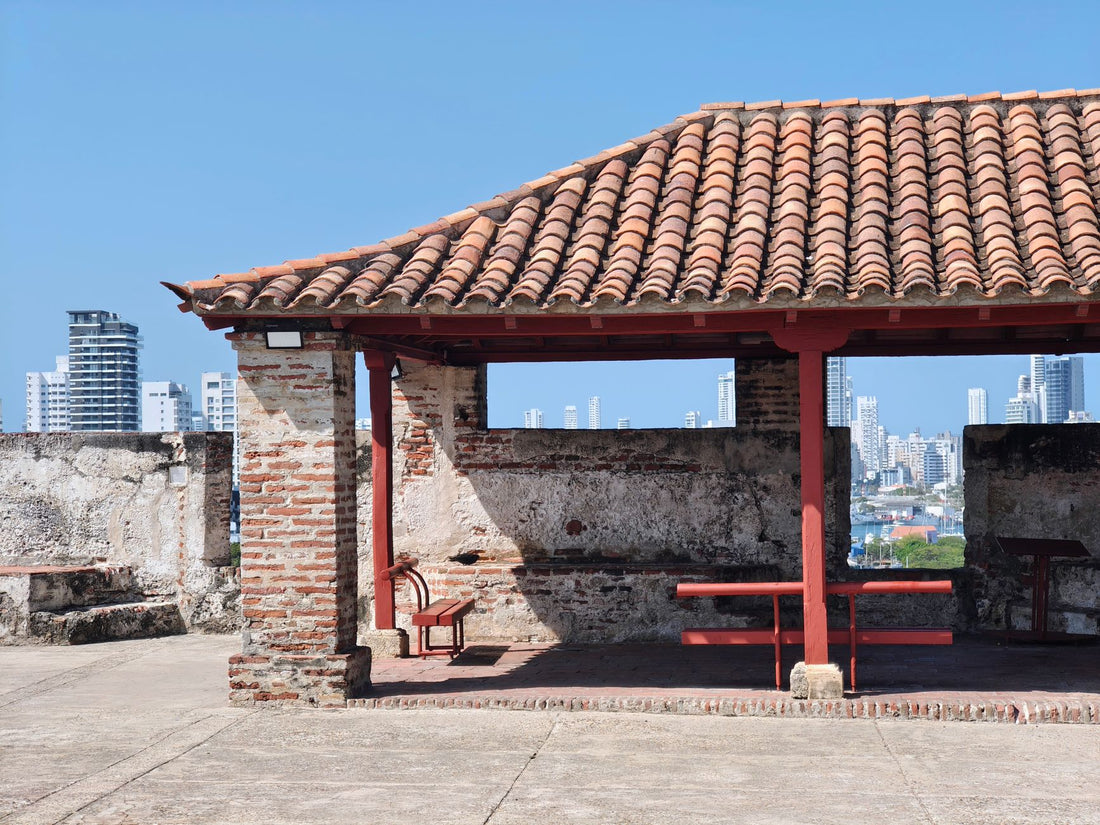
In Bocagrande, the area of skyscrapers, hotels, and urban beach, the connection is stable and constant, which makes sense as it's the city's most modern area. Climbing up to the San Felipe de Barajas Castle, you'll have plenty of data to check entrance times or order a taxi back when you finish your visit, although being on an open hill, the signal is even better than in the historic center.

With an eSIM, you connect to local Colombian mobile networks just like a local user, without guest rates or strange redirects. The signal might drop in very inner alleys of the historic center, between thick meter-and-a-half colonial walls, or inside some internal courtyards of houses converted into hotels. This is a normal effect of colonial architecture, not a coverage failure: if it happens, step out onto the street or approach a window and the signal will return immediately.
Excursion to the Rosario Islands and Barú: what to expect from the signal
Almost everyone who visits Cartagena takes a day trip to the Rosario Islands or Barú, and it's good to adjust expectations before embarking. Near the hotels and beach clubs of the more touristy islands, there's usually some coverage, but on the open sea, during the boat trip, and in the more pristine areas of the archipelago, the signal can be weak or disappear altogether. This is normal for a group of small islands separated from the mainland.
The recommendation is simple and avoids typical frustration: download an offline map of the area, the meeting point address, and tour information before getting on the boat, with your eSIM data already active from the city. This way, even if you lose signal on the island for a while, you'll have the important information saved on your phone without relying on a connection. Upon returning to solid ground, coverage quickly recovers and won't cause you any more problems for the rest of your trip.
How many GB to get for your Cartagena getaway
For a few days of beach and walled city exploration, most travelers get by just fine with a few gigabytes, especially if they use hotel Wi-Fi at night for data-intensive activities like uploading videos or making long video calls. Daily usage in Cartagena primarily involves maps, messaging, and photos, not continuous streaming. This table provides a reference based on your travel style:
| Traveler Profile | Days | Recommended Data |
|---|---|---|
| Beach getaway (maps, WhatsApp, photos) | 3-4 days | 3 GB |
| Active tourist (Instagram, tours, daily Uber) | 4-6 days | 5 GB |
| Heavy usage (video, streaming, data sharing) | 5-7 days | 8 GB or more |
If your trip is short, it's not worth overestimating your data just in case: it's better to adjust to your actual travel profile and, if you run short, extend on the fly. To make your data last without sacrificing anything important, these tricks for saving data with an eSIM while traveling are useful even if you have plenty of GB, because they reduce background consumption from apps you didn't even know were using data.
eSIM, physical SIM, or roaming: quick comparison for Colombia
Before deciding, it's good to see the three options side by side. eSIM isn't always the best idea: if you're only going for a weekend with very loose plans and your Spanish plan includes some data in Colombia, it might not even be worth buying anything.
| Option | Installation | Your Spanish number | When it makes sense |
|---|---|---|---|
| Colombia eSIM | Before traveling, with Wi-Fi, in minutes | Remains active on the physical SIM | Multi-day trip with normal data usage |
| Local physical SIM | Must be bought and activated in the country | Replaced or stored separately | Long stays where losing the Spanish line temporarily doesn't matter |
| Carrier roaming | None, already activated | Remains the same | Very short trips with little data usage |
To find out if a physical SIM card is worth it for a segment of your trip—for example, if you'll be in the country for weeks—the comparison of international chip vs. eSIM delves into the advantages and disadvantages of each format.
Cartagena is a city in Colombia: why you buy the country's eSIM
Although you search for "eSIM Cartagena," what you actually buy is the Colombia eSIM: there are no plans limited to a single city, because carrier coverage is national. And in practice, this is an advantage, not a limitation: with the same line, you have data in Cartagena, but also if you escape to Medellín, Bogotá, or go up to the Coffee Axis, without buying anything new along the way or restarting any plan.
If your route includes more than one Colombian city, you'll be interested in the eSIM guide for Colombia with Medellín, Bogotá, and Cartagena, which compares coverage between the three and helps you calculate the total GB for the entire itinerary instead of going city by city. And if after Colombia your trip continues through South America, the eSIM guide for Peru and the route to Machu Picchu will serve you for the next leg, because each country has different operators and plans.
Common mistakes and what almost no one tells you about eSIM in Cartagena
There are a series of small details that make the difference between arriving calmly or spending the first few minutes in Cartagena struggling with your phone. None are complicated, but they are easily forgotten:
- Installing the eSIM at the airport is the worst time. It needs stable Wi-Fi to download, and the Wi-Fi at your origin airport is usually slow with everyone connected at once. Install it at home, calmly, days before flying.
- Confusing "install" with "activate." You can install the eSIM in Spain and leave it dormant until you land; it doesn't start consuming days from your plan until you activate the data for that line, so there's no rush or risk in having it ready in advance.
- Leaving your Spanish line's data roaming on "just in case." If you don't deactivate it, your phone might try to use your Spanish carrier's network instead of the eSIM, and that's when unexpected charges can occur. Check your settings to see which line has active data.
- Buying a physical SIM card on the street or at an airport kiosk "just in case the eSIM fails." It's not necessary: the eSIM installs perfectly as a backup network, and in Colombia, street vendors of SIM cards don't always offer the best price or the plan you really need for a few days.
- Banking or payment apps that require location verification. When changing countries and networks, some apps may ask you to confirm that it's you from a trusted device. This is not an eSIM failure; it's a normal security alert from the bank. If you also use a VPN during your trip, keep in mind that it can affect these verifications; we explain it in eSIM, VPN, and privacy while traveling.
- Not all advertised "virtual chips" are the same. If this is the first time you've heard of the format, it's good to be clear about what an eSIM is exactly and how it differs from a normal physical chip before buying any plan, to avoid surprises with your phone's compatibility.
Frequently Asked Questions
Is there an eSIM just for Cartagena de Indias?
No. Cartagena is a city in Colombia, so the country's eSIM is used. That same line works in Cartagena, Medellín, Bogotá, and the rest of Colombia, giving you total freedom if your trip includes several stops or a day trip.
Will I have internet in the Rosario Islands?
Limitedly. Near hotels and beach clubs there may be some signal, but on the high seas and in the more pristine areas of the archipelago, it usually fails. It's best to download maps and tour information before boarding, with the eSIM already active from the city.
How many GB do I need for a few days in Cartagena?
For three or four days of beach and walking around the walled city, about 3 GB is usually enough if you use the hotel's Wi-Fi at night. If you upload a lot of photos and videos, order Uber daily, or share the connection with someone else, go up to 5 GB or more to be at ease throughout the trip.
Does the eSIM work right after leaving Rafael Núñez airport?
Yes, as long as you have installed it beforehand with Wi-Fi. Upon landing, you just turn off airplane mode and activate the eSIM line's data: in seconds, it connects you to a Colombian network, and you can already request a taxi or open the map. The airport is just a few minutes from the historic center, so you'll barely need data before reaching your hotel.
Do I keep my Spanish number during the trip?
Yes. The eSIM is a second line for data only, so your Spanish SIM remains active for calls and SMS in its usual slot. You have both simultaneously and decide which line uses the internet at any given moment from your phone's settings.
Do I need to buy a backup physical SIM in case the eSIM has problems?
It's not necessary. The eSIM works just like a physical SIM once activated, and carrying a spare physical chip only adds an extra step and an expense you'll almost never use. If you're concerned about compatibility, check before you travel that your phone supports eSIM, which is the only thing that really matters.
What happens if my trip continues after Cartagena to other cities in Colombia?
Nothing special: the same Colombia eSIM will continue to work for you in Medellín, Bogotá, or wherever you go within the country, without having to activate or buy anything new. You just have to accurately calculate the total GB for the entire itinerary, not just for Cartagena.
Conclusion
Cartagena is a city for walking, beaches, and photos among walls, and all of that is best enjoyed with data in your pocket from the first minute. Remember that what you buy is the Colombia eSIM, which covers Cartagena and any other stop in the country without city limits. Install it before leaving Spain, activate it upon landing at Rafael Núñez, and forget about roaming for the rest of your trip. Land in Cartagena with internet, without roaming, and without stress.