
In brief: an eSIM for Ireland and Slovenia provides you with mobile data in both countries with a single profile, without roaming or physical cards. It activates before you leave, automatically connects to the local operator in each area, and switches countries automatically when you cross from one to the other. Ideal if your route combines both destinations in one trip.
Ireland and Slovenia are not exactly close on the map, so if you've landed here, it's because your itinerary brings them together in one trip: perhaps a business getaway with a European city in between, a family trip split into two legs, or simply two destinations you've been wanting to check off your list. Whatever the reason, managing mobile data shouldn't be the headache of your trip.
Why a single eSIM for two such different countries?
There are no direct flights between Dublin and Ljubljana. The usual way is to connect through a Central European hub—Munich, Frankfurt, Vienna, or Amsterdam are the most common—and that already gives you an important first hint: if your layover is long and you want to check the airport map or answer an email, that transit country is not included in a plan designed only for Ireland and Slovenia. Use the airport's Wi-Fi during those downtimes and save your mobile data for when you land at your destination.
That said, the underlying logic is simple: instead of buying one eSIM for Slovenia separately and another for Ireland—with two activations, two QR codes, and two different profiles to manage—a single plan covers both legs of the trip. Upon landing in the first destination, the eSIM automatically connects to the local network; when you fly to the second country, it switches operators without you having to do anything. If you've never used one, you should first understand what a virtual eSIM is and why it has replaced physical cards for most short trips.

Coverage in Ireland
Dublin, Cork, Galway, and Limerick have solid 4G networks, and 5G already covers a good part of urban areas, so for moving around the city, using maps, or making a quick video call, you won't notice any difference from your home connection.
The nuance is in the countryside. If your route includes the Cliffs of Moher, the Ring of Kerry, Connemara, or any secondary road section in the west, be prepared to lose coverage at some points: these are areas of rugged coastline and hills that occasionally block the signal, especially between small towns. It's not a plan failure; it's the Irish topography. The solution is common sense: download the offline map of the route on Google Maps or Maps.me before leaving the hotel, because at the cliff edge, you won't have time to load anything. In Dingle and the westernmost part of Kerry, the signal is particularly erratic on descents to the sea, so if you need to confirm a reservation or send a location, do it while still on the main road.
Coverage in Slovenia
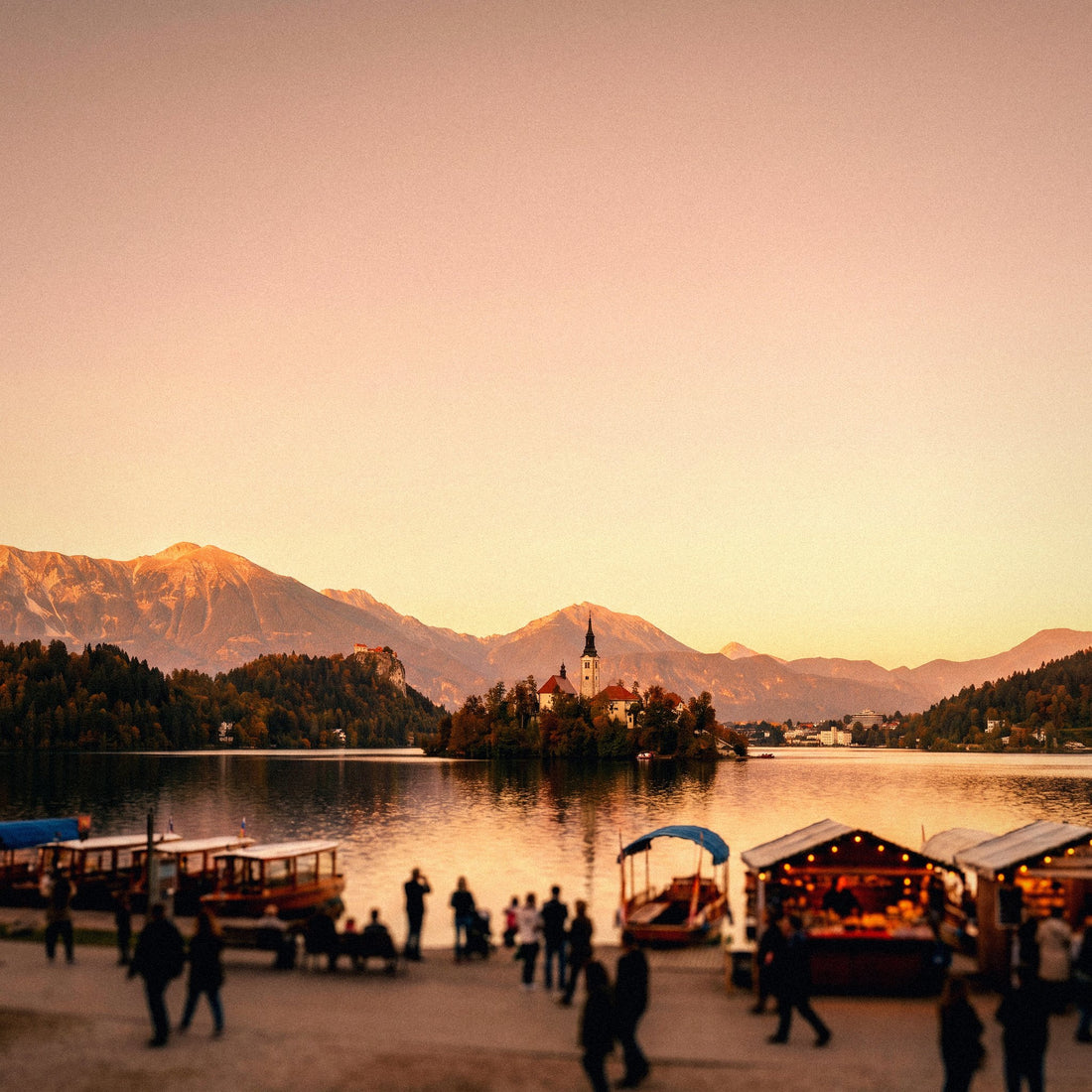
Slovenia is a small country with surprising coverage density for those unfamiliar with it. Ljubljana, Maribor, Bled, and the coastal strip of Piran have stable 4G, and in the Julian Alps or the Soča Valley, the signal holds up well in towns and on main roads, which isn't always the case in mountainous areas of other Alpine countries.
Where coverage does disappear is on high mountain trails, deep within the gorges of the Soča, and in some parts of Triglav National Park far from roads. If you plan to hike in that area, download the track to an offline app before leaving the village: once inside the canyon, you won't regain a signal until you exit. For moving between Lake Bled, the Postojna Caves, and Predjama Castle—another classic near Postojna, with shorter queues than Ljubljana Castle—you'll have plenty of data at all times.

Local operators in both countries
The eSIM does not use its own operator: it connects to the leading local networks in each country to give you the best available signal at all times.
| Country | Main Operators | Technology | Points to watch |
|---|---|---|---|
| Ireland | Vodafone Ireland, Three Ireland, Eir | 4G / 5G in cities | Irregular coverage in rural west (Kerry, Connemara) |
| Slovenia | Telekom Slovenije, A1 Slovenija, Telemach | 4G / 5G in Ljubljana | No signal on high mountain trails and deep gorges |
You don't choose the network: the profile selects the one that works best at each point, and when crossing from one country to another, it switches automatically. This switching is precisely what differentiates a dual-destination plan from carrying a physical international chip, which usually requires you to manually reconfigure the APN every time you change networks.
How much data do you need?
For a trip that splits days between the two countries, calculate the total consumption for the entire trip, not country by country separately:
- 5-7 day getaway (maps, social media, some video): 3 to 5 GB is usually enough.
- Two weeks split between Ireland and Slovenia: think 8-12 GB if combining city and nature.
- Long trip with many video calls and streaming on the go: a 15-20 GB or renewable plan is better, to avoid running out halfway through the trip.
What almost always spikes consumption is the same: watching a series or making a long video call on 4G instead of waiting for the accommodation's Wi-Fi. Maps, WhatsApp, and social media consume little in comparison. A trick that works well on long itineraries: download podcasts, maps, and offline content at night with the hotel's Wi-Fi, and save the next day's mobile data for essentials. If you want to refine the calculation, we have a specific guide on how to save eSIM data on a trip with tips that truly make a difference in daily consumption.
Useful fact: Since Ireland and Slovenia are in the EU, there is free data circulation between them within your Spanish contract if you travel with your usual line, but this depends on your operator's fair usage roaming conditions. A travel eSIM gives you a fixed price without relying on these limits or surprising bills. If you're not sure how this roaming works, we explain it in detail in what data roaming is.
How to activate and use it
Installation is done before leaving home, with Wi-Fi, and takes no more than a minute:
- Purchase the Ireland and Slovenia plan and receive the QR code via email.
- Scan the code in Settings → Mobile Data → Add eSIM.
- Keep your usual SIM active for calls and voice, and set the eSIM as your data line.
- Upon landing in the first country, activate data and roaming in the eSIM profile, and you're good to go.
When you cross into the second country, you don't have to do anything else: the data continues to work automatically. If it's your first time installing one, our guide on how to install an eSIM answers common configuration questions (which phones are compatible, what to do if the QR doesn't scan, how to name the profile so as not to confuse it with your normal line) in five minutes.
Myths and what almost no one tells you
"If I have an eSIM, I don't need to download anything offline." False, and this is the most common mistake on routes like this. An eSIM gives you data, it doesn't create coverage where there isn't any. In the Ring of Kerry or the Soča Valley, you'll have stretches with no signal due to sheer topography, whether you have the best or worst eSIM on the market. Download maps and key locations the night before.
"The eSIM profile takes up space and you have to delete the physical SIM to use it." No. A modern phone stores several eSIM profiles at once, and you can keep your physical SIM active for calls while the eSIM handles data. The only thing it consumes is a tiny bit of extra battery for having two lines searching for a network, nothing significant.
"The bigger the GB plan, the better." Not necessarily. Buying too much just means paying for data you won't use. It's better to calculate with a reasonable margin (add 20% to your estimate) than to buy the biggest plan "just in case."
Hidden connectivity gem: In Ljubljana, a good part of the pedestrian historic center has free public Wi-Fi from the city council, so if your data plan is running low, you can save it for moving outside the old town and use the Wi-Fi while strolling across the Triple Bridge or the central market. In Dublin, there's nothing similar widespread, so it's advisable to have plenty of data there.
Another overlooked detail: If your return flight also connects through a hub like Frankfurt or Vienna, don't assume you'll have data there. Check the full itinerary of your ticket, not just the final destination, before deciding how many GB to buy.
When this plan is NOT suitable for you
Let's be honest: if your trip is just a short getaway to Ljubljana or Bled for two or three days, without passing through Ireland, you'll benefit more from an eSIM only for Slovenia, typically with fewer GB and more tailored to that single destination. And if your European route involves adding countries as you go—Croatia, Austria, Italy, whatever comes up—a plan limited to two specific countries might fall short; in that case, an eSIM for all of Europe gives you more flexibility without having to buy new plans at each border.
It also doesn't make sense if you're going to be connected to office or hotel Wi-Fi almost all the time and only need occasional data for getting around: in that scenario, a small, generic plan with fewer GB is more cost-effective than one designed for two countries with high consumption.
Frequently Asked Questions
Does data work the same in Ireland as in Slovenia?
Yes. The plan covers both countries with the same speed and consumption conditions. When crossing from one to the other, the eSIM automatically switches local operators, and you continue browsing without touching settings or paying anything extra for the country change.
What if my flight has a layover in another European country?
That transit country is not covered by a plan specifically designed for Ireland and Slovenia. If your layover is long, use the airport's Wi-Fi for essentials. If you anticipate needing data during the layover as well, consider an eSIM for all of Europe directly.
Do I need to do anything when crossing the border or arriving in the second country?
No. The transition is automatic. Keep mobile data and roaming activated in the eSIM profile, and upon landing in the second country, it will automatically connect to the corresponding local network. There's no need to reinstall anything or buy a separate plan.
Does the eSIM include voice calls?
No, it's a data plan. For talking, you use WhatsApp, FaceTime, or data calls, which work perfectly with the active eSIM. This is common for travel in Europe and usually cheaper than traditional calls with roaming.
Can I share the eSIM data with another device?
On most mobile phones, you can activate the internet sharing function (tethering or hotspot) to provide Wi-Fi to a tablet or laptop, provided your model allows it. This consumption comes from your contracted GB, so monitor your usage if you connect several devices at once, especially if you plan to make video calls from your laptop.
What happens if I run out of data mid-trip?
You can extend or top up the plan from your phone without needing a physical store or waiting to arrive in another country. This is one of the advantages over buying a physical local SIM card, where topping up can be complicated depending on the operator if you don't speak the language.
Do I need to unlock my phone or ask permission from my Spanish operator?
No, the travel eSIM is independent of your Spanish line: it doesn't affect your contract or your usual SIM. You only need your mobile to be eSIM compatible (most mid-to-high-end phones from recent years are) and unlocked, not tied to a specific operator.
Conclusion
Combining Ireland and Slovenia in one trip has its charm: Atlantic green on one side, Alps and Adriatic coast on the other. What shouldn't complicate your life is connectivity. With a single plan, you have coverage in Dublin, Ljubljana, and everything in between—except for layovers, be aware of that—without changing cards or suffering roaming scares upon arrival. Install your eSIM for Ireland and Slovenia before you fly and forget about data worries in both destinations.