In short: Naxos doesn't have its own eSIM: you use a Greek eSIM, and it works across the island, on the ferry from Athens, and in the rest of the Cyclades. Install it before you leave, it activates automatically upon arrival, and it avoids expensive roaming. For beaches and towns, a few GB per day is more than enough.
If you're looking for an eSIM for Naxos that works as soon as you step foot in the port, this guide gets straight to the point: real coverage on the island, how many GB you'll need for a beach and town getaway, and how to arrive connected from the Athens ferry. Naxos is an island, so your plan is for all of Greece, not one exclusive to the town.
Does a Greek eSIM work in Naxos?
Yes. Naxos is part of Greece, so there isn't a plan just for Naxos: you use a country-specific eSIM, and it works across the island, on the ferry, and in the rest of the Cyclades. It activates in 1 minute, and you connect to local networks without changing your card.
This is important because many people search for something as specific as "data in Naxos" and get confused. Mobile coverage on the Greek islands is provided by the same operators as on the mainland, and a travel eSIM uses those networks. With a single Greek plan, you have internet in Naxos, in Chora, in the southern coves, and on the sea journey. If you also plan to hop to Santorini or Mykonos, the same plan works without paying again. For the traveler, this means something very practical: you buy an eSIM that covers the entire European Union, like PuraSim's Europe eSIM, once and you forget about it until you return home.

Coverage on the island and at the beaches
Chora (the capital) and large towns like Filoti or Apollonas have good 4G/5G signal. In more isolated coves in the mountainous interior or on the east coast, coverage might drop to 3G or disappear for a while, which is normal on any island with mountains.
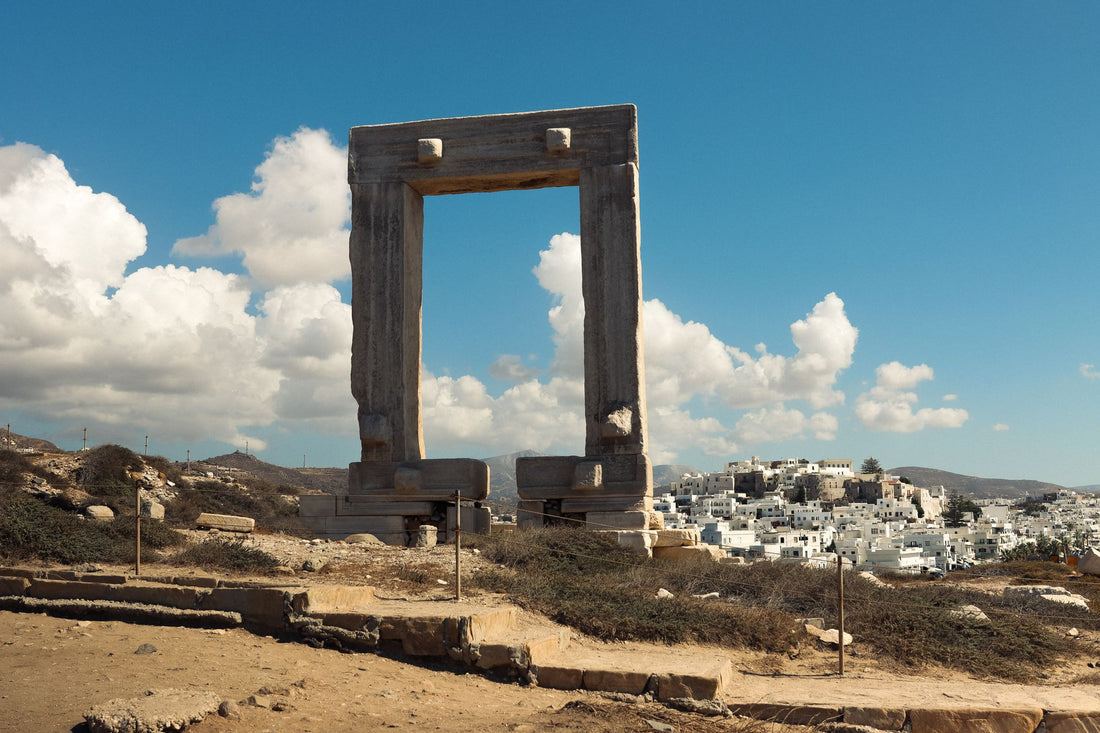
The port area, the Portara, and the southwestern beaches (Agios Prokopios, Plaka, Agia Anna) usually have plenty of data, which is where you'll be most of the time uploading photos and looking for places to eat. If you're hiking towards Mount Zas or exploring inland routes, download the offline map before you go: that's where the lack of network is most noticeable. A traveler's tip: activate the offline map in your route app the night before, using the hotel's Wi-Fi, and you won't depend on coverage during your climb. For everything else, the data network in Naxos is more than enough for browsing, WhatsApp, and sharing your location.
Tip: If you're renting a car or scooter to explore the island, use your phone as a GPS with active data. Inland roads are not always well-marked, and a connection can save you from more than one wrong turn.
eSIM, physical SIM, or roaming: what's best for your trip
Not everyone needs to buy anything. If you're traveling with a Spanish line and your operator includes the European Union in your plan (the regulation for roaming without additional charges covers Greece, which is a member country), for a long weekend in Naxos, your own number will probably suffice as is. Check your plan details before spending on anything else: if you already have data included in the EU, don't buy an eSIM just for the sake of it.
That said, there are three common reasons why an eSIM is still worthwhile: you want more GB than your plan offers without affecting your Spanish bill, you're traveling with a line from outside the EU (UK, USA, Latin America...) where roaming costs skyrocket, or you prefer to separate your work number from your vacation number without relying on your operator having a good coverage agreement in the Greek islands. Compared to buying a physical SIM at Athens airport, an eSIM wins on a very specific point for this trip: there's no counter to find at Naxos port or the small JNX airport, and if the ferry is delayed, you won't waste planning time waiting in line. If you've never thoroughly compared the two options, you can find a complete breakdown in international chip vs. eSIM. And if your route goes beyond Greece, PuraSim offers eSIMs for over 200 destinations with 24/7 support via email and WhatsApp in your language.
Connect from the ferry and airport
Most people arrive in Naxos by ferry from Athens (Piraeus port) or from other islands. The fast boat journey takes around 3-4 hours, and for much of the trip, especially near the islands, you'll have signal to check maps or notify of your arrival.
This is the big advantage of an eSIM over buying a local SIM: you install and configure it at home, and as soon as the boat approaches coverage, you're connected without looking for a shop or waiting in line. If you arrive by plane at Naxos' small airport (JNX) instead of by ferry, the same applies: you land and you already have data. No counters, no passport photocopies, no tiny cards that get lost. If your line is from outside the European Union, the comparison with traditional roaming is even clearer: outside the EU, the data cost from your usual operator skyrockets without warning, while an eSIM has a fixed plan that you know beforehand. The eSIM activates before you leave and starts automatically upon arrival.

How many GB for a Naxos getaway
For a few days of beach, maps, and photos, 1 GB for every 2-3 days is comfortable. If you make videos, many stories, or share your connection with your partner, calculate more. This table gives you an idea depending on the type of getaway.
| Days in Naxos | Light use (maps, chat) | Medium use (social media, photos) |
|---|---|---|
| 3 days (long weekend) | 1 GB | 3 GB |
| 5 days | 2 GB | 5 GB |
| 7 days | 3 GB | 7-10 GB |
| Islands + Naxos (2 weeks) | 5 GB | 10-15 GB |
The key is that your accommodation's Wi-Fi saves you a lot of data: download podcasts, series, and maps at night and reserve the eSIM for when you're out. If you run short, you can recharge in a minute from your phone without buying another eSIM. To avoid running out or overbuying, check out our tips for saving data with your travel eSIM.
How to activate it before boarding
The ideal order is simple: buy the eSIM, install it at home with Wi-Fi, and don't activate it until you arrive in Greece. This way, the day counter starts when you actually use it, and you don't waste your plan during the journey.
The process is the same on iPhone and Android: you receive a QR code, you scan it in your mobile data settings, and you're all set. When you land or the ferry enters Greek coverage, your phone automatically connects to the network. If it's your first time, it's helpful to read how to install an eSIM step-by-step, and if you want to understand why this frees you from your operator's roaming, here's what data roaming is explained without jargon. A useful note: keep your Spanish line's mobile data off and roaming for that line also off, not just the data, to avoid bill shocks. The data eSIM works independently, and your Spanish number is still available for calls and SMS.
Naxos and other Cyclades with the same eSIM
Naxos is an excellent base for hopping to Paros, Ios, Santorini, or Mykonos by ferry. And this is where the Greek eSIM shines: it covers all these islands with the same plan, without buying anything new at each port.
If your trip is island-hopping, this saves you time and money. Instead of looking for a SIM upon each arrival, you'll have active data from day one on all of them. Just keep an eye on your GB usage depending on how much you use your phone during journeys and on the beach. And if you want to understand what it means for a single plan to cover you in so many places at once, here's what a virtual eSIM is explained simply. For a longer European trip before or after Greece, the Europe eSIM covers several countries in one go without buying anything new at each border. The whole island, all the Cyclades, one plan.
Myths and what almost no one tells you about Naxos
The first myth is thinking you have to sort out your data at Athens airport before catching the ferry. You don't need to: if the eSIM is installed and set to activate automatically upon arrival, you cross Piraeus, board the boat, and relax until you set foot in Naxos.
Second myth: believing that all the Cyclades have the same coverage as Naxos. Not true. Naxos is one of the larger islands with more antennas in the area, so if your route includes smaller islands like Koufonisia or Iraklia, expect longer and more frequent signal drops than in Naxos or Paros.
A real hidden gem: if you're going to see the kouros of Apollonas or the one at the Melanes quarry – the half-carved marble statues that have been lying in the field for centuries – both are in inland areas with patchy coverage. Download the exact location on your map before leaving Chora, because once you're there, it might not load.
Another detail almost no one tells you: in Chora, the labyrinth of white alleys in the Kastro can confuse GPS, which sometimes places the blue dot on the next street due to signal bouncing off stone walls. It's not an eSIM or coverage fault; it's the very layout of the village. Drop a manual pin on the map before you get lost, and you're good to go.
Frequently Asked Questions
Is there an eSIM just for Naxos?
No. Naxos is a Greek island, so you use an eSIM for the country, which works throughout the island, on the ferry, and in the rest of the Cyclades. It's cheaper and more practical than looking for something exclusive to the town, which doesn't exist anyway.
Will I have coverage on Naxos' beaches?
On the southwestern beaches (Agios Prokopios, Plaka, Agia Anna) and in Chora, the 4G/5G signal is good. In isolated coves in the interior or on the east, it may drop to 3G or cut out for a while, which is normal on a mountainous island. Download offline maps just in case.
Does the eSIM work during the ferry from Athens?
Yes, as long as there is coverage. At sea, the signal may drop, but near the islands and as you approach port, you'll regain data. It's best to have the eSIM already installed at home so it connects automatically as soon as you enter a network zone.
How much data do I need for a week in Naxos?
For normal use of maps, WhatsApp, social media, and photos, about 3-5 GB for seven days is usually sufficient, especially if you use your accommodation's Wi-Fi at night. If you record many videos or share your connection, calculate a bit more and top up if needed.
Can I use the same eSIM in Santorini or Mykonos?
Yes. As it's a Greek eSIM, it covers all the Cyclades with the same plan. If you're island hopping, you don't buy anything new at each port: just keep an eye on your GB usage depending on how much you use your phone during journeys and on the beach.
Which phones are compatible with the eSIM for Naxos?
Most iPhones from the XS onwards and high-end Android phones from recent years (Samsung, Google Pixel, Xiaomi among others) have eSIM. Before buying, confirm in your phone settings that it has the feature and is unlocked: a phone locked to an operator may not support an eSIM from another provider.
Do I need an eSIM if I'm traveling from Spain to Naxos?
Not always. If your Spanish plan includes data in the European Union, Greece is covered, and your own number might suffice for a short trip. An eSIM is worthwhile if you want more GB without affecting your bill, are traveling with a line from outside the EU, or prefer to keep your Spanish number just for calls and messages.
Conclusion
Naxos doesn't need its own plan: with a Greek eSIM, you have internet on the island, on the ferry, and in the neighboring Cyclades, activated in 1 minute and without queues. Leave expensive roaming behind and arrive in Naxos already connected with PuraSim's Greek eSIM, ready before you embark.