In short: the eSIM for Uruguay provides good coverage in Montevideo, Punta del Este, and Colonia del Sacramento with Antel, Claro, or Movistar on 4G, but coverage weakens in rural areas and it won't work for crossing to Argentina on the ferry. It's installed before leaving home and activated upon landing, without queues or a physical SIM to lose.
Coverage by operator in Uruguay: Antel, Claro, and Movistar
Uruguay is a small country by South American standards—you can almost cross it in a day by car from end to end—and this is reflected in its coverage: it's one of the most uniform in the region. The eSIM profiles sold for the country rely on the network of one of the three local operators, and in practice, all three perform reasonably well in the areas where you'll spend most of your trip.
Antel is the state-owned operator and has the most coverage outside Montevideo: if your itinerary includes inland towns, small coastal resorts on the east, or rural routes, it's the network that causes the fewest headaches. Claro Uruguay and Movistar Uruguay match or even surpass Antel within Montevideo and in the coastal tourist corridor (Punta del Este, José Ignacio, La Paloma), but lose some density as you move away from the main routes. For a trip that involves the capital, coast, and a few inland excursions, the real difference between the three is small; for very rural routes or border crossings, Antel usually provides fewer surprises.
A nuance that is almost never explained: in Uruguay, 4G actually works, without the dead zones you find in other countries in the region. What changes from one operator to another is not so much "is there coverage or not," but rather the specific speed and stability in a particular neighborhood or town. If your eSIM uses one of these three networks, for 90% of the tourist route, you won't notice a difference between them.
| Operator | Strength | Weakness | Technology |
|---|---|---|---|
| Antel | Greater reach in inland and rural areas | Nothing notable for typical itineraries | 4G, 5G being deployed in the capital |
| Claro Uruguay | Very solid in Montevideo and the east coast | Lower density outside the tourist corridor | 4G |
| Movistar Uruguay | Good urban coverage and in Punta del Este | Similar to Claro outside main routes | 4G |
Data speed depending on the region of the country
The actual speed you'll experience depends more on your location than on the operator itself. In Montevideo, especially in Ciudad Vieja, Pocitos, and the city center, 4G is more than sufficient for maps, WhatsApp, uploading photos, and making video calls without interruptions. In Punta del Este, something curious happens: in the low season, the network is fluid, but in January and February, with the population multiplied by the summer influx, it's common to notice slower speeds in the late afternoon in the Playa Brava area and the port, simply because there are many mobile phones connected simultaneously in a small radius. It's not a coverage failure, but rather peak hour temporary saturation.
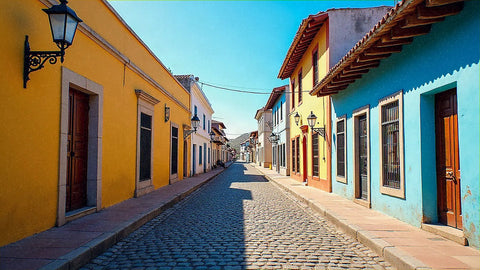
Colonia del Sacramento, with its historic center of cobblestone streets and low-rise houses, generally has good signal, although inside some colonial buildings with very thick walls, the signal might drop a little: nothing that will prevent you from checking the ferry or the map. If you go north to cities like Salto or Paysandú, urban coverage remains good, but on the roads connecting these cities to the rest of the country, there are sections with less antenna density, typical of low-population areas. And in the Uruguayan countryside itself—estancias, rural tourism areas, livestock routes—the norm is 3G or intermittent coverage, so if you're staying at a remote estancia, ask beforehand if they have their own Wi-Fi.
Which data plan to choose based on your type of trip
There's no need to overspend on your plan. For a short weekend trip focused on Montevideo and Colonia, with normal use of maps, messaging, and social media, a light data package is sufficient: you won't be streaming in 4K from the bus. If the trip includes the east coast—Punta del Este, José Ignacio, Cabo Polonio—and you're moving around for more days, it's worth stepping up: more photos, more in-car navigation, more time connected in general.
For those working remotely during the trip or making long video calls, consumption shoots up quickly, so here it does pay to have plenty of data rather than running out halfway through the week. And if your plan includes crossing to Argentina at some point during the trip, keep in mind that a plan designed for Uruguay will not work on the other side of the Río de la Plata: we discuss this in the myths section, because it's the most common mistake people make unknowingly.
The exact price of each package varies according to duration and data volume, so it's best to consult it directly on the eSIM plan for Uruguay product page before purchasing, where you can compare the available options based on the number of days you'll be there.
How to activate the eSIM before landing
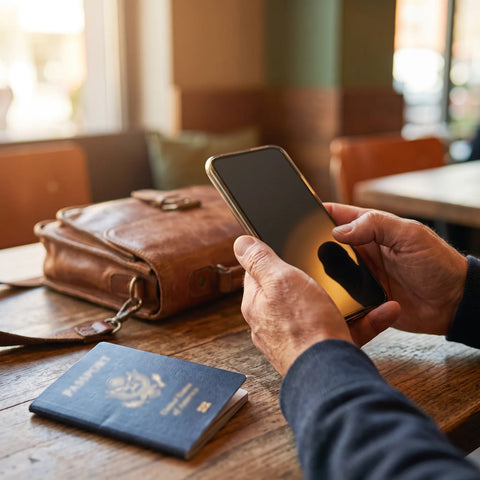
The advantage of an eSIM over a physical SIM is that the entire process is done from home, calmly, and not in line at a Carrasco airport stand with your luggage in tow.
- Purchase the plan from your mobile or computer, specifying Uruguay as the destination.
- Install the profile by scanning the QR code you receive via email; your mobile needs Wi-Fi or data at that moment, so do it before leaving home.
- Leave the eSIM installed but not activated until you land, so you don't waste extra days of your plan.
- Activate mobile data as soon as the plane touches down in Carrasco (or at the border crossing, if you enter by land from Brazil or Argentina) and enable data roaming for that specific line in your mobile settings.
- Check that WhatsApp and Maps use the new data line, especially if you also keep your physical Spanish SIM active for calls.
If it's your first time using an eSIM, it's a good idea to review the complete process beforehand in how to install an eSIM step-by-step, because each manufacturer (iPhone, Samsung, Pixel) organizes the menu slightly differently.
Roaming, local SIM, or eSIM: what's best in Uruguay
Here's where it's important to be honest: the eSIM isn't always the best option. It depends on how long you're staying and how you use your phone.
| Option | Advantage | Disadvantage |
|---|---|---|
| Roaming from your Spanish operator | Zero hassle, same number always | Cost skyrockets outside the EU; check your operator's rate for Uruguay before traveling |
| Local physical SIM | Local prices, good coverage | Must find a point of sale, bring passport, and sometimes wait in line; you lose your Spanish number while it's active |
| PuraSIM eSIM | Installed before leaving, immediate activation upon landing, you keep your Spanish line for calls | Requires an eSIM-compatible phone (most mid-to-high-end phones since 2020 are) |
If your trip to Uruguay is a short two or three-day break from Buenos Aires and you already have active data in Argentina, consider if you really need another line just for the crossing: sometimes the hotel and ferry Wi-Fi are enough. But if the trip to Uruguay is the central part of your itinerary, with several days of moving around the country, then it does pay to have your own data from minute one. To understand the fundamental difference between these options, you can find more details in eSIM vs. traditional roaming.
What almost no one tells you before traveling to Uruguay
The ferry to Buenos Aires takes you out of Uruguayan coverage without warning. This is the most common mistake: many people buy a plan only for Uruguay thinking about the "little crossing" to Buenos Aires on the Buquebus or Colonia ferry, and upon arriving on the other side of the Río de la Plata, they find themselves without data. The onboard network is usually intermittent during the crossing, and upon disembarking in Argentina, you need a different data plan, because one country's networks do not cover the neighboring one, except for specific cases of cross-border roaming that tourist eSIMs do not include. If your route combines both countries, sort out both legs separately before you leave.
Punta del Este in January is not Punta del Este in April. Formal coverage is the same, but the real experience changes a lot: in high season, with the population multiplied, you will notice more slowness during peak hours in the peninsula and Brava beach. If you are going to work remotely or need a stable connection for something important, it's better to manage it early in the morning or avoid peak hours in the late afternoon.
The interior is not the coast. It's tempting to think that if Montevideo and the coast are good, the whole country is good. That's not the case: in rural tourism areas, remote estancias, and cattle routes inland, data coverage can be intermittent or drop to 3G. If your plan includes a stay far from the main route, ask about accommodation Wi-Fi beforehand and don't assume you'll have constant 4G.
No need to buy anything if your layover is only a few hours. If you're just connecting at Carrasco airport on your way to another destination, the airport Wi-Fi is usually enough for basic needs; don't waste a day of your data plan for a three-hour layover.
Uruguay has no active app or website restrictions like some other destinations: you won't need anything special to use social media, online banking, or video calls. Even so, if you also travel to countries with more network control on the same route, it's worth understanding what really changes when using a travel VPN, which we explain in eSIM, VPN, and travel privacy.
Automatic roaming can remain active without you realizing it. If you don't deactivate mobile data for your Spanish line upon landing, your phone might alternate between both lines and inadvertently generate roaming consumption. Check your settings to see which line is the "primary for data" as soon as you land.
How to extend data if you're running low on GB
If you've bought a tight plan and want it to last until the last day, there are simple tricks that make a difference: downloading the map of Montevideo and Punta del Este in offline mode before moving around, disabling automatic app updates in the background, and using accommodation Wi-Fi for heavy tasks (uploading photos, system updates) while saving mobile data for essentials on the street. You can find the complete list of tricks in how to save data with an eSIM on a trip.
If your trip continues to another country in the region
Uruguay works very well as a stop within a longer South American route. If you then continue to Peru, keep in mind that you'll need another data profile: coverage and operators change completely, and we explain it in detail in the eSIM guide for Peru and Machu Picchu. And if your route includes Colombia, the logic is the same: each country needs its own data plan, unless you buy a regional eSIM specifically designed for several destinations at once.
If you've never used an eSIM and have more technical questions—what it is exactly, if it can be shared, if it takes the place of your physical SIM—it's worth clarifying the basic concepts first in what is a virtual eSIM and, if you're deciding between the usual physical chip and the digital option, in international chip vs. eSIM.
Frequently Asked Questions about eSIM in Uruguay
Which operator has the best coverage in Uruguay?
The three main ones—Antel, Claro, and Movistar—cover Montevideo and the tourist coast well. Antel has a bit more reach in the interior and rural areas; for itineraries focused on the capital and coast, the difference between the three is minimal.
Is there good coverage in Punta del Este?
Yes, 4G coverage in Punta del Este is solid all year round. During high season (December to March), you might notice occasional slowdowns during peak hours due to the influx of people, but it's not a coverage problem, but rather temporary congestion.
Does the Uruguay eSIM work if I cross to Buenos Aires by ferry?
No. Upon disembarking in Argentina, you need to activate a different data plan for that country; the Uruguay eSIM loses coverage when crossing the Río de la Plata.
Do I need to buy data if my layover in Carrasco is short?
For a short layover of a few hours, the airport Wi-Fi is usually sufficient, and there's no need to use a day of your data plan.
How does the eSIM work in Colonia del Sacramento?
Generally well; inside some historical buildings with thick walls, the signal might drop a bit, but it's sufficient for checking maps, ferry schedules, or taking and sharing photos.
Are there areas in Uruguay without data coverage?
In the rural interior, remote estancias, and cattle routes, it's common to find only 3G or intermittent coverage. In cities and throughout the coastal strip, 4G coverage is consistent.
Can I keep my Spanish number active while using the eSIM in Uruguay?
Yes, that's one of the advantages over a physical SIM: your usual line remains active for calls and SMS while data runs on the eSIM, provided your phone supports dual SIM.