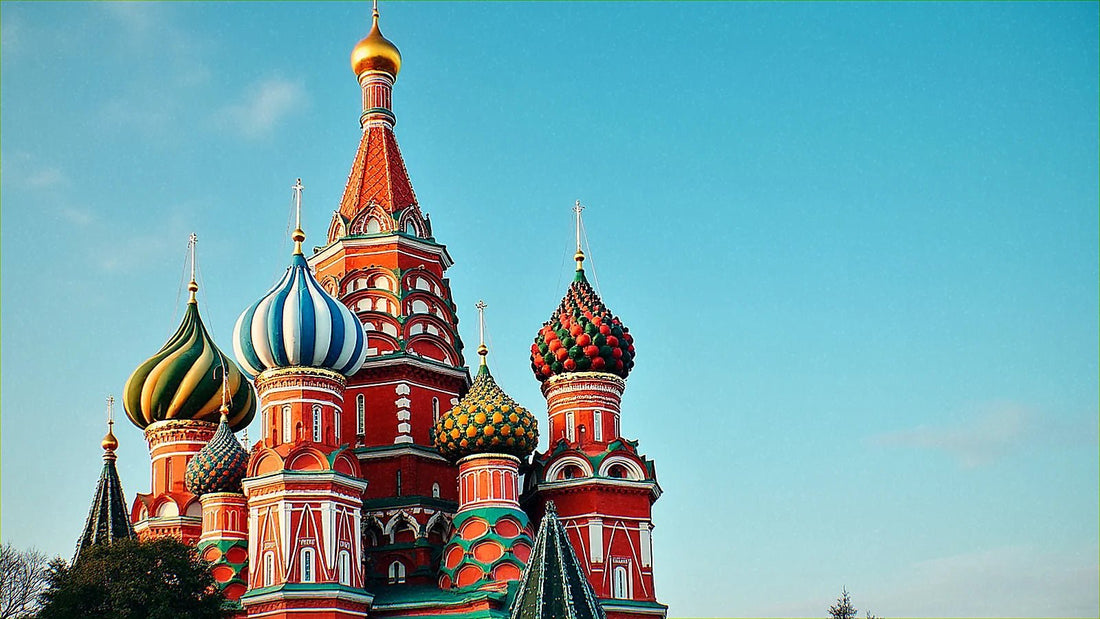

In summary: an eSIM for Russia gives you mobile data as soon as you land in Moscow or St. Petersburg, without a physical store or the passport registration required for local SIMs. Urban coverage with MTS, MegaFon, or Beeline is solid; beware that Instagram, Facebook, and some payment apps do not work without a VPN.
Traveling to Russia with a connected mobile is simpler than it seems: an eSIM for Russia gives you data from the moment you land, without having to look for a SIM store or struggle with the language. In this guide, you'll see real coverage in Moscow and St. Petersburg, which operators are behind the network, how many GB you need, and how to activate it in a minute.
Does an eSIM work in Russia?
Yes. An eSIM works in Russia as long as your mobile is compatible and unlocked. It connects to the local networks in large cities and the Moscow–St. Petersburg corridor just like a physical SIM, but you install it before leaving home and activate it upon arrival, without changing cards.
The advantage over traditional roaming is twofold. First, the price: your Spanish operator's roaming in Russia can skyrocket to €10-20 per day or charge you for every megabyte outside your allowance, while a local data plan costs a fraction. Second, convenience: you don't depend on finding a physical store or registering a Russian SIM with a passport, a mandatory process there for local cards. With an eSIM, you arrive already connected and avoid surprises on your bill when you return.

Coverage and local operators
Connectivity in Russia relies on four major operators: MTS, MegaFon, Beeline, and Tele2. A good travel eSIM routes your traffic through one or more of these networks, so you have stable 4G in the areas where you'll actually be.
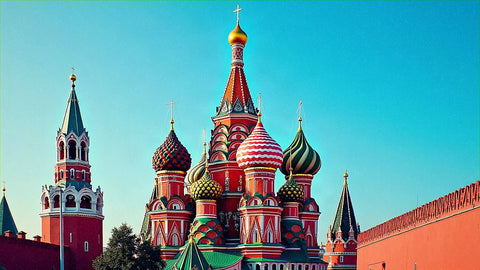
Coverage is very solid in Moscow, St. Petersburg, and regional capitals, with almost total 4G in the urban center, the metro, airports like Sheremetyevo or Pulkovo, and major train stations. On the Trans-Siberian Railway and in rural areas of Siberia, the signal becomes intermittent: you'll have data at stops and in cities, but expect long stretches without coverage between towns. For the typical urban traveler (Kremlin, Hermitage, museums, restaurants), the network is more than adequate for maps, messaging, and live translation.
Tip: Download offline maps of Moscow and St. Petersburg before you leave. The metro is huge, and this way you can navigate even if you go down to a deep station without a signal.
How many GB you need
It depends on how much you use your mobile, but for a typical trip to Russia, most people use between 3 and 10 GB. If you only use maps, WhatsApp, and some email, a small amount is more than enough; if you share photos, watch videos, or use camera translation, upgrade your plan.
- Light use (maps + messaging): 1-3 GB for a 4-5 day getaway.
- Medium use (social media, photos, some video): 5-8 GB for 7-10 days between Moscow and St. Petersburg.
- Intense use (streaming, remote work, many uploads): 10 GB or more, or review these tips to save data while traveling before paying too much.
A trick that saves a lot of data: use hotel Wi-Fi for heavy downloads (maps, series for the overnight train, updates) and save your eSIM's GB for when you're out and about.

Indicative prices and plans
eSIM plans for Russia are purchased by data volume and days of validity. These are indicative ranges to give you an idea before choosing; the exact details can be seen in the product description.
| Plan | Data | Days | Ideal for |
|---|---|---|---|
| Short getaway | 1-3 GB | 7 days | Weekend in Moscow |
| Classic trip | 5 GB | 15 days | Moscow + St. Petersburg |
| Long trip | 10 GB | 30 days | Extensive route or remote work |
Compared to the cost of data roaming from Spanish operators, a local eSIM is much cheaper and, above all, has a fixed price: you know what you're paying before you travel and there are no hidden MB charges.
How to activate your eSIM step by step
Activating the eSIM takes about a minute. Ideally, you should install it at home, with Wi-Fi, and only turn on data when you land in Russia. The summarized process is this:
- Purchase the plan and receive the QR code by email instantly.
- With Wi-Fi, go to Settings > Mobile Data > Add eSIM and scan the QR.
- Label the line (e.g., "Russia") and leave it installed.
- Upon arrival, activate the mobile data for that eSIM and deactivate roaming for your Spanish line.
- Check that a Russian operator appears (MTS, MegaFon…) and you're good to go.
If it's your first time, the general guide on how to install an eSIM will answer your questions, and before buying, it's advisable to confirm what an eSIM is and what you need to use it. Almost all iPhones since the XR and recent mid-to-high-end Androids are compatible.
Tips for connecting in Russia
Russia has peculiarities that should be considered so that your connection doesn't fail you at a crucial moment. Some Western apps and services may be limited within the country, so plan your map and messaging tools in advance.
- Install your apps before traveling: offline maps, translator, and messaging downloaded from Spain will save you trouble if a service is slow at your destination.
- Save key documents offline: train tickets, hotel reservations, and museum tickets, in case you run out of data on the subway.
- Have a backup language: Cyrillic makes getting around difficult; a translator with a camera on your eSIM will save you on menus and signs.
- Monitor your battery: Russian cold drains it quickly; a power bank and not wasting data unnecessarily will extend your day.
With the eSIM installed and these precautions, you'll have your mobile operating from the airport, without queues or paperwork. If your route crosses borders, also check the comparison of international chip vs. eSIM so you don't have to change cards in each country; and if you continue your journey to the neighboring country, there is a specific eSIM plan for Belarus that you can activate separately.
Russia without the usual apps: what to expect and how to solve it
Here's what no eSIM seller tells you before you buy: having data doesn't mean having all your apps. Instagram and Facebook have been blocked in Russia since 2022, so no matter how strong your eSIM signal is, you won't be able to open them without help. WhatsApp does work normally for messages and calls, but if you really want to communicate like people do there, install Telegram before you leave: it's the app that hotels, guides, and even many businesses use to confirm reservations.
If you need those blocked networks or simply prefer to browse as you do at home, install a reliable VPN before leaving Spain. Once in Russia, local app stores may not offer the same VPN apps you see here, and downloading it upon arrival becomes complicated. Personal use of a VPN is not a crime in the country, but it's advisable to have it ready beforehand instead of improvising from your hotel room. The guide on eSIM and VPN for your travel privacy explains how to combine them without losing connection speed.
One detail that surprises many people: free Wi-Fi at airports like Sheremetyevo or Domodedovo requires SMS verification to a Russian phone number to grant access, which a visitor does not have. If your eSIM is already active upon landing, you skip that step because you browse directly with your own data from the baggage claim area.
eSIM versus the local Russian SIM
Many travelers consider buying a Russian SIM upon arrival, but in practice, it turns out to be less practical than it seems. The eSIM wins in convenience and procedures, especially if you're staying for a few days or don't speak Russian.
A local SIM requires going to an MTS, MegaFon, or Beeline store and registering it with your passport, a legal requirement in Russia that can take time and be complicated by the language barrier. Additionally, you have to find the store, understand the plan, and activate the line in person. With an eSIM, you skip all that: you buy it online from Spain, install it before flying, and activate it upon landing, with Spanish support if something doesn't add up. For short or business trips, the hours you save on procedures are worth more than the small price difference.
| Aspect | Travel eSIM | Local Russian SIM |
|---|---|---|
| Passport registration | No | Yes, mandatory |
| Activation | Online, 1 minute | In physical store |
| Transaction language | Spanish | Russian |
| Ready upon landing | Yes | After going to the store |
For very long stays or huge consumption, a local SIM might be cheaper per GB, but for a typical trip, the eSIM more than makes up for it with immediate connectivity and no paperwork.
Myths and what almost no one tells you about eSIM in Russia
Before buying, it's worth dispelling some common misconceptions that could complicate your trip if you take them for granted.
- "Any international travel eSIM includes Russia": False. Due to sanctions and changes in agreements between operators, not all providers have coverage in the country. Before paying, confirm in the product details that Russia is explicitly listed among the covered destinations.
- "My phone has eSIM, so it will definitely work": It depends on where you bought it. Some models sold in markets with dual physical SIMs have the eSIM function factory-locked by the manufacturer or local operator. Check your device settings to confirm that the "Add eSIM" option is available before making any payment.
- "With an eSIM, I don't need anything else": Visa and Mastercard issued outside Russia stopped working in the country since 2022. This has nothing to do with the eSIM, but it's a common surprise for those who don't know: bring cash in euros or dollars to exchange, because your Spanish card won't help you at the hotel counter.
- "The more coverage, the better, so I'll buy the largest plan": Not always. If your trip is a short getaway of two or three days only in Moscow, a 1-3 GB plan with Wi-Fi support at the hotel is usually more than enough; paying extra for data you won't use doesn't make sense.
When NOT to buy an eSIM for Russia: if your time in the country is a technical stopover of a few hours without leaving the international airport area, you'll probably manage with the free airport Wi-Fi and won't need to contract anything. Save the eSIM for when you actually plan to go out.
Frequently asked questions
Can I use the eSIM to make calls in Russia?
Most travel eSIMs are data-only, but with them, you can use WhatsApp, Telegram, or internet calls without a problem. For talking to family or making reservations in Russia, app calls over your data work perfectly and are free.
Do I need to register the eSIM with my passport?
No. Unlike physical Russian SIMs, which require passport registration at a store, the travel eSIM is activated online without procedures. You buy it, scan the QR, and connect, without providing your documentation or going to an office.
Does it work in St. Petersburg the same as in Moscow?
Yes. Both cities have very extensive 4G coverage in the city center, metro, airports, and stations. The eSIM connects to the best available local network, so the experience between Moscow and St. Petersburg is practically identical.
Can I use it on the Trans-Siberian Railway?
You will have data at stops and in cities along the route, but between towns, there will be long stretches without a signal, especially in Siberia. Download maps, music, and series via Wi-Fi before boarding the train to avoid depending on coverage en route.
When should I activate the eSIM's data?
Install it at home with Wi-Fi and activate mobile data only when you land in Russia. This way, you don't spend your plan prematurely and avoid expensive roaming charges for your Spanish line. In a minute, you'll have internet working directly from the airport.
Can I use the eSIM and my physical Spanish SIM simultaneously in Russia?
Yes, if your mobile supports dual SIM (one physical and one eSIM), you can leave your Spanish line active only for SMS and calls and use the eSIM exclusively for data. This way, you keep your usual number without activating expensive data roaming.
Can I make video calls with the eSIM in Russia?
Yes, without a problem via WhatsApp or Telegram as long as you have 4G coverage, which is the usual situation in Moscow and St. Petersburg. Keep in mind that other Western video call platforms may perform worse or be restricted, so have Telegram as an alternative handy.
Conclusion
Russia is much better traveled with a connected mobile: metro maps, on-the-fly translation, and reservations always at hand. With an eSIM for Russia, you save on expensive roaming, registration paperwork, and queues, and you arrive already connected from the airport. Choose your GB according to your trip, install it before you leave, and enjoy Moscow and St. Petersburg without worrying about the bill.