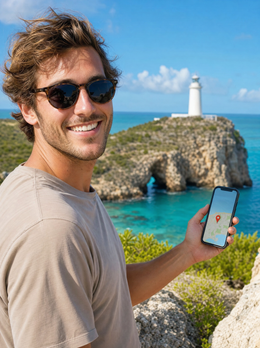
In short: an Anguilla eSIM gives you mobile data at local prices from the moment you land, without touching your Spanish operator's roaming or needing to find a shop on the island. Install it with Wi-Fi before you leave, activate it upon arrival, and connect to Flow or Digicel networks. For a week at the beach, 3 to 5 GB is usually enough.
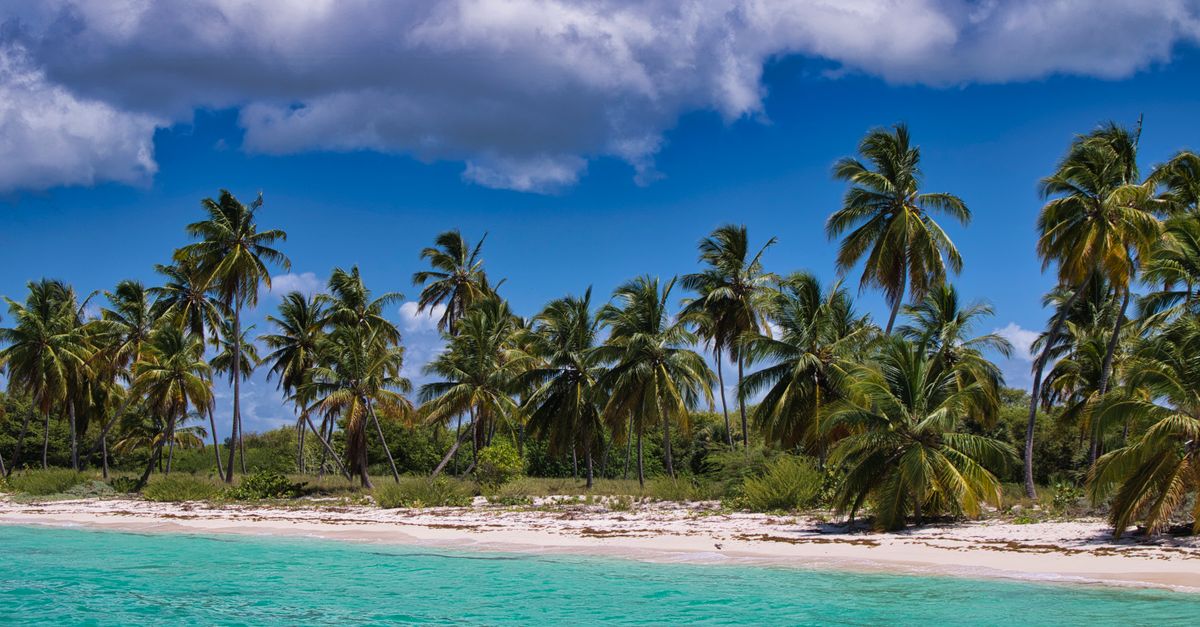
Anguilla is that British island in the eastern Caribbean that almost no one visits in passing: you go there on purpose, usually combining a flight to St. Martin and then a ferry or small plane to Clayton J. Lloyd International Airport (AXA). Almost empty white sand beaches, turquoise water, and a slow pace that encourages minimal phone use. The problem is that, once you leave the European Union, your Spanish tariff no longer applies "roaming like at home," and the roaming bill skyrockets without warning. An Anguilla eSIM solves this at the root: a digital profile, no physical card, no airport queues, and data at local prices from the first minute.
Does an eSIM work in Anguilla?
Yes, as long as your mobile is eSIM-compatible. The profile connects to the island's local networks just like a physical card would, with the difference that you don't occupy a SIM slot and can keep your Spanish line active for calls and SMS. You install it with Wi-Fi before leaving home and activate it upon landing: in a couple of minutes, you'll have maps, WhatsApp, and email working without relying on hotel Wi-Fi.
Anguilla is a British Overseas Territory, not an independent state or part of any larger Caribbean country, with its capital in The Valley and an area of approximately only 90 km²: you can drive across the entire island in less than an hour. Due to its size, coverage is concentrated in inhabited areas and the tourist strip to the northwest, with good 4G signal on most beaches and hotel complexes. Being outside the European Union, no community roaming regulations apply here, so an eSIM is the most direct way to avoid bill surprises. Before buying anything, confirm that your mobile supports eSIM: the vast majority of iPhones since the XS and a good portion of mid-to-high-end Androids from recent years allow it, but it's worth checking carefully and not taking anything for granted the night before you fly.
Coverage and local operators
Two main networks operate in Anguilla: Flow (part of the Cable & Wireless group) and Digicel, the two major operators in the English-speaking Caribbean. Both provide 4G/LTE coverage on the island, with the most stable signal in The Valley, the tourist coast to the northwest, and popular beaches like Shoal Bay or Meads Bay. A good travel eSIM relies on these same networks to connect you without you having to choose an operator or step into a store upon arrival.
Here's an indicative coverage situation by area, useful for planning which days it's best to have your map downloaded just in case:
| Area | Typical coverage | Practical notes |
|---|---|---|
| The Valley (capital) | Good 4G | Administrative and commercial center of the island |
| Northwest beaches (Meads Bay, Barnes Bay) | Good 4G | Main hotel area, best coverage on the island |
| Shoal Bay East | Fair 4G | Popular tourist beach, stable signal on the sand |
| Remote coves (Captain's Bay, Savannah Bay) | Irregular | Accessed by dirt track, weak or absent coverage in sections |
| Rural interior and secondary roads | Variable | May drop to 3G or briefly lose signal between hills |
Useful fact: Anguilla is just a few minutes by ferry from St. Martin, and it's common to combine both islands on the same trip. Even so, your data plan must explicitly cover Anguilla: do not assume that an eSIM purchased for St. Martin will work here, they are different networks and coverages even though they are so close.
How many GB do you need for your trip?
Anguilla is a destination for beaches, relaxation, and minimal phone use, so there's no need for a giant plan. For a typical week-long trip, 3 to 5 GB is usually enough if you use your accommodation's Wi-Fi for heavy tasks (uploading photos, watching series at night). It all depends on how much you use maps, social media, and video calls during the day.
This table helps you choose without running out mid-trip or overpaying for gigabytes you won't use:
| Usage profile | Estimated data per week | What it includes |
|---|---|---|
| Light | 1-2 GB | Occasional maps, WhatsApp, email, almost no social media |
| Medium | 3-5 GB | Social media, normal browsing, some short videos |
| Intense | 8-10 GB or more | Streaming, frequent video calls, 4K photo backup |
| Long stay or remote work | Rechargeable plan | Online meetings, file transfers, stable daily connection |
If you often run out of gigabytes on other trips, take advantage of our tips to save data with your eSIM: disabling automatic app updates, lowering video quality on networks, and downloading offline maps before leaving the hotel can save you much more than it seems at first glance.

How to activate your eSIM in Anguilla
Activating your eSIM takes a couple of minutes, and it's best to get it ready before leaving Spain. You buy the plan, receive the code by email instantly, install it with Wi-Fi at home, and only activate the data when you arrive on the island. This way, you land already connected, without relying on the Wi-Fi at St. Martin airport or the Blowing Point ferry terminal, which may not always have a good signal for everyone at once.
The process, step by step:
- Buy the Anguilla plan and receive your eSIM by email instantly.
- Install it with Wi-Fi at home by scanning the QR code or using the direct activation link.
- Upon landing (or getting off the ferry), activate the eSIM data in your phone's settings.
- Check that you have a signal and start browsing at local prices.
You can find the detailed step-by-step instructions in how to install an eSIM. Keep your Spanish SIM in to continue receiving bank SMS and calls, and use the eSIM only for data: it's the combination that offers the most peace of mind in a destination where you won't find your operator's store on every corner.
eSIM vs. roaming and local SIM in Anguilla
Since Anguilla is a territory outside the European Union, your Spanish operator's roaming does not work at national prices: it activates roaming tariffs that accumulate every day your phone is on, and the cost quickly skyrockets if you don't check the conditions before traveling. It's advisable to consult with your operator in advance, as rates change and what was valid last year may not apply now.
Buying a local physical SIM on the island is also possible: there are Flow and Digicel points in The Valley. But it involves finding an open store, registering with your passport, and being without your Spanish number while you use it, which can be inconvenient if you're expecting an important call. Thoroughly review this comparison in our guide on eSIM versus roaming and also on international chip versus eSIM if you're unsure between the three options.
The eSIM offers the best of both alternatives: local prices without queues or paperwork, and your Spanish number intact for important matters. If your route combines Anguilla with the United States on the same trip (many flights to the Caribbean stop in Miami or San Juan), take a look at our USA eSIM plan to avoid running out of data during your connection.
What almost no one tells you about connecting in Anguilla
There are specific details about this destination that don't appear in generic travel guides and make the difference between arriving stressed or arriving relaxed. They go beyond the typical "coverage is usually good in cities":
- Traffic drives on the left. Anguilla, as a British territory, maintains left-hand driving even though it's a stone's throw from islands where people drive on the right. If you rent a car, have Google Maps offline prepared anyway, because getting confused at a roundabout with your phone out of data adds a problem to the initial scare.
- Arrival almost always involves St. Martin. Except for private or charter flights, it's normal to land in Sint Maarten (Princess Juliana) and cross by ferry to Blowing Point or by small plane to AXA. This transfer segment is the typical moment when people lose coverage because their eSIM covers "Caribbean" in general but does not explicitly include St. Martin or Anguilla: always check the exact coverage of the plan before buying it, not just the destination name.
- The telephone prefix is +1-264. If you're going to give your local number to someone at the hotel or a restaurant to confirm a reservation, it's useful to know it in advance instead of improvising on the spot.
- In coves like Captain's Bay or Savannah Bay, the signal disappears. These are some of the most beautiful and least crowded beaches on the island precisely because they are hard to reach and there's nothing around. Download the map of that area and let your hotel know your plan before you go, just as you would in any remote place without guaranteed coverage.
- When NOT to buy anything. If you're only making a short stopover of a few hours in Anguilla as part of a longer Caribbean itinerary, or you're staying at an all-inclusive resort with decent Wi-Fi and rarely leave the premises, the hotel Wi-Fi will probably be enough for essentials, and you won't need to spend on a full data plan. Save the money for when you really move around the island.
Tips for connecting on the island
Anguilla is small and quiet, and with a couple of simple steps, you'll make better use of your data plan without constantly thinking about it. The idea is to have internet when you really need it (a route, a reservation, a photo to share with family) without spending gigabytes lounging on the sand.
These tips will help you get the most out of it:
- Download the offline map of Anguilla before leaving the hotel; it's a small island but with poorly signposted roads outside the tourist area.
- Take advantage of your accommodation's Wi-Fi to upload photos to the cloud and download heavy content at night, saving mobile data for the day.
- Book restaurants in advance with mobile data: in high season, the most renowned places in Meads Bay and Shoal Bay fill up, and without a reservation, you'll be left without a spot.
- Bring a plan with some margin if you're going to make video calls home; video consumption skyrockets more than one anticipates.
- Save your accommodation and ferry contacts offline, in case you lose coverage at the worst moment of the inter-island transfer.
If your Caribbean trip later includes a stop in continental Europe, check out our Europe eSIM plan to arrive already connected without having to manage another profile on the go.
Frequently asked questions
Does the eSIM work in Anguilla with my Spanish mobile?
Yes, as long as your phone is eSIM-compatible (the vast majority of iPhones since the XS and many recent Androids). The profile connects to Anguilla's local networks, such as Flow or Digicel, and gives you data at local prices without activating your Spanish operator's roaming.
How many GB do I need for a week in Anguilla?
For normal use of maps, WhatsApp, social media, and some browsing, between 3 and 5 GB is usually enough for a week if you use the hotel's Wi-Fi. If you're going to make many video calls or upload a lot of content to the cloud, a plan of 8-10 GB is better so you don't have to constantly depend on Wi-Fi.
Is there free roaming in Anguilla for Spaniards?
No. Anguilla is a British Overseas Territory outside the European Union, so your operator does not apply the "roaming like at home" that you have within the EU. Using your Spanish line there activates roaming tariffs that you should consult with your operator before leaving, as they can quickly skyrocket. An eSIM avoids this cost and gives you data at local prices from the moment you land.
Can I use the same eSIM in Anguilla and St. Martin?
It depends on the plan you purchase. An Anguilla-specific eSIM only covers the island; if your trip also includes St. Martin, the plan needs to state this explicitly or you need to buy coverage that includes both destinations. Don't assume that a generic Caribbean plan includes both islands: always check the exact coverage before paying.
When should I activate the Anguilla eSIM?
Install it with Wi-Fi before leaving Spain, but only activate the data when you land on the island (or get off the ferry, if you arrive via St. Martin). The plan's validity starts counting when it connects to the local network, not when you buy it, so activating it right upon arrival makes the most of all your plan's days.
Do I need Wi-Fi at St. Martin airport if I'm going to Anguilla with an eSIM?
Not if you've already installed it at home with Wi-Fi before leaving. All you need upon arrival is to activate the data from your phone's settings, without relying on airport Wi-Fi or the ferry terminal, which can be slow during peak hours due to the number of people connected at once.
What if my mobile doesn't support eSIM and I'm going to Anguilla?
You would have to resort to a local physical SIM (Flow or Digicel, available in The Valley) or accept your Spanish operator's roaming. In both cases, you lose the convenience of activating everything from home before traveling, so it's worth checking your mobile's compatibility well in advance of your flight date.
Conclusion
Anguilla is a Caribbean paradise where classic roaming is expensive, and an eSIM connects you at local prices from the first minute, without queues or paperwork on the island. Choose between 3 and 5 GB for a normal week, install it before leaving Spain, and activate it only upon landing (or getting off the ferry, if coming from St. Martin). With over 200 destinations in the catalog and 24/7 support in all languages via email and WhatsApp, you'll have both Anguilla and the rest of your Caribbean route covered. Book your plan and land already connected.