Slovenia is one of those destinations where everything is just a step away: in the morning you have breakfast in Ljubljana, at midday you row on Lake Bled, and in the evening you stroll through the narrow streets of Piran. For that plan to go smoothly, you need something we take for granted until it fails: having internet in Slovenia that works in the city, in the mountains, and on the road. In this guide, I honestly compare the four ways to get connected—roaming with your Spanish plan, hotel Wi-Fi, local SIM, and eSIM—and tell you which one is best for your situation. An honest warning from the start: since Slovenia is in the European Union, often your home plan is already sufficient, and here I explain exactly when you don't need to spend an extra euro.
Your four options, at a glance
In Slovenia, you have four ways to stay connected: roaming with your Spanish plan (included because it's an EU country), hotel Wi-Fi, a local Slovenian SIM, or a data eSIM. For most European travelers, roaming or eSIM covers almost all cases.
Before going into detail, I want you to have a clear mental map, because the most expensive mistake is contracting something you already had for free. Each option answers a different question: how much data will you use? Where are you coming from? How many days are you staying? And do you care about keeping your Spanish number for calls and bank SMS? With those four answers, you can almost choose by yourself.
As a quick summary: if you have a normal Spanish plan with plenty of gigabytes and are traveling for one or two weeks, roaming is usually sufficient and you won't spend anything extra. If your plan is tight on gigabytes, old, or you're coming from outside the European Union, an eSIM is the most convenient and cheapest option. A local Slovenian SIM makes sense if you're staying for weeks or want a local number, and hotel Wi-Fi is a good complement but never the complete solution. In the following sections, I break down each one with real prices, coverage by area, and a comparative table so you can decide in two minutes and forget about it for the rest of your trip.
Roaming with your Spanish plan: when it pays off
Let's start with the best news, the one almost no one tells you clearly: Slovenia is part of the European Union, so the "Roam Like At Home" rule applies. In plain English, since 2017, your Spanish data, call, and SMS plan works in Slovenia at the same price as at home, without surcharges. If you have a modern contract with plenty of gigabytes, chances are you don't have to do absolutely anything.
If you have a current Spanish plan with plenty of data, the most honest thing I can tell you is this: for a one or two-week trip to Slovenia, roaming is free and you don't need to buy anything. The alternative comes into play when your plan is tight, old, or you're coming from outside the EU.
Now for the fine print. EU roaming is intended for occasional travel: if you spend more time connected abroad than in Spain over 4 months, your operator can warn you and apply a surcharge. There's also a "fair use" limit for data allowances: your roaming allowance is approximately 2 × (plan price excluding VAT ÷ wholesale cap per GB), and that cap is around €1.10/GB in 2026. Translated: a €10 plan gives you around 18 GB to use in Slovenia, more than enough for almost any trip.
So when is an alternative advisable? When you have a cheap prepaid plan with a low allowance, an old contract without European roaming included, a plan with very few gigabytes, or when you come from outside the EU (non-European visitors do not have "Roam Like At Home"). If in doubt, check the fine print of your plan before you leave. I explain it in depth in my guide on eSIM vs. roaming and, if you want specific numbers by country, in how much international roaming costs.

Hotel Wi-Fi: useful but incomplete
Wi-Fi is the great silent ally of any trip to Slovenia. Virtually all hotels, apartments, hostels, cafes, and restaurants offer free Wi-Fi, and generally the connection is decent for what matters: sending photos, making video calls at night, or downloading a series before bed.
The problem is what Wi-Fi cannot do. As soon as you step out the door, it doesn't cover you when you leave the hotel: you're left without maps while driving to Bled, without a translator at the market, without Google when you're looking for where to eat in Bohinj, and without a digital ticket at the station. Just when you need it most, you don't have it.
There are two more nuances to keep in mind. The first is security: open public networks in cafes and airports are not the best place to log into your bank or enter sensitive passwords; if you do, always use websites with a padlock (HTTPS) or a VPN. The second is speed, which drops significantly when half the hotel is connected at once at night. My practical advice: use the accommodation's Wi-Fi for heavy downloads and photo backups, and save mobile data for getting around the country. Wi-Fi is a great complement, but never your only network.
Local Slovenian SIM: Telekom Slovenije, A1, and Telemach
If you're staying for several weeks or want a Slovenian number, a local SIM is a solid option. There are three major operators: Telekom Slovenije (the one with the widest coverage), A1 Slovenija, and Telemach. They can be bought in their own stores, kiosks, and some supermarkets, and you need your passport or ID card to activate it, as registration is mandatory.
Prices are reasonable. The card itself costs from €2 at Telemach, €3-6 at A1, and €8.50 at Telekom Slovenije. Tourist packages usually go like this:
| Operator | SIM from | 4G Coverage | Ideal for |
|---|---|---|---|
| Telekom Slovenije | €8.50 | ~98% population | Maximum mountain coverage |
| A1 Slovenija | €3-6 | ~98% population | Best 5G in cities |
| Telemach | €2 | ~90% population | Tight budget |
As a data reference: a 3-5 GB package with minutes valid for 7 to 15 days costs around €15-20, and a 10-15 GB package for 30 days ranges from €25 to €30. Not expensive at all. The drawbacks are logistical: you have to go to a physical store, queue, change your Spanish SIM (and thus lose your usual calls and SMS unless your phone has a dual slot), and waste some time on the first day of your trip. If this hassle doesn't bother you and you're looking for a lot of data for little money while staying for a long time, it's a good choice. I compare the two options in detail in eSIM vs. local SIM.
eSIM: getting connected before landing
An eSIM is the digital version of a traditional SIM card: instead of a piece of plastic, it's a profile your phone downloads by scanning a QR code. Most recent phones already support it (iPhones from the XR, and mid-to-high-end Samsung, Google Pixel, or Xiaomi). If you have doubts about what it is and how it works internally, I explain it step-by-step in what an eSIM is.
Its great advantage for Slovenia is convenience. You buy the plan online, activate it from your couch at home, and land at Ljubljana Jože Pučnik Airport already connected, without having to look for stores or change anything. And since you don't remove your Spanish SIM, you keep your usual number to receive calls, WhatsApp, and bank SMS while using the travel plan's data.
The plans adjust to what you actually use: you can get 3, 5, or 10 GB valid for 7 to 30 days, and many work on the same Telekom and Telemach antennas, so the coverage is like that of a local. It's also the cleanest option if you're coming from outside the EU and don't have European roaming, or if your Spanish plan is tight and you don't want to touch your allowance. You can find all the details on prices and activation in my eSIM guide for Slovenia.
Quick comparison of the four options
After years of planning trips and trying everything, the conclusion is that there is no single right answer: it depends on your plan and your trip. This table summarizes the essentials for a quick comparison.
| Option | Approximate cost | Main advantage | Disadvantage |
|---|---|---|---|
| Roaming (EU plan) | €0 if included | Nothing to install | Depends on your allowance and plan |
| Hotel Wi-Fi | Free | Good for downloads | Doesn't cover you outside |
| Local SIM | €2-30 | Lots of data and local number | Physical store and SIM change |
| Data eSIM | From about €5-15 | Remote activation, keep your number | Requires compatible phone |
There's a fifth option sometimes offered, the pocket Wi-Fi router, a rental device that creates its own network. It can work for a family sharing a connection, but for a solo traveler or couple, it's usually an extra gadget to carry, return, and keep track of. I compare it with the digital alternative in eSIM vs. pocket Wi-Fi. My quick rule: generous Spanish plan, use roaming; tight plan or coming from outside the EU, eSIM; long stay with a Slovenian number, local SIM; and hotel Wi-Fi, always as backup.

Coverage by area: from Ljubljana to the Julian Alps
Slovenia has one of the best mobile networks in Europe, even in rural areas. Telekom and A1 cover about 98% of the population with 4G, and Telemach is around 90%. That said, topography dictates, and the center of the capital is not the same as a ridge in the Alps. Here's the real picture by area:
| Area | Coverage | What to expect |
|---|---|---|
| Ljubljana | Excellent 4G and 5G | Strong signal throughout the center and castle |
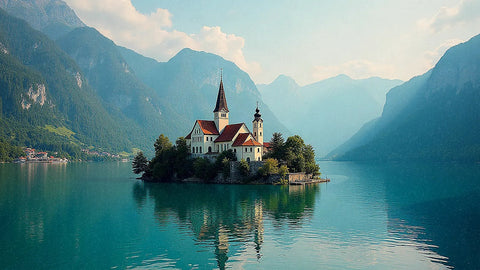
| Lake Bled | Very good 4G | No problems in the lake and village |
| Bohinj | Good 4G in the valley | Weakens when climbing towards Vogel |
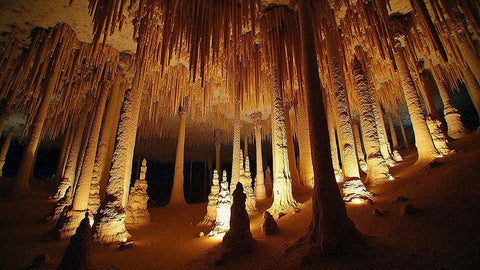
| Postojna Caves | 4G only outside | No signal underground |
| Julian Alps | Irregular at high altitudes | Cuts above 2,000 m |
| Coast (Piran) | Good 4G and 5G | Reliable coverage in Tartini Square |
Two warnings you'll appreciate. First, in the Julian Alps and Triglav National Park, coverage is solid in valley bottoms and villages, but as soon as you start climbing towards Vogel, Mangart, or the Seven Lakes Valley, the signal comes and goes; don't count on stable data at the peaks. Second, and very specific: inside the Postojna Caves, there is no signal from any operator inside the galleries because the rock blocks everything. At the entrance and visitor center, you have good 4G, so download the audio guide and map before going down.
How much data you really need
This is where people either overdo it or fall short. The practical truth is that a typical trip to Slovenia uses less data than you think, because you'll rely heavily on Wi-Fi at night. To give you an idea, these are the three profiles I always see:
| Profile | Typical usage | Data per week |
|---|---|---|
| Light | Maps, WhatsApp, some email | 1-3 GB |
| Medium | Above + social media and browsing | 3-5 GB |
| Heavy | Everything + video and music streaming | 7-10 GB |
The biggest data consumers are moving maps and video. Google Maps navigation uses little data if you download the area offline; however, an hour of high-quality video can consume almost 1 GB by itself.
My honest recommendation: for one week, between 3 and 7 GB is more than enough for the vast majority of travelers who sleep somewhere with Wi-Fi. If you're going to livestream, work remotely, or share your connection with your partner's phone, upgrade to 10 GB and travel worry-free. And remember: almost all plans can be extended on the fly, so there's no need to go overboard "just in case." Start with a conservative amount and top up only if you need to.
Tips to avoid losing signal
I'll conclude with the most practical part, the small habits that make the difference between a smooth trip and an afternoon struggling with your phone.
- Download offline maps. Before leaving, save offline areas from Google Maps or Maps.me: Ljubljana, Bled, Bohinj, and the coast. They will work even if you lose data in the mountains.
- Download the Postojna audio guide and any tickets or reservations before entering the caves, as there is no coverage underground.
- Save screenshots of addresses, train schedules, and hotel confirmations; a screenshot doesn't need internet.
- Activate data usage alerts in your phone settings to avoid surprises if your allowance is limited.
- Save heavy downloads for hotel Wi-Fi at night and reserve mobile data for getting around.
- If using an eSIM, install it at home with Wi-Fi and activate data roaming on the correct profile upon landing.
With these six tips, no matter which option you choose: you'll reach every corner of Slovenia with your phone sorted and your mind on the trip, which is what it's all about.
Frequently asked questions
Does my Spanish plan work in Slovenia without extra charges?
Yes. Slovenia is in the European Union, so "Roam Like At Home" applies: your data, calls, and SMS work at the same price as in Spain. Just check that your plan includes European roaming and that you have enough gigabytes.
How much data do I need for a week in Slovenia?
For an average traveler who sleeps with Wi-Fi, between 3 and 7 GB per week is more than enough. If you do a lot of video, work remotely, or share your connection, increase to 10 GB. Almost all plans can be extended on the fly if you run out.
Is there coverage at Lake Bled and in the Julian Alps?
At Lake Bled and in Bohinj, you have very good 4G in the village and along the shore. In the Julian Alps, the signal is solid in the valleys but becomes irregular when climbing above 2,000 meters. Download offline maps just in case.
Do I have internet inside the Postojna Caves?
No. Inside the underground galleries, there is no signal from any operator because the rock blocks the waves. At the entrance and visitor center, there is good 4G, so download the audio guide, map, and your ticket beforehand.
Is it worth buying a local Slovenian SIM?
Only if you are staying for several weeks or want a Slovenian number. The SIM costs from €2 and data plans are cheap, but you have to go to a store with your passport and change your card. For short trips, roaming or eSIM are more convenient.
Can I keep my Spanish number if I use an eSIM?
Yes, and it's one of its big advantages. Since you don't remove your physical SIM, you continue to receive calls, WhatsApp, and SMS on your usual number while browsing with the travel plan's data. You just choose which line uses data in the settings.
Is free Wi-Fi in hotels and cafes safe?
For browsing and viewing maps, yes. For sensitive tasks like logging into your bank, avoid open public networks or use a VPN and websites with HTTPS encryption. Hotel Wi-Fi is ideal for heavy downloads, but it doesn't cover you when you go out.
Which is the cheapest option for a short trip?
If your Spanish plan includes European roaming with plenty of data, the cheapest option is to buy nothing. If your plan has limited data or you're coming from outside the EU, a low-data eSIM is usually more cost-effective than a local SIM due to convenience and not losing your number.
Conclusion
Getting connected in Slovenia is easier than it seems, and often cheaper than you think. If you have a modern Spanish plan, roaming covers you for free, and you won't need anything else for a week or two. If your plan has limited data, is old, or you're coming from outside the EU, an eSIM is the most convenient option: you activate it before you fly, keep your number, and land connected to the same antennas a local uses. A local SIM is for long stays, and hotel Wi-Fi is always a backup.
If you fall into the latter category and want to arrive connected from minute one, check out PuraSIM's eSIM for Slovenia: buy it today, install it at home with Wi-Fi, and forget about it so you can enjoy Bled, the Alps, and Piran without interruptions. Have a great trip.