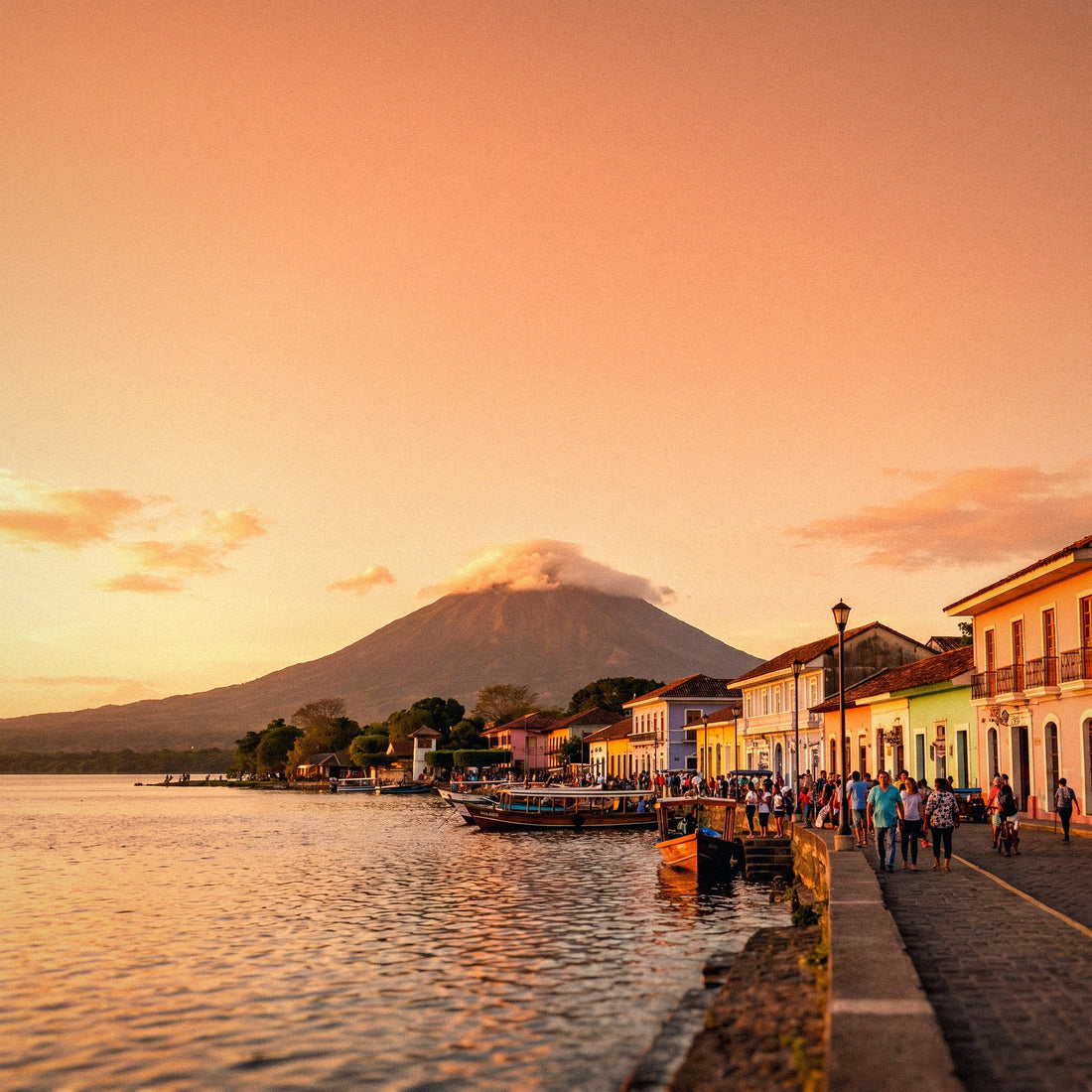
If you're planning your trip to Nicaragua, amidst volcanoes, lakes, and waves, there's one detail worth sorting out before leaving home: how to get internet in Nicaragua without a shocking bill or getting stranded in the middle of a lake. In this guide, I'll compare, straightforwardly, all the ways to connect—from your usual provider's roaming to a local Nicaraguan SIM—so you land in Managua ready to use your phone from the first minute.
How to connect to the internet in Nicaragua: the four options
To have internet in Nicaragua, you have four paths: activate an eSIM before traveling, buy a local SIM with your passport, rely on your Spanish provider's roaming, or depend on Wi-Fi in hotels and cafés. eSIM is usually the most convenient and cheapest option for a short trip.
The difference between these four options isn't just price: it's convenience, speed, and, most importantly, when you stay connected. Roaming works from minute one, but it can hit you with a shocking bill; a local SIM is cheap, but requires queuing and passport registration; Wi-Fi is free, but ties you to your accommodation; and an eSIM keeps you connected as soon as you land without changing a physical card. My advice is to make a single decision before flying and not leave it for Augusto C. Sandino Airport in Managua, where flight fatigue causes many people to end up overpaying. In the following sections, I break down each path with real prices, for which type of traveler it fits, and, very importantly, how each performs in areas of Nicaragua where signal is scarce, which are quite a few.
Real coverage: cities yes, islands and countryside weak
This is the most important section, and one that almost no one tells you about, so start here. In Nicaragua, the mobile network is shared by two operators, Claro and Tigo, and geography plays a big role: in Managua, Granada, León, and the Pacific cities, you'll have plenty of 4G/LTE for maps, messaging, and some video calls. 5G is barely deployed, so don't count on it. The drop-off comes as soon as you enter the lake, mountains, or deep countryside.
On the slopes of the Concepción and Maderas volcanoes, in Ometepe, you won't have signal with any company. Download maps and notify your loved ones before going up.
That's why it's advisable to download offline maps for each leg of your journey before leaving your accommodation. Claro has the widest reach in rural areas and on the Pacific coast, while Tigo holds up well in cities. Here's an honest summary by area so you don't get any surprises:
| Area | Mobile coverage | What to expect |
|---|---|---|
| Managua, Granada, and León | Very good (4G) | Video, maps, and video calls without interruptions |
| San Juan del Sur (town) | Good (4G) | Social media and browsing without problems |
| Ometepe (Moyogalpa and Altagracia) | Acceptable (3G/4G) | WhatsApp and maps; video just barely |
| Volcano slopes and rural areas | Scarce or none | Be prepared to be disconnected |
| Caribbean and Corn Islands | Intermittent | Don't count on stable data |
Moral of the story: where people live, you'll connect well, and where adventure begins, assume you'll be without signal at times. With that mental map in mind, the rest of the decisions become much easier.
Roaming with your Spanish provider
First important warning: Nicaragua is not part of the European Union, so the "roam like home" tariff you use in France or Portugal does not apply here at all. As soon as your mobile connects to a Nicaraguan network, you enter international roaming tariffs, which for many Spanish operators are calculated by individual megabytes at alarming prices, or daily "zone 2" bundles that devour your budget in two days.
Roaming has one major advantage: you don't do anything. You arrive, turn on your mobile, and it works. But that convenience comes at a price, and often it's the surprise bill upon returning that prompts people to seek alternatives. Before trusting it, call your company and ask for the exact price outside the EU, without settling for "don't worry, it's included."
If you're still considering it, carefully check the temporary travel bundles for "rest of the world," because for a two or three-day getaway, they sometimes pay off. To understand how all this is calculated, I leave you with my guide on how much international roaming costs, and if you want a side-by-side comparison with numbers, I have a comparison of eSIM versus roaming on the table.
Hotel, hostel, and café Wi-Fi
Free Wi-Fi is your ally for anything non-urgent. Almost all hotels and hostels in Granada, León, and San Juan del Sur offer decent Wi-Fi in common areas, and tourist cafés and restaurants in colonial cities do too. For uploading photos, making video calls at night, or finalizing plans for the next day, relying on the hostel's Wi-Fi at night is more than enough and won't cost you a córdoba.
The problem arises when you leave your accommodation. Wi-Fi doesn't accompany you on the boat to Ometepe, or on the road to the volcano, or when you need Google Maps to find a hidden entrance. And in the eco-lodges and farms on the island, where you're most eager to show off your photos, the connection is usually slow, shared among many guests, and limited to the reception for a few hours.
Another downside is security: on open networks, it's advisable not to enter bank details without a VPN. My advice is to treat Wi-Fi as a complement, never as your sole network. If a portable pocket Wi-Fi tempts you, first check out my comparison of eSIM versus pocket Wi-Fi, where I explain the hassle of batteries and deposits.
Local Nicaraguan SIM: Claro and Tigo with passport
A local SIM is the cheapest option if you're staying many days or using a lot of data. In Nicaragua, the two operators are Claro, with the widest coverage in the country and better rural and Pacific coast reach, and Tigo, very strong in cities. Both sell prepaid SIMs with data packages and extra gigabytes for WhatsApp at very low prices compared to what you'd pay in Spain.
The downside is the management. By law, buying a prepaid SIM requires registering it with your passport, so you'll have to queue with your passport in hand at an official store. Upon landing, at Augusto C. Sandino Airport in Managua, there's usually a Claro booth that activates the line and loads data on the spot; in the city, shopping mall stores do the same. The SIM costs little, and top-ups start at very small amounts.
If you're traveling for a month, living very locally, or need a Nicaraguan number for errands, it's worth the hassle. For two weeks of tourist travel, many travelers prefer to avoid it. I compare it in detail in my article on eSIM versus local SIM so you can see when each is worth it.
The eSIM, my recommended option
For the vast majority of trips to Nicaragua, my recommendation is a data eSIM. It's a digital SIM you buy online, receive by email, and install by scanning a QR code: you can activate it from your sofa at home a few days before flying and land in Managua already connected, without looking for stores or dealing with passport procedures. If you've never used one, in my guide on what an eSIM is, I explain it step-by-step and without jargon.
The advantages are clear. You keep your Spanish number active in the physical slot of your phone (to receive bank SMS or some calls), while data travels via the eSIM connected to the best coverage network in the area, which in Nicaragua is usually Claro. There's no plastic to lose, no deposit, and you don't depend on any store opening.
The honest downside: for very long stays and huge consumption, a rechargeable local SIM might be slightly cheaper per gigabyte. But when you add up the convenience, the absence of queues, and not depending on anyone, the balance tips towards the digital side for the average traveler. You have all the fine print in my eSIM guide for Nicaragua.
Granada, León, Ometepe, and San Juan del Sur
Let's get into the details of the classic route, because each stop behaves differently. In Granada, the colonial gem by the lake, and in León, the university city of volcanoes, you'll have stable 4G throughout the old town: you'll be able to browse, send photos, and make video calls without thinking about the signal. These are the two most convenient bases for working remotely for a while or uploading your daily reel.
Things change on the island of Ometepe, in the middle of Lake Cocibolca. In the main towns, Moyogalpa and Altagracia, there's enough 3G/4G for the basics, but as soon as you go around the island towards the Maderas volcano side or up to the waterfalls, the signal becomes intermittent or disappears. There, you'll need to plan your island days carefully and download everything before crossing on the ferry.
In San Juan del Sur, the surf mecca on the Pacific, the town has good 4G: the beach bars, surf camps, and boat trips are connected. But in the surrounding coves accessible by 4x4, like Maderas or Remanso, coverage drops. Simple rule: connect and download in town before heading out to catch a wave.
How much data do you really need?
The million-dollar question. The good news is that calculating gigabytes without overspending is easier than it seems if you separate by type of use. As a general rule, an average traveler uses around 1 GB per day: light use (maps, messaging, some web browsing) is around 0.4 GB, while intensive use with social media, video, and photo uploads can go up to 2.5 GB daily or more.
For a typical two-week trip to Nicaragua, that translates to a range of between 10 and 30 GB. If you use accommodation Wi-Fi a lot at night, you'll be at the lower end; if you live stream and make video calls every day, aim for the higher end or a generous data plan. Here it is in a table so you can see it clearly:
| Profile | Daily consumption | 10-14 days |
|---|---|---|
| Light (maps and chat) | ~0.4 GB | 5-8 GB |
| Medium (social media and browsing) | ~1 GB | 10-15 GB |
| Intensive (video and live streams) | ~2.5 GB | 25-35 GB |
My trick: since you'll be without data on Ometepe and in the countryside anyway, don't inflate your calculation thinking you'll consume the same every day. And if in doubt, go for a plan with some margin or with a top-up option; running out on the second to last day is the typical avoidable hassle.
How to choose and activate your connection
Choosing well means cross-referencing three pieces of data: days of travel, estimated gigabytes, and how much coverage you need outside of cities. If your route includes a lot of island and countryside, prioritize an option supported by the network with the best rural reach, which in Nicaragua is Claro. If you're moving between Granada, León, and San Juan del Sur, almost any option will work, and convenience will be more important. The best thing is to get everything ready before takeoff and not improvise at the airport.
With an eSIM, the process is quick. Here are the steps I follow:
- Check that your mobile is compatible (phone settings or manufacturer's website).
- Buy the plan with the GB and days that suit you, a few days before flying.
- Install the profile by scanning the QR you receive by email, using Wi-Fi at home.
- Leave the digital profile for "data" and your Spanish SIM for calls and SMS.
- Upon landing in Managua, activate data roaming and you're good to go.
A practical note: install the profile at home, but don't activate it until you arrive, so you don't use up plan days prematurely. And save a screenshot of the QR just in case. With that, you'll leave the airport with Google Maps working and without wasting a minute looking for where to buy a signal.
Tips to avoid losing signal
Even with the best connection, you will experience periods without coverage in Nicaragua, and a couple of habits can make a difference. The most important: download offline Google Maps for all areas of your route before leaving your hotel, especially Ometepe and the coves of San Juan del Sur. Carrying an external battery at all times is the second commandment, because searching for a signal in fringe areas significantly increases mobile battery consumption.
Other habits that have saved me from more than one tight spot:
- Notify your family which days you'll be unreachable (island, boat trips, volcanoes).
- Download tickets, reservations, and boarding passes to your mobile in case there's no network upon arrival.
- Have offline music lists or podcasts for long bus journeys.
- Keep your accommodation's number handy in case you need to notify them of a delay.
A nice extra: more and more farms and lodges in Ometepe are installing Starlink, so you might have satellite Wi-Fi where there's no mobile data signal. Don't count on it, but it's a great bonus. By combining data for daily use, Wi-Fi for heavy tasks, and these little tricks for gaps, your trip will be covered from start to finish.
Frequently asked questions
Does my Spanish operator's roaming work in Nicaragua?
Yes, but at international roaming rates, not European rates. Nicaragua is not in the EU, so "roam like home" does not apply. Check the exact cost per MB or the travel package before you leave, as it is usually expensive.
Do I need a passport to get a connection?
Only if you buy a local Nicaraguan SIM: the law requires you to register it with your passport at an official store or at Managua airport. With a travel eSIM or roaming, no in-person procedures or documents are required.
Will I have coverage on Ometepe Island?
In the towns of Moyogalpa and Altagracia, yes, with 3G/4G for basic use. But when you go around the island towards the Maderas volcano or up to the waterfalls, the signal drops or disappears with any operator. Download offline maps before crossing on the ferry.
How many gigabytes should I contract for two weeks?
For average use, between 10 and 15 GB is usually enough; if you take many photos, videos or live streams, aim for 20-35 GB. Remember that in Ometepe and the countryside you won't be using data, so don't inflate your calculation thinking you'll spend every day.
Which Nicaraguan operator has the best coverage?
Claro has the widest reach in rural areas and on the Pacific coast, with the country's most extensive network. Tigo works very well in cities. For a route with islands and countryside, relying on Claro's network usually gives you more peace of mind.
Can I continue to use WhatsApp with my usual number?
Yes. With a data eSIM, you keep your Spanish number active on the physical SIM for SMS and calls, and WhatsApp continues to work with that number using the data from the digital profile. You won't lose your account or your chats at any time.
Is there a good signal in San Juan del Sur for remote work?
In the town, yes: there is stable 4G and Wi-Fi in cafes and surf camps, enough for video calls and online work. In the surrounding surf coves, such as Maderas or Remanso, coverage drops, so get important tasks done before heading to the beach.
Conclusion
To summarize the map: roaming is convenient but expensive, Wi-Fi is free but stays at the accommodation, a local SIM is worthwhile if you stay long but requires a passport and queuing, and an eSIM is the sweet spot for most travelers. And above all, the Nicaraguan lesson: in Granada, León, and San Juan del Sur town, you're covered; in Ometepe and the countryside, expect periods without signal and have your maps downloaded.
If you want to forget about it and arrive connected from the first minute, check out the PuraSIM eSIM for Nicaragua: buy it, install it at home, and land in Managua with Google Maps working. Have a great trip and see you between volcanoes and waves.