If you're planning your getaway to the Island of Enchantment, you're probably wondering about a very practical question: how to get internet in Puerto Rico without getting a shock on your bill when you return. I'll tell you firsthand, as I would explain it to a friend who's packing their bags. Here are the four real ways to connect, what each costs, and which one I choose to get around San Juan, El Yunque, and the eastern islands.
How connection works on the island
In Puerto Rico, you have four ways to connect: roaming from your Spanish operator, hotel Wi-Fi, a local SIM card, or a data eSIM. 4G and 5G coverage is good almost everywhere on the main island, so the decision is more about price and convenience than about the network.
The first thing to understand is that Puerto Rico is a territory of the United States, not an independent country or part of the European Union. This completely changes the rules of the game for a Spanish traveler and is the source of almost all confusion. Three major networks operate here: Claro, the oldest and with about 2.5 million customers; T-Mobile, which boasts the best 5G; and Liberty, which is deploying its fast network in cities. Together, these three cover almost the entire population: signal availability is around 99% on the main island. Therefore, except in the jungle and on smaller islands, you won't be incommunicado. The real question is how much you pay for that data and how much hassle you want to go through to get it.
Roaming from Spain: beware, it's not the European Union
This is where many travelers make a mistake. Since we browse "as if at home" in the EU, we assume the same applies abroad. But Puerto Rico falls into the international zone of Spanish tariffs, the most expensive, and the bill can skyrocket if you don't check before you fly.
I'll give you real figures from 2026 so you can see the difference. With Movistar, a travel bundle costs around €6/day for only 500 MB, and a call can go up to €1.82/minute. Orange asks around €9/day for 2 GB. Vodafone is one of the more friendly, with a bundle of €3/day and 3 GB for the United States zone, and even includes it for free with some unlimited plans. Still, for a ten-day trip, we're talking between €30 and €90 depending on the operator, and with ridiculously low data caps for using maps, uploading photos, or using a translator. Of course, it's a convenient option if your company gives it to you for free; otherwise, it's expensive. I break it down in my guide to eSIM vs. roaming and in the one about how much it costs to connect abroad, because the figures are truly alarming.

Hotel Wi-Fi: convenient but limited
Almost all hotels, hostels, and many rental apartments offer free Wi-Fi, and in the tourist areas of San Juan, you can also find it in cafes, shopping centers, and some parks. For checking emails at night or making a quick video call from your room, it's more than enough and costs nothing.
The problem is that Wi-Fi doesn't travel with you. As soon as you leave the hotel to go to the beach, climb El Yunque, or take the ferry to Culebra, you're left with nothing: no maps, no Uber, no looking for a restaurant, and no letting anyone know you'll be late. And the speed of shared hotel networks is a lottery, especially when half a floor is watching series at the same time. I also don't trust open networks to enter my credit card details or access my bank. My advice: use it as a supplement for downloading offline maps and little else, but don't make it your only data source. If you really want something portable, before resorting to a pocket router, I recommend reading why I prefer another method in my comparison of eSIM and portable Wi-Fi.
Local SIM: Claro, T-Mobile, and Liberty
Buying a local physical SIM card is the classic option and works well, with one major drawback for transient travelers. They are sold at Luis Muñoz Marín Airport (SJU), at stores of the three operators across the island, and at some hotels and car rentals. However: you need your passport to register it and an unlocked phone.
Regarding prices, at the airport you can find Claro and Liberty plans ranging from $15 for 3 GB to $85 for unlimited data. Claro usually offers plans between $15 and $39 (from 3 to 39 GB), Liberty between $15 and $65 (from 5 GB to unlimited), and T-Mobile starts higher, around $40. Here are the downsides I see: airport counters usually close around 9:00 PM, so if you land at night, you'll be stuck; you spend time queuing and changing cards; and you lose your Spanish number, meaning you stop receiving bank SMS exactly when you need them most. If you're torn between this and a digital option, I compare them in depth in eSIM vs. local SIM card.
| Operator | Estimated Price | Data | Strong points |
|---|---|---|---|
| Claro | $15–39 | 3–39 GB | General coverage (widest) |
| T-Mobile | from $40 | 10 GB to unlimited | Best 5G and speed |
| Liberty | $15–65 | 5 GB to unlimited | Good balance in cities |
The eSIM: my recommended option
This is what I use and what I recommend to nine out of ten travelers. An eSIM is a digital card installed on your mobile with a QR code, no plastic and no need to visit a store. You buy it from your couch at home, set it up, and it activates automatically as soon as you land in San Juan.
Its advantages fit this destination perfectly. It doesn't require a passport or in-person registration, so it doesn't matter if you land at midnight. It relies on the same major local networks, so you browse with the same 4G/5G coverage as a local. And the best part for me: you keep your Spanish number in its slot, so you continue to receive WhatsApp, calls, and bank codes just as you would at home. If you've never used one, I explain the step-by-step process in what an eSIM is and how it works. And if you want to get straight to the point, we have a specific data plan for the island ready in our Puerto Rico eSIM, ready in five minutes and with Spanish support if anything gets stuck.
My routine is simple: I install the eSIM the night before flying, activate data when I hit the runway, and keep the physical card in case I need to top up in a hurry. Zero queues, zero passport, zero surprise bills.
San Juan and Old San Juan
The capital is, by far, the best-connected area on the entire island. In San Juan, Condado, Isla Verde, and Santurce, you'll have strong 4G and 5G almost everywhere, with speeds more than enough for browsing, maps, and video calls. Here, you won't run out of data with any of the three networks.
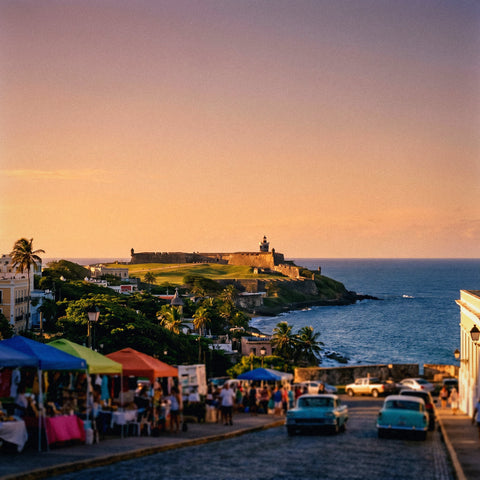
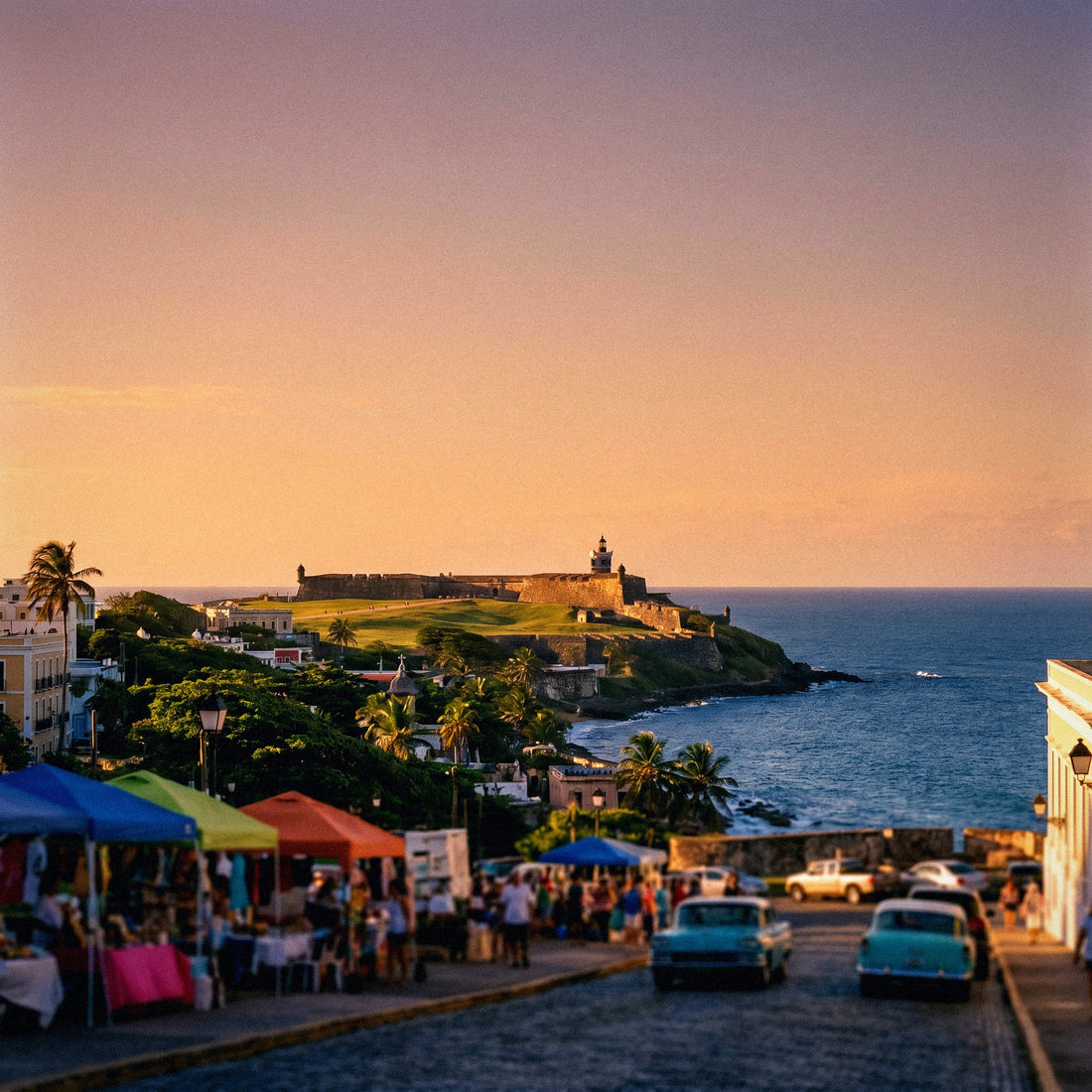
The curious case is Old San Juan, the historic district with cobblestone streets and colorful houses. The 16th-century walls, narrow alleys, and thick stone walls can cause the signal to bounce and drop a notch in specific spots, especially inside fortresses like El Morro Castle or San Cristóbal. It's not that you'll lose coverage, but in very massive interiors, you might switch from 5G to 4G without realizing it. For the day-to-day tourist — finding a place to eat mofongo, ordering a car, sharing sunset photos from the wall — any data option will serve you well. If you plan to rely heavily on navigation and translation, having plenty of gigabytes will give you peace of mind not to ration your data.

El Yunque: jungle and weak signal
El Yunque is the only tropical rainforest in the United States national park system, and an almost mandatory visit. But precisely because of that —dense vegetation, mountains, and enclosed valleys— it is the weak point of the island in terms of coverage. Here, the signal comes and goes, and on some trails, it disappears completely.
Don't expect to have stable data while hiking to La Mina waterfalls or climbing Yokahú tower. In high areas and deep within the jungle, it's normal to lose signal for significant stretches, with any operator. This has a practical safety implication that I always emphasize to those who travel with me: download the park map offline before entering, notify someone of your route, and don't rely on your phone for navigation inside the forest. The good news is that at the entrance, visitor center, and access roads, you usually regain coverage. With a good data plan loaded, when you get a signal again, your photos and messages will sync all at once without you having to worry about anything.
Culebra and Vieques: islands with intermittent coverage
These two eastern islands are among the most beautiful in Puerto Rico —Flamenco Beach in Culebra or the bioluminescent bay of Vieques are breathtaking— but also where the connection becomes temperamental. Mobile coverage exists, although it is more irregular than on the main island and drops significantly as you move away from the towns.
In the urban areas of Dewey (Culebra) and Isabel II (Vieques) and their surroundings, you usually have decent 4G for basic needs. The problem comes on remote beaches, lighthouses, and mountainous areas, where the signal becomes intermittent or disappears. In fact, much of the fixed internet on these islands works via satellite (like Starlink or HughesNet), which gives a clue as to how isolated the terrain is. My recommendation is to treat these islands as a mini-expedition: download maps, directions, and ferry tickets before embarking in Ceiba, and inform your plans via WhatsApp while you still have a good signal. Having plenty of data helps, but here, even the best SIM card won't work miracles against the geography.
Beaches and coast: what to expect
The coast of the main island is a delight and, in general, well covered. On beaches near towns and cities —Isla Verde, Luquillo, Rincón, Cabo Rojo— you will have 4G or even 5G without problems to share stories, check the weather, or find the next beach bar. Here, the connection will not fail you.
Things change as you move towards hidden coves, unspoiled stretches of the west coast, or mountain viewpoints over the sea. As in any destination with varied terrain, the more remote and less populated the beach, the weaker the signal; nothing strange, pure physics. For a beach day, this is almost never a problem —on the contrary, disconnecting is appreciated— but it is worth keeping in mind if you are expecting a work delivery or depend on a transport app to return. A good trick is to save the accommodation location and route on the map before leaving. With enough data on your phone, as soon as you return to an area with coverage, everything will update itself, without you having to do anything.
How much data you need and how to choose
The million-dollar question. The short answer: for a tourist trip, less than you think, as long as you download large maps via Wi-Fi. What really consumes data are videos and long video calls; browsing, messaging, and maps consume very little. Here I give you my reference numbers by travel profile.
| Travel Profile | Typical Use | Recommended Data |
|---|---|---|
| Light (5–7 days) | Maps, WhatsApp, some social media | 3–5 GB |
| Medium (7–10 days) | Active social media, photos, some video calls | 5–10 GB |
| Intense or remote work | Video, uploading content, using phone as hotspot | 15 GB or more |
With this in mind, my order of preference is clear. If your operator gives you roaming for free with your plan, take advantage of it for a short trip. Otherwise, the digital option almost always wins: you pay less, you set it up from home, and you keep your number. The local SIM card is only worth it if you're staying for weeks and want a Puerto Rican number for errands. Whatever you choose, go with plenty of gigabytes: the price difference between a just-enough plan and a generous one is small, and running out of data in El Yunque or on the way to Culebra is much more annoying than a few extra euros.
Frequently asked questions
Does my Spanish mobile phone work in Puerto Rico?
Yes. Puerto Rico uses the same 4G/5G bands as Europe, so any modern, unlocked mobile phone works without a problem. You just have to decide how you get data: roaming, local SIM card, or eSIM. Just check that your phone is unlocked.
Do I need a visa or anything special to connect?
To connect, no. To enter, keep in mind that Puerto Rico is a territory of the United States, so you need ESTA authorization, just like for traveling to the U.S. Internet connection is separate and can be managed with mobile data or Wi-Fi.
Can I use my WhatsApp number with an eSIM?
Yes, and that's one of its great advantages. The digital card only provides data; your Spanish number remains active in its slot, so WhatsApp, Telegram, and bank SMS reach you just like at home. You don't change numbers or lose your chats.
Is there coverage in El Yunque and the small islands?
Irregularly. In El Yunque, the signal is weak or nonexistent on many trails, and in Culebra and Vieques, it drops outside of towns. Download offline maps before entering and inform someone of your route. On the main island, however, coverage is good.
Is a local SIM or an eSIM cheaper?
It depends on the trip, but for tourism, they are usually very similar in price. The eSIM wins in convenience: no passport, no queues, and no closing at nine at night. A local SIM card is more interesting if you are staying for weeks or want a Puerto Rican number.
How much does roaming from Spain to Puerto Rico cost?
It falls under the international zone, unlike in the EU. It's around €3/day for 3 GB with Vodafone, €6/day for 500 MB with Movistar, and €9/day for 2 GB with Orange. Check your plan before flying, as calls can exceed €1.80 per minute.
Can I buy the card upon arrival at the airport?
Yes, Claro and Liberty are sold in the arrivals area of San Juan Airport (SJU), starting from around $15. However, the counters close around 9:00 PM, and you need your passport. If you arrive at night, having the digital option ready from home saves you the trouble.
Which operator has the best coverage in Puerto Rico?
Claro has the widest general coverage, and T-Mobile leads in 5G and speed, with over 70% fast network availability. Liberty performs well in cities. The good news is that an eSIM relies on these networks, so you benefit from their coverage.
Conclusion
Connecting to the internet in the Island of Enchantment is easy if you arrange it before leaving home. 4G and 5G coverage is good in San Juan, along the coast, and almost throughout the main island; only El Yunque and the eastern islands require you to be prepared with downloaded maps. Among the four options, roaming is expensive unless your plan includes it for free, hotel Wi-Fi stays in your room, and a local SIM card requires a passport and store hours. That's why I'm clear: I set up my eSIM for Puerto Rico the night before flying, and I forget about the problem as soon as I land. Prepare your connection calmly, save your passport for customs, and dedicate your energy to what's important: mofongo, the beaches, and those sunsets from the wall.