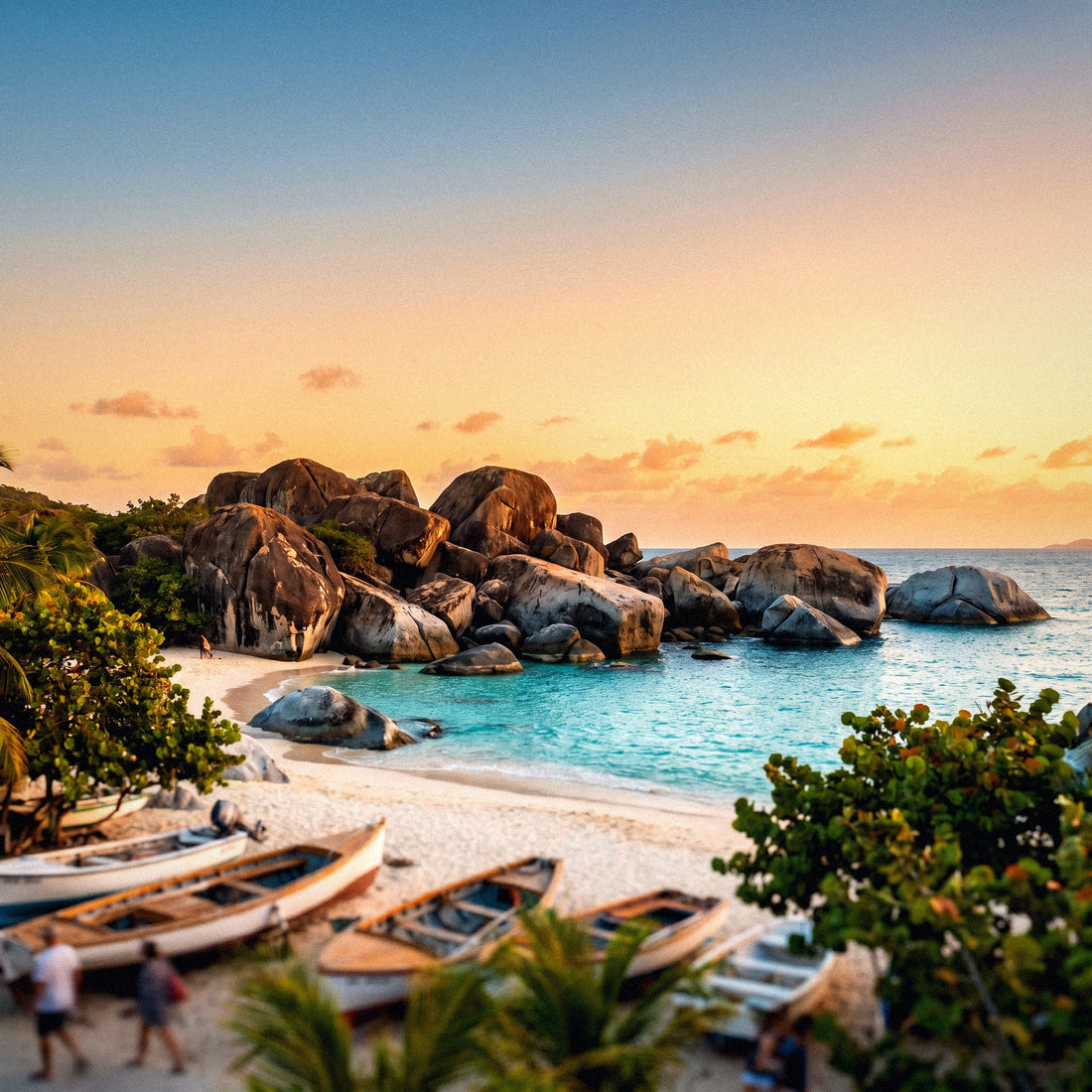
If you already know you'll need data and just need to decide on the package size, this guide is for you: how many GB you'll need for the British Virgin Islands. And here, the calculation is tricky because almost no one travels to the BVI to stay in a hotel: they travel by boat, anchoring from island to island, with entire days where the mobile doesn't see a decent antenna. That changes the number, and almost always lowers it. I'll give you the figure, tables, and specific warnings for the destination.
The direct answer: how many GB for the BVI
For a typical 7-10 day charter in the British Virgin Islands, 3 GB is usually more than enough for most people if they use maps, WhatsApp, and a bit of social media. If you upload photos and videos daily, budget 5 GB. Only if you work on board or are the family's sole connection point will you need 10 GB or more.
I like to start there because the common mistake is the opposite: people buy 20 GB "just in case" and return home with 14 unused. In the BVI, such waste is even more likely, because there are parts of the trip—sailing between islands, snorkeling, beach dinners, nights at anchor—where the mobile is simply not consuming anything.
That said, there's one case where it's wise to have plenty of data: if you plan to make long video calls home or upload uncompressed diving videos. In that case, consumption skyrockets, and a single video can cost you as much as three days of normal use. In other scenarios, running out and recharging is better than paying for expiring gigabytes.
The rest of the article provides tables to fine-tune your specific case, including the profile-by-duration table, which I use when someone asks me directly. If you're still weighing connection options (and not just size), that's explained in the BVI internet guide.
Why the British Virgin Islands change the number
Each destination shifts the needle for different reasons. In the BVI, five factors mostly work in your favor, and it's good to understand them before choosing a package.
One: the boat rules. The standard trip is a 7- to 10-day catamaran or sailboat charter departing from Road Town or Nanny Cay, Tortola. You spend many hours sailing, and when sailing, you don't scroll: you look at the sea. That means hours of almost zero consumption.
Two: there's Wi-Fi more often than you think. Marinas, beach bars, and many anchor-spot restaurants offer Wi-Fi to their customers. It's not fiber Wi-Fi—forget about uploading 4K video from Jost Van Dyke—but it's fine for WhatsApp and email.
Three: you don't need transport apps. There's no Uber or equivalent: taxis operate with fixed fares per trip, and inter-island ferries are taken without an app. You save a whole block of consumption that would be significant in a European city.
Four: payments are in US dollars. The BVI uses USD despite being British territory, so you won't be constantly opening a currency converter. And in several beach spots, cash is still king, meaning you won't rely on banking apps as much either.
Five: coverage is not uniform. And that's the factor that truly deserves its own section, because it affects when you can spend data and when you can't. It comes right after.
Coverage at sea: where there's signal and where there isn't
The BVI have three mobile operators—Digicel, Flow, and CCT—and between them, they cover populated and tourist areas with 4G: almost all of Tortola, Virgin Gorda, the main bays of Jost Van Dyke, and the core of Anegada. Digicel once reported exceeding 99% population coverage in Tortola and Virgin Gorda after completing its LTE rollout.
The important nuance is that mobile coverage extends only a few miles offshore from the antennas. Since the archipelago is compact and almost all navigation occurs within the Sir Francis Drake Channel, with land on both sides, in practice you usually have signal for much of the journey. But it's a signal that comes and goes: it appears as you approach an island and drops as you pass to the leeward of a hill or move further out to sea.
| Area | Typical Mobile Signal | What it's good for |
|---|---|---|
| Road Town and Nanny Cay (Tortola) | Stable 4G | Everything, including video upload |
| Soper's Hole / West End | Good 4G | Everything |
| Spanish Town and the Baths (Virgin Gorda) | Good 4G | Photos, social media, maps |
| Great Harbour / White Bay (Jost Van Dyke) | Irregular 4G | Messaging and some social media |
| Sir Francis Drake Channel while sailing | Intermittent | Messages, pre-downloaded maps |
| Norman, Cooper, Salt Island | Weak or medium | WhatsApp with patience |
| Anegada (Setting Point) | Acceptable at anchor | Messaging, occasional photos |
| Passage to Anegada / open sea to the north | No signal in stretches | Nothing: disconnect mode |
Translated into gigabytes: hours without coverage are hours you don't pay for, and on a week-long charter, that can be many. That's why the BVI recommendation is lower than for an equivalent urban destination.
Caution: your mobile might connect to the U.S. Virgin Islands
This is the most important warning in the article, and almost no one mentions it. From Tortola, Jost Van Dyke, or the West End, you can see Saint John and Saint Thomas with the naked eye: they are just a few kilometers away. And the antennas there emit with enough strength for your mobile to pick them up from BVI waters and coasts.
The problem is that the U.S. Virgin Islands are a different country for telephony purposes: U.S. territory, with U.S. operators and separate rates. A data package purchased for the BVI does not cover the USVI, and vice versa. The consequences, depending on what you're traveling with, are:
- With your Spanish SIM and international data activated: the risk is financial. The Caribbean is outside the European zone, so connecting to a U.S. or British network can be billed at out-of-plan rates.
- With a local prepaid data package: the risk isn't the bill, it's running out of internet. If your mobile connects to an excluded network, you simply won't have internet until you switch back to the correct network.
The solution takes two minutes, and I always apply it when sailing near an invisible border:
- Deactivate automatic network selection and manually choose the BVI operator (Digicel BVI, Flow, or CCT) in your mobile network settings.
- Check the operator name in the status bar before using data. If you see a U.S. name, correct it.
- If you carry your physical SIM in addition to the travel package, leave it with international data deactivated and use only the travel line for browsing.
And if your itinerary truly includes Saint Thomas, Saint John, or Saint Croix—many charters cross over—you need a package that covers both territories or two different plans. Planning ahead costs nothing; improvising on board does.
How much each activity consumes, in figures
Before choosing a size, it's good to see where the gigabytes go. These are reasonable reference figures; they vary depending on the app, configured quality, and network, but they are perfectly suitable for calculation.
| Activity | Approximate Consumption | Impact on a charter |
|---|---|---|
| WhatsApp text only | 2-5 MB per day | Negligible |
| WhatsApp with photos and audio | 30-60 MB per day | Low |
| WhatsApp video call | 300-450 MB per hour | High |
| Google Maps navigation | ~5 MB per hour (+50-100 MB for loading area) | Low |
| Instagram or TikTok scrolling | 500-840 MB per hour | Very high |
| Uploading a photo to social media | 3-5 MB per photo | Low |
| Uploading a 1-minute high-quality video | 150-400 MB | Very high |
| YouTube at 480p | 250-350 MB per hour | Medium |
| YouTube or Netflix in HD | 1.5-3 GB per hour | Prohibitive |
| Spotify in high quality | ~150 MB per hour | Medium |
| Email and web browsing | 10-20 MB per hour | Low |
| Checking weather forecast | 5-15 MB per check | Low |
Notice the pattern: anything involving video devours your data package, while everything else barely counts. An entire day of maps, messaging, and email won't reach 100 MB; twenty minutes of TikTok scrolling will. That's why controlling video is controlling your bill. If you want a more detailed breakdown of figures, I've compiled them in the article on mobile data usage statistics by activity.
Master table: GB by profile and duration
This table truly answers the question. Find your profile, cross-reference it with your travel days, and you'll have the number. The figures are calculated for the BVI, meaning they account for hours of navigation with no usage and some Wi-Fi in marinas and restaurants.
| Profile | 5 days | 10 days | 15 days | 30 days |
|---|---|---|---|---|
| Tourist (maps and WhatsApp) | 1 GB | 2 GB | 3 GB | 5 GB |
| Photos and social media | 3 GB | 5 GB | 8 GB | 15 GB |
| Diving with lots of video / content creator | 5 GB | 10 GB | 15 GB | 30 GB |
| Family sharing one anchor mobile | 6 GB | 10 GB | 15 GB | 25 GB |
| Digital nomad / remote work on board | 8 GB | 15 GB | 20 GB | 40 GB |
A couple of honest clarifications about the table. The "tourist (maps and WhatsApp)" row seems stingy, but it's realistic: if you download maps before leaving and don't watch videos, it's hard to exceed 200 MB per day. And the "family sharing" row assumes a single mobile acts as a hotspot for tablets and other phones, which is how most boats operate.
The remote work profile is the only one where I strongly recommend having plenty of data, because a one-hour video meeting can consume half a gigabyte, and on a boat, you can't always wait for marina Wi-Fi. If your case falls outside these molds, the general calculation method is explained in the guide on how much data I need for travel.
A 7-10 day charter, day by day
Since most BVI trips follow a similar route, I'll break down a classic itinerary with the expected consumption for an average person: photos, moderate social media, WhatsApp with home, and maps.
| Day | Scenario | Estimated Consumption |
|---|---|---|
| 1 | Arrival in Tortola, briefing and shopping in Road Town | 400-600 MB |
| 2 | Crossing to Norman Island, snorkeling at The Indians | 150 MB |
| 3 | Cooper Island and Salt Island, diving | 200 MB |
| 4 | Virgin Gorda: The Baths and night in Spanish Town | 500 MB |
| 5 | Anegada, long crossing and lobster in Setting Point | 150 MB |
| 6 | Return to the channel, anchoring in Marina Cay or Trellis Bay | 250 MB |
| 7 | Jost Van Dyke: White Bay and Great Harbour | 400 MB |
| 8 | Soper's Hole and return to base | 350 MB |
Total sum: around 2.5 GB in eight days, with peaks on land days and valleys on travel days. That's why 3 GB covers the standard charter with a margin, and 5 GB leaves you relaxed even if you decide to upload a video of the day at The Baths.
Watch out for day 1: it always consumes more than expected. You arrive, find your mooring, send photos to everyone, check the weather, download something you forgot. Mentally set aside half a gigabyte for the arrival day, and the rest will fall into place. If your itinerary includes a stop in U.S. waters, remember the previous section: your BVI package won't count there.
Diving, video, and photos: the gigabyte sink
The BVI is a diving and snorkeling destination: the RMS Rhone wreck off Salt Island, the caves of Norman Island, the reefs of Anegada. This means action cameras, lots of video, and a huge temptation to upload everything every night.
Here are the important numbers. One minute of 4K video takes up between 300 and 400 MB on a mobile; at 1080p, around 130 MB. If you upload it as is to the cloud or social media, that's exactly what you pay in data. Three two-minute 4K clips are more than 2 GB: a normal traveler's entire charter, spent in a single session.
My rule on a boat: watch video on board and upload it on land. All the photos and clips from the week can wait for marina Wi-Fi or the airport on the way back. The only thing I upload via mobile data is what truly needs to go out today.
Three adjustments that make a big difference:
- Record in 1080p instead of 4K if the final destination is Instagram. The difference on a mobile screen is minimal, and the file size is a third.
- Disable automatic photo backup in Google Photos, iCloud, or Amazon Photos, or set it to "Wi-Fi only." This is the number one data leak on diving trips.
- Upload stories, not full videos. A 15-second story is around 20-30 MB; the original video is ten times that.
If you follow these tips, you can be the one who posts the most photos from the boat without being the one who uses the most gigabytes. And if you're a content creator and need to upload in real-time, then yes: go straight for the 10-15 GB row in the table above.
Calculate your own consumption before embarking
The tables are guidelines; your mobile has the exact data. Before buying anything, take two minutes to check how much you actually use:
- On Android: Settings > Network & internet > SIM / Data usage. You'll see current cycle consumption and can view previous months and breakdown by app.
- On iPhone: Settings > Mobile Data. Below, you'll see usage per app; the counter is cumulative since the last statistics reset, so note the date or reset it and measure a clean week.
Now for the part almost no one does well: don't just extrapolate your monthly consumption as is. At home, a huge portion of traffic goes through Wi-Fi and doesn't show up in that counter. On a trip, the opposite happens: everything goes through mobile data, so your actual travel data usage is usually higher than your monthly average, even if you use your phone less.
My quick method: look at your mobile data usage for the last month, divide it by 30, and multiply by 1.5 to compensate for the home Wi-Fi you won't be using. Then apply the discount for the BVI — the hours of navigation without coverage and marina Wi-Fi — and you'll have a number very close to reality.
Example: if you use 6 GB of mobile data a month, that's 200 MB a day, multiplied by 1.5 is 300 MB, multiplied by 8 days is 2.4 GB. With 3 GB, you'll be comfortable, and the number matches that of the itinerary in the previous section. When two independent methods yield the same result, it's usually a good sign.
How to make your data last on board (and what to do if you run out)
On a boat, saving tricks are more effective than on land, because Wi-Fi appears intermittently, and it's worth taking advantage of it. Here's what I do:
- Download offline maps before you leave, and not just Tortola: include Virgin Gorda, Jost Van Dyke, and Anegada. Google Maps and Maps.me allow you to save entire areas via Wi-Fi.
- Activate data saver for your system and low-power mode within Instagram, TikTok, and YouTube.
- Disable automatic video playback on all social networks. This setting saves the most gigabytes without you even noticing.
- Backups and updates, Wi-Fi only. Check this also in action camera apps, which sync without warning.
- Download music, podcasts, and series before boarding. You'll have long journeys without coverage: if you don't download it beforehand, you won't be able to watch it anyway.
- Take advantage of marina Wi-Fi for heavy tasks: uploading the day's video, backing up photos, updating apps.
And if you still run out? Good news: topping up is immediate and won't leave you stranded. That's why I always say it's better to underestimate and top up than to pay in advance for gigabytes you won't use and that expire when the plan ends. The only caution in the BVI is to top up before the trip to Anegada or a weak signal anchorage: buying data requires being connected, even if it's to a beach bar's Wi-Fi. Top up in port, not at sea. You'll find more tips in the guide on how to save data while traveling.
Frequently Asked Questions
How many GB do I need for 7 days in the British Virgin Islands?
3 GB is more than enough for most people on a week-long charter. If you upload photos and videos every night, go up to 5 GB. Only those who work remotely on board or share the connection with the whole family will exceed 10 GB.
Will I have coverage while sailing between islands?
Almost always yes within the Sir Francis Drake Channel, but with interruptions. Mobile signal reaches a few miles from land and the archipelago is compact, so you usually have intermittent connection. On the journey to Anegada and in open sea to the north, there are stretches with no signal at all.
Does my BVI package work in the US Virgin Islands?
No: they are two different countries for phone services. Saint Thomas, Saint John, and Saint Croix are US territory with their own operators. If your itinerary includes them, you need a plan that covers both or two separate plans.
Why does my phone connect to a US network while in Tortola?
Because the antennas in Saint John are visible and broadcast strongly. Go to mobile network settings, disable automatic selection, and manually choose a BVI operator like Digicel, Flow, or CCT. Check the name in the status bar.
Is there Wi-Fi at anchorages and marinas?
Yes, in marinas and many beach restaurants, for customers. It's good for messaging and email, but don't count on it for uploading heavy video or an important work video call. Treat it as an extra, not your main plan.
How much data does it cost to upload diving videos?
Between 150 and 400 MB per minute of video, depending on quality. A single two-minute 4K clip can take up almost a gigabyte. Record in 1080p if it's for social media and save large uploads for marina Wi-Fi.
Can I add more data if I run out halfway through my trip?
Yes, and it's the recommended strategy. Topping up takes a moment and avoids paying for gigabytes that expire unused. Just make sure to do it when you're connected: in port or with Wi-Fi, never in the middle of a journey without coverage.
Do I need to carry more data because I pay in dollars?
No, quite the opposite: the BVI uses the US dollar, which saves you data. You won't be opening the converter for every purchase, and in several beach spots, you pay cash, so you don't rely on the banking app as much either.
Conclusion
To summarize so you don't have to reread: 3 GB for a classic 7-10 day charter, 5 GB if you upload photos and videos daily, and 10-15 GB only if you work on board or share the connection with the entire crew. Download maps before you leave, save backups for marina Wi-Fi, and manually set the BVI operator so your phone doesn't connect to US antennas across the channel.
The rest is about enjoying: The Baths first thing in the morning, anchoring in White Bay, dinner in Great Harbour. In the BVI, you use your phone little, and that's precisely the charm. If you've never used this technology, I'll explain in two minutes what an eSIM is and why it fits so well with a boat trip.
Once you have your number, choose the package that covers you without overpaying: here you have data for the British Virgin Islands with activation before leaving home, and if you want technical details on compatibility and step-by-step activation, they are in the specific destination guide.