If you're figuring out how many GB to buy for your trip to Mongolia, here's something most eSIM pages won't tell you: you'll use a lot less than you think, because for a good chunk of the trip you simply won't have coverage. Mongolia is the destination where I've most often seen people buy 20 GB and come home with 17 untouched. I'll give you the number with good reasoning, the table by profile, and the specific details that really change the figure: the steppe, the Gobi, the ger camps, and the Naadam peak in July.
How many GB you need for Mongolia: the number
For a 10-day trip to Mongolia, most people are fine with 3 GB: you'll spend whole days on the steppe and in the Gobi without coverage. If you're working from Ulaanbaatar or uploading video daily, go up to 10 GB. Less than you'd imagine.
That's the answer, and I'm not going to hide behind caveats. The typical Mongolia itinerary is two or three nights in Ulaanbaatar and the rest on the road: Gobi, Karakorum, the Orkhon Valley, Khövsgöl. On those stretches, your phone spends most of its time searching for a signal and finding nothing. It's not that "you use little" — it's that you physically can't use data for hours on end.
My quick rule for Mongolia, and I apply it backwards compared to almost any other destination: only count the city days. A 12-day trip with 3 nights in the capital and 9 in the countryside behaves, data-wise, like a 4 or 5-day trip in any European country.
- 1-2 GB: short getaway or very rural trip, offline maps and WhatsApp.
- 3 GB: the sensible option for 10-14 days of the classic circuit. The one most people buy.
- 5 GB: if you upload photos daily and make video calls home from the hotel.
- 10-20 GB: actual remote work from Ulaanbaatar, or a family sharing across several phones.
If you're coming from the general article on how much data you need for travel, you'll see here that Mongolia breaks the average on the low side. And I think it's more honest to tell you that than to sell you a big package you won't use.
Why Mongolia lowers the number: the real coverage map
Mongolia has three and a half million people in a territory three times the size of Spain. The mobile network is where the people are, and the people are in very few places. That draws a usage map with three very clear tiers worth understanding before you choose your plan.
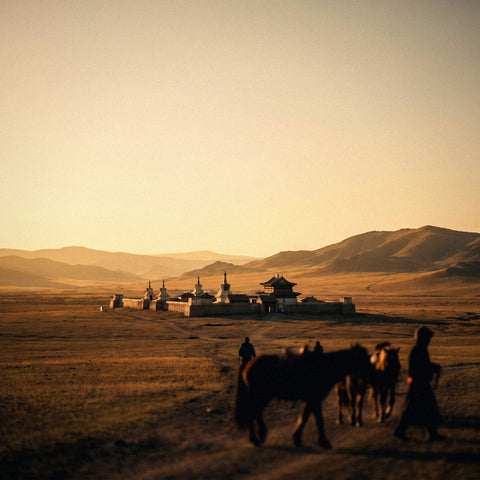
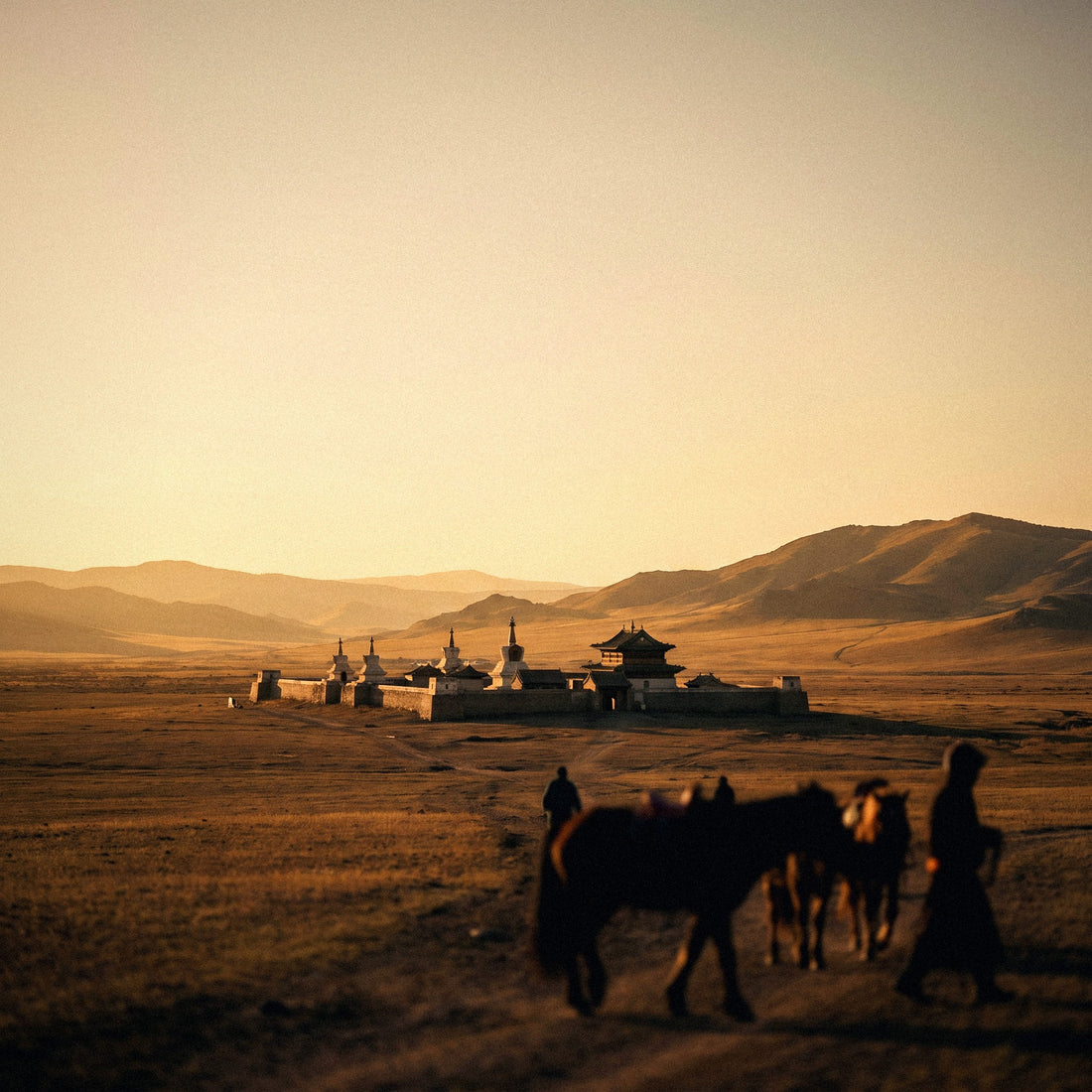
Ulaanbaatar works well: fast 4G, wifi in cafés, hotels and shopping centers, and a decent café scene with good connections. This is where you'll use almost all of your plan. Province centers (the aimags: Dalanzadgad for the Gobi, Kharkhorin, Mörön) have reasonable 4G or 3G, though speed drops when the town is busy. And then there's the rest of the country: steppe, Khongoryn Els dunes, Yolyn Am canyon, ger camps two hours from nowhere. There you can go two or three days straight without a single bar.
The local carriers are Mobicom, Unitel, Skytel and G-Mobile, and of them Mobicom covers the most ground outside the cities. You don't always choose which network an eSIM connects to, but it's worth knowing: if on a roadside stop your travel buddy has signal and you don't, they're almost certainly on a different network.
On the steppe, the question isn't "how many gigs do I have left?" but "when will I see a tower again?". It completely changes how you plan the trip.
If you want the details on carriers, bands and connection options, it's all broken down in the internet in Mongolia guide. Here we'll keep going with the gigabytes.
What each activity uses, in real MB
Before you decide, it helps to have the numbers in front of you. These are the ones I use, rounded up and on the high side so you don't run short. Watch the last row: video is the only thing that can drain a plan in a single afternoon.
| Activity | Approximate usage | On a trip to Mongolia |
|---|---|---|
| Maps with online navigation | 3-5 MB per hour | Almost irrelevant; offline, zero |
| WhatsApp: messages and daily photos | 10-25 MB per day | The baseline spend for almost everyone |
| Video call (WhatsApp or similar) | 5-12 MB per minute (300-700 MB/h) | Only possible in the city; 10 min a day is already 60-120 MB |
| Scrolling social media | 300-800 MB per hour | The real devourer: Reels and TikTok |
| Uploading compressed photos to social or chats | 1-3 MB per photo | 50 photos ≈ 100 MB. Not much |
| Auto backup of photos to the cloud in original quality | 3-6 MB per photo, 30-80 MB per short video | This one adds up: 200 photos ≈ 1 GB |
| Music streaming | 40-150 MB per hour | On long stretches it adds up; better to download |
| Video streaming (480p / 720p / 1080p) | 350 MB / 900 MB / 2-3 GB per hour | What ruins a small plan |
| Email and normal browsing | 10-20 MB per hour | Negligible |
The takeaway is simple: chatting and browsing are practically free, and the expensive part is video — both watching it and uploading it in original quality. If you want the full breakdown with more apps and scenarios, I have it in the data usage stats by activity. For Mongolia, these nine rows have you covered.
Recommendation by profile and trip length
This is the table I'm here to give you. It's calculated for the typical Mongolia itinerary (2-4 nights in Ulaanbaatar and the rest on the road), not for someone staying a month in the capital. If your trip is all city, take the right-hand column and go up one step.
| Profile | 5 days | 10 days | 15 days | 30 days |
|---|---|---|---|---|
| Maps-and-WhatsApp tourist | 1 GB | 2 GB | 3 GB | 5 GB |
| Photos and social media | 2 GB | 3-5 GB | 5-8 GB | 10-15 GB |
| Digital nomad / remote worker | 5 GB | 10 GB | 15-20 GB | 30 GB or more |
| Family sharing one phone | 2-3 GB | 5 GB | 8 GB | 15 GB |
Three important caveats to read it correctly:
- The digital nomad doesn't fit in rural Mongolia. If you need to work, plan to do it from Ulaanbaatar or a provincial center. No data plan can fix an area without a tower.
- The family spends less than you'd fear if they share a connection from one phone: offline maps and chats use almost nothing, and the rest of the day you're looking out the window.
- A guided tour lowers the number. Local drivers have their own line, and the camps warn you where there's signal; you end up using less than expected.
My practical advice: if you're torn between 3 and 10 GB for two weeks, go with 3 and save the money for a good ger camp. Topping up takes minutes; returning unused gigs doesn't exist.
Landscape and wildlife photos: the hidden cost
Mongolia is a photographer's destination. You'll be shooting like crazy: dunes at sunrise, herds of horses, yaks, vultures, the clearest sky you've ever seen. And here's the most common misunderstanding I come across: taking photos doesn't use data. Not a single MB. What uses data is uploading them.
The problem is that many phones upload automatically. Google Photos, iCloud, or your gallery backup kick in as soon as you get a signal, and if you've been three days without coverage, your phone has a queue of 300 photos and 12 videos waiting. You connect to 4G when you get to Dalanzadgad and twenty minutes later you've burned through a gig and a half without touching the phone.
What to do, in order of importance:
- Go into your photo app settings and set backup to wifi only. It's a single toggle and it saves you half your plan.
- If you still want to back up on the road, upload them in reduced quality, not original. The difference is 6 MB vs 1.5 MB per photo.
- Videos are best saved for the hotel in Ulaanbaatar. A one-minute 4K clip can weigh more than 50 photos.
- To send to family, WhatsApp or Telegram compress them and cost you 1-3 MB per image. Perfect for day-to-day.
With auto backup turned off, a two-week trip shooting nonstop fits comfortably in 3 GB. With it on in original quality, not even 20 GB will cut it. That single setting matters more than the size of the plan you buy.
Battery life matters more than gigabytes
Let me be clear: in Mongolia, the scarce resource isn't data — it's electricity. Yurt camps near Ulaanbaatar are usually hooked up to the grid and have power 24 hours a day, but in the Gobi and remote areas, electricity comes from solar panels or a generator that runs for a few hours at dusk, typically between six and ten at night. Outside that window, there's no outlet to be found.
And there's a technical catch: a phone with no signal drains more battery than one that's connected, because the antenna keeps boosting power to search for a network. Eight hours of 4x4 across the steppe with your phone in normal mode can leave it at 20% without you having done a thing.
What works:
- Airplane mode while driving. You can still use the camera and downloaded maps with GPS on — it doesn't need a network. You'll gain hours of battery life.
- A 20,000 mAh or larger power bank. It's the most useful accessory for the whole trip, ahead of any data plan.
- A European-style adapter. Mongolia uses 220 V and outlets compatible with ours in most places, but check yours beforehand.
- Charge during the generator window, and if your ger doesn't have an outlet, use the dining area or camp reception.
In other words: 20 GB are useless on a phone at 4%. If you're going to spend money on something before you leave, make it a decent power bank and a reliable cable.
What to download before leaving Ulaanbaatar
This is the habit that will save you the most data in Mongolia: spend half an hour at your hotel in the capital, on Wi-Fi, downloading everything before you hop into the 4x4. Take advantage of that city night and don't leave it for the road — because on the road, there is no road.
| What to download | Approximate size | Why it matters in Mongolia |
|---|---|---|
| Offline maps (Google Maps, Maps.me or OsmAnd) | 150-400 MB depending on area | Essential: GPS works without a network, so you can navigate the steppe |
| Mongolian offline language pack in your translator | 40-70 MB | The alphabet is Cyrillic; the translator camera saves you on menus and signs |
| Music and podcasts for the drives | 100-300 MB for a few hours | 6-8 hour stretches by car are the norm |
| Series or movies for the camp | 300-700 MB per episode | It gets dark late in summer, but there's nothing to do after dinner |
| Bookings, insurance, PDFs of tickets and your agency contact | Less than 10 MB | Having them locally saves you cold sweat at an airport with no signal |
| System and app updates | Several GB if they kick off | Do them on Wi-Fi or disable them — they're the biggest silent drain |
That last point deserves a warning: automatic app updates are the dumbest way to burn through an entire plan in a country where data is scarce. Set them to "Wi-Fi only" before you leave home and forget about it. You'll find more tips like this in the guide on how to save data while traveling.
Naadam in July and other calendar peaks
If you're traveling in July, there's one date that changes everything: Naadam, the national festival of wrestling, archery and horse racing, which in 2026 has its main days in Ulaanbaatar from July 11 to 13. It's the best time to see the country and also the worst time to count on a fast network.
What this means in practice:
- Congested network at the stadium and surrounding areas. Tens of thousands of people recording video in the same spot make the connection sluggish, even if you have full coverage.
- You'll use more data that day. Between uploading videos, checking schedules and coordinating with your group, one Naadam day can easily eat up 300-600 MB, compared to 30-50 MB on a normal day in the countryside.
- Local provincial Naadam festivals happen around the same dates and are more authentic, but they're usually in places with poor coverage. There, you'll go back to using zero data.
- Everything books up. Accommodation, domestic flights and cars. If you're going during those dates, book well in advance.
The rest of the calendar matters too. In winter, tourism almost disappears and roads get tricky, so you'll spend more hours inside a vehicle and less time with your phone in hand. In peak summer season, on the other hand, you'll have more stops in towns and more chances to connect.
My advice if you're going to Naadam: upload the video that same night from the hotel, not live from the stands. It'll be faster, use less data, and you'll enjoy the show instead of fighting with the loading bar.
How to know your real usage before you travel
All of the above are averages. Your exact number is already in your pocket and takes two minutes to check, without installing anything. It's the most honest method I know to avoid buying too much or too little.
- On Android: Settings → Network & internet → Mobile data usage. You'll see your monthly usage and a breakdown by app.
- On iPhone: Settings → Mobile data. Scroll down to the app list; remember to reset the statistics at the start of a month to get clean data.
- Divide by 30 and you'll have your real daily usage at home.
- Multiply by the number of travel days and then subtract between 40% and 60% for the days without coverage on your Mongolian itinerary.
An example with round numbers: if you use 9 GB per month, that's 300 MB per day. A 12-day trip would be 3.6 GB under normal conditions; in Mongolia, with seven or eight days on the steppe, you're looking at around 1.5-2 GB. Buy 3 GB and you'll have plenty of margin.
Two upward adjustments that do make sense: if you watch a lot of video on data at home and don't plan to change that habit, don't subtract as much. And if you're going to share the connection with other people in your group, add up everyone's usage, although in Mongolia it's normal that the person sharing ends up using less than expected because the others are also without signal half the time. If you've never used this technology before, here I explain what an eSIM is and how to activate it.
How to stretch your data and what happens if you run out
I'll start with the second part, since that's what worries people. If you run out of data in Mongolia, nothing serious happens: you top up from the app or website in a couple of minutes, as long as you have coverage or wifi at that moment. That's why I say it's better to run short and top up than to overbuy: the gigs you don't use aren't refunded, and buying 20 GB "just in case" in a country where you'll be days without a tower is throwing money away.
The only precaution: top up when you still have some balance left or when you're in an area with wifi, not when you're at zero in the middle of the Gobi. If you know you'll be cutting it close, do it the night before at the camp or in the last town with signal.
To stretch what you have:
- Turn on data saver on your system and enable low-power mode inside social media and streaming apps.
- Disable autoplay for video on Instagram, X, Facebook, and TikTok. It's the setting with the best effort-to-benefit ratio.
- Always use offline maps. Navigating with a downloaded map uses virtually zero data.
- Backups only on wifi, as we've already covered, and updates too.
- Use hotel and café wifi in Ulaanbaatar for the heavy stuff: uploading your gallery, long video calls, downloads.
- Check your usage every two or three days from the settings. Thirty seconds and you'll know if you're on track.
With these six habits, a modest data plan lasts an entire trip. And if you have some left over at the end, even better: it means you were looking at horses instead of your screen, which is exactly what you go to Mongolia for.
Frequently asked questions
How many GB do I need for 10 days in Mongolia?
3 GB is more than enough for most people. The classic itinerary includes several days without coverage on the steppe or in the Gobi, so actual usage is concentrated in the evenings in Ulaanbaatar. If you make daily video calls or upload video, go up to 5 GB.
Is there coverage in the Gobi Desert?
Very little and very patchy. There's 4G in Dalanzadgad and some larger towns, but between destinations you can go two or three days without a single bar. Assume you'll be disconnected and download your maps before you leave.
Do the ger camps have wifi?
Some do, many don't. Those near Ulaanbaatar usually have wifi and 24-hour electricity; remote ones run on generators or solar panels for a few hours at dusk and, if they offer internet, it's usually satellite-based, slow, and sometimes paid. Don't count on it for work.
Can I work remotely from Mongolia?
Yes, but only from Ulaanbaatar or provincial centers. The capital has fast 4G and cafés with good connections. On the road it's unfeasible: it's not a matter of gigs, it's that there's no network. Schedule meetings for your days in the city and let people know about your offline windows.
Will my photos upload automatically and drain my plan?
Yes, if you don't turn it off beforehand. When you regain coverage, your phone uploads the entire backlog of days without signal all at once. Set your backup to "wifi only" and the problem disappears: it's the most cost-effective setting of the entire trip.
What happens if I run out of data in the middle of the country?
You wait until you have signal or wifi and top up in two minutes. You don't lose your number or your settings. The risk is running out right in an area with no coverage, so top up with a margin from the last town or camp with a connection.
Do I need more data if I travel during Naadam?
A bit more, but nothing dramatic. A festival day uses around 300-600 MB compared to 30-50 MB on a day in the countryside. With half a gig extra on top of your calculation you'll be covered; and the network will be slow due to congestion even if you have full bars.
Does the same calculation work for the north, around Khövsgöl?
Yes, and you can even go lower. Mörön has reasonable coverage, but the lake area and northern forests are just as poorly served as the Gobi, if not worse. Same rule: count your city days and write off the rest.
Conclusion
Mongolia is the destination where I can most confidently tell you to buy little. 3 GB for ten or fifteen days covers the vast majority, because half the trip is spent where there isn't a single tower. Go up to 5 GB if you upload photos and make video calls daily, and to 10-20 GB only if you're working from Ulaanbaatar or sharing the connection with several people.
And most importantly: disconnection here isn't a flaw in the plan, it's part of the plan. Download your maps, set your photo backup to wifi only, bring a big power bank, and get your head around the idea of going two days without replying to messages. It's one of the few things today that you can only buy by traveling very far.
Once you know your number, activate your eSIM for Mongolia before you leave home and arrive at Chinggis Khaan Airport with data from the first minute. You can choose your plan and have it ready in five minutes on the Mongolia eSIM page.