You’ve decided to buy data for your trip, and now you just need one thing: to know how many GB to pack for Senegal so you don't run out or overpay. This article won't bore you with the endless debate of connection options—you can find that in the country's internet guide. Here, we'll get straight to the point about gigabytes, with real figures, a table by profile and days, and the specific characteristics of Senegal that truly influence the number.
The number, in a nutshell
For 10 days in Senegal, most people will be fine with 3 to 5 GB: maps, WhatsApp with family, uploading photos of Gorée, and some social media will fit comfortably. Only if you work online or share data with multiple phones should you consider increasing to 10-15 GB.
I'm giving you the number early on purpose, because I don't like guides that hide the recommendation until the end. From here, all I'm doing is refining that figure for your specific case: someone spending a week lounging on Saly beach doesn't use the same amount of data as someone exploring Dakar, Saint-Louis, and the Saloum Delta while recording videos, or someone visiting family and spending all day on video calls. The good news is that Senegal, on the coast and in the cities, has more than decent coverage, so the problem is almost never the network; it's how much you buy. If you want a general overview of the cluster before continuing, you can find it in the guide to how much data you need for travel. But for Senegal, these figures will serve you well.
How much data apps actually use
Before deciding how many gigabytes to buy, it's worth seeing where they go. People think WhatsApp devours data, but that's rarely the case: texts and voice calls use very little. What really bites are video, social media with auto-play, and long video calls. Here's the approximate consumption per activity, based on real measured data, to give you an idea of where your spending is:
| Activity | Approximate Consumption |
|---|---|
| Google Maps / GPS navigation | 5-10 MB per hour |
| WhatsApp (messages and photos) | 1-5 MB per day |
| WhatsApp voice call | ~0.5 MB per minute (30 MB/hour) |
| WhatsApp video call | ~5 MB per minute (300 MB/hour) |
| Instagram / TikTok (scrolling) | 400-720 MB per hour |
| Upload 10 photos to cloud or chat | 30-50 MB |
| Music streaming (Spotify) | 60-90 MB per hour |
| Video streaming (SD / HD) | 0.3-0.7 GB (SD) · 1-1.6 GB (HD) per hour |
The quick takeaway: a week of maps, chat, and photos barely touches 1-2 GB. What skyrockets the bill is watching series on your phone or spending the afternoon on video calls. If you want the app-by-app breakdown, I detailed it in the mobile data usage statistics by activity. With this table in mind, you can start adding up your typical daily usage.
Why Senegal changes the number
No two destinations use data exactly the same way, and Senegal has its own characteristics that can increase or decrease your consumption. The first, in your favor: Orange (Sonatel) dominates the market and has the best coverage in the country, with 4G reaching 97% of the population and very good speeds in Dakar and on the coast. In other words: in the capital, on the Petite Côte, in Saint-Louis or Saly, you'll have excellent connectivity, so you don't need extra "cushion" for a bad network. Where it's wise to be prepared is in the interior and the deep south: in rural areas and parts of Casamance, the signal drops to 3G or disappears, and there, paradoxically, you use less because there's simply no connection.
| Area | Coverage | What to expect |
|---|---|---|
| Dakar, Plateau and Almadies | Excellent 4G/5G | Smooth sailing, no extra cushion needed |
| Petite Côte (Saly, Mbour) | Good 4G | Beaches and resorts well covered |
| Saint-Louis | Good 4G | Colonial city with stable signal |
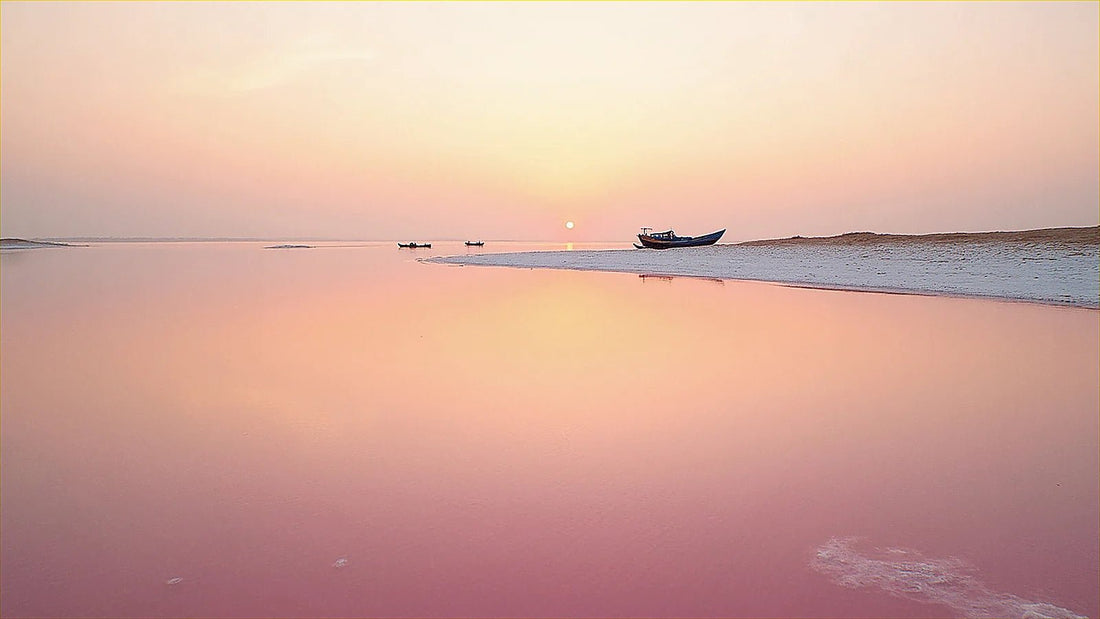
| Pink Lake, Bandia and Saloum Delta | Irregular 3G-4G | Have maps downloaded |
| Rural interior and deep Casamance | 3G or no signal | You'll use little: almost no connection |
The second factor is language: French and Wolof are spoken in Senegal, so if you're not fluent in French, you'll rely heavily on a translator. Translating text uses almost no data, but a real-time camera translator certainly adds up. And the third, very Senegalese, factor: nature excursions (Bandia reserve, river safari, and Saloum Delta) take you to areas with weak coverage, where it's smart to have downloaded maps and not depend on data. I explain all this in more detail in the internet in Senegal guide.
My table: GB by profile and days
This is the table that truly matters, the heart of the article. Find your profile, look at how many days you'll be there, and you'll have your figure with a small margin already included. These are informed recommendations, not tight minimums: I'd rather you have 500 MB left over than be stuck searching for Wi-Fi on your last day. Choose the row that best resembles how you use your phone on vacation:
| Profile | 5 days | 10 days | 15 days | 30 days |
|---|---|---|---|---|
| Tourist (maps and WhatsApp) | 2 GB | 3 GB | 5 GB | 8-10 GB |
| Photos and social media | 4 GB | 7 GB | 10 GB | 20 GB |
| Digital nomad / remote work | 8 GB | 15 GB | 20 GB | 40 GB or unlimited |
| Family sharing (2-3 phones) | 8 GB | 15 GB | 20 GB | 40 GB |
Notice the jump between rows: going from "maps and WhatsApp" to "photos and social media" almost doubles the data usage, and video or online work doubles it again. If you're unsure between two rows, only choose the lower one if you know you watch video daily; otherwise, go with the upper one and top up if needed. Almost everyone traveling for tourism falls into the first two rows.
Beach, culture, or family visit: your profile
Senegal attracts three very different types of travelers, and each uses data differently. It's worth seeing yourself reflected here before buying, because your reason for travel weighs more than the number of days:
- Beach package on the Petite Côte (Saly). A lot of time at the resort, with Wi-Fi at the hotel. Outside, you only use data for maps, some photos, and sharing stories. This profile uses the least data: 3 GB for a week will be more than enough.
- Cultural trip (Dakar, Gorée, Saint-Louis). You move around, look up schedules, upload photos of Gorée island and colonial history, perhaps some video. Medium consumption: plan for 5-7 GB for ten days.
- Visiting diaspora family. Video calls dominate here to show where you are and talk to those who stayed behind. This is what skyrockets data usage the most: go up to the 7-10 GB range even if the trip is short.
Golden rule: don't buy based on days, buy based on what you do with your phone. A week of video calls uses more data than two weeks of maps and postcards.
The hop to Gambia: double border and double network
Many trips to Senegal include a hop to Gambia, that narrow country enclaved within Senegal, following the river. It's beautiful and much-visited, but it has a data trick, and I want to warn you so you're not caught off guard: when entering Gambia, you cross the border twice (Senegal → Gambia → Senegal) and, more importantly, you change network countries. A plan designed only for Senegal might stop providing data as soon as you step onto Gambian soil, and vice versa.
The solution isn't to haphazardly buy two packages: it's to carefully choose your plan's coverage before you leave. If your itinerary includes Gambia, make sure your eSIM covers both countries or have a regional plan handy; this way you avoid a network drop right in the middle of your excursion. If this still sounds strange, how to activate a plan without changing your card, I explain it simply in what an eSIM is. The gigabyte amount doesn't change for the hop to Gambia; what changes is that your plan needs to reach there.
Calculate your own consumption before you go
The most honest way to get the right amount of GB is not to trust someone else's table (not even mine), but to look at your own history. Your phone has been recording exactly how much you spend for months, so use it. This trick will give you your personal number in two minutes:
- On Android: Settings → Network & internet → Mobile data usage. Look at the total for the last month.
- On iPhone: Settings → Mobile Data and scroll down to the period summary (it's a good idea to reset the statistics at the beginning of the month for a clean reference).
Divide that total by 30 and you have your daily home usage. When traveling, you usually spend a bit less (more hotel Wi-Fi, less work routine) unless you're uploading videos or making long video calls. Multiply your daily usage by the number of days of your trip, add a 20% margin, and you'll have a tailor-made figure that's much more reliable than any average.
Tips to stretch every gigabyte
If you want to buy just enough and not worry, the key is to cut down on invisible spending—the data that goes without you enjoying it. With these adjustments, a few gigabytes will feel like double. Activate them on the first day and forget about the counter:
- Offline maps. Download the Dakar, Petite Côte, and Saloum areas on Google Maps via Wi-Fi before you leave. Navigating without data uses zero.
- Lower video quality to 480p on YouTube and social media. On a phone screen, it's barely noticeable, and you save more than half the data.
- Backups only via Wi-Fi. Let photos upload to the cloud at night in the hotel, not via data during the day.
- Disable auto-play on Instagram, TikTok, and X: this consumes the most data without you choosing to watch it.
- Activate your phone's Data Saver Mode, which limits background data usage for apps you're not actively using.
You can find the complete list of tips, with screenshots, in the guide on how to save data on your travel eSIM. Even half of these will make a noticeable difference.
If you run short: top up without hassle
Let's talk about something important that almost no one mentions: it's better to run short and top up than to overbuy. If you buy a huge package "just in case" and only use half, that money doesn't come back. On the other hand, if you run short, adding more data today is a matter of a couple of taps from your phone, without going to any store or changing anything physical. That's why my advice is to buy just enough for your estimated usage and only extend if you truly need it. If you're still deciding which plan to get, I compare the options in the Senegal eSIM guide.
Also, consider that in Senegal, between hotel Wi-Fi, Saly resorts, and Dakar cafes, you'll have free connection times that will help you stretch your package. And if one day you overuse data with videos, it's okay: top up and continue. What I want you to take away is that you don't need to get the exact amount. Aim for the figure in the table, travel worry-free, and top up if the counter gets low.
Frequently asked questions
How many GB do I need for a week in Senegal?
For 7 days, 3 GB is more than enough for the average tourist for maps, WhatsApp, and photos. If you make a lot of video calls with family or watch video daily, go up to 5 GB and you'll travel without watching the counter.
Is 1 GB enough for Senegal?
Only if you're going for a few days and mostly rely on hotel Wi-Fi. 1 GB is enough for occasional maps and messaging on a very austere 2-3 day getaway. For a normal week, it's not enough; 3 GB is better.
Do I need more data if I travel inland or to Casamance?
No, quite the opposite: you'll use less data inland. Coverage drops to 3G or disappears in rural areas, so you'll consume almost no data there. Have maps downloaded and use them offline.
Does my Senegal plan also work in Gambia?
Don't assume it does. Gambia is enclaved within Senegal but is a different network country: a Senegal-only plan might stop providing data there. If your route includes Gambia, choose a plan that covers both.
How much data does the camera translator use?
Text translation uses very little data; real-time camera translation does add up. French and Wolof are spoken in Senegal, so if you rely heavily on visual translation, add half a gigabyte to your total just in case.
Is it better to buy a lot of GB at once or to top up?
Topping up, almost always. Buy just enough according to the table's figure and extend in two taps if you run short. A large unused package is wasted money; unused data is not refunded.
Do I need more GB to upload photos and videos from the trip?
Photos use little data; video uses a lot. Uploading 10 photos is 30-50 MB, which is nothing. But recording and uploading videos or going live skyrockets consumption: if this is your case, factor in the "photos and social media" profile from the table.
Does data work well on the beaches of the Petite Côte?
Yes, very well. Saly, the Petite Côte, and the entire coast have good 4G Orange coverage. You won't have network problems there; the only limit is the GB you've purchased.
Conclusion
In summary, without beating around the bush: for ten days of tourism in Senegal, 3-5 GB will comfortably cover most people; only increase to 10-15 GB if you work online, share data with multiple phones, or live for video and video calls. Take advantage of the good coverage on the coast and in cities, have maps downloaded for trips to the interior and the Saloum, and if your route includes Gambia, make sure your plan covers both countries. Buy according to your profile, activate data saving, and top up if you're running low: it's smarter than overbuying. Once you're clear on this, choose your data package for the trip on the Senegal eSIM and relax from the moment you land in Dakar.