Every time someone writes to me asking about the internet in Colombia, the short answer is the same: much better than people imagine in cities, and much worse than one would want in the jungle. Colombia is a country where you can be watching a live 5G stream in Bogotá in the morning and have no coverage bars in Tayrona in the afternoon. That's why "just getting data" isn't enough: you need to understand what options you have, which one suits you, and above all, which one saves you the hassle of landing and having to look for a phone store with your luggage in tow. In this guide, I compare all the ways to connect—roaming with your operator, hotel Wi-Fi, local SIM card, and eSIM—with real prices and coverage, not brochure promises.
What the mobile network is really like in Colombia
In Colombia, there are four main operators (Claro, Movistar, Tigo, and WOM). Claro leads in coverage with over 94% of the territory on 4G and the bulk of 5G antennas. Cities are good; the Amazon, Pacific, and national parks have areas without signal.
The Colombian market is shared by four names: Claro, Movistar, Tigo, and WOM. And they are nowhere near equal. According to data from the Communications Regulatory Commission, Claro covers around 94.6% of the country with 4G, Tigo is around 82.7%, WOM 78%, and Movistar is around 55.4%. This difference, which on paper seems like a technical detail, is exactly what separates having Google Maps working on a Coffee Axis road from going blind.
4G is the dominant technology: it's present in nearly 97% of municipal capitals, so in any town with a main square and a church, you'll have data. 5G, however, is still a city thing. 5G coverage in urban areas is about 19% nationwide, but in Bogotá, it already reaches almost 70% of the urban area. Claro concentrates over 90% of the deployed 5G antennas, with Tigo and Movistar sharing the rest.
What does this mean for you as a tourist? That the quality of your connection in Colombia depends less on what contract you have and much more on which network you end up connected to. And that's exactly what changes between options.
Roaming with your operator: when it's worth it and when it's a rip-off
Let's start with the most convenient, and almost always the most expensive, option: using your usual SIM card and activating international roaming. Colombia is in Zone 2 for practically all Spanish operators, meaning outside the European tariff zone. There's no "roam like at home" here.
Without a contracted bundle, the numbers are frightening: some tariffs exceed €10 per MB of data and €2-3 per minute of calls. A two-minute video at the airport and you already have a three-figure bill. It's literally the worst possible scenario and the reason why every year there are headlines about people returning from a trip with an unpleasant surprise.
The reasonable alternative is daily passes or bundles. Vodafone lowered its bundles outside Europe in June 2026 and sets Colombia at about €3 a day for 1 GB. Movistar, Orange, and Yoigo offer passes between €5 and €10 daily, including data, minutes, and SMS. For a three-day getaway, it might make sense. For two weeks touring the country, you're talking about between €40 and €140 just for connection. I elaborate on this with numbers in my comparison of how much international roaming costs and in the head-to-head of eSIM vs roaming.
My rule: if the trip lasts more than four days, roaming stops being a sensible option.

Hotel Wi-Fi (and the corner cafe's)
Colombia has a spectacular coffee culture, which, by rebound, means Wi-Fi everywhere. Hotels, hostels, restaurants, shopping centers, co-working spaces in El Poblado, cafes in Chapinero... The connection exists and is often decent for answering emails or uploading a photo.
The problem with Wi-Fi is that it's a network, not your network. And that brings three drawbacks that will bite you right when you least expect it:
- It's not where you need it. Wi-Fi is at the hotel; you need Maps on the street, the taxi driver's number, the Uber code, or the bus ticket to Salento.
- Lottery quality. In a crowded hostel at 9:00 PM, the bandwidth shared among forty backpackers is a joke.
- Weak security. Open and shared networks are not the ideal place to access your bank or enter your card details.
And there's a point that people underestimate: arriving at El Dorado airport without data means managing your transfer blind. Yes, there's Wi-Fi in the terminal, but as soon as you walk out the door, it's gone. It's the moment of the trip when you most need to be connected and exactly when Wi-Fi abandons you.
Wi-Fi is a great complement—for downloading offline maps, making long video calls, or uploading videos—but it's not a connection plan. If your idea was to rely on Wi-Fi and some borrowed device, also check out eSIM vs pocket Wi-Fi before deciding.
Colombian local SIM: passport, store, and IMEI registration
The classic option for seasoned travelers: land, find a Claro or Movistar stand, and buy a prepaid card. It works, it's cheap, and it gives you a Colombian number. But it has fine print that's worth knowing beforehand.
First thing: in Colombia, the SIM must be registered in a person's name. It's not an anonymous product. You need to present your passport and be registered in the operator's system. The kiosks at El Dorado (Bogotá) and José María Córdova (Medellín) airports do it without a problem, although they usually charge a bit more than a neighborhood store.
The price is honest: the card itself costs a few thousand pesos (Tigo is around 20,000 COP) and a 30 GB package for 30 days with Claro is around 31,000 COP, about 7 euros. Hard to beat in pure price.
Now for the detail no one tells you: Colombia has a mandatory IMEI registration to combat mobile phone theft. When activating a Colombian line on a device purchased abroad, you will receive an SMS asking you to register the phone's IMEI. If you don't do it within the specified period (around 30 days), your phone may be blocked on all networks in the country. For a two-week trip, this rarely happens, but it's a process that exists and has ruined trips for more than one person. I explain it in detail in eSIM vs local SIM, because that process makes a bigger difference than it seems.
Travel eSIM: the option I recommend
An eSIM is a digital card: no plastic, no tray, no clip. You buy the plan, you get a QR code, you scan it, and the profile is installed on your phone. If you've never used one, I explain it step-by-step in what an eSIM is.
Why is it the best option for Colombia specifically? For three very practical reasons:
- You arrive connected. You install the profile from home, using your Wi-Fi, without rushing. Upon landing at El Dorado, you activate it and you already have data before leaving the baggage claim area. No queues, no searching for a store, no haggling with anyone at eleven at night.
- You don't take out your phone on the street for tasks. And in Colombia, this is not a minor detail, I'll discuss it later.
- You connect to the best available networks. A good digital data plan routes through the operators with the most coverage in the country, which in Colombia is exactly what you want.
You also keep your Spanish number active on your physical SIM to receive bank SMS or calls from home, while data goes through the digital profile. It's the combination I use on every trip: my usual number for verifications, cheap data for everything else. If you want the specific step-by-step for this destination—compatibility, installation, activation—I have it broken down in my guide to eSIM for Colombia.
Comparison: the four options head-to-head
With all options laid out, here's how they stack up for a typical two-week trip to Colombia. Prices are approximate and from July 2026:
| Option | Approx. cost (14 days) | Coverage | Effort | Risk |
|---|---|---|---|---|
| Roaming with Spanish operator | €42-140 (daily bundles) | Good (partner network) | Zero: activates automatically | Surprise bills if bundle runs out |
| Hotel Wi-Fi only | €0 | None outside accommodation | Low | Getting stranded without maps or transport |
| Local prepaid SIM | €7-15 (data) + card | Excellent if you choose Claro | High: store, passport, IMEI registration | IMEI blockage, wasted time, language barrier |
| Travel eSIM | €10-25 depending on data | Excellent (main networks) | Minimal: QR from home | Requires compatible phone only |
After several trips to Latin America, I have a pretty firm conclusion: the money you save with a local card almost never makes up for the hour and a half you lose getting it, nor the fact of walking around asking on the street with your phone in your hand on the first day, which is precisely when you're most disoriented.
The local SIM wins on raw price by a small margin. The eSIM wins on everything else: time, peace of mind, and zero paperwork. And the real difference between the two, on a two-week trip, is a few euros. It's not worth fighting for.

Coverage zone by zone: from Bogotá to the Amazon
Colombia is not a homogeneous country in terms of coverage, far from it. Here's what you can expect in the most common tourist areas:
| Zone | Coverage | What to expect |
|---|---|---|
| Bogotá | Excellent. 5G in ~70% of urban area | Fast data throughout the center, Chapinero, La Candelaria, and the airport |
| Medellín | Excellent. Full 4G, 5G expanding | El Poblado and Laureles are fine; the metro also has signal |
| Cartagena and Caribbean coast | Very good in urban areas | Walled city, Bocagrande, and Getsemaní without problem; Rosario Islands, patchy |
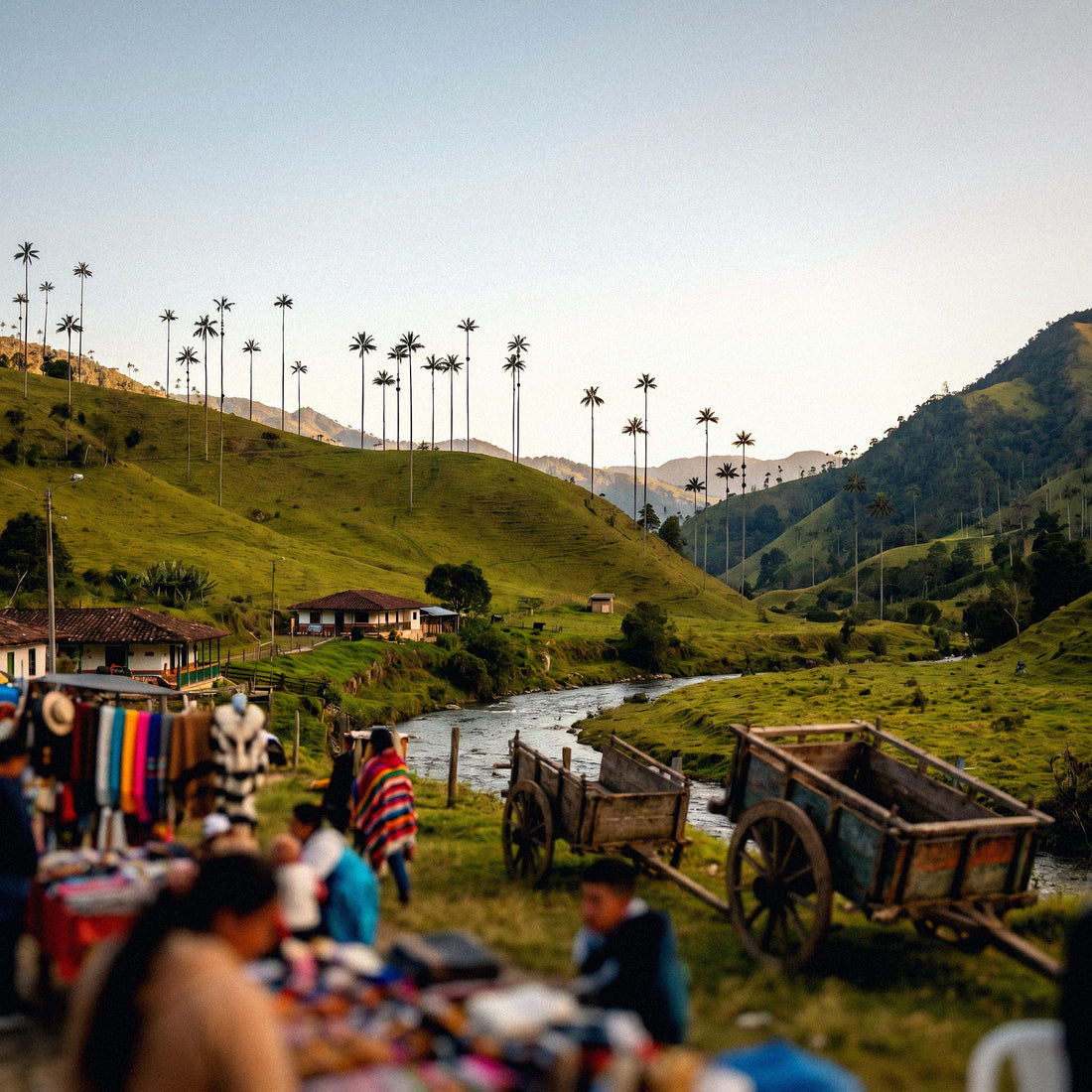
| Coffee Axis (Salento, Cocora Valley) | Good in towns, weak on farms | Signal in the urban area; in the valley and coffee trails, intermittent |
| Tayrona Park | Practically none | No signal inside the park. Airplane mode and downloaded maps |
| Amazon (Leticia and jungle) | Leticia yes; jungle no | Leticia has 4G with fiber optics; half an hour by boat, the connected world ends |
Two pieces of advice that are worth their weight in gold. One: always download offline maps from Google Maps or Maps.me before heading to Tayrona, Cocora, or any trekking route. Two: in Tayrona, put your phone in airplane mode as soon as you enter. It sounds strange, but if you leave it searching for a non-existent signal, your battery will drain in two hours, and you'll be without a camera. It's the most common mistake among first-time visitors to the park.
How much data you really need
Here, people go overboard and buy giant plans they don't use, or fall short and ration megabytes as if it were 2010. An average traveler in Colombia—Maps, WhatsApp, some Instagram, looking for restaurants, ordering a car—consumes between 500 MB and 1 GB per day. If you're someone who downloads series or makes long video calls, increase that amount.
| Traveler profile | Daily usage | Recommended plan (10-14 days) |
|---|---|---|
| Basic: maps, messaging, some email | ~300-500 MB | 5 GB |
| Normal: above + social media and photos | ~700 MB - 1 GB | 10 GB |
| Intensive: stories, video, streaming music | ~1.5-2 GB | 20 GB or unlimited |
| Remote work: video calls, cloud, tethering | 2-3 GB or more | 20 GB+ with hotspot |
Three tricks to make your data last: activate data saver mode on Instagram and YouTube, download your Spotify playlists via Wi-Fi the night before, and use your accommodation's Wi-Fi for heavy uploads. With that, a 10 GB plan will easily last two weeks of normal travel.
And yes, check that your plan allows tethering (hotspot) if two of you are traveling and only one has data. It's the cheapest way to connect your partner or friend without doubling the cost.
Your phone on the street: don't "give papaya"
There's a Colombian expression that sums up half of the country's safety guide: "no dar papaya". It means, more or less, don't make it easy for someone looking for an opportunity. And your phone is the prime "papaya."
Colombia is a wonderful country, and the vast majority of trips occur without the slightest incident. But phone theft in public is a real problem in certain areas of Bogotá, Medellín, Cali, and Cartagena, which is why Colombians themselves are the first to not walk around with their phones in hand. They take them out, look at what they need to see, and put them away.
Translated into concrete advice:
- Don't walk with your phone in your hand looking at a map. Stop in a local business, check the route, memorize two streets, and put it away.
- No phones near the taxi window or on terraces next to the street. Motorcycles exist.
- Have your route planned before leaving the hotel. Fewer checks, less exposure.
- Have data active from minute one. This is where all of this connects: if you land without a connection, your first hour in the country will be spent looking for a phone store with your luggage, asking strangers, and pulling out your phone in places where you shouldn't.
Arriving with data already working isn't just about convenience. It's a security decision, and a good one.
Frequently Asked Questions
Does the internet work well in Colombia for a tourist?
Yes. In cities and municipal capitals, 4G works very well, and Bogotá and Medellín already have 5G in a large part of the urban area. Exceptions are natural parks like Tayrona, the Amazon jungle, and rural areas of the Pacific, where there may be no signal.
Can I buy a Colombian SIM card as a foreigner?
Yes, but you need your passport: in Colombia, lines are registered in a person's name. You can buy one at the airport or at any Claro, Movistar, Tigo, or WOM store. Keep in mind the mandatory IMEI registration of your phone.
What is IMEI registration and does it affect me?
It's an anti-theft measure: when activating a Colombian line on a phone purchased abroad, the country requires you to register the device's IMEI. If you don't do so within about 30 days, the phone may be blocked on all Colombian networks.
Which operator has the best coverage in Colombia?
Claro, by far. It covers around 94.6% of the territory with 4G and accounts for over 90% of deployed 5G antennas. It is followed by Tigo (82.7%), WOM (78%), and Movistar (55.4%). Outside of cities, the difference is very noticeable.
How many GB do I need for two weeks in Colombia?
For normal use (maps, WhatsApp, social media, and photos) estimate between 700 MB and 1 GB per day: a 10 GB plan will cover two weeks well. If you stream video, or work remotely, go for 20 GB or an unlimited plan.
Is there coverage in Tayrona Park?
Practically none. Inside the park, there is no signal for most of the route. It's best to download maps before entering and put your phone in airplane mode: if you leave it searching for a network, the battery will drain in a couple of hours.
How much does it cost to use roaming in Colombia from Spain?
Colombia is in Zone 2, outside the European tariff. Without a bonus, data can exceed €10 per MB. With daily bonuses, you pay between €3 and €10 per day, which can add up to over 100 euros in two weeks.
Can I keep my Spanish number while using Colombian data?
Yes, and that's what I recommend. You leave your physical card with your usual number to receive bank SMS and calls, and you configure mobile data to go through the digital profile. This is managed from the phone settings in two taps.
Conclusion
To summarize the important points: Colombia is much better connected than people think, Spanish roaming is still expensive and treacherous, hotel Wi-Fi won't help you where you really need it, and a local SIM card is cheap but requires a trip to the store, a passport, and IMEI registration. The option I recommend for anyone traveling for tourism is the simplest: get everything ready before leaving home and land connected.
Install the profile with your Wi-Fi, activate it upon arrival, and leave the airport with Maps working, your transfer requested, and your phone in your pocket, which is where it should be. No queues, no paperwork, and no being vulnerable on your first day. You can get it ready today with PuraSIM: choose the data you need, receive the QR code in your email, and it'll be set up in five minutes. Have a good trip.