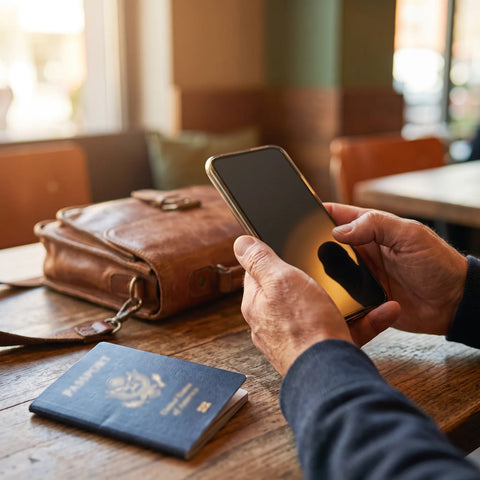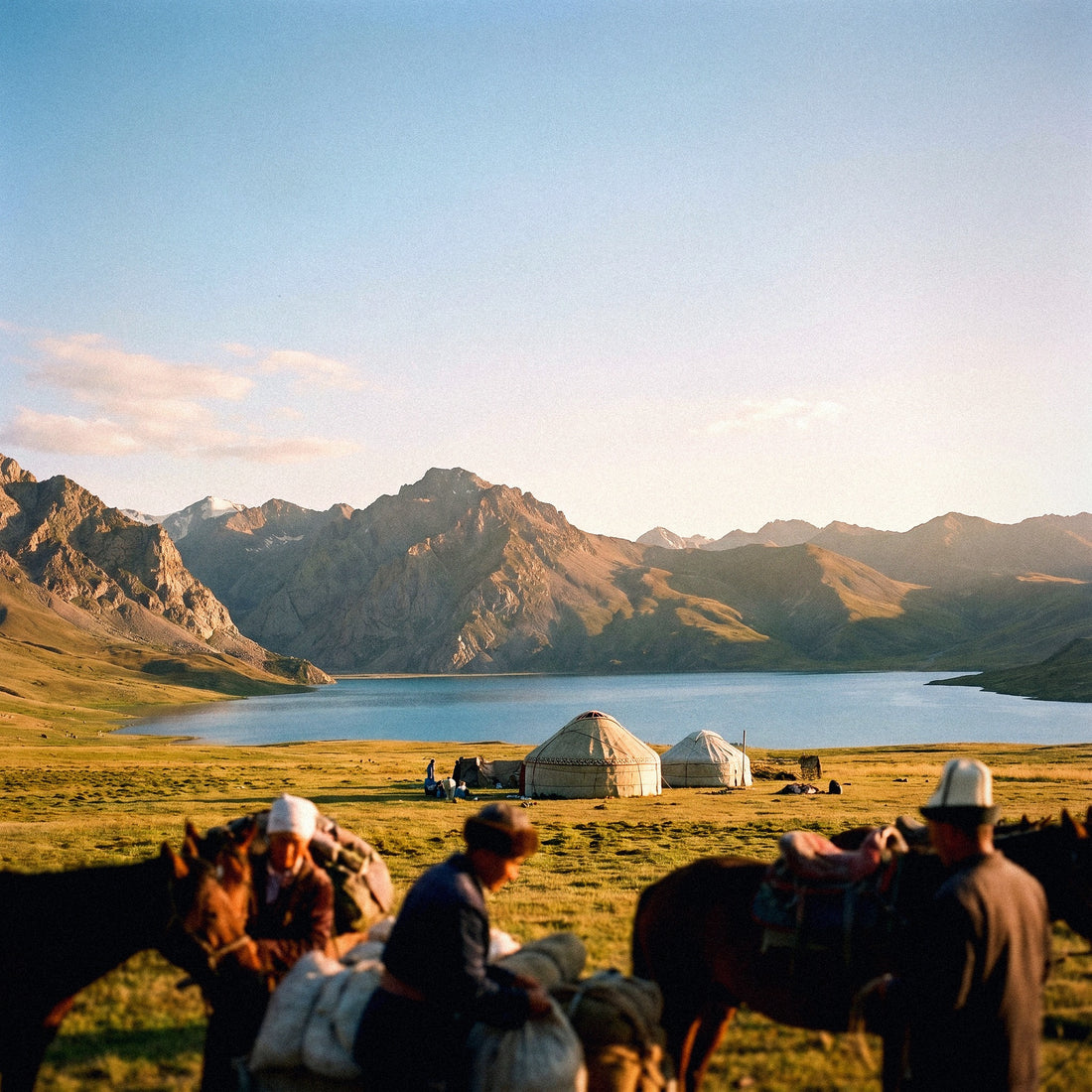
Kyrgyzstan is one of those destinations where your phone stops being a toy and becomes a tool: you need it to negotiate a shared taxi in Bishkek, to let people know you're running late to the yurt, and to stay on the trail. The good news is that getting internet in Kyrgyzstan is easier and much cheaper than you imagine; the bad news is that as soon as you climb up to the high pastures, all signal disappears. In this guide, I compare the four options—roaming, Wi-Fi, local SIM, and eSIM—with real coverage data.
How to connect to the internet in Kyrgyzstan: your 4 options
In Kyrgyzstan, you have four ways to connect: roaming from your Spanish operator, the most expensive; Wi-Fi in hotels and hostels, limited; a local Kyrgyz SIM, very cheap but requires passport registration; and a travel eSIM, the most convenient option and the one I recommend to most travelers.
The country is a curious case. On one hand, mobile data is among the cheapest on the planet, and 4G coverage reaches almost every town with a paved road. On the other hand, it's an adventure destination: as soon as you cross a mountain pass or sleep in a yurt camp, the signal vanishes. Choosing wisely solves 90% of your trip—Bishkek, the Silk Road, transfers—and the rest is handled with prior preparation, not by megabytes.
| Option | Estimated Cost | Requirements | Coverage |
|---|---|---|---|
| Roaming (Spain) | Up to €12-18/MB outside the EU | None, already active | Local network coverage |
| Hotel/hostel Wi-Fi | Free | Must be at the accommodation | Indoor only, none in yurts |
| Local Kyrgyz SIM | 300-500 KGS (€3.50-6) for 20-50 GB | Passport + registration | Very good in cities and valleys |
| Travel eSIM | Plans starting from a few euros | Compatible phone | Relies on local networks |
Roaming from Spain: why your bill will hurt
I'll start with what I don't recommend unless it's an emergency. Kyrgyzstan is outside the European Union, so the "roam like at home" rule does not apply: you pay international destination rates, which are among the most expensive on the list. With Movistar, browsing outside the EU can cost up to €12.10/MB; Vodafone can set limits of €18.15/MB, and calls hover around €3 to €6 per minute. To give you an idea of how absurd this is: at €12/MB, downloading just one GB would exceed €12,000. And we're talking about a country where the same GB costs a few cents.
Some operators sell travel bundles—Orange, for example, offers packages of 2 GB for €9/day in certain destinations—but always check if Kyrgyzstan is included in the covered zone before relying on it, because Central Asia often falls into the most expensive zones or is excluded entirely. My practical advice: if you're traveling with your Spanish line active, turn off mobile data and set a spending limit in your operator's app. I provide a full breakdown in my guide on how much international roaming costs and the comparison eSIM vs. roaming.

Hotel, hostel, and yurt Wi-Fi: use it, but don't rely on it
Wi-Fi will save you more than one night. In Bishkek, almost all hotels, hostels, and apartments have free and decent connections, enough for video calls, photos, and planning the next day. Downtown cafes are a classic for working, and in Karakol, Cholpon-Ata, or Osh, most guesthouses offer free network access. So far, so good.
The problem starts when you leave the building. Wi-Fi ties you to the location, and precisely when you need it most—to locate the marshrutka stop, translate a sign in Cyrillic, or show the driver where you're going—there's no network to be found. And there's a very Kyrgyz scenario where Wi-Fi simply doesn't exist: yurt camps. In Song-Kul or many jailoos, electricity comes from a solar panel and is barely enough for a couple of light bulbs; no Wi-Fi, no reliable outlets. Also, don't trust the security of open networks: avoid logging into your bank without a VPN. If you're considering a portable router, I compare the two options in eSIM vs. pocket Wi-Fi, although I'll note in advance that neither works miracles in the mountains.
Local Kyrgyz SIM: Beeline, MegaCom, and O!, with passport
Kyrgyzstan has three mobile operators: Beeline, MegaCom, and O! (Nur Telecom). All three compete with huge packages at ridiculously low prices: in a city store, a tourist package costs around 300-500 KGS (about $3.50 to $6) with 20 to 50 GB. Be careful at Manas Airport: there, they cost 800-1,500 KGS, two or three times more.
The downside? The paperwork. By law, every line is registered in someone's name: the vendor scans your passport and activates the card, a process that takes about 10 minutes at an official store. Don't buy from informal stalls: a poorly registered SIM can stop working after a few days. Go to a branded store and ask them to activate the data package right there. If you're staying for weeks, a local SIM is unbeatable in price; for short stays, many of us prefer to avoid the queue and language barrier. You can find the full comparison in eSIM vs. local SIM. Here's the summary by operator:
| Operator | Where it works best | Strengths | Ideal for |
|---|---|---|---|
| O! (Nur Telecom) | Bishkek, Chuy Valley, north of Issyk-Kul | Fast 4G in the capital | City and remote work |
| Beeline | Bishkek, Osh, and the south | Very large user base | North-south routes |
| MegaCom | Naryn, Suusamyr, Song-Kul area | Best rural coverage | Mountains and villages |
eSIM: the option I recommend for travelers
For most trips to Kyrgyzstan, my recommendation is an eSIM. It's a digital SIM that you install by scanning a QR code: no physical card, no need to go to a store, and no reliance on the salesperson speaking English. You buy the plan before leaving home, get it ready, and when you land in Manas, you activate the data and you're connected. Zero queues at five in the morning, which is when many flights arrive in Bishkek.
The advantages fit this destination well. You arrive with maps ready for your first taxi, you can message your guesthouse if the driver can't find the address, and you keep your Spanish number active in the other slot for bank SMS. Plus, you control your spending: you choose the GB you need, and there are no surprises when you return. The only requirement is a compatible phone—almost all iPhones from the XS onwards and most mid-to-high-end Android phones—and it must be unlocked. If you're not sure how it works, I explain it step-by-step in what an eSIM is, and you have the country-specific guide in eSIM for Kyrgyzstan.
Super cheap mobile data: the fact that surprises everyone
Here's the detail that bewilders almost all European travelers: Kyrgyzstan is one of the countries with the cheapest mobile data in the world. Annual international price studies place the average cost of a gigabyte at around $0.17, putting it among the global leaders and light-years away from what we pay in Spain or Germany. It's not a temporary offer: it's the normal market price.
The explanation is that the three operators compete with huge data bundles rather than voice minutes. That's why you see packages of 30 or 50 GB for the price of a latte in Madrid, and why phones are used for everything here, from paying at the neighborhood store to streaming a kok-boru match. For you, this has two implications. First: price will never be the reason you run out of internet. Second, and more importantly: cheap doesn't buy coverage, and no matter how many gigabytes you have, at a mountain pass at 3,400 meters, no antenna will work. The bottleneck isn't the price, it's the geography.

Coverage in Bishkek, Issyk-Kul, and Osh
In populated areas, coverage is surprisingly good. 4G is the standard in cities, towns, and along major roads, with more than enough speed for maps, messaging, social media, and video calls. 5G exists, but as of 2026 it is still limited to specific areas in central Bishkek: don't take it for granted or count on it for anything.
By region, the capital and the Chuy Valley are very well served, and O! generally provides the best speeds within Bishkek. Around Lake Issyk-Kul, the north shore—Cholpon-Ata, Bosteri, the entire strip of resorts—has good, almost continuous signal, while the south shore, quieter and less populated, is much more irregular. In Karakol, the starting point for almost all treks in the east, you'll have 4G without a problem within the town. And in the south, Osh and the towns in the Fergana Valley work well, with Beeline typically providing a solid network. The Bishkek-Osh road maintains signal for much of the journey, though with long interruptions when crossing the Töö-Ashuu and Ala-Bel passes. In summary: if your trip involves cities and roads, you'll be connected almost always.
Mountains: Song-Kul, the jailoos, and the Ala-Kul trek
And now for the part that truly sets Kyrgyzstan apart from other destinations. Outside the inhabited valleys, coverage goes from patchy to non-existent, and it's best to accept this before setting out. At Song-Kul lake, at 3,000 meters, signal is anecdotal: it appears only at specific high points, if you're lucky, and MegaCom is usually the only one that gets any bars. In the jailoos, the summer pastures where families set up yurts, there is no network at all, and electricity is limited to a solar panel.
The same goes for treks. On the way to Ala-Kul from Karakol, you lose signal shortly after entering the valley and don't regain it until you descend. The Ala-Archa gorge, 40 kilometers from Bishkek, has some coverage in the parking lot and lower area, but it cuts out as you gain altitude towards the shelters. Routes like Jyrgalan, Arslanbob, or Kel-Suu are data-free territory.
The rule I apply in Kyrgyzstan is simple: above the last village, I assume there's no coverage and prepare for the day as if my phone were just a camera with a compass.
That's not a problem if you plan for it: in fact, it's part of the country's charm.
How much data do you need for your trip?
The million-dollar question. Here, the calculation is different from a European trip, because you'll spend entire days without using a single megabyte: trek days and yurt days are free, whether you like it or not. That's why many people buy giant plans they never fully use.
As a reference, maps and messaging consume little; what drives up usage are videos, social media stories, and long video calls. For a classic one-week route between Bishkek, Issyk-Kul, and some excursions, 5 to 8 GB will be more than enough. If you stay for two weeks, combine north and south, and use GPS daily in the car, aim for 10-15 GB. And if you work remotely from Bishkek, calculate 25 GB or more. A trick that works for me: use accommodation Wi-Fi for heavy downloads—videos, photo backups, updates—and reserve your data for when you're out and about. With that discipline, a medium plan goes a long way. Here it is by profile:
| Travel Profile | Main Usage | Recommended Data |
|---|---|---|
| 1 week: Bishkek and Issyk-Kul | Maps, chat, some social media | 5-8 GB |
| 2 weeks: North, South, and treks | Daily GPS, photos, social media | 10-15 GB |
| Remote work from Bishkek | Video calls and video | 25 GB or more |
How to get everything ready before you travel (and before each trek)
To recap: for short stays and maximum convenience, eSIM; for long stays with a minimal budget, local SIM; roaming, only as an emergency with data turned off. If you choose an eSIM, buy it at home, install it with Wi-Fi, and don't activate data until you land.
But the preparation doesn't end there, and this is the part you'll appreciate the most. Before each mountain outing, take ten minutes to do this:
- Download offline maps of the entire region in Google Maps or Organic Maps, not just the starting village.
- Save the route track in an app that works without data and open it in airplane mode to check it.
- Take screenshots of reservations, Cyrillic addresses, and accommodation phone numbers.
- Download Russian offline in your translator: it will get you out of more trouble than English.
- Bring an external battery: GPS and high-altitude cold drain your phone quickly.
- Inform someone of your plan and when you expect to have signal again.
With this routine, losing coverage stops being a risk and becomes expected. And don't rely on your phone on the trail: a downloaded track is great, but a paper map and asking in the last village are still the best Plan B.
Frequently asked questions
I'll answer the most common questions about getting connected in Kyrgyzstan.
Is there coverage in Song-Kul and on treks?
Practically none. In Song-Kul, the signal only appears at some isolated high points, usually with MegaCom, and in the jailoos there's nothing. On treks like Ala-Kul, you lose coverage upon entering the valley. Download maps and tracks offline before leaving.
Does Spanish roaming work in Kyrgyzstan?
Yes, your phone connects to local networks, but the country is outside the EU, and "roam like at home" doesn't apply. Data can cost between €12 and €18/MB, so only use it in emergencies and with data turned off.
Do I need a passport to get internet?
Only if you buy a local Kyrgyz SIM: by law, the vendor registers it in your name by scanning your passport, a process that takes about 10 minutes at an official store. With a travel eSIM bought before leaving, you don't need any documents.
Is it true that data is so cheap?
Yes. Kyrgyzstan is among the countries with the cheapest gigabyte in the world, with an average of around $0.17/GB. Local tourist packages are around 300-500 KGS (€3.50-6) for 20-50 GB, prices unthinkable in Europe.
Is there 5G in Bishkek?
It exists, but as of 2026, it is still limited to specific areas in the city center. The real standard in the country is 4G, which works well in cities, towns, and main roads and is more than enough for maps, social media, and video calls.
Which operator has the best coverage in the mountains?
MegaCom has the best reach in rural areas like Naryn, Suusamyr, and the Song-Kul area. O! excels in Bishkek and the north of Issyk-Kul, and Beeline is solid in Osh and the south. None cover high-altitude mountains.
Is there Wi-Fi in yurt camps?
No. In the jailoos, electricity usually comes from a small solar panel and is barely enough for lights. No Wi-Fi, no reliable outlets. Arrive with your battery charged, bring a power bank, and expect to be disconnected for a couple of days.
Is my phone compatible with eSIM?
Most are. iPhones from the XS onwards and almost all mid-to-high-end Android phones support it, provided the device is unlocked. Check in your mobile data settings: the option to add a digital plan should appear.
Conclusion
In short: having internet in Kyrgyzstan is easy and cheap as long as you are in cities, valleys, and along main roads, and simply impossible in the high mountains. That's the whole story. Roaming is the expensive and dispensable plan; Wi-Fi, a hotel extra; a local SIM, the option for long-term travelers; and an eSIM, the convenience of landing in Manas with maps already working.
If you want to avoid paperwork and be connected from the first taxi ride, without having to look for a store at five in the morning, check out PuraSIM's eSIM for Kyrgyzstan: choose it, install it at home, and activate it upon landing. The rest—the jailoos, the horses, the days without signal—let it go. Have a good trip.