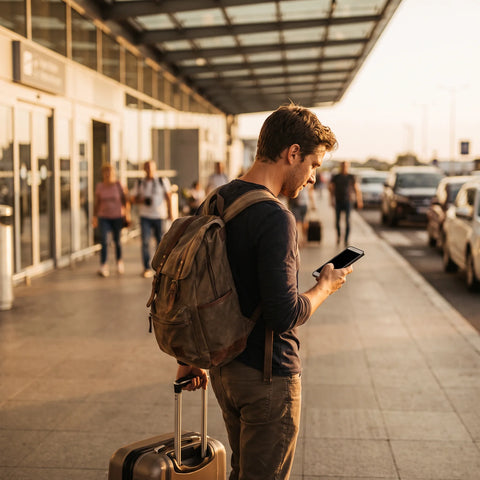
If you're planning a trip along the Silk Road, you're probably wondering how to get internet in Kazakhstan without spending a fortune or dealing with paperwork. In this guide, I compare all the real options – roaming, hotel Wi-Fi, local Kazakh SIM, and eSIM – so you can land in Almaty or Astana with your phone already working and a clear decision made.
Can you get good internet in Kazakhstan?
Yes. In major Kazakh cities, you'll have fast 4G and even 5G in some areas, but the signal drops significantly in the steppe and remote areas. For a tourist, the most convenient option is usually an eSIM: it activates instantly and bypasses the IMEI registration required for a physical local SIM.
Kazakhstan is a huge country, the ninth largest in the world, and that affects everything related to connectivity. The three main operators – Kcell, Beeline, and Tele2 – account for over 99% of subscribers and offer a very decent experience in urban centers: video calls, maps, real-time translation, and uploading photos without stress. The problem is not the quality, but the unequal mobile coverage between city and country.
My advice is to decide on your connection method before leaving home. Buying a card upon arrival seems logical, but in Kazakhstan, it involves an extra step that many people are unaware of and which can leave your phone blocked after a few weeks. Throughout the guide, you'll see why, and why I almost always recommend arriving with your connection already sorted out from your phone.
Roaming: why it's so expensive (and why it's not the EU)
Here's the most expensive mistake I see Spanish travelers make. We're used to "roaming like at home" in the European Union, which allows us to use our plan without surcharges. Kazakhstan is not part of the EU, so that rule doesn't apply: your operator will charge you international roaming rates, which can skyrocket up to several euros per megabyte if you don't purchase a specific data package.
The result is exorbitant bills for four days of maps and WhatsApp. Many operators sell daily data packs for non-EU destinations, but they usually cost around €5-15 per day with ridiculously small volumes (sometimes 100-500 MB), which run out quickly.
The only positive aspect of roaming is that your phone, being connected to your original operator, works in roaming mode and is not obliged to register the IMEI in Kazakhstan. But you pay a very high price for that "privilege." If you want to see the numbers in detail, I've got an analysis on how much international roaming costs and a direct comparison between eSIM vs. roaming. Spoiler: for a trip to Central Asia, roaming only pays off as a last-resort emergency.
Hotel and cafe Wi-Fi: useful but limited
Free Wi-Fi is your ally, but never your main plan. In Almaty and Astana, you'll find good connections in hotels, cafes, shopping centers, and the airport; in small towns and the countryside, things change significantly, and unstable connection is the rule rather than the exception.
The problem with Wi-Fi is obvious: it ties you to one place. The moment you go for a walk in Panfilov Park, take a taxi, or try to navigate with your map in the middle of the steppe, you're left with nothing. And those are precisely the moments when you need data the most: to avoid getting lost, to translate a menu in Cyrillic, or to order a Yandex Go.
There's another point I always remind everyone about: security. Open public networks are fertile ground for data theft, so avoid accessing your online banking or entering sensitive passwords unless you're using a VPN. My practical recommendation is to use hotel Wi-Fi for heavy downloads (offline maps, series) and rely on your own data connection for everything else. This way, you combine free with reliable without having to find a network every few minutes.
Local Kazakh SIM and mandatory IMEI registration
A local physical SIM is cheap for data, but it comes with a major catch in Kazakhstan: mandatory IMEI registration. This is the most important point in this entire guide, so pay attention.
The available operators are Kcell (premium, and its brand Activ, which uses the same network), Beeline (good coverage and slightly cheaper), and Tele2/Altel. You can buy them at the airport, in official stores, or in shopping centers, and by law, you must present your passport at the time of purchase, as your data will be linked to the line.
What almost no one tells you: when you insert a Kazakh SIM, your phone's IMEI is linked to your passport in a state database. If you don't complete this registration, your device will be blocked on the country's network within 30 days of the first connection. For a short stay, you might not notice it, but it's a real risk and a process that takes time away from your vacation. Furthermore, as of March 2025, Kazakhstan has tightened IMEI verification for imported phones. You can find details on this option in my guide on eSIM vs. local SIM.
eSIM: the option that avoids IMEI registration
This is where a travel eSIM solves almost all the previous problems at once. An eSIM is a digital card that is installed on your mobile by scanning a QR code, without paperwork or a passport and without going through any store. If you're still unclear on the concept, I explain it in what an eSIM is.
The decisive advantage for Kazakhstan is this: international eSIMs do not require IMEI registration with your passport, because they rely on wholesale network agreements and not on a named line purchased in the country. In other words, you get fast local data without risking the 30-day block or bureaucracy.
The process is as simple as buying it online before you travel, installing it calmly at home, and activating it upon landing. No queues at the airport or explaining to a shop assistant in English what plan you want. You buy according to the days and gigabytes you need, keep your Spanish number active to receive bank SMS, and arrive connected. For a trip to Kazakhstan, with its combination of local procedures and vast distances, the eSIM is the option I recommend most for convenience and peace of mind.
Comparison: which option is right for you?
For a quick overview, I've summarized the four alternatives for the average tourist. There's no "bad" option per se, but there is one that combines better price, coverage, and freedom from paperwork.
| Option | Indicative price | IMEI registration? | Coverage | Ideal for |
|---|---|---|---|---|
| Roaming | Very high (€5-15/day or more) | No (you're roaming) | Your associated operator's | Occasional emergencies |
| Hotel Wi-Fi | Free | No | Only on-site | Downloads and fixed tasks |
| Local SIM | Low data cost | Yes, with passport | Excellent in cities | Long stays with time |
| eSIM | Medium-low | No | Local 4G/5G networks | Most travelers |
As you can see, the local SIM wins on raw data price, but loses on convenience due to registration and having to go buy it. Roaming is very expensive. Wi-Fi doesn't travel with you. The eSIM strikes the ideal middle ground: affordable local data, zero paperwork, and everything ready from your couch. If you're torn between this and a classic card, this contrast between eSIM and pocket Wi-Fi will also help you rule out the rental gadget, which adds another device to carry and return.
Coverage: Almaty, Astana, the steppe, and remote areas
Understanding signal geography is key to avoiding surprises. Coverage in Kazakhstan operates at two very distinct speeds, and it's important to be clear about this before planning routes through the Kazakh steppe.
In Almaty, the former capital and largest city, and in Astana (formerly Nur-Sultan), the network is excellent: stable 4G throughout virtually the entire city and 5G in many areas. The same applies to urban centers like Shymkent or Karaganda. Here, any of the options will give you a smooth experience.
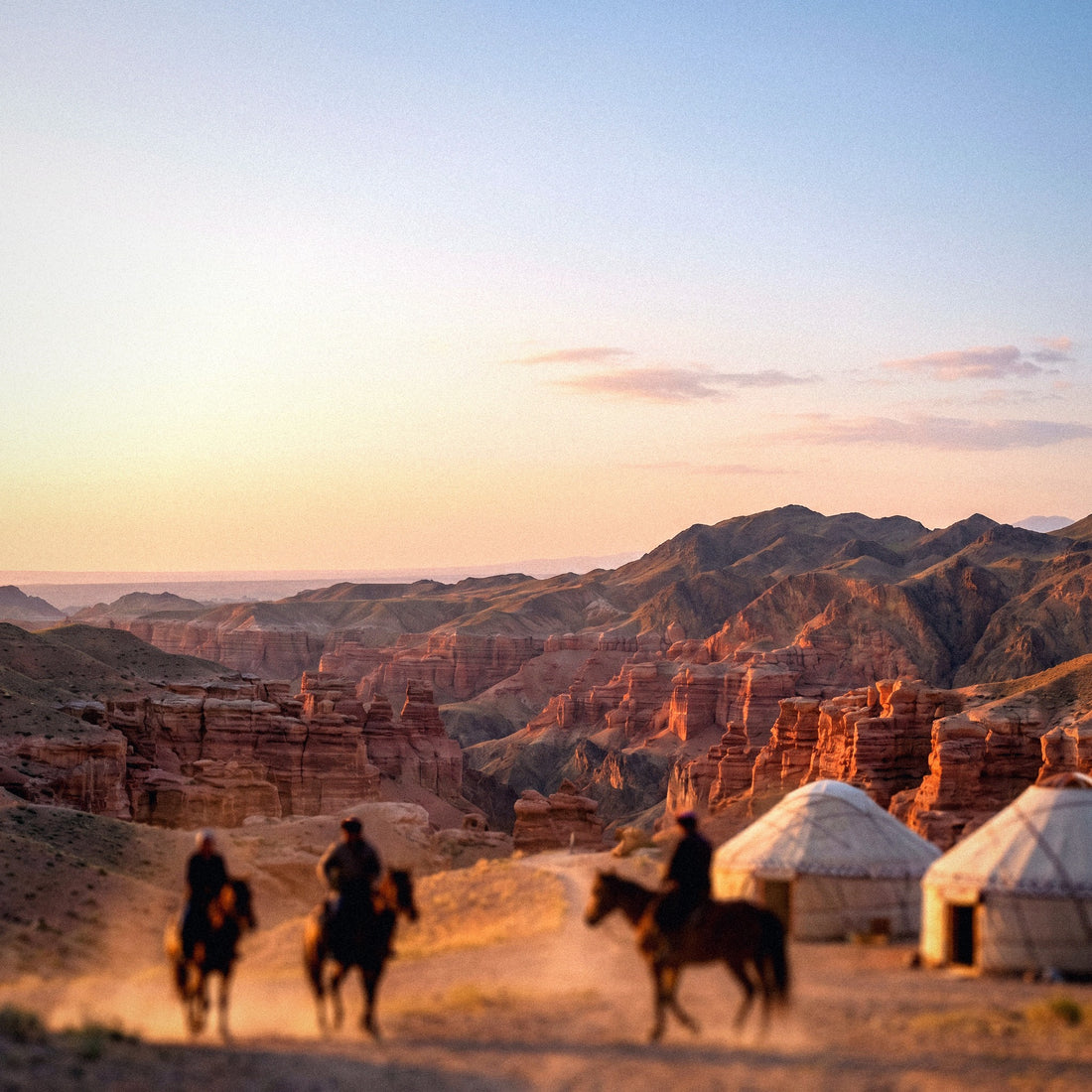
The landscape changes radically when you leave urban areas. Kazakhstan has immense expanses of steppe, mountains, and desert with very sparse populations, and there, coverage is scarce or directly nonexistent. If your plan includes Charyn Canyon, Kaindy Lake, the Tian Shan mountains, or long road trips, there will be sections without a signal with any operator.
My golden rule for Kazakhstan: always download offline maps of your route and share your itinerary with someone before venturing into unpopulated areas. No SIM, no matter how good, will give you a signal in the middle of the steppe.
That's why I insist so much on having your own data: you make the most of the good urban network and arrive prepared for the gray areas.
How much data do I need for my trip?
This is the million-dollar question, and the answer varies greatly depending on your type of trip. Don't run short and ration megabytes, or overpay for gigabytes you won't touch. Here's a realistic estimate based on how you travel.
| Travel profile | Typical use | Recommended data |
|---|---|---|
| Light (7 days) | Maps, messaging, some email | 1-3 GB |
| Medium (7-10 days) | Social media, photos, daily navigation | 5-10 GB |
| Intensive (10-15 days) | Videos, video calls, remote work | 15-20 GB or unlimited |
My practical advice: for most tourist getaways of one or two weeks, a plan of between 5 and 10 GB is the sweet spot. It covers maps, translating Cyrillic signs, ordering taxis with Yandex Go, messaging, and uploading photos without stress. If you're traveling as a couple, remember that each phone needs its own data, although you can share a connection from just one by activating the hotspot. And if you're working remotely or making a lot of video calls, go straight for 15-20 GB or unlimited plans to avoid being stranded in the middle of a meeting. The advantage of an eSIM is that you adjust the exact volume to your days and, if you run short, you can top up instantly from the app without having to find a store.
How to get everything ready before you fly
I'll summarize the recommended flow to arrive connected without stress, getting everything sorted before leaving home. It's a matter of ten minutes and saves you queues and scares.
- Check that your mobile is compatible. Most mid-to-high range phones from 2018 (iPhone XS or later, Google Pixel, Samsung Galaxy S20+, etc.) support eSIMs. Look for it in your phone settings.
- Purchase your plan online a few days before your trip, choosing the gigabytes and days according to the table above.
- Install the eSIM at home with Wi-Fi, scanning the QR code you receive. Installing is not activating: most plans start counting when you connect at your destination.
- Upon landing in Almaty or Astana, activate the data line in the settings and voilà, you'll have internet before collecting your luggage.
- Keep your Spanish SIM in place to continue receiving calls and SMS to your number (e.g., bank codes), but with data deactivated on that line to avoid roaming charges.
If you want the specific step-by-step for this destination, with screenshots and activation details, you have it all in my Kazakhstan eSIM guide. With this covered, all that's left is to enjoy your trip without worrying about being reachable or running out of maps at the least opportune moment.
Frequently asked questions
I'll answer the most common questions I get about connecting in the country, including the legal issues of device registration.
Is IMEI registration mandatory in Kazakhstan?
Yes, but only if you purchase a local physical SIM. When you insert it, your IMEI is linked to your passport in a state database, and the device is blocked after 30 days if you don't complete the registration. An international eSIM completely avoids this process.
Will my Spanish phone work in Kazakhstan?
Yes, as long as it is unlocked and compatible with the country's 4G/5G bands, which is common for any recent mid-to-high-range mobile. To use an eSIM, it must also support that technology, which can be checked in the settings.
Do I have free roaming like in the European Union?
No. Kazakhstan is not part of the EU, so the "roaming like at home" rule does not apply. Your operator will charge international rates, which can be very high. Purchase a data package or use a local alternative to avoid a nasty surprise.
Which operator has the best coverage?
Kcell (and its brand Activ) is generally considered to have the best coverage and quality, followed closely by Beeline, which is slightly more economical. Tele2/Altel completes the trio. In cities, all three work well; in remote areas, none guarantee a signal.
How many gigabytes do I need for a week?
For normal tourist use for 7 days (maps, messaging, social media, and photos), a 5 GB plan is usually sufficient. If you'll be watching videos or making video calls daily, go up to 10 GB or unlimited to be safe.
Can I buy a SIM or eSIM at the airport?
You can buy a physical SIM at the airport, as there are counters for all operators in arrivals, but it involves presenting your passport and IMEI registration. It's better to buy an eSIM online before traveling and install it at home; that way, you land already connected, without queues.
Will I have internet in the steppe and rural areas?
Generally, no or very intermittently. Coverage is excellent in cities but scarce in the steppe, mountains, and desert. Always download offline maps before venturing into unpopulated areas, regardless of your connection type.
Do I keep my Spanish number with an eSIM?
Yes. The eSIM is a second, data-only line: your Spanish SIM remains in place and active for calls and SMS (like bank codes). Simply deactivate mobile data for your Spanish line to avoid roaming charges.
Conclusion
Getting connected in Kazakhstan doesn't have to be a headache. Roaming is too expensive, Wi-Fi ties you to one place, and a local SIM, while cheap, requires you to register your IMEI with your passport and risk being blocked within 30 days. For most travelers, a data eSIM is the perfect balance of price, urban coverage, and zero paperwork.
My recommendation is simple: sort out your connection from home and land with your mobile already working. Take a look at the eSIM for Kazakhstan, choose the gigabytes that fit your trip, and forget about it. This way, you can focus on what matters: enjoying Almaty, Astana, and the vast steppe with the peace of mind of always being connected when you need it.