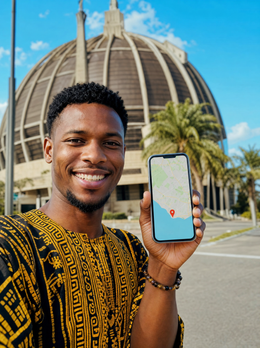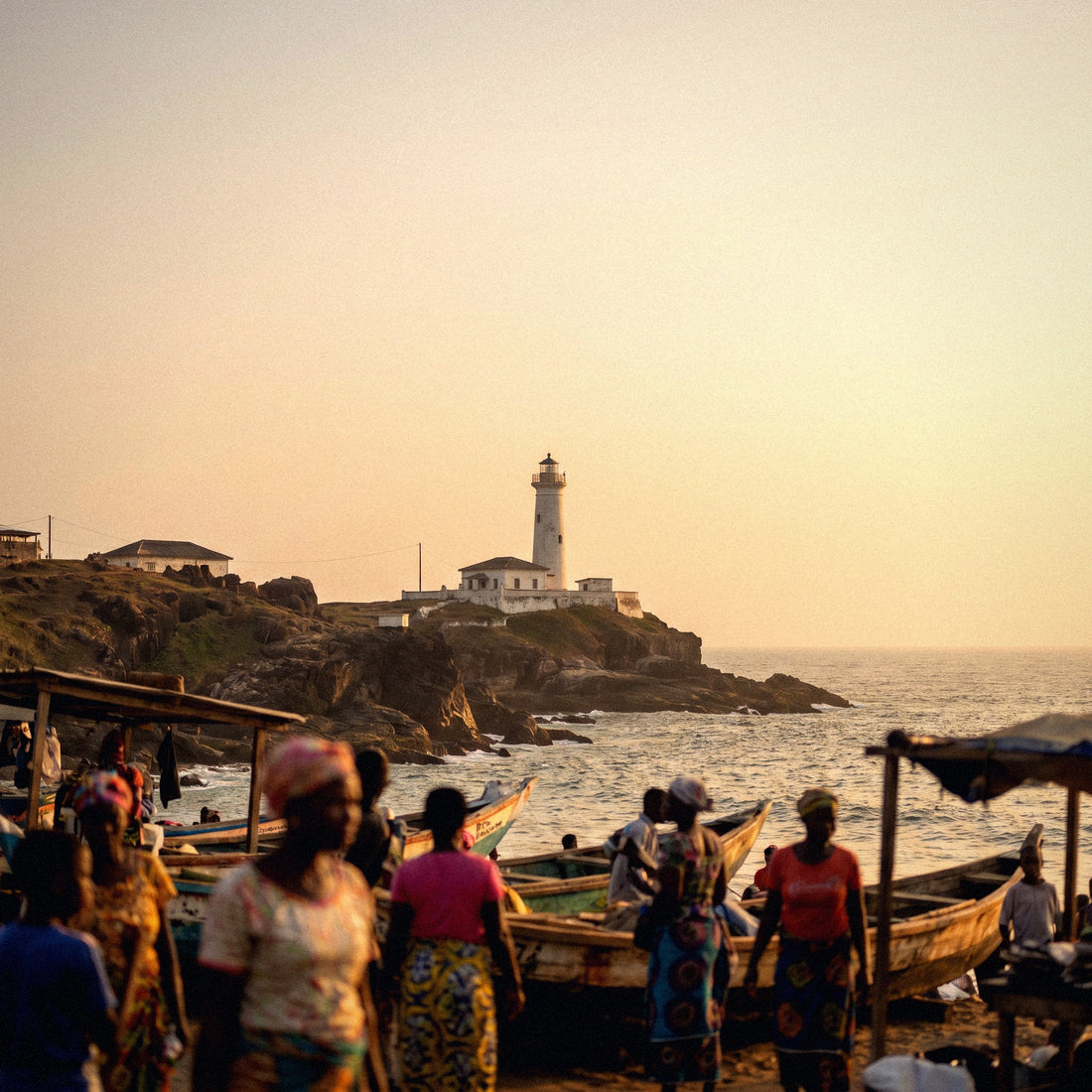
Liberia is one of those countries that almost no one has on their list and that, as soon as you step foot in it, disorients you: founded in 1822 by freed slaves from the United States, with English as the official language and with US dollar bills circulating side by side with the Liberian dollar. This makes getting around easier than you imagine… until you take out your phone. Here I tell you how internet in Liberia really works, how much it costs to connect with Orange or Lonestar Cell MTN, where there is coverage and where you won't have it even if you want it, and why power outages are the factor that no one tells you about and that does affect your connection.
The quick overview: how to connect in Liberia
To connect in Liberia you have four options: roaming from your Spanish operator (very expensive, because the country is outside the EU), hotel Wi-Fi (slow and intermittent due to power outages), a local SIM from Orange or Lonestar Cell MTN with your passport, or an eSIM contracted before leaving, which works upon landing.
Liberia has only two mobile operators: Orange Liberia and Lonestar Cell MTN. Between the two, they cover Monrovia, the main road corridors, and county capitals with decent 3G and 4G. Outside of that, things get a bit more rustic: bars that appear and disappear, 2G for text WhatsApp, and entire stretches with no service at all.
The most surprising fact for Spanish travelers is the price. Due to the inflation of the Liberian dollar, operators set many of their bundles directly in US dollars, and a 15% tax is added to the final rate. Even so, we are talking about ridiculous figures compared to roaming: 500 MB for 1 USD for one day on Lonestar, or 20 GB for 30 USD for a month. A new SIM costs around 100 LRD, about 1 dollar.
The problem is not the price, it's the process: queue, passport, mandatory registration and, if you land at night at Roberts International, a long hour's drive to Monrovia with no open store. That's why so many people arrive already connected and leave the local SIM as a backup plan.
Spanish roaming: Liberia is outside the EU
Quick and straightforward warning: Liberia does not belong to the European Union or the European Economic Area, so the "Roam Like at Home" you use in Lisbon or Rome does not apply here by a long shot. Nor is it an outermost region like the Canary Islands or Guadeloupe. It is pure and hard West Africa, and in Spanish tariffs it falls into the most expensive zone on the list, which is usually called "rest of the world".
What that means in practice: many Spanish operators don't even offer a daily bundle for Liberia and bill consumption per loose megabyte. With that mechanism, half an hour of maps, a few uploaded photos, and automatic mobile updates can turn into a three-digit bill without you having done anything unusual. And there is no European security limit to save you, because that cap is only mandatory within the EU.
My advice before flying is to go to your operator's customer area, search for "Liberia" in the tariff simulator and check the price per MB or per day. If it doesn't appear in any bundle, assume the worst. You can delve into how much international roaming costs and the direct comparison between eSIM and roaming.
If you decide not to contract anything, the least you can do is deactivate mobile data roaming as soon as you land and don't touch it again.
Hotel and cafe Wi-Fi in Monrovia
Wi-Fi exists in Liberia, but it's important to temper expectations. In Monrovia, hotels catering to expatriates and NGO staff (the Sinkor, Mamba Point, and Congo Town areas concentrate most of them) offer Wi-Fi in rooms and common areas. Restaurants and cafes in these same areas also usually have network access. Outside the capital, in Robertsport, Buchanan, or Gbarnga, you'll find Wi-Fi in some accommodations, almost always shared and with bandwidth just enough for messaging.
The real problem isn't availability, it's stability. Many businesses operate with a diesel generator because the power grid frequently goes down, and when the generator rests, so does the router. I've seen places where the Wi-Fi "works" for three hours in the afternoon and then shuts off until the next day. Add to that the fact that a good portion of connections are radio links or even satellite, with high latencies, and you'll understand why a work video call is a lottery.
There's another layer I don't like to ignore: security. Open hotel and restaurant networks are fertile ground for snooping. If you're going to access your bank or work email, do it from your own mobile data or with an active VPN.
Honest summary: Liberian Wi-Fi is good for sending photos at night from your accommodation, but don't make it your only network if you depend on being reachable.
Local SIM: Orange Liberia and Lonestar Cell MTN
Buying a local SIM in Liberia is cheap and, thanks to English being the official language, surprisingly easy to negotiate: you can communicate with the shop assistant without a translator. You need your passport, because line registration is mandatory and they do it at the point of sale. The registration itself is free, and the card costs around 100 LRD (approximately 1 USD).
| Operator | SIM Price | Data Bundles (approximate) | Requirements |
|---|---|---|---|
| Orange Liberia | ~100 LRD (~1 USD) | "Turbo" packs from 10 LRD; promos of 1.7 GB to 13 GB from 1 USD. Menus via *352# and *144# | Passport + in-store registration |
| Lonestar Cell MTN | ~100 LRD (~1 USD) | 500 MB for 1 USD (1 day); 20 GB for 30 USD (30 days); frequent bonus promotions on top-ups | Passport + in-store registration |
Add 15% tax to the advertised prices. You can pay in Liberian or US dollars (the exchange rate is around 190-200 LRD per dollar, check it on the day you travel), and many stores accept cards, although I would carry cash.
Where to buy it: official Orange and Lonestar stores on Tubman Boulevard and downtown Monrovia, and points of sale in Kakata, Gbarnga, Zwedru, and other county capitals. Street vendors with orange or yellow umbrellas also sell and top up, but insist that they register the line in your name. Here's a complete comparison between eSIM and local SIM.
eSIM: connect before landing
An eSIM is simply a chip soldered inside the mobile phone that is programmed by software: you buy the plan, scan a QR code, and your phone connects to local networks without changing anything physical. If you've never used one, in what is an eSIM I explain it calmly, step by step.
In a destination like Liberia, the advantage is twofold. First, logistics: you land at Roberts International Airport, which is about 50 km from Monrovia, and as soon as you leave the terminal you need to call your hotel, notify the driver, or open the map. With the eSIM already activated, that works from minute one, without queues or photocopied passports. Second, the process: you save yourself the mandatory registration and the search for an open store on a Sunday.
How it's done, in order:
- Check that your mobile is compatible and unlocked (settings → information → search for "EID").
- Buy the plan from home, with your Wi-Fi.
- Scan the QR code or click the installation link before leaving Spain.
- Upon landing, activate data on the new line and leave your Spanish number only for calls and SMS.
The other advantage is that you keep your usual number active to receive bank SMS, which is invaluable on a trip like this. And if you doubted the portable router, check out eSIM versus pocket Wi-Fi: in Liberia, carrying an extra device with the power outages that occur is not worth it.
Comparison of the four options
Having put everything on the table, here's the decision map for a typical one or two-week trip to Liberia. I've tried to be fair with all four options, including the one I'm least interested in selling.
| Option | Approximate Cost | Pros | Cons |
|---|---|---|---|
| Spanish Roaming | "Rest of the world" zone: often per MB, no bundle available | Zero hassle; your usual number | The most expensive by far; no EU security cap |
| Hotel Wi-Fi | Included or a few dollars | Free; sufficient for night messaging | Goes down with power outages; slow; insecure on open networks |
| Local SIM | ~1 USD for SIM + from 1 USD per bundle | Cheapest per gigabyte; Liberian number for taxis and guides | Passport, registration, and queue; must top up via USSD in English |
| Travel eSIM | Fixed plan contracted from Spain | Active upon landing; no paperwork; keep your number | Requires compatible phone; gigabyte is more expensive than local |
My take: if you're traveling for work or are short on time, the eSIM wins by a landslide because it eliminates friction at the worst possible moment, which is arrival. If you're staying for a long month, volunteering, or moving around the interior, also buy an Orange SIM —its 4G network is the most extensive in the country— and use both in parallel. And roaming, honestly, only if your company pays the bill without looking. You can find detailed plans in the eSIM guide for Liberia.
Real coverage: Monrovia, Robertsport, Sapo and interior
Here's the part you won't see in brochures. Liberian coverage is very uneven and it's good to plan your trip knowing this.
Monrovia and surroundings: good. Functional 4G in the center, Sinkor, Congo Town, and Paynesville, with speeds sufficient for browsing, messaging, and short video calls. It gets congested during peak hours.
Main corridors: the road to Roberts International, the one going up to Kakata and Gbarnga, and the one going down to Buchanan maintain signal almost the entire way, alternating 4G and 3G.
Robertsport: the surf town in Grand Cape Mount County, with one of the best left breaks in West Africa and practically no one in the water, has basic coverage in the urban core, weaker as you go down to the ends of the beach. It's enough to let people know you're alive, not for teleworking while watching the sea.
Sapo National Park: primary rainforest in Sinoe County, pygmy hippos, forest elephants, and zero coverage inside. Let's be clear: when you go in there, you disappear from the map for days.
In Sapo, there's no antenna to speak of. Download offline maps, leave your route and an estimated return time at your accommodation, and assume no one will be able to call you until you leave.
In the rest of the interior —Nimba, Lofa, Grand Gedeh, River Gee— the signal appears in county capitals and vanishes between towns. In 2024, Orange installed 128 new solar rural antennas with ZTE, which brought coverage to more than 580,000 people, so the situation is improving, but do not take connection for granted outside the main roads.
Power outages and why they affect your signal
This is the point that almost no guide mentions and that, on the ground, explains 80% of your connection problems. The Liberian power grid is limited and power outages are common, even in Monrovia. And a cell phone tower, no matter how modern, needs electricity.
Operators compensate with diesel generators and, increasingly, with solar panels and batteries—Orange's new rural stations are precisely the "solar" type, designed for areas without a reliable grid. But a generator runs out of fuel, a battery runs out if the outage is prolonged, and the result is the same: the antenna in your neighborhood stops emitting even if your phone is at 100%.
Translated into practical advice:
- Carry a generous power bank, preferably 20,000 mAh, and charge it whenever there is electricity.
- Don't leave for the evening what you can do in the morning: the signal is usually better during daylight hours.
- Download offline maps of Monrovia and each area before moving around.
- If you need to make an important video call, do it from a hotel with a generator and with plenty of time.
- Keep an offline copy of reservations, visa, and tickets: in a power outage, you won't be able to open your email.
None of this makes Liberia an impossible destination; it just means that connection here is a resource to be managed, not something to be taken for granted. I assume that every day I will have a couple of hours without data and organize the rest around that.
How many gigabytes do I need depending on my trip
With the irregular coverage we've just seen, actual consumption in Liberia is usually lower than in Europe: you spend hours without a signal and that, paradoxically, extends your gigabytes. Even so, it's advisable not to run short, because uploading photos from Robertsport or making a video call home can skyrocket your data usage.
| Travel Profile | Duration | Recommended Data |
|---|---|---|
| Layover or express business trip in Monrovia | 2-3 days | 1-3 GB |
| Classic tourism: Monrovia, beaches and Robertsport | 7-10 days | 5-10 GB |
| Long trip with interior and Sapo National Park | 2-3 weeks | 10-20 GB |
| Remote work, NGO or extended stay | 1 month or more | 20 GB or more, and local SIM for backup |
To calibrate: an hour of maps consumes around 5 MB, an hour of messaging with photos is around 30-50 MB, a medium-quality video call consumes 300-500 MB per hour, and high-definition video can exceed 1.5 GB per hour. If you're going to share stories daily, double your initial estimate.
A note on local promotions: Lonestar often offers 100% bonuses when buying a bundle, and Orange constantly changes its "Turbo" packs. These are fluctuating offers and are advertised via SMS in English, so read the messages you receive instead of deleting them: sometimes they double your data for the same money.
Practical tips on the ground
Here I've gathered the things I wish I had known before my first trip to West Africa, applied to the Liberian case.
English plays in your favor. As it is the official language —a direct inheritance from the country's founding by freed slaves from the 19th century—, all operator menus, promotional SMS, and in-store customer service are in English. Be aware, on the street you'll hear Liberian English, with its own accent and idioms that are difficult at first; don't be shy about asking them to repeat themselves.
Two currencies, one pocket. The US dollar and the Liberian dollar circulate simultaneously. Large prices (hotels, tours) are quoted in USD and small ones in LRD; for data bundles you will see both. Carry small dollar bills and exchange just enough for local currency for daily expenses.
Mobile money. Orange Money and MoMo by Lonestar are widely used and allow you to top up data without going to a store. If you're staying for weeks, ask to be registered when you buy the SIM.
Before entering Sapo or going surfing in Robertsport: download maps and notify someone. This is the basic rule in any destination without coverage.
And regarding general reliability: always have a second connection method ready. If you're traveling with an eSIM, note down where the nearest Orange store is; if you're using a local SIM, save enough credit for an emergency bundle.
Frequently Asked Questions
Does my Spanish carrier's roaming work in Liberia?
Technically, yes, but outside of European rates and at "rest of the world" prices. Liberia is not in the EU or EEA, so "Roam Like at Home" and the European security limit do not apply. Many carriers charge per megabyte. Check your plan before flying.
Do I need a passport to buy a SIM in Liberia?
Yes, line registration is mandatory and requires a passport. It is processed at an Orange or Lonestar Cell MTN store on the spot and is free. Without registration, the line may be blocked, so do not accept cards already activated in someone else's name.
Is there coverage in Sapo National Park?
No, there is no mobile coverage inside the park. It is primary rainforest in Sinoe County, home to the pygmy hippopotamus, and there is no antenna infrastructure. Download offline maps, leave your itinerary in writing at your accommodation, and expect several days completely disconnected.
Can I surf in Robertsport and stay connected?
In the town, yes; on the beach points, so-so. Robertsport has basic Orange and Lonestar signal in the core, sufficient for messaging and calls. As you move towards the surf breaks, coverage drops. It's good for sending a message, not for teleworking in front of the wave.
Why does my connection drop even if I have bars?
Almost always due to power outages affecting the antennas. The Liberian electrical grid is unstable, and base stations rely on generators or solar batteries. When these run out, the antenna stops transmitting. Carry an external battery and don't leave critical tasks for the last minute of the day.
Which operator has better coverage, Orange or Lonestar Cell MTN?
Orange Liberia has the most extensive 4G network in the country. In 2024, it added 128 rural solar antennas that provided coverage to over 580,000 people. Lonestar Cell MTN competes well in Monrovia and large cities, with aggressive data promotions. For the interior, Orange is the safest bet.
Do I pay in US dollars or Liberian dollars?
Both: they circulate simultaneously, and operators set many bundles in US dollars. This is a consequence of the Liberian dollar's inflation. Add 15% tax to the advertised price. Carry small USD bills and exchange LRD only for daily expenses.
Is it worth carrying both an eSIM and a local SIM?
Yes, if your stay is long or you plan to travel inland. The eSIM covers your arrival and first few days without hassle; the local SIM gives you the cheapest gigabyte and a Liberian number useful for taxis, guides, and accommodation. Modern phones allow both to be active.
Conclusion
Liberia rewards the traveler who arrives with adjusted expectations. You'll speak English from minute one, pay in dollars you already know, and find a wave in Robertsport that would have a hundred people on it anywhere else. In return, connection is a resource that needs managing: good in Monrovia and along main routes, patchy inland, non-existent in Sapo, and always at the mercy of power outages that cut off antennas.
My recipe is simple. Leave Spain with your data sorted so you don't have to depend on finding an open store after an hour-plus drive from Roberts International. If you're staying for weeks or plan to explore the interior, add an Orange SIM with your passport and use both lines. And rule out roaming unless someone else is paying your bill without looking at it.
If you want to land with your phone already working, check out our eSIM for Liberia: you install it from home, it keeps your Spanish number for bank SMS, and it saves you from waiting in line for registration when you least feel like doing paperwork.