If you're wondering how many GB you need for Anguilla, I'll save you the suspense: it's one of the destinations where you'll use the least data in the entire Caribbean. A flat, small island with absurdly beautiful beaches and plans that consist of doing nothing. There are no endless excursions here or a subway to decipher with a translator in hand: there's sand, beach bars, and a 25-minute ferry ride. And all of that translates into very low data consumption. Let's go with the number, and then with the why.
The direct answer: how many gigabytes to buy
For 10 days in Anguilla, 3 GB is more than enough for most people. It's a beach island, with Wi-Fi in almost all accommodations and little else to do besides swimming: the phone is used for maps, WhatsApp, and uploading photos. If you work remotely, increase it to 10 GB.
I know it sounds like little compared to what people buy "just in case." And that's precisely why I'm telling you so early: in Anguilla, your phone spends most of the day in your pocket or face down on a towel. There's no public transportation system you need to constantly check, you don't need a translator camera because English is spoken, and you'll learn the island's map on the second day because there's basically one main road that runs from end to end.
My rule for this destination is simple: budget about 250-300 MB per day if you're a normal traveler who checks maps, texts on WhatsApp, and uploads a few photos. Multiply by the number of days, round up, and you have your number. For a week, 2 GB. For ten days, 3 GB. For two long weeks, 5 GB. If you're sharing a connection with your partner from your phone, add their usage separately.
This article is the "Anguilla" version of a calculation I explain in general in the guide on how much data you need for travel. Here, I go into detail for this specific island, which is where the difference lies.
Why you'll spend less in Anguilla than in other destinations
The same traveler spends very different amounts depending on the country, and it's not a whim: it depends on how much they need to rely on their phone to function. Anguilla is at the low end of that scale for several very specific reasons.
- It's tiny and flat. About 26 kilometers long with one main road. Map navigation is a matter of minutes a day, not hours.
- English is spoken. You don't need a translator with a camera pointing at signs, menus, and billboards, which is one of the biggest data drains in Asia or the Middle East.
- There are no essential transport apps. No subway, no trains, no taxi app to check every two hours: taxis have fixed fares and are ordered by phone or at the hotel.
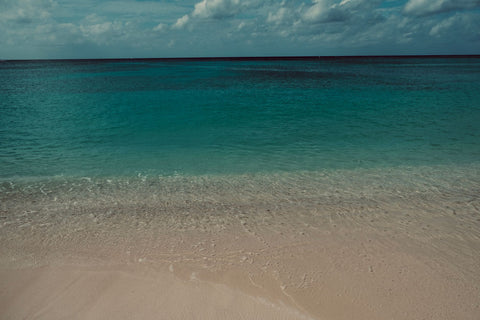
- The plan is the beach. Shoal Bay, Rendezvous Bay, Meads Bay… and at the beach, your phone is for taking photos, not consuming data.
- No massive cruises. This keeps the island quiet and also avoids those moments of dead time when you start scrolling and burn through half a gigabyte without realizing it.
The downside is that Anguilla is expensive, and there it is advisable not to overpay for gigabytes you won't use. If you also want to understand how to connect there (what options there are, how the local network works), I explain that in the guide to internet in Anguilla; here we continue with the package size.
How much each activity you'll do there consumes
This table is what truly answers the question. These are approximate and average figures, but they are perfectly sufficient for calculation: the margin of error won't change the decision between 3 GB and 10 GB.
| Activity | Approximate Consumption | How often you'll use it in Anguilla |
|---|---|---|
| WhatsApp: text, photos, and audio | 20-40 MB per day of normal use | Every day |
| WhatsApp voice call | 20-30 MB per hour | Occasional |
| Video call | 300-500 MB per hour | The biggest spike |
| Google Maps navigation | 5-10 MB per hour | Very little: the island is tiny |
| Instagram or TikTok scrolling feed | 120-500 MB per hour | The main risk |
| Uploading a photo from your phone | 2-5 MB each | You'll take a lot of photos |
| Uploading a 1-minute video | 50-100 MB | Save it for Wi-Fi |
| Streaming music | 40-70 MB per hour (normal quality) | Beach soundtrack |
| Streaming video (SD) | 500-700 MB per hour | Avoid it with mobile data |
| Email and web browsing | 10-20 MB per hour | A while each day |
Notice the pattern: what drains a data plan is always video, whether watching it, uploading it, or during video calls. Everything else—messages, maps, individual photos, email—easily fits into very few gigabytes. If you want more detailed figures per application, I have them broken down in the mobile data usage statistics by activity.
Recommendation by travel profile and duration
With the figures above, this is my actual recommendation by profile. It's designed for a single mobile phone: if there are two of you and each has their own line, each person looks at their row.
| Profile | 5 days | 10 days | 15 days | 30 days |
|---|---|---|---|---|
| Tourist: maps and WhatsApp | 1 GB | 2 GB | 3 GB | 5 GB |
| Photos and social media | 2 GB | 3 GB | 5 GB | 10 GB |
| Digital nomad / remote work | 5 GB | 10 GB | 15 GB | 30 GB |
| Family sharing from one phone | 3 GB | 5 GB | 8 GB | 15 GB |
A couple of honest nuances about this table. The "photos and social media" profile is where almost everyone going to Anguilla fits: you take a hundred photos a day, upload a few stories from the hammock, and send the good videos at night. With 3 GB for ten days, you'll be comfortable as long as you save large uploads for the hotel Wi-Fi.
The remote work profile is the only one that truly needs a large package, and not for browsing: for video calls. One hour of meetings a day for ten days is 3-5 GB just for that. If you're coming to work from the island, calculate meetings separately from the rest and add them up.
And families sharing: if three or four of you are using a single phone as a hotspot, each person adds their own consumption. That's when upgrading your package is justified.
The ferry from St. Martin: three networks in 25 minutes
This is the most useful warning in the entire guide, and almost no one mentions it. Anguilla is almost always reached by ferry from St. Martin: about a 25-minute journey from Marigot to Blowing Point. The curious thing is what happens on your phone during that quarter of an hour and a bit.
St. Martin is divided into two parts. The French side is an outermost region of the European Union, so your Spanish tariff works there as it would at home. The Dutch side, Sint Maarten, is not part of the EU: it's an overseas territory, and European tariffs don't apply there. And Anguilla is a British overseas territory, also outside the EU. The result: on a 25-minute journey, your phone can connect to networks from three different jurisdictions, with three completely different billing methods, without you doing anything.
In practical terms: your phone doesn't distinguish between "I'm in the EU" and "this will cost me an arm and a leg." It sees a strong signal antenna and connects. If you make that journey with your Spanish line open and no international data plan, it's perfectly possible that something trivial—email syncing, photos uploading automatically—could end up being expensive.
My advice for the ferry: activate your data package before boarding and completely deactivate data for your Spanish line. It's not paranoia; it's because your phone changes countries three times without warning on that journey.
If you're going to travel between the two islands more than once, check your plan's coverage carefully: a package only for Anguilla won't cover St. Martin. This is explained in the guide to eSIM for Anguilla.
Coverage and Wi-Fi on the island: where you'll spend data and where you won't
Good news: Anguilla has better coverage than one would expect from an island of twelve thousand inhabitants. The market is shared by Flow (Cable & Wireless) and Digicel, both with quite decent 4G/LTE throughout the island. There is no 5G deployed, but for what you'll be doing there, it doesn't matter: 4G will be more than enough.
| Where | Mobile Coverage | Wi-Fi | What you'll spend |
|---|---|---|---|
| Accommodation (hotel, villa, apartment) | Good | Almost always included | Practically nothing |
| Beach bars and restaurants | Good | Frequent, variable quality | Little |
| Main beaches (Shoal Bay, Rendezvous Bay, Meads Bay) | Good | Only at local establishments | Photos and messaging |
| Road and interior area | Correct | No | Maps, scattered minutes |
| Ferry and crossing | Irregular, jumps networks | No | Be careful here |
| Secluded coves and cays | May drop | No | Zero: no signal |
The key to your calculation is the first row. In Anguilla, you'll be sleeping in a place with Wi-Fi and spending quite a few hours there, so much of your actual consumption won't come from your data plan: backups, downloads, and long videos are done when connected. That's precisely what allows 3 GB to last for ten days.
And a nice detail: in the cays and some northern coves, there's simply no signal. A moment without coverage on an empty beach isn't a problem; it's half an hour of data you're not spending.
Calculate your own consumption before flying
All of the above are averages, and you are not an average. The honest way to get it right is to look at your own numbers, and it takes two minutes from your sofa at home. No need to install anything.
- On Android: Settings → Network & internet → SIM / Data usage. It shows you the current cycle's consumption and a breakdown by application.
- On iPhone: Settings → Mobile Data. Below, you'll find the list by app; if you've never reset the statistics, the total is cumulative, so focus on the proportion between apps.
Take your consumption from a normal month, divide it by 30, and you'll have your daily average at home. Now apply the Anguilla filter: on a beach trip, you'll spend considerably less than in your routine, because at home you consume data on transport, while waiting, and during daily downtime. I usually stick with 60-70% of my usual daily average for these types of destinations.
Real example of how the number is done: if at home you spend 6 GB per month, that's 200 MB per day. 70% is about 140 MB daily. Ten days is 1.4 GB. With a 2 GB package, you'll have plenty, and with 3 GB, you'll be comfortable even if you go a bit overboard with stories one day. That's the entire calculation, no mystery.
If the number you get is very high, see which app is eating it up. It's almost always just one, and almost always video.
How to make your data last on the island
With these five actions, a small package will last twice as long. These aren't guru tricks: they're settings you make once and they work automatically.
- Download the Anguilla map before you leave. In Google Maps, search for the island and use "Download offline map." It takes up very little space because the territory is tiny, and from then on you navigate with GPS at zero data cost.
- Backups only over Wi-Fi. This is the setting that saves the most data of all. Google Photos and iCloud, by default, can upload every photo you take. On an island where you'll be taking 300 photos, that's over a gigabyte wasted.
- Disable automatic video playback on Instagram, TikTok, Facebook, and X. Scrolling without automatic video consumes a fraction of the normal amount.
- Activate the Data Saver Mode on your system and in apps that have it. It compresses, limits quality, and blocks background activity.
- Lower video and music quality. On a mobile screen, 480p looks perfectly fine and consumes half as much as 1080p.
A specific extra for this destination: save big uploads for the evening. In Anguilla, you'll dine where you're staying or return early, and you'll have Wi-Fi there. Upload your day's photos while you shower, and your data plan won't even notice. I have more ideas in the guide to tips for saving data while traveling.
What happens if you run out
Let's address the underlying fear: "What if I run out of data in the middle of my trip?" The calm answer is that nothing serious will happen. When the package runs out, you simply stop having mobile data: you're not charged extra, no surprise fees kick in. Your phone continues to work on Wi-Fi as usual, and in Anguilla, Wi-Fi is available at accommodations and many establishments.
Recharging is a matter of minutes: you log into your account from the hotel Wi-Fi, buy more gigabytes, and you're reconnected. That's why my recommendation is the opposite of intuitive: it's better to run short and recharge than to have too much. If you buy 10 GB "just in case" and only use 2, you've wasted money on eight. If you buy 3 and run out one day before the end, you recharge for a small amount, and you're good to go.
There's one exception: if you're traveling alone, don't talk to anyone for days, and rely on your phone for your return transfer to the ferry or airport, always have a buffer. It doesn't have to be gigabytes: just have your map downloaded, your ticket saved on your phone, and the taxi number written down. With that, running out of data stops being a problem and becomes an anecdote.
And if it's your first time with these types of digital lines, here I explain what an eSIM is and how it works internally, without technical jargon.
Frequently asked questions
How many GB do I need for a week in Anguilla?
2 GB is good for 7 days. It's a beach destination with Wi-Fi at accommodations, so daily consumption is around 250-300 MB for maps, messaging, and some photo uploads. If you're big on stories and videos, bump it up to 3 GB and you won't have to worry.
Is 3 GB enough for 10 days?
Yes, for most travelers, it is. It provides about 300 MB per day, which comfortably covers WhatsApp, maps, email, social media, and photos. The only ones who will run short are those who make long video calls daily or watch series with mobile data instead of the hotel's Wi-Fi.
Can I use the same plan in St. Martin?
No, unless the plan expressly covers both destinations. Anguilla is a British overseas territory, and St. Martin is divided between France (EU) and the Netherlands (outside the EU). These are three distinct regimes. If you plan to spend nights in St. Martin, look for a regional Caribbean plan or add the destination separately.
Is there good coverage on Anguilla's beaches?
Yes, 4G coverage is good on the main beaches. Shoal Bay, Rendezvous Bay, and Meads Bay have decent signal from Flow and Digicel. In some secluded cays and coves in the north, the signal might drop, but this doesn't affect your gigabyte calculation: no signal means no consumption.
What if I telework from the island?
Count on 10 GB for 10 days. Email and spreadsheets aren't the main data consumers; video calls are, using between 300 and 500 MB per hour. A daily one-hour meeting means 3-5 GB in ten days. If your accommodation has stable Wi-Fi, connect to it for meetings and get a smaller package.
What happens if I run out of data?
You simply stop browsing, with no extra charges. There are no surprise bills or out-of-package consumption. You connect to the hotel's Wi-Fi, recharge in a couple of minutes, and continue. That's why it's better to get a smaller package and recharge than to buy too much from the start.
Do I need data on the ferry from Marigot?
You need the opposite: control. During those 25 minutes, your mobile can switch between networks in French St. Martin, Dutch Sint Maarten, and Anguilla, each with different rates. Activate your data plan before boarding and keep your home line data deactivated.
Do downloaded maps consume data?
No, once downloaded, they work with GPS and use zero data. Your phone's GPS doesn't use mobile data. Download the Anguilla map using your home Wi-Fi before you fly: it's a small island, takes up very little space, and eliminates the only guaranteed daily data consumption of your trip.
Conclusion
Anguilla is one of those places where I can tell you the truth without hesitation: buy little. For one week, 2 GB. For ten days, 3 GB. For fifteen, 5 GB. Only if you're going to telework with daily video calls, or if several people are sharing the same mobile, does it make sense to go up to 10 GB or more. It's a beach island, with English, with Wi-Fi at your accommodation, and a daily plan that basically involves changing beaches.
The important thing is not the size of the package: it's arriving with the map downloaded, backups tied to Wi-Fi, and your home line deactivated before getting on the ferry. With that, a small package will last your whole trip, and you'll avoid paying for gigabytes that would have gone unused.
Once you're clear, here's the eSIM for Anguilla: activate it before you leave home, arrive connected, and forget about looking for a SIM card store as soon as you get off the boat.