If you already know you're going to take data to Benin and just need to decide how many GB to buy, this guide is for you. I won't repeat how to connect — I cover that elsewhere — here we'll go straight to the numbers: how many GB do I need for Benin based on your travel style and length of stay, without buying too much or too little. Benin is a destination of roots, voodoo, and memory, with many cities and vast rural areas without cell towers, which significantly changes the calculation compared to a European trip.
The quick answer for Benin
For a typical 10-day trip to southern Benin (Cotonou, Porto Novo, Ouidah, Ganvié) using maps, WhatsApp, and some photos, 3 or 4 GB is more than enough for most people. If you live on Instagram or work remotely, increase that to 8-12 GB. Less than that will only run out if you overuse video.
That's the short answer, and I like to give it early so you don't have to read half the article looking for it. The rest of the guide is to fine-tune that number based on your specific needs, because a two-week trip following the slave memory route with a camera in hand is not the same as a business trip with video calls every morning. The important thing is that in Benin, actual consumption tends to be lower than people fear, because you'll spend entire stretches — Ganvié, the north, Pendjari — simply without signal, and there you won't spend anything. I prefer to give you a well-reasoned number rather than selling you the most expensive package just in case. If you want a general overview of how much data to take on any trip, you can find it in the main guide on how much data you need for travel, which is the starting point for this whole topic.
Why Benin changes the numbers
Each country shifts data consumption for different reasons, and Benin has its own distinct characteristics. The first: coverage is very unevenly distributed. In Cotonou, Porto Novo, or Abomey-Calavi, you'll find decent 4G; as soon as you head north or venture into Lake Ganvié, the signal drops. And here's the good news for your data budget: where there's no tower, you don't spend. This means the average daily data consumption in Benin is lower than in an urban, always-connected destination.
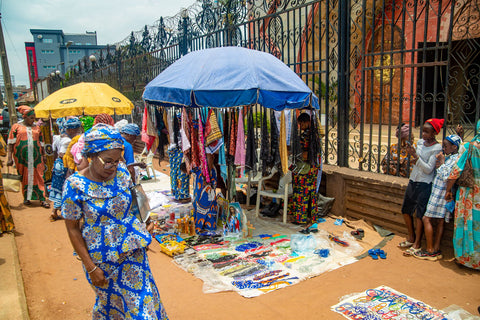
The second reason is how people travel here. It's a country of long road trips between Cotonou, Ouidah, Abomey, and the north, and cultural visits — voodoo temples, the Door of No Return, markets — where you'll rely heavily on your camera and translator, but not so much on streaming. Hotel and accommodation Wi-Fi exists in cities, though it's unreliable, so don't count on it for heavy downloads. It's advisable to download maps beforehand and not depend on always being online. If you're also unsure how to connect once you're there, review the Benin internet guide: I explain the options there; here we're just focusing on the package size.
How much each app really consumes
Before deciding how many GB to buy, it's worth knowing what truly eats up your data and what's almost free. People believe that a mobile devours gigabytes no matter what you do, but that's not the case: maps and messaging consume very little, and video is always what drives up the bill. These are the numbers that truly matter, with real consumption figures per hour or per use:
| Activity | Approximate consumption | Notes |
|---|---|---|
| Google Maps (navigation) | 3-5 MB/hour | Almost nothing; with offline map, virtually 0 |
| WhatsApp (messages and audio) | 5-10 MB/hour | Most efficient option |
| WhatsApp video call | 200-350 MB/hour | Voice-only call: 40-60 MB/hour |
| Translator with camera | 2-5 MB per use | Useful for French; minimal consumption |
| Uploading photos (batch of 20) | 80-100 MB | Higher resolution, more; better over Wi-Fi |
| Social media: browsing feed | 100-150 MB/hour | Stories and casual scrolling |
| Social media: reels and videos | 700-900 MB/hour | This is where the data really goes |
| Music streaming | 60-150 MB/hour | Download it beforehand via Wi-Fi and save everything |
| Video (YouTube/Netflix SD) | 500-700 MB/hour | In HD, exceeds 1 GB/hour |
The interpretation is simple: you can use maps and WhatsApp all day for weeks with a few gigabytes. What busts your data package is watching video on 4G. If you want the details for each application, I break it down in the data usage statistics by activity.
Where you'll have coverage and where you won't
This is the most "Benin" part of it all, and the one that will save you the most. Data consumption doesn't just depend on what you do, but where you can do it. In Benin, there are areas with reasonable 4G and areas where your phone becomes a mere ornament, and knowing this beforehand prevents you from overbuying and forces you to carry downloaded maps before you leave.
| Area | Coverage | What to expect |
|---|---|---|
| Cotonou, Porto Novo, Abomey-Calavi | Decent 4G (15-30 Mbps) | Backups, video calls, and photo uploads here |
| Ouidah, Grand-Popo, Abomey (south) | Reasonable 3G/4G | More than enough for maps and WhatsApp |
| Ganvié (Lake Nokoué) | Intermittent and weak | Almost no signal from the pirogue; download the map |
| North and Natitingou | Weak | Minimal consumption; depends on offline maps |
| Pendjari National Park | Practically none | Safari without signal; you won't use data |
| Northern border strip | Poor + travel warning | Check official recommendations before going |
Notice what this means: the two most exciting highlights of the trip — exploring Ganvié by pirogue and the Pendjari safari — are precisely the ones that consume the least data, because there's no network there. MTN and Moov, the two dominant operators in the country, concentrate their good coverage in the south and the cities. Plan accordingly: spend freely in Cotonou and save data unintentionally in the countryside.
Calculate your own consumption before leaving
All the tables in the world are worth less than your own history, because you already know how you use your mobile, even if you're not aware of it. The most honest and reliable trick to getting the right amount of GB is not to rely on an invented average, but to check your phone's settings and see how much you've spent in the last month. That number, adjusted to the context of Benin, is your best estimate.
On an iPhone, go to Settings, Mobile Data and scroll down to see the period usage. On Android, go to Settings, Network & internet, Data usage. Look at the total gigabytes for the last month, divide by 30, and you have your daily home consumption. Now adjust it for your trip:
- Subtract what you do at home over Wi-Fi (Netflix at night, large downloads): much of that will be cut off while traveling.
- Subtract the days you'll be without coverage: in Ganvié, the north, and Pendjari, your consumption will drop to almost zero.
- Add if you plan to use maps, a translator, or video calls more to share your trip with family.
With this, you move from theory to your reality. Almost always, people discover they spend less than they feared, especially in a destination like this with so many disconnected hours. Multiply your adjusted daily usage by the number of travel days, add a small margin, and you have your figure without relying on anyone else.
How many GB according to your profile and days
Here is the core of this guide: the table that crosses your travel style with the number of days you stay. These are designed for a trip through southern Benin and its cities, which is where there's actually coverage to spend data; if your route includes many days in the north or Pendjari, aim low because you won't consume as much as expected. A typical trip to Benin lasts one to two weeks, so pay particular attention to the 5, 10, and 15-day columns.
| Traveler profile | 5 days | 10 days | 15 days | 30 days |
|---|---|---|---|---|
| Maps and WhatsApp tourist | 2 GB | 3 GB | 5 GB | 8-10 GB |
| Photos and social media user | 5 GB | 8-10 GB | 12-15 GB | 25-30 GB |
| Digital nomad / remote worker | 8-10 GB | 15-20 GB | 25 GB | 40-50 GB |
| Family sharing | 8 GB | 12-15 GB | 20 GB | 35-40 GB |
The most common profile for Benin, the cultural tourist who uses maps, messaging, and uploads photos occasionally, falls into the first row: 3-5 GB is more than enough for one or two weeks. Families pay the "tax" of multiple devices simultaneously, especially if children watch videos on long road trips. And the digital nomad needs the most margin, because video calls are added to sharing data with their laptop. And families traveling with children should factor in that video on trips between cities quickly eats up their data package. Identify which profile you are and adjust from the table above.
Traveler profiles in Benin, in detail
The table gives you the number; this section helps you recognize yourself in it, because Benin attracts a very specific type of traveler. Many people come following the journey of roots and voodoo: descendants of the diaspora who visit Ouidah, the Door of No Return, and the temples, with an enormous emotional charge and the desire to document everything. This profile takes many photos and sends many WhatsApp audio messages to share the moment with family, but hardly touches streaming video, so 4-6 GB for two weeks would fit this profile.
In Benin, you'll spend more data telling your story — photos, audio, an emotional video call from the coast — than consuming other people's content. And you'll spend a good part of the most intense days without coverage, in a pirogue or on safari, living the moment instead of uploading it.
The photographer of markets and ceremonies uploads many images: it's best for them to back up over Wi-Fi at the hotel, thus keeping them in the middle range. The digital nomad who combines work with cultural experience is the one who needs the most margin, because video calls are added to sharing data with their laptop. And families traveling with children should account for video on inter-city trips quickly eating up their data package. Identify which profile you are and adjust from the table above.
Tips to extend your data
With a few adjustments made before leaving, you can stretch each gigabyte much further, and in Benin, these work wonders because the country almost forces you to be prepared. Most are free and common sense:
- Offline maps. Download the entire southern region, Cotonou, Ouidah, Abomey, and Ganvié in Google Maps using Wi-Fi before you move around. You'll navigate with GPS spending practically zero data, and it will work even where there's no signal.
- Lower video quality. If you're going to watch something, set it to SD; and on social media, activate the low-consumption mode. It's the difference between 500 MB and over 1 GB per hour.
- Backups only over Wi-Fi. Don't let photos upload to the cloud automatically using data: set backups to "Wi-Fi only" and upload at night in your accommodation.
- Disable autoplay on Instagram, TikTok, and YouTube so videos don't start automatically while you're scrolling.
- Data saver mode. Activate it in your system settings and in each app; it cuts down background consumption without you barely noticing.
With these tips, a normal tourist can make 3 GB last two weeks comfortably. You can find the complete list in the guide to data-saving tricks, which works well for any destination, not just Benin.
What happens if you run out
Here's the advice almost no one gives you, and that running out is not a drama sums up well: it's better to be just right than to overbuy. If you buy a small package and see it running out, recharging is a matter of a couple of taps on your phone, without going to any store, without registering anything, and without paperwork. You finish your package, buy another, and stay connected in minutes.
The expensive mistake is the opposite: buying 20 GB "just in case" for a ten-day cultural trip, returning home with 15 GB unused and having paid for them anyway. Unused data is not refunded. And in Benin, that risk is even greater, because on the days in Ganvié, the north, and Pendjari, you consume almost nothing due to lack of coverage, so the package lasts longer than you think. Keep in mind that an eSIM allows you to carry several packages or recharge on the go without physically changing anything on your phone, so starting with a smaller amount has no penalty. The winning strategy is clear: estimate conservatively, buy for your actual profile, and leave the door open for a quick top-up if you overdo video one day. You'll be more relaxed and only pay for what you use.
Recharge or overbuy?
If you're debating between a large package all at once or a smaller one with the option to recharge, my recommendation is clear: start small and recharge only if you truly need it. The logic is always the same: leftover data is wasted money, but in Benin, it's even more true because of all those hours without signal that we've already discussed.
My practical rule for a one to two-week trip through the south:
- Cultural and roots trip, normal use: 3-5 GB. Covers maps, WhatsApp, translator, and photos without stress.
- If you're very active on social media or upload video: 8-10 GB, and still with some margin.
- Remote work or sharing with a laptop: 15-20 GB, and be careful with long video calls.
The beauty of the eSIM is that it doesn't force you to get it right the first time; if you want to see how the Benin eSIM works step by step, it's explained separately. You buy your package, and if one day you use it all up with extra video at the hotel, you recharge from your phone in a minute. You don't have to go to a store to register with your passport — that's for a local physical SIM — or negotiate prices, or run out of data on a Sunday. That's why I insist on starting with a conservative amount: it's the cheapest and least risky option, and you always have recharging as a safety net. Be honest with yourself about how you use your phone, and you'll get it right.
Frequently asked questions
These are the most common questions about how much data to bring to Benin, answered directly.
How many GB do I need for 10 days in Benin?
For ten days of normal tourism, 3-4 GB is more than enough. Maps, WhatsApp, translator, and some photos easily fit into that package. Only increase it to 8-10 GB if you live on social media or plan to watch videos on 4G.
Does 4G work in Ganvié?
Coverage in Ganvié is intermittent and weak, especially from a pirogue. Don't count on stable data during your visit to the lake village; download the map beforehand and enjoy the ride without looking at your phone. You'll barely use any data there.
Is there coverage in Pendjari National Park?
There is practically no signal in Pendjari. It's a safari area in the north, without network infrastructure. Download maps and guides, notify people before entering that you'll be unreachable, and assume your data consumption will be almost zero on those days.
Do I need a passport for a SIM card in Benin?
Yes, for a local physical SIM, they require your passport and to register the card. This is the usual procedure in the country. An eSIM saves you this hassle: you activate it online before flying and arrive connected without going to any store or providing your data there.
MTN or Moov, which is better?
MTN generally provides wider and more stable coverage, while Moov competes on price. Both dominate the market and work well in Cotonou and the south. For worry-free travel, MTN is the safest bet; a quality eSIM already relies on these networks for you.
Does the same connection work in the northern border area?
Coverage in the north is weak, and there are restrictive travel recommendations for the border strip. Before planning routes through that area, consult updated official advisories. As for data, expecting little to no signal is realistic.
How much data does the camera translator use?
Very little, about 2-5 MB per use. Translating signs or menus in French with the camera consumes very little compared to video. Use it without fear; it's not what will drain your data plan by a long shot.
Is it better to buy too much or recharge on the go?
It's better to start with less and recharge if needed. Unused data is not refunded, and in Benin, you'll spend many hours without coverage, using zero data. Buy for your actual profile and keep quick top-ups as a safety net.
Conclusion
In summary, without exaggeration: for a one to two-week trip to Benin following the route of memory, voodoo, and the southern cities, most people will be fine with 3-5 GB. Increase to 8-10 GB if you're heavily into social media or video, and to 15-20 GB if you telework or share with a laptop. Remember that during the days in Ganvié, the north, and Pendjari, you'll consume almost nothing because there's no antenna, so your plan will go further than you fear. Calculate tightly, check your own data history, have maps downloaded, and leave recharging as a safety net instead of overpaying upfront. If you've already decided, the most convenient way to arrive connected without registering your passport at any store is the Benin eSIM, ready before takeoff. Choose it according to your profile, activate it at home, and don't worry.