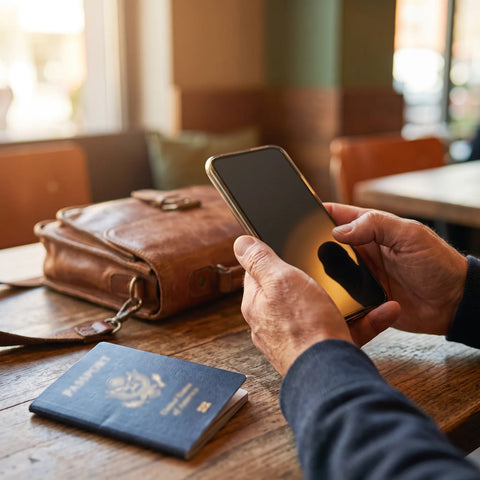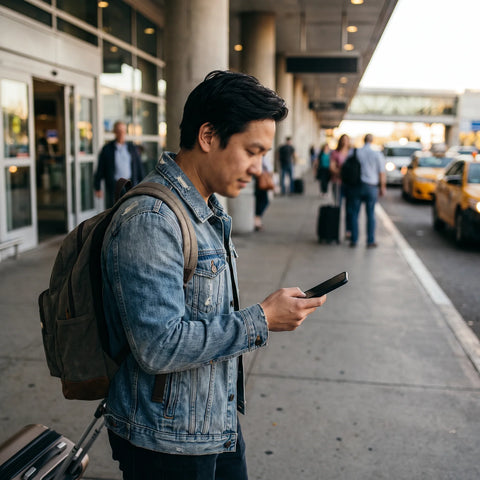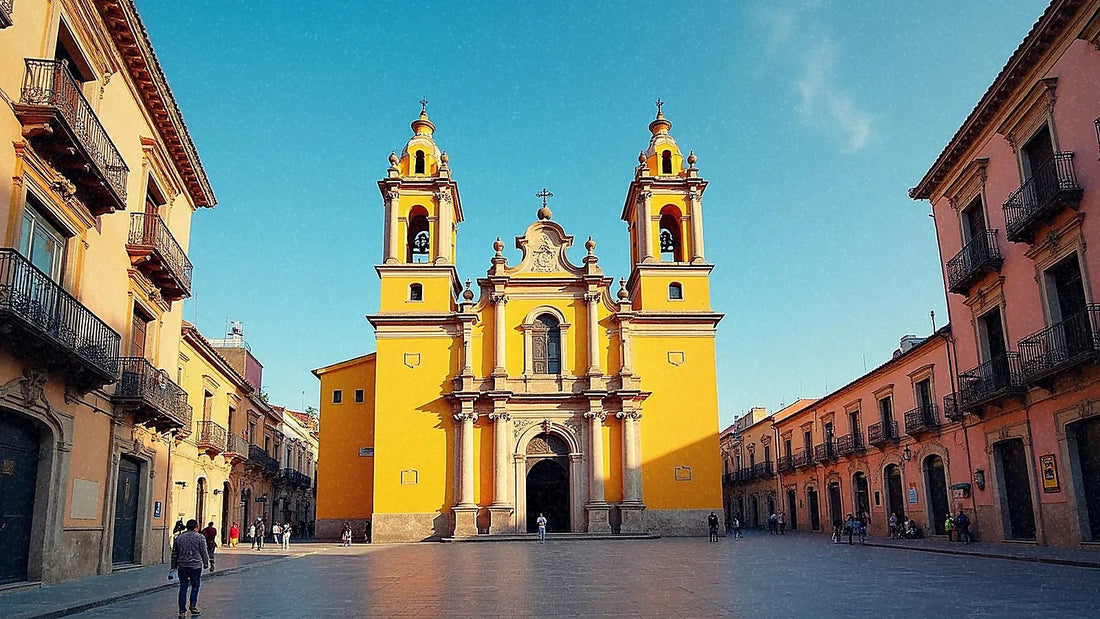
In short: A Lima eSIM gives you internet as soon as you land at Jorge Chávez, without operator queues or sky-high roaming charges. You install it at home using Wi-Fi, activate it when you land, and in less than a minute, you have data to order a taxi, open a map, and get to Miraflores without relying on airport Wi-Fi.
Lima is not a city to arrive in blindly. Jorge Chávez Airport is in Callao, quite a distance from the districts where you'll actually sleep and move around, and in between there's traffic, very long avenues, and areas best avoided at night. If your plan is to use Lima as a gateway to Cusco, Arequipa, or the south coast, the last thing you want is to waste the first hour of your trip looking for a local operator's counter. That's why it's useful to activate your eSIM before leaving Spain: you arrive, connect, and you can order a taxi from inside the terminal.
Do you need an eSIM as soon as you arrive in Lima?
Almost certainly, yes. Jorge Chávez is in Callao, far from the tourist circuit of Miraflores, Barranco, or San Isidro, and leaving the terminal with active data to order a taxi via an app is more a matter of safety than convenience. In Lima, hailing a car on the street outside the airport is not recommended: it's normal to request one through Uber, Cabify, or InDrive from inside the terminal, with the pickup point already marked on the map.
The eSIM activates automatically when it connects to the Peruvian network, without a physical card to insert or a counter to find. With a plastic SIM, you would have to locate the operator's point of sale, queue, and register with your passport before getting a single bar of coverage. With the eSIM already installed, you leave the terminal connected. If you don't know if your device supports eSIM, check beforehand what a virtual eSIM is and how it works to avoid a surprise at the airport.
Lima is also enormous: from Miraflores to the Historic Center, it's more than an hour by car with normal traffic, and moving around without data means relying on the taxi driver knowing exactly where you're going, which isn't always the case. A connected mobile allows you to correct the route, notify a restaurant if you're running late, or change your plans on the fly if the bus to Paracas is delayed.
Mobile coverage at the airport and in Lima city
Lima has good mobile coverage in the districts where you'll actually be. A travel eSIM relies on the best 4G Peruvian networks in the capital, so you're covered from the moment you land until you leave the historic center.
Where you'll move and what signal to expect
- Jorge Chávez (Callao): airport's own signal and Wi-Fi as soon as you get off the plane, enough to request a transfer before going outside.
- Miraflores, Barranco, and San Isidro: solid 4G for maps, mobility apps, and restaurant reservations; these are the districts with the best infrastructure in the city.
- Historic Center: good coverage on the street and in squares, although inside thick-walled colonial buildings —the Cathedral, some old town churches— the signal drops, and it's advisable to have what you need already loaded on your phone before entering.
- Routes to the south (Paracas, Ica, Nazca): reasonable 4G in the cities themselves, more irregular on the Pan-American highway stretches between them, so don't count on continuous streaming during the bus journey.
Outside the tourist circuit —peripheral districts like San Juan de Lurigancho or Comas— coverage still exists but is more uneven, something that rarely affects a traveler's itinerary but is good to know if you're visiting someone or moving around there.
Practical tip: In Lima, always use taxi apps instead of hailing cars on the street, especially at night. You need active data from the first minute, and that's where an eSIM makes a difference compared to arriving with your phone in airplane mode.
How many GB do you need for your Lima getaway?
For a few days in Lima before continuing your journey, normal use of maps, taxi apps, and social media is covered with just a few GBs, because in Miraflores hotels and cafes you will have good Wi-Fi for much of the day. This is a guide based on the type of trip, not a fixed rule:
| Type of stay | Days | Estimated data |
|---|---|---|
| Layover before Cusco or Arequipa | 1-2 | 1-2 GB |
| Weekend in the capital | 3-4 | 3 GB |
| Week in Lima + south coast | 7 | 5 GB |
| Long route through all of Peru | 14 or more | 10 GB or more |
If you're going to upload a lot of photos of the Miraflores boardwalk or make video calls to show your trip live, go up a notch: video is what really drives up consumption, not maps or messages. And if you're going to travel through several regions of the country on the same getaway, review how to save eSIM data while traveling to stretch your plan without running out of data halfway through the route.
An important nuance: if Lima is just your gateway and you're then continuing to Cusco, Machu Picchu, or the rest of the country, it doesn't make much sense to buy a plan designed only for the capital. You're better off with a plan designed for all of Peru, which covers Lima just as well and saves you from buying two separate plans.
eSIM vs local SIM vs roaming in Lima
The usual dilemma when planning a trip is always the same: a travel eSIM, a physical Claro or Movistar SIM purchased in Lima, or relying on your Spanish operator's roaming. Each option has its place, but not all of them fit equally well with a short trip.
| Option | Cost | Convenience | Main drawback |
|---|---|---|---|
| Travel eSIM | Reasonable, you choose it before flying | High: ready before landing | Requires a compatible phone |
| Local SIM (Claro, Movistar, Entel, Bitel) | Very low for the data itself | Low: queue, passport registration, and sometimes fingerprint scan | Time wasted and a new number no one has |
| Spanish operator roaming | Skyrockets outside the European Union | High, no action required | Surprise bill upon return |
Peruvian operators offer cheap prepaid plans, it's true, but getting a SIM will cost you a queue, your passport, and in some points of sale, biometric registration with a fingerprint, a process designed for residents that usually takes tourists longer than expected. Roaming outside the European Union, on the other hand, does not have the flat rate you are used to in France or Portugal: always check the current price with your operator before leaving, because in Peru it falls outside European conditions. If you want to understand why this happens, it's useful to read what data roaming is and how roaming works outside the European Union, as well as the direct comparison between eSIM and roaming.
That said, be honest with yourself about the duration of your trip: if you're only going to be in Lima for a 24-hour technical stopover before an internal flight and you have Wi-Fi at the airport hotel, it might not even be worth spending money on data—the hotel's Wi-Fi and the airport's own Wi-Fi might be enough. The eSIM makes sense once you go out and move around, not as an automatic expense by default.
How to activate your Lima eSIM step by step
The process is done only once and takes no more than a couple of minutes. The important thing is not to leave it until the last minute at the airport:
- Purchase the eSIM and receive the QR code by email immediately.
- At home with Wi-Fi, before flying, add the plan in Settings by scanning that QR.
- Name the line, for example "Peru," to distinguish it from your Spanish SIM.
- Leave the line installed but without activating data roaming until you land.
- Upon landing at Jorge Chávez, activate the data for that line and wait less than a minute for it to connect to the Peruvian network.
If it's your first time using one, follow the complete details in how to install an eSIM step by step. Installing it before flying avoids relying on airport Wi-Fi precisely when you want to order a taxi to the hotel, which is when you need it most.
Myths and what almost no one tells you about eSIM in Lima
There are a few ideas circulating about staying connected in Lima that should be debunked before they complicate your trip:
"With Wi-Fi at the hotel, I have more than enough"
This is the most common trap. Hotel Wi-Fi works within the hotel, but the moment you need data most is outside: ordering a taxi back from a Barranco restaurant at eleven at night, or checking if the bus to Paracas leaves from the gate indicated on your ticket. That's when Wi-Fi doesn't cover you, but an eSIM does.
"Any phone supports eSIM"
That's not true. There are models, especially mid-range ones from before certain years, that don't have eSIM or only allow one line at a time without real dual SIM. Before buying, check the difference between an international physical chip and an eSIM and whether your device supports it, because finding out at Lima airport that your model doesn't have eSIM isn't an easy fix.
"The more GB, the better, just in case"
Buying too much "just in case" is usually a waste of money. In Lima, you'll have Wi-Fi at your accommodation and in many cafes in Miraflores and Barranco, so the plan you actually use is usually smaller than what people buy as a precaution. It's more sensible to calculate carefully and, if you run short, top up on the fly.
"Tourist districts always have good signal"
Almost always, yes, but not everywhere. Inside thick-walled buildings in the Historic Center, in some museum basements, or on certain underground sections of the Lima subway, the signal drops significantly. If you're going to need an address or contact right after leaving, save it offline before entering instead of relying on constant coverage.
"A local SIM is always cheaper"
In terms of the cost of the plastic, yes. But nobody factors in the time spent queuing at the airport or in a Miraflores store, the passport registration, and in some cases, the biometric process designed for Peruvian residents. For a short stay, that time is worth more than what you save.
Tips for getting around Lima when already connected
With your data sorted out from the airport, navigating Lima becomes much easier. These habits really make a difference:
- Always use taxi apps (Uber, Cabify, InDrive), especially if you're moving around at night or returning alone from a restaurant.
- Download an offline map of Lima in Google Maps before leaving the hotel, in case you lose coverage on some stretch of road to the south.
- Book a table at trendy restaurants in Miraflores and Barranco from your phone: they fill up on weekends, and without a reservation, you'll be left out.
- Save the exact hotel address offline in Spanish and in a message you can show to the taxi driver, not just on the map.
- Coordinate buses to Paracas, Ica, or Cusco with data at hand: departure times change gates more frequently than one would like.
- Be discreet with your phone on the street, like in any big city: order your taxi from inside the establishment, not standing on the sidewalk consulting your phone.
If your route continues afterwards to northern South America, many travelers combine Lima with Colombia in the same itinerary; in that case, it's advisable to check the eSIM guide for Medellín, Bogotá, and Cartagena beforehand instead of buying separate plans for each country.
Frequently asked questions
Is there Wi-Fi and coverage at Jorge Chávez Airport in Lima?
Yes. Jorge Chávez International Airport, in Callao, has its own Wi-Fi and good mobile signal. With the eSIM already active, you can order a taxi via an app before leaving the terminal, which is recommended because the airport is far from the city's tourist center.
How much does an eSIM for Lima or Peru cost?
The price depends on the GB and the days you choose: the more data and longer duration, the higher the cost. Always check the current price at the time of purchase, as it may vary. What can be said is that opting out of roaming outside the European Union usually incurs a significantly higher cost than a data plan designed for the destination.
Does the Lima eSIM also work for Cusco or Machu Picchu?
It depends on the plan you choose: some are designed only for the capital and others for the entire country. If your trip goes beyond Lima, it's more beneficial to directly choose a complete Peru plan, which already covers Cusco and the route to Machu Picchu, instead of buying twice.
Is it safe to use my phone on the street in Lima?
As in any large city, it's advisable to be discreet with your mobile phone in public and avoid taking it out in crowded areas or at night. Having data with an eSIM helps precisely with that: you order your taxi from inside the premises and follow the route without consulting your phone at every corner.
Can I continue to use my usual WhatsApp in Lima?
Yes. The eSIM only provides data, so WhatsApp, Telegram, and the rest of your apps continue to work with your usual Spanish number. You don't lose chats or change your main line: you browse through the Peruvian data plan while your usual line remains active for calls and messages.
Do I need to activate the eSIM before leaving Spain or can I do it in Lima?
It can be done both ways, but installing the profile with Wi-Fi before flying is more convenient: you arrive at Jorge Chávez, activate data roaming for that line, and in less than a minute you have coverage, without relying on airport Wi-Fi to download anything at that moment.
What if my phone doesn't support eSIM?
In that case, the alternative is a local physical SIM or your operator's roaming. Before traveling, it's worth checking this calmly at home, because finding out at the airport that your model doesn't have an eSIM leaves you without the most convenient option precisely when you need it most.
Conclusion
An eSIM for Lima lets you leave Jorge Chávez with internet, safely order a taxi via an app, and organize the rest of your trip through Peru without relying on expensive roaming or queues at a counter. You choose the GB according to your real itinerary, install it calmly at home, and activate the data upon landing. Arrive in Lima connected from the first minute and start your Peruvian route without wasting the first hour looking for coverage.