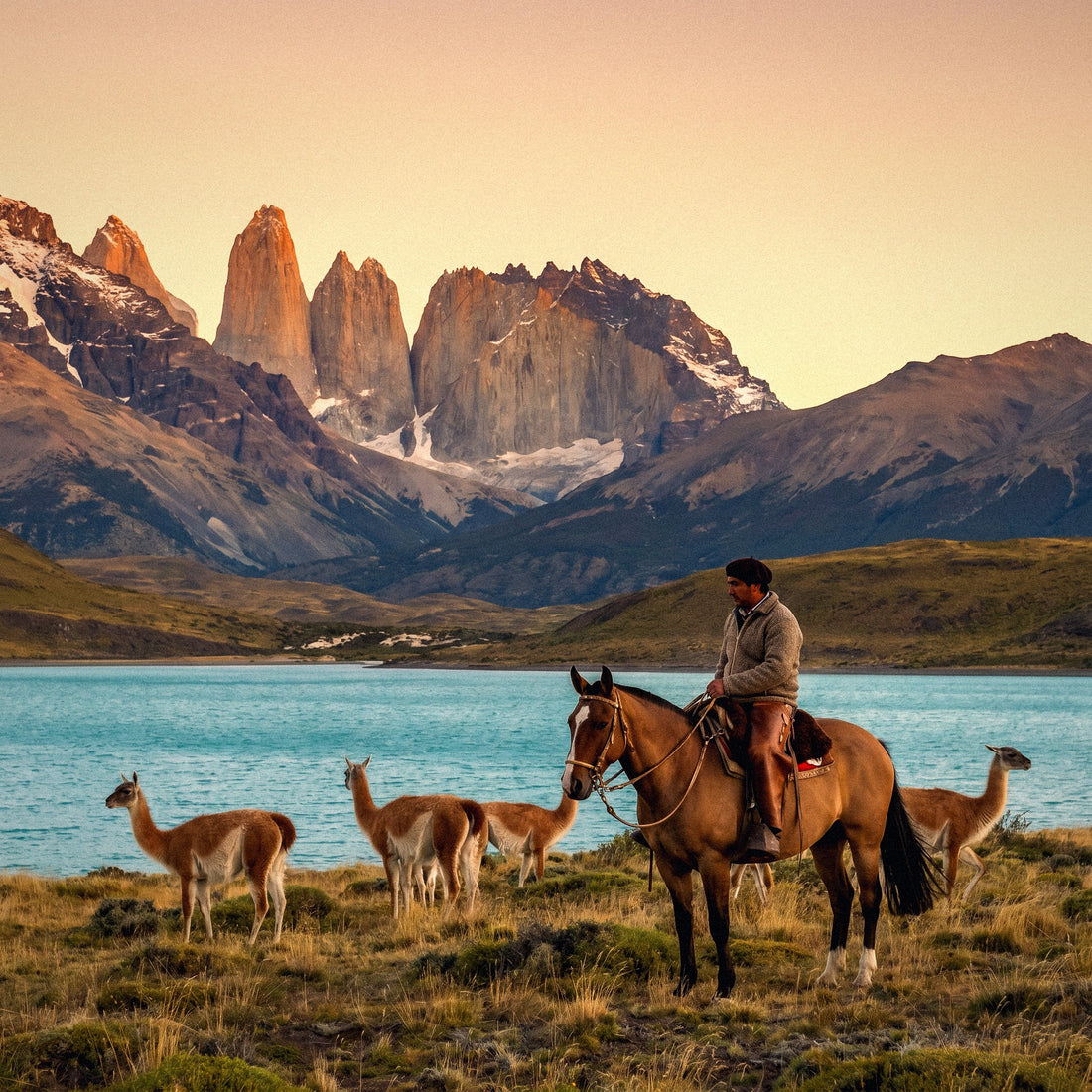
Chile is over 4,300 km long from north to south: on the same trip, you go from the driest desert on the planet to a Patagonian glacier. And that completely changes the way you get internet in Chile without worries, because what works in Santiago won't work in El Tatio. In this guide, I compare all the real options—your carrier's, the hotel's, a Chilean SIM card, and a digital one—and tell you honestly where you'll have signal and where you won't.
Connectivity in Chile in 2026
Quick answer: To travel to Chile, you have four options: roaming with your carrier (convenient but expensive), hotel Wi-Fi (free but ties you to the building), a local Chilean SIM (cheap, purchased with a passport), or a travel eSIM (the most balanced option: activated before departure and works as soon as you land).
Chile has one of the best mobile networks in Latin America. According to Subtel, the country exceeded 10 million 5G connections by early 2026, accounting for around 45% of the mobile market, and seven out of ten households already use fiber optics. In cities, the experience is comparable to Europe.
The nuance is that this network is concentrated where people live. The density of antennas drops sharply as soon as you leave urban areas: the northern desert and Patagonia have kilometers without coverage from any operator. This is not a network failure; it's pure geography.
As for operators, there are four major ones, and all work well in urban areas:
- Entel: leader in coverage and reaches the furthest on routes and rural areas.
- Movistar: solid network throughout the country.
- Claro (Claro-VTR): good urban coverage and competitive prices.
- WOM: the cheapest, strong in cities, weak outside them.
Keep that order in mind: it will be very important when we talk about the south.
Roaming with your carrier: convenient and expensive
Chile is outside the European Union, so your Spanish "roaming included" plan does not apply. Here you enter the most expensive international zone for almost all carriers, and that's where three-figure bills come in.
Prices change every season, but the order of magnitude is constant: browsing without a contracted data plan can cost you several euros per megabyte—Vodafone publishes rates of around €6 per MB outside of a plan—so a two-minute video at the airport costs as much as a dinner. That's why carriers sell international data plans: daily or weekly packages with a few gigabytes for between €5 and €15 per day.
The problem with these plans is not just the price; it's the fine print: they expire, renew automatically, have speed limits when exhausted, and often don't cover full weeks. If you want to see it with numbers, I break it down in how much international roaming costs and in the direct comparison of eSIM vs roaming.
When does it make sense? Only in two cases: if your company pays the bill, or if you have a 24-hour layover and don't want to complicate your life.

Hotel Wi-Fi: useful, but insufficient
Wi-Fi is free and usually works well in Chile. Almost all hotels, hostels, and cafes in cities offer a decent connection, and in Santiago, you'll even find it in many metro stations. As a backup network, it's perfect: backing up photos, long video calls, or downloading offline maps before going out.
The problem is that Wi-Fi only exists where there are walls. And traveling through Chile essentially means being outside walls: on a night bus to La Serena, in a taxi looking for your accommodation in Valparaíso, or in a ferry line in Chiloé. That's exactly when you need Google Maps, the driver's number, or the QR code for your park entrance.
In addition, there are three reasons not to rely on it:
- Security: open airport networks are fertile ground for credential theft.
- Real speed: the Wi-Fi of a hostel with 40 guests at nine at night is a lottery.
- Zero coverage outside the premises: it's no use for ordering an Uber or letting someone know you're running late.
If you consider a portable router as an alternative, I compare it in depth in eSIM vs pocket Wi-Fi: the summary is that it adds another gadget to carry and return.
Local Chilean SIM: Entel, Movistar, Claro, and WOM
The classic backpacker's choice. It's cheap, works well, and gives you a Chilean number, useful if you're booking tours by phone. A prepaid card costs between 2,000 and 5,000 Chilean pesos (about €2-5), and data top-ups start at around 1,000 CLP.
What many travelers don't know is that since February 2025, Chilean law requires all prepaid SIMs to be registered with a RUT or, if you're a foreigner, with your passport number. You can't just buy one at a kiosk and activate it yourself: you have to go to an official operator store and present your document.
What you'll find depending on the operator:
- Entel: the best coverage outside cities. If you're going south, it's the safe bet.
- Movistar: welcome packs like 2 GB + 100 minutes with short validity (7 days).
- Claro: bundles from 3 to 25 GB with validity from 3 to 30 days.
- WOM: the cheapest in gigabytes per peso, but with notable gaps in rural areas.
The real cost is not money; it's time: queues at the airport store, opening hours, and landing in the early morning without internet to request a transfer. I break it down in eSIM vs local SIM.
The eSIM: my recommendation for most people
It's a digital card downloaded to your phone that coexists with your Spanish line without removing anything. You buy it from home, install it with your living room Wi-Fi, and when you land in Santiago, it automatically connects to the Chilean network. No queues, no passport at the counter, and no losing your WhatsApp.
If you've never used one, start with what an eSIM is. The only requirement: a compatible mobile phone (iPhone XS or later, Samsung Galaxy S20 onwards, Pixel 3 and above) and unlocked by the carrier.
The specific advantages for Chile are three:
- Connection upon landing: you leave the plane with Google Maps and Uber working, which is exactly when you need them most.
- Fixed price: you pay before traveling, and there are no surprise bills when you return.
- Your number stays active: you receive bank SMS (the verification code that always arrives at the worst moment) without paying for data.
The honest downside: it doesn't give you a Chilean number for local calls, and if you use up your data early, you'll have to top up. For a normal tourist trip, neither of these is a real problem. If you want the step-by-step installation and specific plans, you'll find it in the eSIM guide for Chile.
Comparison: which option suits you best
I summarize what we've just seen in a table so you can decide in thirty seconds. The prices are indicative for a ten-day trip and depend heavily on your original carrier and the data volume you contract:
| Option | Estimated cost (10 days) | Ready upon landing | Best for |
|---|---|---|---|
| Roaming with your carrier | €50-150 (or much more without a plan) | Yes | Business trips and short layovers |
| Hotel Wi-Fi | €0 | No | Support, never a sole solution |
| Local Chilean SIM | €10-25 | No (passport registration required) | Long stays and local number |
| Travel eSIM | €10-30 | Yes | Most tourists |
My criterion, after many trips: if you're staying less than a month and want zero friction, the digital card wins by a landslide. If you're staying three months working from Santiago, it's worth queuing up and getting a Chilean line with your own number. And hotel Wi-Fi is always there, but as a complement, not a plan.
The right question is not "which is the cheapest option?", but "what happens if I run out of internet at the worst possible moment?". In Chile, that moment usually happens on an empty road 200 km from the nearest town.

Coverage in Santiago and Valparaíso
No drama here: connectivity in the central zone is excellent. Santiago has 5G deployed throughout almost the entire Metropolitan Region, and you'll browse as well as or better than in Madrid. The metro has signal, tourist neighborhoods (Bellavista, Lastarria, Providencia, Las Condes) are well covered, and the airport has coverage from all four operators as soon as you step into the terminal.
Valparaíso and Viña del Mar work just as well. The only peculiarity is the topography: Valparaíso is built on more than 40 hills, and in some steep alleys, the signal degrades for a few seconds. Nothing that prevents normal mobile use.
The same applies to the rest of the central axis and much of the urban north:
- La Serena, Antofagasta, Iquique, Arica: solid 4G/5G coverage in the city center.
- Concepción, Temuco, Pucón, Puerto Varas: good signal in the town and its immediate surroundings.
- Main routes (Route 5): reasonably continuous coverage, with some brief dropouts between cities.
If your trip is limited to Santiago, the coast, and some wine valleys, any option in this guide will serve you well. The problem begins when you go off the map, and in Chile, going off the map is surprisingly easy.
Atacama: good signal in town, zero in the desert
San Pedro de Atacama is a small town with decent coverage: Entel and Movistar provide reasonable 4G in the center, in hostels, and on Caracoles Street. You can book tours, upload photos, and make video calls without a problem. All good... until you get on the tour van.
As soon as you leave the town, the signal disappears. And I'm not talking about being slow; I'm talking about zero bars. The places where you'll spend the most time in Atacama are precisely those without an antenna nearby:
- El Tatio Geysers (at 4,300 m altitude): no coverage, and the early morning journey there also has none.
- Moon Valley: virtually no signal except at a few specific high points.
- Altiplanic lagoons and Salar de Atacama: absolutely nothing for hours.
- Route to Uyuni or the pass to Argentina: long stretches completely isolated.
This is not a flaw in your card: none invent an antenna that doesn't exist. The important thing is to accept it and prepare: download offline maps before you leave, let your people know you'll be unreachable that morning, and don't count on uploading your sunrise story in real time.
Patagonia, Torres del Paine, Carretera Austral, and Easter Island
Here's where I need to be completely honest, because this is where most people get a rude awakening. Chilean Patagonia is spectacular and, for the most part, disconnected.
| Area | Actual coverage | What to expect |
|---|---|---|
| Puerto Natales / Punta Arenas | Good (4G/5G) | Normal cities, no surprises |
| Torres del Paine (park) | Very scarce or none | Sporadic signal in some refuges and at the entrance gate; none on the W and O circuits |
| Carretera Austral | Intermittent | Signal in towns (Coyhaique, Chaitén, Cochrane); between them, very long stretches with nothing |
| Easter Island (Rapa Nui) | Limited | Coverage in Hanga Roa; slow and saturated; almost none on the rest of the island |
The new development for 2026 is direct satellite connection to mobile phones: Entel already offers satellite messaging (SMS and apps like WhatsApp) to over a million customers, from Atacama to Magallanes. It sounds magical, but it's emergency messaging, not browsing: it requires clear skies, compatible phones, and specific Chilean plans.
The golden rule for the south: download everything (maps, CONAF tickets for parks, bus and plane tickets, and accommodation reservations in PDF) while you have Wi-Fi in Puerto Natales or Coyhaique and assume that you'll be offline in the park. Honestly, it's part of the charm.
How much data you really need
The million-dollar question. The short answer: less than you think, and even less in Chile, precisely because you'll spend entire days in areas without signal where you won't consume anything.
My practical rule is to estimate between 500 MB and 1 GB per day for normal tourist use: maps, WhatsApp, looking for restaurants, uploading a few photos, and some social media at night. That gives you plenty of leeway. Only if you make long video calls daily or work from your phone should you go up to 2 GB daily, and even then, you'll have data left over on desert or park excursion days.
| Trip type | Duration | Recommended data |
|---|---|---|
| Layover or city break in Santiago | 3-4 days | 3 GB |
| Classic route (Santiago + Atacama + Valparaíso) | 10 days | 5-8 GB |
| Grand north-south route with Patagonia | 3 weeks | 10-15 GB |
| Digital nomad or remote work | 1 month | 20 GB or more |
A note that saves many gigabytes: download Google Maps offline for each region before you leave. In such a long country, maps are the biggest data devourer... and it's also the only thing that will save you when you lose signal on the endless straight road between two Patagonian towns.
Tips to avoid being incommunicado
After traveling through countries with impossible geographies, these are the habits that truly make a difference in Chile:
- Download everything critical offline: maps by region, CONAF park tickets, bus and plane tickets, and accommodation reservations in PDF.
- Share your itinerary: if you're doing the W circuit or the Carretera Austral, let people know which days you'll be out of coverage.
- Always carry a power bank: searching for signal consumes the most battery, and a dead phone won't connect to any network.
- Check your data upon landing: if you're using a digital card, verify it with the airport Wi-Fi before leaving the terminal.
- Save important phone numbers in your contacts: emergencies (131 ambulance, 133 police), your accommodation, and your tour operator.
- Don't trust the signal bar: in the south, you might see a 4G bar and still not have usable data. Phantom signal is common.
And a mindset recommendation: days without coverage in Torres del Paine or El Tatio are not a trip failure; they are the trip. Prepare for them and enjoy them instead of fighting with your phone looking for a signal that won't come.
Frequently Asked Questions
Is there coverage in Torres del Paine?
Very little. Inside the park, coverage is scarce or non-existent: there's occasional signal at the entrance and in some refuges with paid Wi-Fi, but on the W and O circuits, you won't have data. Download everything before entering and assume you'll be offline.
Can I buy a Chilean SIM with my passport?
Yes. Starting in February 2025, the law requires all prepaid SIMs to be registered with a RUT or passport, so you must buy it at an official Entel, Movistar, Claro, or WOM store and present your document.
Which Chilean operator has the best coverage?
Entel, without a doubt, especially outside of cities and on southern routes. Movistar and Claro work well in urban areas, and WOM is the cheapest but has the most gaps in rural and mountain areas.
Will my Spanish mobile work in Chile?
Yes. Chile uses 4G and 5G bands compatible with European mobiles, so any recent, unlocked device will work without problems.
How many GB do I need for 10 days in Chile?
Between 5 and 8 GB is more than enough for a 10-day tourist trip with maps, messaging, social media, and a few video calls. You'll consume less than you think because you'll spend many hours in areas without coverage where you won't use data.
Is there internet on Easter Island?
Yes, but limited. In Hanga Roa, there is mobile coverage and Wi-Fi in hotels, although the speed is low and the network easily gets saturated. Outside the town, at the moais and on the island's routes, the signal is practically non-existent.
Is paid Wi-Fi in southern refuges worth it?
Only if you need something specific and essential. It's usually slow, time-limited, and expensive for what it offers. It's better to download everything before entering the park and use that Wi-Fi only to let people know you're okay.
Is Entel's satellite connection useful for me as a tourist?
Generally, no. It's emergency satellite messaging (SMS and some apps), not browsing, requires clear skies, compatible phones, and is linked to specific Chilean plans. Use it as a safety net, never as your primary connection for the trip.
Conclusion
Chile will give you two opposite experiences: hyper-connected cities with top-tier 5G and corners where your mobile becomes a very expensive camera. Accepting this duality is key to a peaceful trip.
My recommendation is simple: arrange your connection from home for everything that does have coverage —Santiago, Valparaíso, San Pedro, transfers, airports— and prepare for offline mode for what doesn't.
If you want the simplest option, activate the PuraSIM eSIM for Chile before boarding the plane: it installs in two minutes, connects automatically upon landing, and gives you a fixed price with no surprises when you return home. The rest of the trip —the desert, the glaciers, the pisco sour— is up to you.