If you've made it this far, one thing is clear: you want data for your trip to Sierra Leone and you just need to decide how many GB to buy. No need to get bogged down with options or theory: in this guide you'll know how many GB you really need based on how you travel and how many days you stay, with real figures and an honest recommendation. And I'll tell you something upfront: there's no need to overdo it here, because Sierra Leone is a destination where your phone consumes less than you think.
The short answer, no beating around the bush
For 10 days in Sierra Leone, most people will have more than enough with 3 GB. You'll spend many hours without coverage on the beaches and you'll use hotel Wi-Fi for heavy tasks, so your phone will only load maps, WhatsApp, and an occasional photo. If it's an adventure or cooperation trip, aim for 3-5 GB and you're good.
That's the number you were looking for, and I'm not hiding it at the end. However, "most people" isn't necessarily you, so let's refine it. The difference between spending 2 GB or 15 GB on the same trip isn't determined by the country: it's determined by you and what you do with your phone. A backpacker who only looks at maps and sends voice notes on WhatsApp doesn't come close to the consumption of someone who uploads reels every night or makes hour-long video calls with their family.
In Sierra Leone, there's also a factor that works in your favor and that almost no comparison site mentions: coverage is good in Freetown but patchy on the coast and inland, so for a good part of the trip, your phone simply won't consume data. That's why my initial advice is to buy a modest package and top up if necessary, instead of paying for gigabytes that will go unused. If you want a general overview for any destination, you can find the hub on how much data you need for travel; here I'll focus on the specifics of Sierra Leone.
Why Sierra Leone lowers the number
Each country changes the calculation, and Sierra Leone changes it downwards. The reason is simple: you won't have decent connection all the time, and what you can't use, you don't spend. Freetown and its area (city center, Aberdeen, Lumley) have reasonable 4G from Orange and Africell, but as soon as you head to the peninsula beaches or inland, the signal becomes intermittent and often disappears.
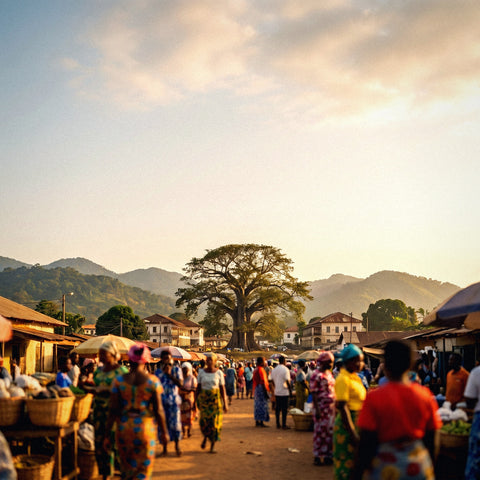
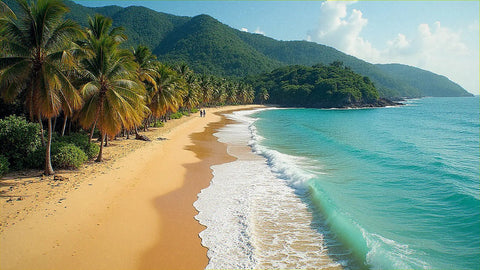
Think about what a trip here is really like. You spend the morning at River No. 2 or Bureh Beach with the surf community, and there your phone is practically in airplane mode even if you don't want it to be. You go up to Tacugama to see the chimpanzees and you're surrounded by jungle with no tower in sight. You cross to the Turtle Islands or Tokeh and it's the same thing again. All those hours are hours that don't add to the counter.
Added to that is the fact that hotel Wi-Fi is often weak and intermittent: it's good for sending a couple of messages, not for downloading movies or for serious work. In practice, your mobile data consumption ends up concentrated in Freetown and during travel, which is when you really rely on maps and messaging. It's the opposite of a hyper-connected European city where your phone constantly eats up data. If you want a complete overview of how to connect, you can find it in the guide to internet in Sierra Leone; in this article, I'm only focusing on gigabytes.
How much each app consumes: real table
Before deciding your number, it's worth seeing where the real expense comes from. People think that "browsing" consumes a lot and that WhatsApp consumes nothing, and it's almost the opposite of what they imagine: video eats it all up and text is almost free. These are approximate hourly consumption figures you can use as a reference for any trip, not just Sierra Leone.
| Activity | Approximate Consumption |
|---|---|
| Maps and navigation (Google Maps) | 3-5 MB/hour |
| WhatsApp: chats and voice notes | 1-5 MB/hour |
| WhatsApp: voice call | 10-20 MB/hour |
| Video call (WhatsApp/Zoom) | ~300 MB/hour (up to 480 in HD) |
| Social media (feed and stories) | 100-150 MB/hour |
| Reels / TikTok (short video) | 0.8-1.2 GB/hour |
| Upload 10 photos | 20-50 MB |
| Music streaming (normal quality) | 40-70 MB/hour |
| YouTube/Netflix video (SD) | ~700 MB/hour (HD up to 3 GB) |
| Email and web browsing | 10-20 MB/hour |
Read the table and draw your own conclusion: you can last weeks with maps and WhatsApp spending less than 1 GB, but a single night of reels or a long video call will drain half your package. If you want the extended breakdown with more apps and scenarios, I have it in the mobile data usage statistics by activity.
My recommendation by profile and days
This is the table you came to see. I've cross-referenced four traveler profiles with the most common trip durations to Sierra Leone. The figures already include a small buffer and assume you'll take a break from your phone on beaches and inland and that you'll use hotel Wi-Fi for heavier tasks. Always round up if you're in doubt between two rows.
| Profile | 5 days | 10 days | 15 days | 30 days |
|---|---|---|---|---|
| Maps and WhatsApp tourist | 1 GB | 2-3 GB | 3-4 GB | 6 GB |
| Photos and social media | 2 GB | 4 GB | 6 GB | 10 GB |
| Digital nomad / remote work | 5 GB | 10 GB | 15 GB | 25 GB |
| Family sharing (2-4 phones) | 3 GB | 6 GB | 9 GB | 15 GB |
My honest advice: if you're the typical adventure, cooperation, or diaspora visitor, start with the modest package for your row. In Sierra Leone, it's very easy to stay below what you purchased, and you can always top up in two minutes. Paying extra for gigabytes you won't use makes no sense.
If you're a digital nomad, note one thing: even if the table suggests 10 or 15 GB, the actual coverage outside Freetown will limit you more than the package. That profile only makes sense if you're staying and working in the capital.
Coverage by area: where you won't spend anything
For the previous recommendation to make sense, you need to understand the coverage map. In Sierra Leone, data is not uniformly distributed across the country: it's concentrated in Freetown and diminishes as you move away. This table helps you anticipate where the meter will stay still and where it's advisable to have downloaded maps.
| Area | Coverage | What to expect |
|---|---|---|
| Freetown (city center, Aberdeen, Lumley) | 4G Orange / Africell | Stable; even good enough for work |
| Peninsula: River No. 2, Bureh, Tokeh | Irregular, 3G/4G at times | Enough for WhatsApp; forget about video |
| Tacugama, inland, and roads | Weak or none | Bring offline maps; you'll barely spend anything |
| Turtle Islands and boat trips | Very weak | Effectively airplane mode |
| Hotel Wi-Fi | Weak and intermittent | For a couple of messages, not as your main connection |
The practical takeaway is clear: save your data for when you truly need it, which is for moving around Freetown, coordinating transfers, and letting people know you're okay. The rest of the time, between almost empty beaches and jungle, your phone rests and your package lasts much longer than theory would suggest. That's why a cautious traveler here spends significantly less than in a typical urban destination, and that's why I insist on not buying too much from day one.
How to know your own consumption before leaving
Tables are good for guidance, but the most reliable data you already have in your pocket: your actual consumption from the last month. Instead of guessing, check it. It's the most honest trick I can give you, and it costs nothing.
On an iPhone, go to Settings > Mobile Data and scroll down to see the period's consumption; it's a good idea to reset it at the beginning of the month for a clean reference. On Android, Settings > Network & Internet > SIM / Data Usage gives you the total and the breakdown by app. Pay particular attention to how much your three most used apps consume.
Now adjust that number for the trip. If you use 8 GB a month at home, it's because you have Wi-Fi all day at work and at home; you won't replicate that usage in Sierra Leone. Remove all the video you watch on the sofa, subtract the hours on beaches and inland without coverage, and you'll see your actual mobile data consumption plummet. A good mental shortcut: take your daily average mobile data usage outside the home and multiply it by the days of your trip, not by 30. That number, rounded up, is usually your ideal package. It's almost always less than what the fear of running out of internet would make you buy.
Tips to stretch your data
With Sierra Leone already working in your favor, a few adjustments can make a small package perform like a large one. These aren't sacrifices: these are things that will come in handy precisely where there's no coverage, not just for saving money.
- Offline maps. Download the entire Freetown and peninsula area in Google Maps while you have Wi-Fi. You'll navigate without spending and, even better, without relying on a signal on the road.
- Lower video quality. Set YouTube and social media to SD and disable auto-play. That's where 80% of the savings are.
- Backups only via Wi-Fi. Photos and videos are heavy; set Google Photos or iCloud to upload only when you're connected to hotel Wi-Fi.
- Data saver mode. Activate it in your system settings and within WhatsApp (so it doesn't automatically download photos and videos).
- Downloaded music and podcasts before you leave, for long road trips.
With these tips, the "maps and WhatsApp" profile can last weeks with very little. I have the complete list, with more adjustments per app, in the guide on how to save data on your travel eSIM. Apply just two or three of these and you'll notice the difference on your meter.
What happens if you run short
Let me be clear: it's better to run short and top up than to buy too much. Buying too much is wasted money, because no one gives you back the gigabytes you don't use. Running short, on the other hand, can be solved in two minutes from your phone, without going to a store or looking for a street vendor.
The logic is always the same: paying for half and topping up if necessary is almost always cheaper than buying the large package "just in case" and returning home with half of it unused. And in a place like Sierra Leone, where it's so easy to consume less than expected, that "just in case" almost never happens.
With an eSIM, this is even more convenient: if you see the meter dropping faster than expected on a day you're in Freetown a lot, you extend the package from the app and continue without interruptions. There's no possible drama: in the worst case, you'll rely on hotel Wi-Fi for a few hours until you top up. That's why my recommendation to start modest isn't a risk, it's the sensible option. If you want to see the options and prices for the country, they are on the Sierra Leone eSIM page, with plans designed precisely for this type of trip.
Before traveling: SIM with passport and warnings
Two points that aren't about gigabytes but will save you trouble. First: in Sierra Leone, SIM registration is mandatory and requires a passport. If you buy a physical SIM card at Lungi Airport or in the city, you'll need to show your document and wait for it to be activated; sometimes it's quick and sometimes it's not. An eSIM saves you that step because you can set it up from home and land with data already active, without queues or paperwork.
The second point is common sense but important: check your Ministry of Foreign Affairs' official travel advisories before booking and while you're there. Sierra Leone is a country reopening to tourism after very difficult years—civil war and then Ebola—and the situation can change; having your phone connected helps you stay updated on any alerts. Having data isn't just for maps: it's being able to check an alert, notify your loved ones, or call if something comes up.
If this is your first eSIM and you're not sure how it works or if your phone is compatible, take a look at the explanation of what an eSIM is before buying. With that sorted, all that's left is to choose the number of gigabytes, and for that, you now have the entire guide.
Frequently Asked Questions
How many GB do I need for 7 days in Sierra Leone?
For a week, 2 GB is more than enough for the typical traveler using maps and WhatsApp. If you upload quite a few photos and use some social media, go for 3 GB. Remember that for a good part of those days you'll be on beaches and inland without coverage, so you'll spend less than you fear.
Is 1 GB enough?
Yes, if you only use offline maps and text WhatsApp for a few days. 1 GB goes further than it seems when you avoid video. For a stay of a week or more, 2-3 GB is better for peace of mind.
What if I work remotely from Freetown?
Count on 10-15 GB for two weeks if you make video calls. Video calls consume the most, about 300 MB per hour. However, you'll only have reliable connection in Freetown; don't count on remote work on the coast or inland.
Will hotel Wi-Fi help me save data?
Yes for basic tasks, no for heavy usage. Hotel Wi-Fi in Sierra Leone is often weak and intermittent. Use it for messages and for backing up photos at night, but don't rely on it as your primary connection.
Can I extend the package if I run out of data?
Yes, and that's the big advantage of starting modest. With an eSIM, you extend it from the app in a couple of minutes, without going to any store. That's why it's better to buy little and top up, instead of overpaying from the start.
Do I need my passport for data?
For a physical SIM, yes; for an eSIM, often no. SIM registration in Sierra Leone requires a passport. You activate an eSIM from home before you fly and save yourself that process at the airport.
Will I use more data by using a translator or VPN?
A little, but factor it in. A camera translator and a VPN add some consumption if you use them a lot. It's not a huge expense, but if you're going to rely on them daily, round your package up a notch.
How many GB for a family of four?
For 10 days sharing between 2-4 phones, estimate about 6 GB. It heavily depends on whether the kids watch videos. If so, increase to 8-10 GB and enable data saver on all phones.
Conclusion
To summarize the important points: for a normal trip to Sierra Leone, you don't need a massive data package. 3 GB for ten days is more than enough for the typical traveler, and if you're into photos and social media, you'll need 4-5 GB. The key is that this destination works in your favor: you'll spend many hours on beaches and inland without coverage, and that keeps your data meter still. Start modest, apply a couple of saving tricks, and top up only if you truly need to.
If you are sure, get your connection ready before leaving home and land in Lungi with data, without queues or passport registration. You can choose your package on PuraSIM's eSIM for Sierra Leone and adjust the number of gigabytes to your profile. Have a good trip.