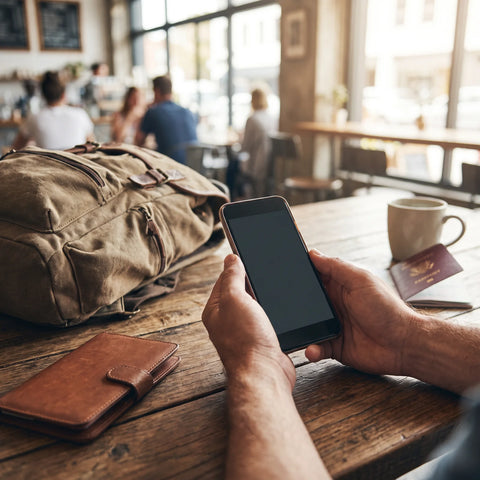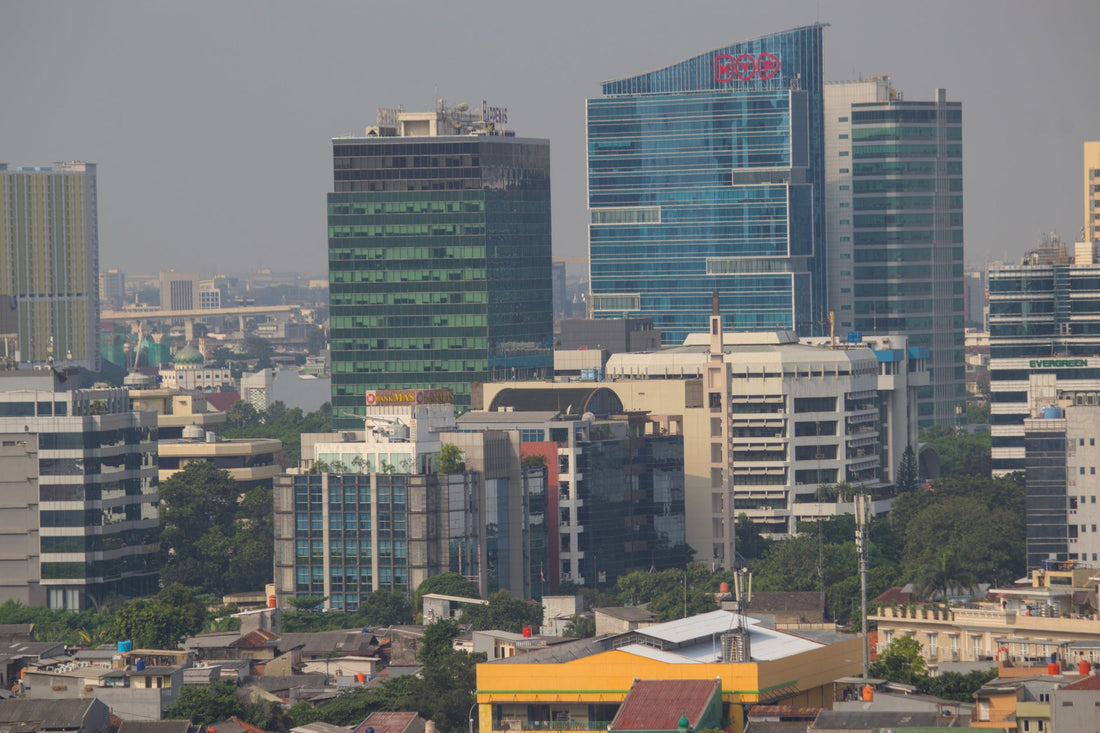
In short: the Indonesia 4G eSIM gives you internet as soon as you land in Bali, Java, or Lombok, without a physical SIM or passport registration at the airport: you buy the plan, scan the QR before leaving home, and activate the data upon arrival. It runs on the same networks as Telkomsel, XL, or Indosat, so you browse like a local, at a traveler price and without expensive roaming.
If you're traveling around Indonesia (Bali beaches, Java temples, diving in Lombok, or the charming chaos of Jakarta), you need data from minute one. An Indonesia eSIM gives you internet as soon as you land, without airport queues or swapping SIM cards. In this guide we'll tell you how many GB to get, the real coverage by island, and how to activate it in 1 minute.
What is an eSIM for Indonesia and how does it work?
An Indonesia eSIM is a digital SIM card that installs on your phone without needing a physical chip: you buy the plan online, scan a QR, and you have data ready to use in the country.
The beauty is that you don't rely on finding a store upon arrival. Indonesia is an archipelago of over 17,000 islands, and in many tourist destinations (Ubud, Gili, Nusa Penida) local SIM counters close early or are far from the hotel. With eSIM you set it up from home and only activate it when you set foot on Indonesian soil.
It works on local operators' networks, so you browse using the same towers as an Indonesian, but paying a clear traveler rate with no surprises. Your home number stays on the main SIM to receive bank SMS or WhatsApp, while data goes through the eSIM. It's the most convenient option if your phone is compatible: you can check the list of compatible models before buying, or go straight to the eSIM for Indonesia and set it up before leaving. If you're still not clear on how it differs from a regular SIM, in our guide to what is a virtual eSIM we explain it without jargon.

Coverage in Indonesia: Bali, Java, Lombok, and the islands
Quick answer: 4G/LTE coverage is very good in Bali, in the big cities of Java (Jakarta, Yogyakarta, Surabaya), and in tourist areas of Lombok. On remote islands, inland rice paddies, or trekking routes the signal drops, but for most of a typical trip you'll have stable internet for maps, messaging, and uploading photos.
Bali is, by far, the best-connected area: in Seminyak, Canggu, Ubud, Uluwatu, and around Denpasar airport you're more than fine. The Gili Islands and Nusa Penida have decent coverage near the towns, though it can be weak in isolated coves: on Nusa Penida, for example, the signal cuts out right at the Kelingking and Broken Beach viewpoints, so download the directions and your boat reservation before heading up. If you want a broader overview of how to get connected across the whole country, check out our guide to internet in Indonesia.
In Java, the capitals and major tourist attractions (Borobudur, Prambanan, Mount Bromo, Ijen) have signal. Lombok covers Senggigi, Kuta Lombok, and Mataram well; for Mount Rinjani, better not to count on data on the trail.
Traveler tip: before a long excursion (Bromo, Ijen, Rinjani, or snorkeling in the Gili Islands) download Google Maps offline and the directions to your accommodation. That way you don't rely on signal at the most remote point of the day.
How many GB do you need for your trip?
How much data you need depends on how much you use your phone and whether you use Wi-Fi in hotels and cafés. As a reference, an average traveler in Indonesia uses between 500 MB and 1 GB per day with normal usage: maps, WhatsApp, social media, finding restaurants, and uploading a photo or story.
For a quick idea based on trip type:
| Travel profile | Duration | Recommended GB |
|---|---|---|
| Short getaway to Bali | 5-7 days | 3-5 GB |
| Bali + Gili/Nusa (with hotel Wi-Fi) | 10 days | 5-8 GB |
| Bali + Java + Lombok itinerary | 2-3 weeks | 10-15 GB |
| Nomad / remote work | 1 month | 20 GB or larger plan |
If you're going to do video calls, use your phone as a hotspot, or upload a lot of videos, step up a tier. It's better to have a bit too much GB than to run out mid-trip, because topping up on the go is always more of a hassle. If you're unsure, check out our guide to tips to save data on your phone while traveling, with examples by usage type.

Local carriers (Telkomsel, XL, Indosat) vs eSIM
Indonesia has several strong mobile carriers. Telkomsel is the leader and offers the best coverage outside cities; followed by XL Axiata, Indosat Ooredoo, Tri (3), and Smartfren. A travel eSIM uses these same networks, so signal quality is equivalent; the difference is in the convenience of buying it.
Buying a local SIM at Denpasar or Jakarta airport means registering your passport (mandatory in Indonesia), waiting for them to set up the chip, and sometimes haggling on the tourist price. It's not hard, but it eats into the first part of your trip just when you arrive tired.
- Local SIM: good price for very long stays, but requires in-person registration and wasting time on arrival.
- Travel eSIM: you install it from home, no airport paperwork, and with support in English if something goes wrong.
- Roaming from your carrier: by far the most expensive (easily 10-20 € per day outside the EU).
For most travelers going between one and three weeks, the eSIM wins for convenience and price predictability. If you're still unsure between carrying a physical international SIM or switching to eSIM, we compare the two options in depth in international SIM vs eSIM.
How to activate your eSIM on arrival
Activating the eSIM is simple if you prepare smartly. The golden rule: install the profile at home, on your home Wi-Fi, but don't activate it until you arrive in Indonesia (or do it with the airport Wi-Fi). That way the day counter doesn't start early.
- Buy your plan and receive the QR by email within minutes.
- Scan the QR from your phone's mobile data settings (or use one-tap installation, no QR needed).
- Leave the profile installed but deactivated until your trip.
- Upon landing, activate the eSIM data and check that the local carrier's network appears.
- Turn on data roaming ONLY for the eSIM line (not for your home SIM) and you're done.
The whole process takes 1 minute when you arrive. As soon as you step into Denpasar or Soekarno-Hatta airport, you'll be able to order a Grab or open the map. If you get an error when scanning the code, in the eSIM installation guide we go over the most common issues and how to fix them.
Prices: eSIM vs Local SIM vs Roaming
Price is key when choosing, and here the eSIM sits at a very reasonable point. Data plans for Indonesia start at a few euros for short getaways and go up depending on GB and days. Compared to roaming from your home carrier, the savings are huge.
| Option | Approximate cost | Convenience |
|---|---|---|
| Travel eSIM | From a few euros per plan | Very high: install from home |
| Local SIM (Telkomsel, XL...) | Cheap for long stays | Medium: registration and purchase on arrival |
| Home carrier roaming | 10–20 €/day outside the EU | High, but very expensive |
The math is simple: two weeks of roaming can cost more than a full month of eSIM. A local SIM is worth it only if you're staying many weeks. Many travelers combine Bali with a jump to Australia (there are direct flights from Denpasar to Perth and Darwin) or continue on to South Korea; if your itinerary continues outside Indonesia, we have our guides for eSIM for Australia and New Zealand and eSIM for South Korea, very useful if your route chains several countries.
Tips to avoid running out of data
With a little planning, your eSIM will last your whole trip without surprises. The key is to keep an eye on the apps that use the most data and rely on Wi-Fi when you can; in Bali and Java, almost all cafés and accommodations offer it.
- Download maps and guides offline before any long excursion.
- Lower the streaming quality for video and music; you don't need 4K on mobile data.
- Turn off automatic updates for apps and photo backups over mobile data.
- Use Wi-Fi for long video calls and for uploading entire photo albums.
- Check your usage every few days from your phone settings so you have some margin.
And if you go over your GB, no big deal: you can top up or buy a new plan on the spot, without reinstalling anything or looking for a store. With these habits, even a modest plan will easily cover a one- or two-week trip.
Common myths and mistakes about eSIM in Indonesia
There are a few ideas floating around among travelers that are worth clearing up before you buy, because some can leave you stranded on day one and others just make you spend more than you need to.
Myth 1: "all eSIMs for Indonesia cover the whole archipelago the same way." Not true. Some traveler plans are designed mainly for the Bali-Java corridor and lose strength in more remote islands like Sumatra, Sulawesi, or Kalimantan. If your route goes beyond the usual tourist triangle, check that the plan is national and not just regional before you pay.
Myth 2: "I need Wi-Fi to activate the eSIM when I arrive." Not mandatory: you just need any internet connection at that moment, whether it's the airport Wi-Fi, a fellow traveler's hotspot, or even data from another line. That said, the public Wi-Fi at Denpasar airport sometimes asks for a login with an Indonesian phone number to give you access — something you don't have as a new arrival. The trick: activate the profile from your hotel Wi-Fi or, if you can, from the taxi/Grab Wi-Fi before you lose your reference coverage.
Myth 3: "the more GB I buy, the better, so I won't run out of data." Buying more isn't free, and if half your plan goes unused, that money doesn't come back. It's better to calculate using the table in this article and, if you're unsure, choose a plan you can top up on the go rather than a huge one from the start "just in case."
A detail almost nobody mentions: if you enable data roaming on your eSIM line, make sure your physical SIM stays with mobile data turned off. It's easy for your phone to switch back to the main SIM for a random app, and then your carrier's roaming charges kick in, even if your eSIM is working in the background.
When you should NOT buy an eSIM for Indonesia: if you're only making a short technical stopover of a few hours at Soekarno-Hatta Airport in Jakarta without leaving the transit area, you don't need it: the airport Wi-Fi is more than enough to check the gate map or reply to a message. It's also not really worth it if you're staying more than two or three months in the country; in that case, the hassle of getting a local SIM with passport registration is worth it, because the price per GB drops significantly over the long term.
Frequently Asked Questions
What is the best eSIM for Indonesia?
The best eSIM for Indonesia is one that relies on strong networks like Telkomsel, gives you the GB you need for your travel days, and has support in English. Prioritize coverage in Bali and Java, easy activation, and the option to top up. That way you browse smoothly both on the beach and in the city.
Does the same eSIM work for Bali and Indonesia?
Yes. An Indonesia eSIM works in Bali, Java, Lombok, the Gili Islands, and the rest of the archipelago because it covers the whole country. You don't need a different eSIM per island. Bali is a province of Indonesia, so with a single national plan you have data in all your travel destinations.
How many GB do I need for two weeks in Indonesia?
For two weeks with normal use (maps, messaging, social media, and some photos), estimate between 8 and 15 GB, depending on how much you use the hotel Wi-Fi. If you make video calls or use your phone as a hotspot for your laptop, go up to 15–20 GB or a large plan to be safe.
Do I have to register my passport with an eSIM?
No. With a travel eSIM you skip the passport registration that Indonesian law requires when buying a local SIM in a store. You buy the plan online, scan the QR, and activate the data upon arrival. That's why many travelers prefer eSIM: zero paperwork at the airport.
Can I still use WhatsApp with my home number?
Yes. WhatsApp is linked to your number, not to the SIM you use for data. With the eSIM you browse the internet while your home number stays active on the main SIM to receive bank SMS. You can chat, call, and send voice messages on WhatsApp completely normally using the eSIM data.
When should I activate the eSIM, before or after traveling?
Install the profile at home using your Wi-Fi, but activate the data only when you arrive in Indonesia (or using the airport Wi-Fi). That way your plan's day counter starts when you actually use it and you don't waste a day. Installing it beforehand avoids relying on signal right after landing.
Does the eSIM in Indonesia have real 4G or will I be stuck on 3G?
An Indonesia 4G eSIM connects to the same 4G/LTE network from Telkomsel, XL, or Indosat that locals use, so in Bali, Java, and the tourist areas of Lombok you browse at 4G speed without issue. Only on remote islands, rural inland areas, or trekking routes the network may drop to a weaker signal or disappear entirely.
Conclusion
An eSIM is the most convenient way to have internet in Indonesia: it saves you from passport registration, airport queues, and expensive roaming, and it works just as well in Bali, Java, Lombok, and the islands. Choose your GB based on your trip length, install it at home, and activate it upon landing. Get your Indonesia eSIM today and land with data from the first minute, ready to order your first Grab in Denpasar.