If you've made it this far, it's because you've already decided to get data and you just need to know how many GB to buy for Botswana. I'll tell you upfront and without beating around the bush: this is probably the destination where you'll use the least data out of the entire catalog, and I'd rather warn you before you overpay. Here's the figure by travel profile and why the Okavango Delta throws all normal calculations out the window.
The figure, straight to the point
For 10 days of a classic safari in Botswana, most people will be fine with 3 GB. You'll spend entire days without coverage in the Okavango Delta and will only truly connect in Maun, Kasane, and during transfers. If you upload videos daily, increase to 5 GB.
That's the answer. Now let me justify it, because it rubs many people the wrong way: we're used to trips to Thailand or the United States where 10 or 20 GB disappear without you noticing, and the natural reaction is to buy the same for Africa. In Botswana, that reaction will make you waste money.
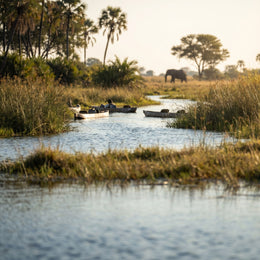
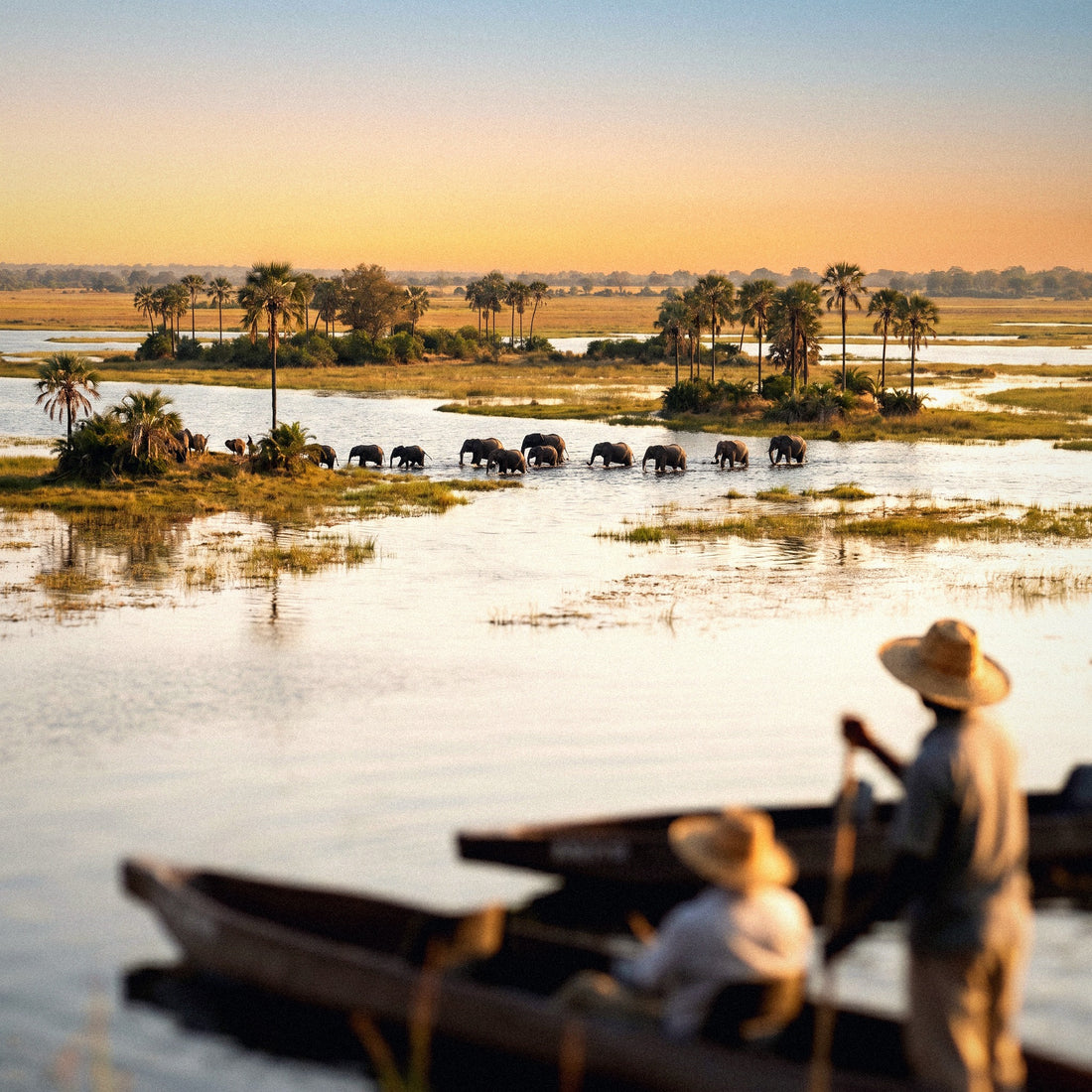
The reason is simple and not very commercial: you won't be able to use the data even if you want to. A high-end safari in the delta practically consists of three or four nights in a camp that you reach by bush plane, with no mobile network of any kind, limited satellite Wi-Fi, and often only available in the common area. Add to that several operators who deliberately restrict it so you can disconnect, and you're left with a trip where your phone acts much more as a camera than a phone.
My honest recommendation by segments: 1 GB if your trip is mostly remote camps and you just want to let people know you've landed; 3 GB for the typical 8-12 day trip that combines the delta, Chobe, and a couple of nights in a city; 5-10 GB only if you're someone who uploads content every night or will spend more days in urban areas than in the bush. If you've read how to get connected in Botswana, here we're only talking about size.
Why Botswana breaks all calculations: where there's coverage and where there isn't
Botswana has three mobile operators—Mascom, Orange, and BTC—and a very distinct geographical reality: the country is sparsely populated, antennas follow people, and the areas you'll be in are precisely those without people. Mascom has the best rural coverage, but even it doesn't reach the interior of the delta.
This means that your consumption isn't decided by you, it's decided by the itinerary. A 12-day trip with eight nights in remote camps can end with less than 1 GB used. The same trip based in Maun with daily excursions can easily go up to 4 or 5 GB.
| Area | Typical Mobile Coverage | What to Expect |
|---|---|---|
| Maun | Reasonable 4G | Logistics hub: airport, safari offices, and lodges work well |
| Kasane and Chobe riverfront | 4G in the town | Reliable in the hotel strip; drops off when entering the park |
| Okavango Delta interior | None | Camps with satellite Wi-Fi, often only in the common area |
| Moremi and wild areas of Chobe | None or sporadic 2G | Signal may appear at a high point and disappear in 200 meters |
| Central Kalahari and Makgadikgadi | Practically none | Several camps are deliberately without Wi-Fi |
| Main roads | Intermittent 3G/4G | Long stretches with no signal between towns |
| Gaborone and Francistown | 4G | Here you would use data like in any city |
Practical translation: count the days you'll be sleeping outside the bush and calculate based on those. Remote camp days are, for data purposes, zero days.
How much each activity consumes, in real figures
Before choosing a data plan, it's good to know how much each activity consumes. These are reference figures I work with; they vary depending on connection quality and app settings, but they're useful for rough calculations. If you want a detailed breakdown, I have it in my mobile data usage statistics by activity.
| Activity | Approximate Consumption | Note for Botswana |
|---|---|---|
| Google Maps navigating | ~5 MB/hour | With the map downloaded, it drops almost to zero |
| WhatsApp text only | 1-3 MB/day | What you'll actually use |
| WhatsApp voice call | 18-30 MB/hour | Perfect for daily check-ins at home |
| WhatsApp video call | ~300 MB/hour (up to 480 in HD) | The camp Wi-Fi won't handle it |
| Instagram or TikTok scrolling | ~100 MB every 10 minutes | Half an hour a day is already 300 MB |
| Email and normal browsing | 10-20 MB/day | Negligible |
| Spotify normal quality | ~40 MB/hour (up to 150 in high) | Download before flying |
| YouTube at 1080p | 1.5-3 GB/hour | This is where an entire package evaporates |
Notice the leap: there's a factor of a hundred between what a map-and-message traveler consumes and what a video-heavy user consumes. That's why there's no single figure for "Botswana": there's a figure for you. The rest of this article is about figuring out what that is.
How many GB according to your profile and travel days
This is the table you really need. It's calculated assuming a realistic Botswana itinerary, meaning with a significant portion of days without coverage. If your trip is all city—unusual here—add 50%.
| Profile | 5 days | 10 days | 15 days | 30 days |
|---|---|---|---|---|
| Map and WhatsApp tourist | 1 GB | 1-2 GB | 2 GB | 3 GB |
| Photos and social media | 2 GB | 3 GB | 5 GB | 10 GB |
| Digital nomad / remote work | 5 GB | 10 GB | 15 GB | 25-30 GB |
| Family sharing one phone | 2-3 GB | 5 GB | 8 GB | 15 GB |
A couple of important nuances. The "family sharing" profile assumes one person acts as a hotspot for others: as soon as the kids hook up a tablet to watch videos, that row becomes insufficient, and the problem isn't Botswana, it's the video. And the "digital nomad" profile has a huge asterisk, which I'll explain below, because in the delta you won't be able to work even if you buy 50 GB.
If you're torn between two rows, go with the lower one. In a country where half the days have no signal, the risk of overbuying is much greater than running short. The general criteria for how much to buy according to your trip type is detailed in my guide on how much data I need for travel.
Wildlife video: the big data devourer of a safari
Here lies the real risk in Botswana, and it's not what people expect. You won't run out of data from browsing: you'll run out of data from trying to share what you record. A safari generates an enormous amount of material. A herd of elephants crossing the Chobe, a leopard descending from a tree, the bush plane taking off over the delta. All of this is recorded, and almost all of it is recorded in 4K without a second thought.
| What you try to upload | Approximate size |
|---|---|
| A mobile phone photo | 3-5 MB |
| Twenty photos from one day | 60-100 MB |
| A 30-second video at 1080p | 60-70 MB |
| A 1-minute video in 4K | 350-400 MB |
| A 60-second edited reel | 50-150 MB |
| Automatic backup of a full day's safari | 2-4 GB |
That last row is what ruins trips. Automatic photo backup is the number one enemy on a safari: you spend three days without coverage accumulating material, you arrive in Kasane, your phone gets 4G and starts uploading everything all at once. Goodbye to your data package in twenty minutes, and you didn't even decide it yourself.
Solution in two taps, before leaving home: go into Google Photos or iCloud settings and set backup to Wi-Fi only. And when you want to show something to your family, send a photo or a short video in 1080p, not the raw 4K file.
Maps, bush planes, and logistics from Maun
Botswana has a logistical peculiarity that does affect data: almost everything is organized from Maun, and a good part of internal transfers are by bush plane, with changing schedules, strict luggage limits, and confirmations that usually arrive via WhatsApp or email. That is, you need to be reachable at specific times, not all the time.
What I always do before flying: download the offline map for the Maun, Moremi, Chobe, and Kasane areas in Google Maps or Maps.me, save tickets, camp vouchers, and operator phone numbers to my phone, and take screenshots of all important information. A saved PDF doesn't consume data; opening email to look for it does.
Regarding maps: if you drive yourself—common if you're doing a 4x4 circuit with a rooftop tent—navigation itself consumes very little, about 5 MB per hour, and with the map downloaded, not even that. Your phone's GPS works without coverage; what doesn't work without coverage is downloading the map on the fly. That's why the classic mistake is trusting it and leaving Maun with a partially loaded map.
Also consider long road trips between Maun and Kasane or towards the Kalahari: these are hours of nothing, with no signal for entire stretches. Download your music and podcasts beforehand, and you'll avoid the urge to stream during moments of coverage.
How to know your real consumption before leaving home
All of the above are averages. Your exact number is in your pocket and can be checked in two minutes, without installing anything.
On Android: Settings → Network & Internet → SIM or Data Usage. You'll see current month's usage and breakdown by app. On iPhone: Settings → Mobile Data, and scroll down to the app list. Be aware that the iOS counter there is cumulative since the last time you reset it, so check the "Current Period" date at the very bottom; if it hasn't been reset in years, set it to zero and measure a clean week.
With that number, do the math: divide your monthly consumption by 30 to get your actual daily average. Then subtract the days you'll be without coverage and multiply by the remaining days. An example with numbers I see often: 9 GB per month is 300 MB per day; on a 12-day trip with 6 nights of remote camping, the real calculation is 300 MB × 6 connected days ≈ 1.8 GB. With 3 GB, you'll have plenty.
And there's a favorable nuance: when traveling, you usually consume less than at home, because you're watching elephants, not your phone. The exception is social media, which tends to skyrocket in such a photogenic destination. If you know yourself and know you'll be posting every night, apply the "photos and social media" row, not the "maps" one.
How to make your data last on a trip to Botswana
With these five adjustments, made before you leave, a small package will last you the entire trip without having to ration:
- Download offline maps of Maun, Moremi, Chobe, Kasane, and the route you'll be driving. This saves the most and provides the most peace of mind.
- Wi-Fi-only backups for Google Photos, iCloud, and WhatsApp. I repeat this because it's 80% of the scares.
- Disable automatic WhatsApp download for photos and videos. Family groups don't know you're in the Okavango and keep sending memes.
- Turn off auto-play video on Instagram, TikTok, X, and Facebook, and activate "use less data" mode within each app.
- Activate system data saver mode, and download music, podcasts, and series from home.
The best way to save data in Botswana isn't a technical trick: it's that the place makes you forget your phone. Camps that deliberately restrict Wi-Fi don't do it out of stinginess; they do it because the lion roars at night, and they want you to hear it.
These settings apply equally to any destination, and I've explained them one by one with screenshots in my guide on tricks to save data when traveling. For Botswana, with the first two, you've solved almost the entire problem.
If you plan to work remotely from your safari, read this
Here I have to be blunt. If your plan is to make video calls from a delta camp, no data package will save you, because the problem isn't the gigabytes: it's that there's no mobile network. It doesn't matter if you buy 50 GB. In the interior of the Okavango, your phone won't pick up anything, and what's available is satellite Wi-Fi from the camp, shared among all guests, often limited to the common area, and with high latency.
A typical camp satellite link can handle email, messaging, and light browsing well. It cannot handle a team video call, uploading heavy files, or a long work session in the cloud. And in several camps in the area, don't even try: some operators deliberately don't put Wi-Fi in the rooms because they sell disconnection, and that's a product decision, not a malfunction.
If you absolutely must work, the solution is in your itinerary, not your data: book your work days in Maun or Kasane, where 4G is reasonable, and leave your camp days free of commitments. In that case, a 10-15 GB package makes sense, because you'll actually use it.
And warn your people before you leave: send a message saying which days you'll be unreachable. It saves you anxiety and them a fright. On a trip to Botswana, "not answering" almost always means "they're in the delta."
What happens if you run out (and why it's better than having too much)
Running out of data in Botswana sounds dramatic, but it's not. When your package runs out, you simply stop having mobile internet: nothing is blocked, you're not charged extra, there are no surprise bills. You still have Wi-Fi at camps and lodges, and you still have GPS and offline maps, which is what really matters when you're driving.
To top up takes minutes and can be done from your phone as soon as you get a signal in Maun, Kasane, or any lodge with Wi-Fi. That's why my advice is always the same: buy short and top up if necessary. Unused gigabytes don't come back, and in this destination, the probability of having too much is very high.
Think of it in terms of money. If you buy 10 GB "just in case" and use 2, you've paid eight times what you needed. If you buy 3 GB and run short one day, you top up and continue. The second option is only worse if you run out of data precisely when there's no coverage to top up, and in that case... you wouldn't have internet even with 50 GB, because the problem would be the antenna, not the balance.
The only thing you should definitely have set up from home is the installation and activation, because configuring anything with satellite Wi-Fi at a camp is an exercise in patience. If it's your first time, check out what an eSIM is and how it works beforehand and get it ready before you board your flight.
Frequently Asked Questions
The most common questions I get about data and travel to Botswana, answered briefly.
How many GB do I need for 10 days in Botswana?
3 GB is more than enough for most people on a 10-day trip. If your itinerary is almost entirely remote camps, 1 GB is plenty; if you spend more nights in Maun or Kasane and post on social media every day, plan for 5 GB.
Is there mobile coverage in the Okavango Delta?
No, there is no mobile coverage in the interior of the delta. Camps reached by bush plane operate with their own satellite internet, often limited to the common area and shared among all guests. Radio and satellite phone are the standard emergency system.
What about Chobe and Kasane?
In Kasane town, there is decent 4G; within Chobe National Park, there is not. The strip of hotels along the river and the airport area have good coverage. As soon as you enter the park for a river cruise or an afternoon safari, the signal disappears or becomes intermittent 2G.
Which operator has the best coverage in Botswana?
Mascom has the widest rural reach, followed by Orange and BTC. Even so, none cover the interior of the delta or the central Kalahari. The difference between operators is noticeable on roads and in small towns, not in deep safari areas.
Can I make video calls from the camp?
Almost never, and not due to a lack of gigabytes. A video call consumes about 300 MB per hour and requires a stable connection; a camp's satellite link usually supports messaging and email, not video. Send voice notes or photos and rest assured.
Can I upload safari videos on the go?
Only if you're willing to spend your entire data package on it. One minute of 4K video weighs 350-400 MB. It's sensible to save the material and upload it upon returning to Maun, Kasane, or directly when you get home, with Wi-Fi.
Will the same package work if I enter Namibia, Zambia, or Zimbabwe?
Not necessarily: a Botswana package covers Botswana. If your route includes Victoria Falls on the Zambian or Zimbabwean side, or if you cross into the Caprivi Strip, look for a regional African plan or buy a specific package for each country.
What happens if I run out of data in the middle of a safari?
Nothing serious: you'll be without mobile internet, with no extra charges. Downloaded maps and GPS will still work, as will camp Wi-Fi. You can recharge as soon as you have a signal, which in practice will be upon returning to Maun or Kasane.
Conclusion
Botswana is the destination where I most confidently tell you to buy little. For the typical 8-12 day trip combining the delta, Chobe, and some city time, 3 GB is sufficient for the vast majority. If you're a map and WhatsApp user, 1-2 GB will do. If you post every night or sleep more in the city than in the bush, 5 GB. And if you truly need to work, organize your workdays in Maun or Kasane and then plan for 10-15 GB.
I prefer you buy just enough and recharge if needed, rather than selling you a large package that will go unused. Have it installed and activated before you board the plane, download offline maps and back up with Wi-Fi, and forget about your phone until you land in Maun. Once you're clear, here's the data for your trip to Botswana in the size you truly need. And if you're still deciding between connection options, I have the details in the eSIM for Botswana guide.